Okay, let's dim the lights, maybe crack open a beverage that definitely didn't come from a fancy wine cellar, and slide a tape into the VCR that’s seen better days. Tonight, we're not hitting the slopes of Aspen with the Griswolds, but heading to the swanky St. Moritz, Switzerland, for a different kind of Yuletide chaos with Vacanze di Natale '91. If you stumbled across this one in the 'International Comedy' section of your local rental joint back in the day, perhaps mistaking it for a cousin of Chevy Chase's adventures, you were in for a uniquely Italian treat – or possibly, a bewildering experience.
This film is a prime example of the cinepanettone, Italy's peculiar and often wildly popular genre of Christmas comedies, typically released right before the holidays to pack cinemas. Forget subtle wit; these films often revel in broad physical comedy, social satire (usually pitting the nouveau riche against old money, or Northerners vs. Southerners), misunderstandings galore, and a healthy dose of cheerful vulgarity. And Vacanze di Natale '91 delivers exactly that, reuniting two titans of the genre.
The Kings of Italian Christmas Chaos
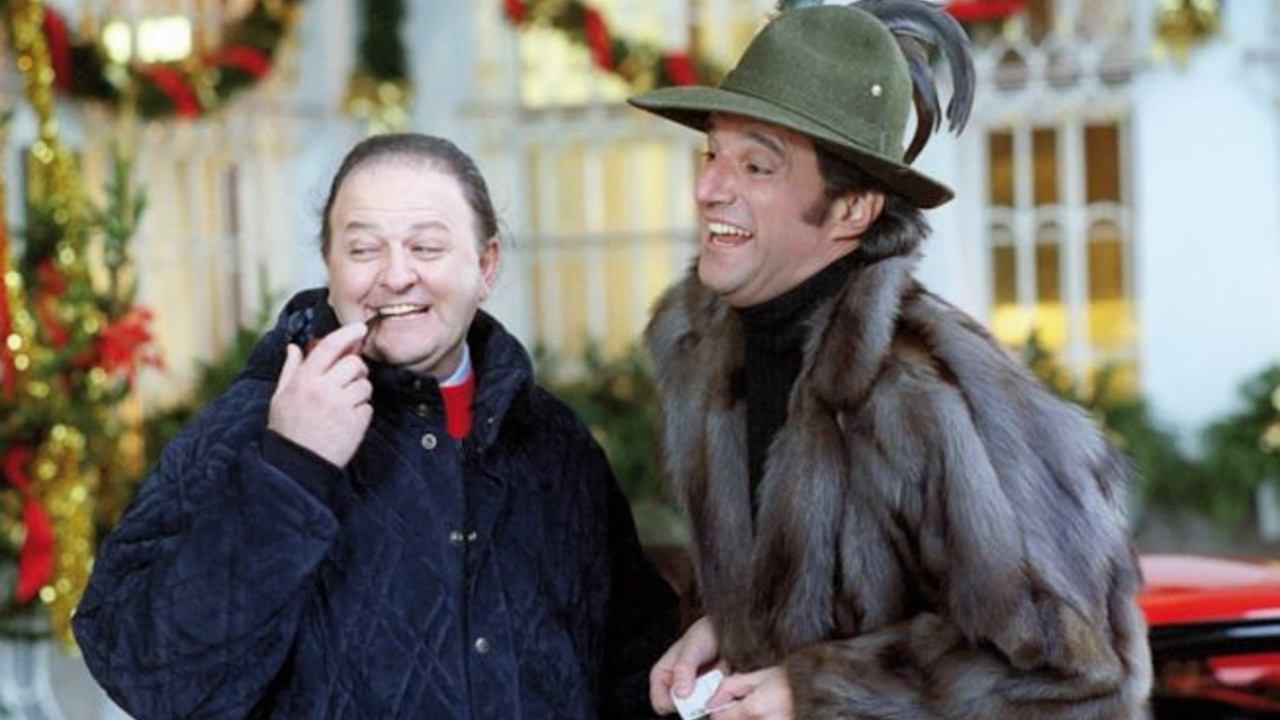
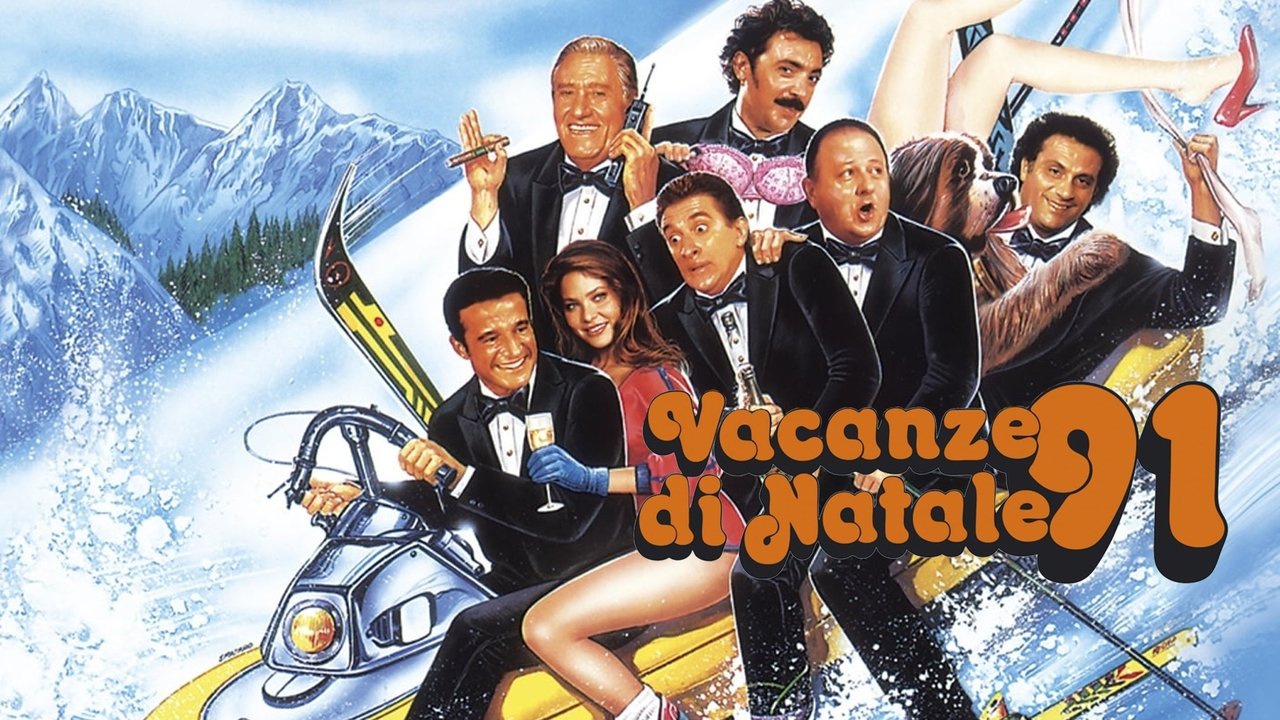
At the heart of the mayhem are Christian De Sica (son of the legendary Vittorio De Sica) and Massimo Boldi. Their on-screen partnership was comedic gold in Italy for decades, a whirlwind of frantic energy, exaggerated Milanese and Roman stereotypes, and slapstick timing. Here, they play two halves of warring families forced together by circumstance and the marriage of their children. De Sica is the boorish, trying-too-hard Enzo and Boldi is the equally crass Nanni. Their chemistry is undeniable, built on years of collaboration; they bounce off each other with the practiced ease of Abbott and Costello, albeit with a distinctly Italian flavour and a focus on social climbing and dodging awkward situations. Watching them navigate the posh ski resort, trying desperately to fit in (or stand out for the wrong reasons), is where much of the film's energy lies.
This wasn't their first Christmas rodeo, of course. The Vacanze di Natale series started back in 1983, effectively launching the cinepanettone trend. This '91 installment, directed by comedy veteran Enrico Oldoini (who helmed several successful comedies in this era), feels like a well-oiled machine, confidently playing the expected beats for its domestic audience. Oldoini, along with co-writers like Liliana Betti and the legendary Rodolfo Sonego (a frequent collaborator with Alberto Sordi), knew exactly what buttons to push.
Enter the Maestro: Alberto Sordi
What elevates Vacanze di Natale '91 slightly above some of its brethren is the presence of the absolute giant of Italian comedy, Alberto Sordi. Playing Leopoldo, a man entangled in his own complicated romantic and familial web, Sordi brings a different, perhaps more melancholic, comedic energy. His storyline, involving infidelity and longing, offers a slightly more grounded counterpoint to the outright farce of the De Sica/Boldi plotline. Seeing Sordi, a true icon whose career spanned decades and included masterpieces like Il Sorpasso (1962) and An Average Little Man (1977), participate in this kind of broad Christmas comedy was a significant draw for Italian audiences. It lent the film a certain gravitas, even amidst the snowball fights and mistaken identities. Retro Fun Fact: Sordi's involvement was a big deal, bridging generations of Italian comedy fans. His character adds a layer that, while still comedic, touches on themes of aging and regret, unusual for the typically featherlight cinepanettone.
St. Moritz Shenanigans and 90s Style
The setting itself is part of the joke. St. Moritz, the playground of the rich and famous, becomes the backdrop for these decidedly un-chic characters' antics. The contrast between the luxurious hotels and ski slopes and the characters' often gauche behaviour is milked for all its worth. The film doesn't shy away from showcasing the fashions and attitudes of the early 90s – think colourful ski suits, big hair, and the particular kind of conspicuous consumption that marked the era. Does some of it feel dated now? Absolutely. The humour can be broad, relying on stereotypes that might make modern audiences wince occasionally.
But there's an undeniable energy to it. The pacing is brisk, moving quickly from one comedic set piece to another. Forget intricate CGI – the laughs here come from well-timed physical gags, rapid-fire dialogue (even if you need subtitles, the rhythm is apparent), and the sheer commitment of the performers. Remember how effective simple misunderstandings and awkward social encounters could be in comedies back then? This film is built on them. Retro Fun Fact: Filming in luxurious locations like St. Moritz was key to the cinepanettone formula, offering viewers a dose of escapism alongside the laughs, often contrasting sharply with the characters' non-aristocratic origins. These films were big business in Italy, often topping the box office charts during the holiday season.
Is It Still a Jolly Holiday?
Watching Vacanze di Natale '91 today is a fascinating glimpse into a specific cultural phenomenon. It's loud, it's brash, and its humour is resolutely Italian. If you're not familiar with the actors or the cultural context, some jokes might fly over your head like a poorly aimed snowball. It lacks the universal appeal of, say, Home Alone (1990) or even the American Christmas Vacation (1989) it might superficially resemble to an Anglophone viewer glancing at a translated title.
However, if you appreciate broad physical comedy, enjoy seeing seasoned performers chew the scenery with gusto, or have a nostalgic fondness for early 90s Euro-style, there's definitely fun to be had. It captures that specific feeling of holiday comedies from the era – slightly chaotic, not always politically correct by today's standards, but full of a certain unpretentious energy.
Rating: 6/10
Justification: While undeniably dated in parts and culturally specific, Vacanze di Natale '91 delivers exactly what it promises: a loud, energetic Italian Christmas farce powered by the dynamite pairing of De Sica and Boldi, elevated by the legendary presence of Sordi. It’s a key example of the cinepanettone genre and provides genuine laughs if you’re in the mood for broad, unashamedly silly comedy. The nostalgic value for those who remember découvrir these types of European comedies on VHS adds a point, but its reliance on domestic humour holds it back from universal classic status.
Final Thought: It might not be the slickest comedy on the shelf, but like finding that slightly worn tape at the back of the store, Vacanze di Natale '91 offers a boisterous, unrefined blast of early 90s Italian holiday spirit – best enjoyed with low expectations and maybe a glass of Prosecco.