What if the afterlife wasn't about pearly gates or fiery pits, but... paperwork? And a trial? That's the quietly brilliant, existentially ticklish premise of Albert Brooks' 1991 gem, Defending Your Life. It arrived not with a thunderclap, but with a thoughtful chuckle, presenting a vision of what comes next that feels less like divine judgment and more like a surprisingly well-run, slightly surreal celestial bureaucracy. It’s a film that asks a profound question wrapped in gentle satire: Did you live bravely, or did you let fear dictate your choices?
Welcome to Judgment City
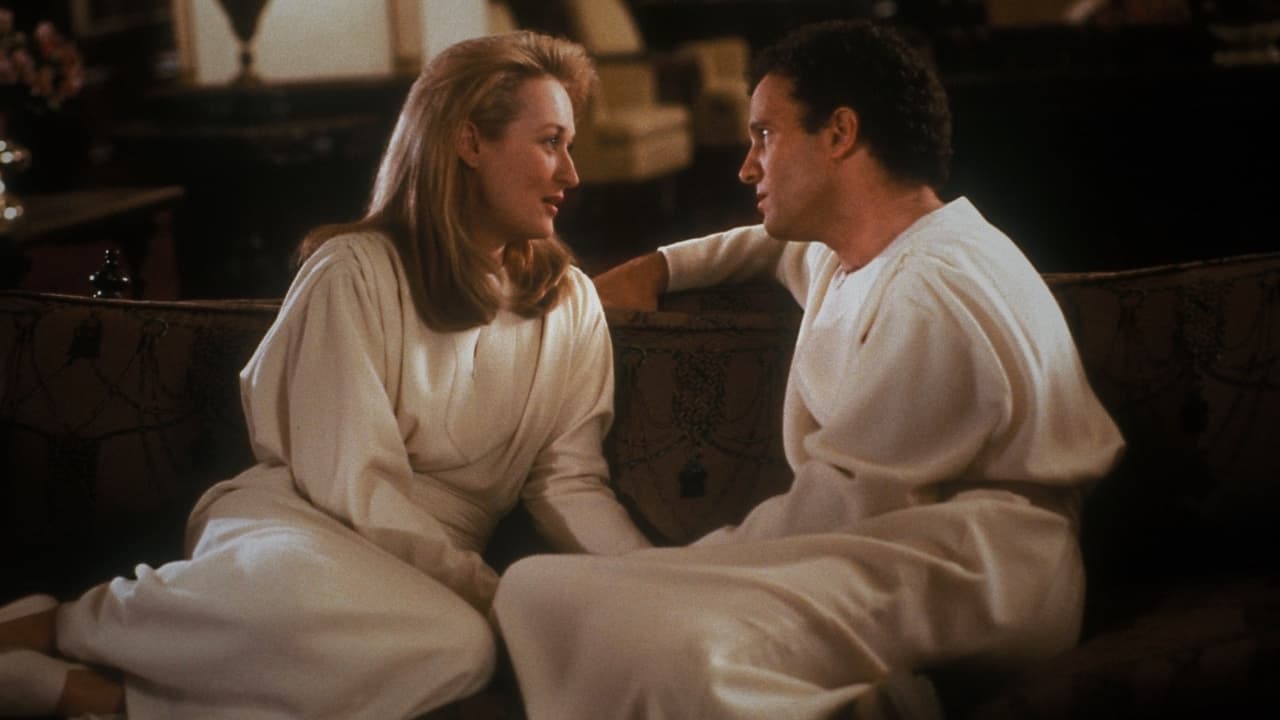
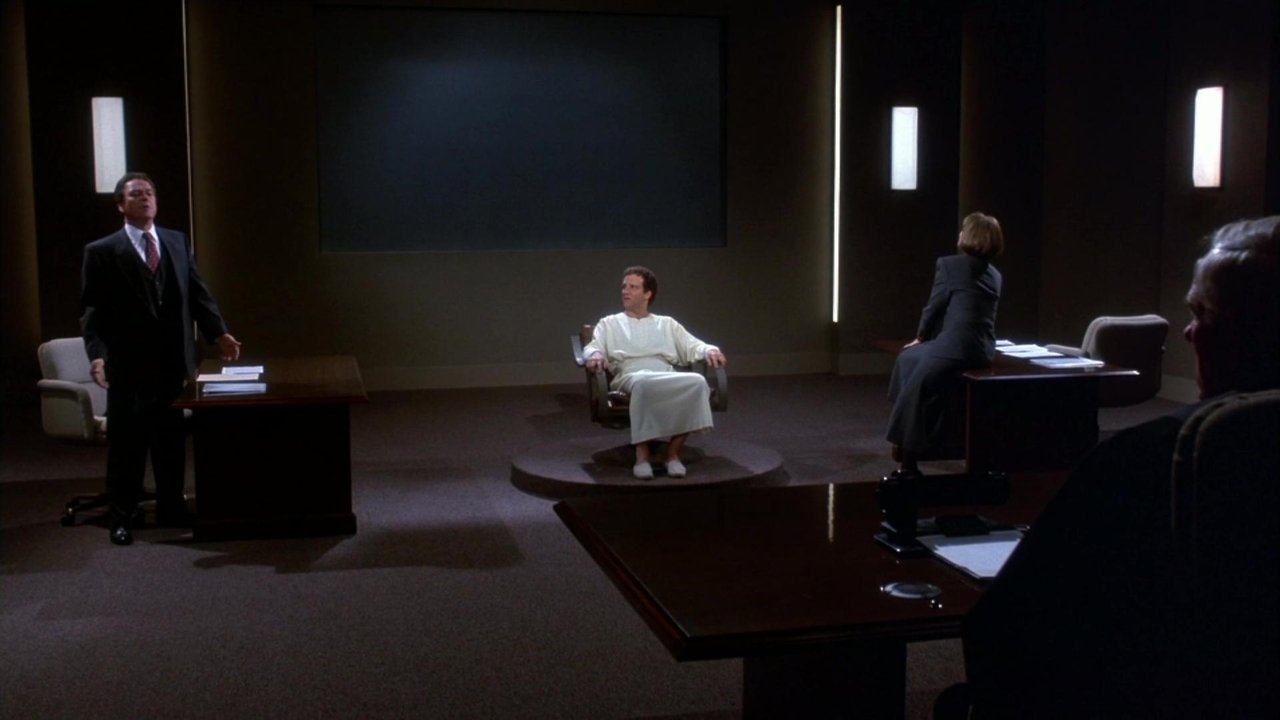
When Daniel Miller (Albert Brooks, who also wrote and directed), a moderately successful Los Angeles ad exec, meets his end in a rather mundane car crash (distracted by his new BMW's CD player, a perfectly judged early 90s detail), he doesn't see a white light. Instead, he wakes up in Judgment City. It looks suspiciously like a clean, efficient, slightly bland corporate campus or upscale mall – fittingly, parts were filmed at the then-under-construction Universal CityWalk. Here, the recently deceased must 'defend their lives' by reviewing key moments (projected like film clips) to determine if they conquered their earthly fears sufficiently to 'move on' to the next stage of existence. Fail, and it's back to Earth for another go-round.
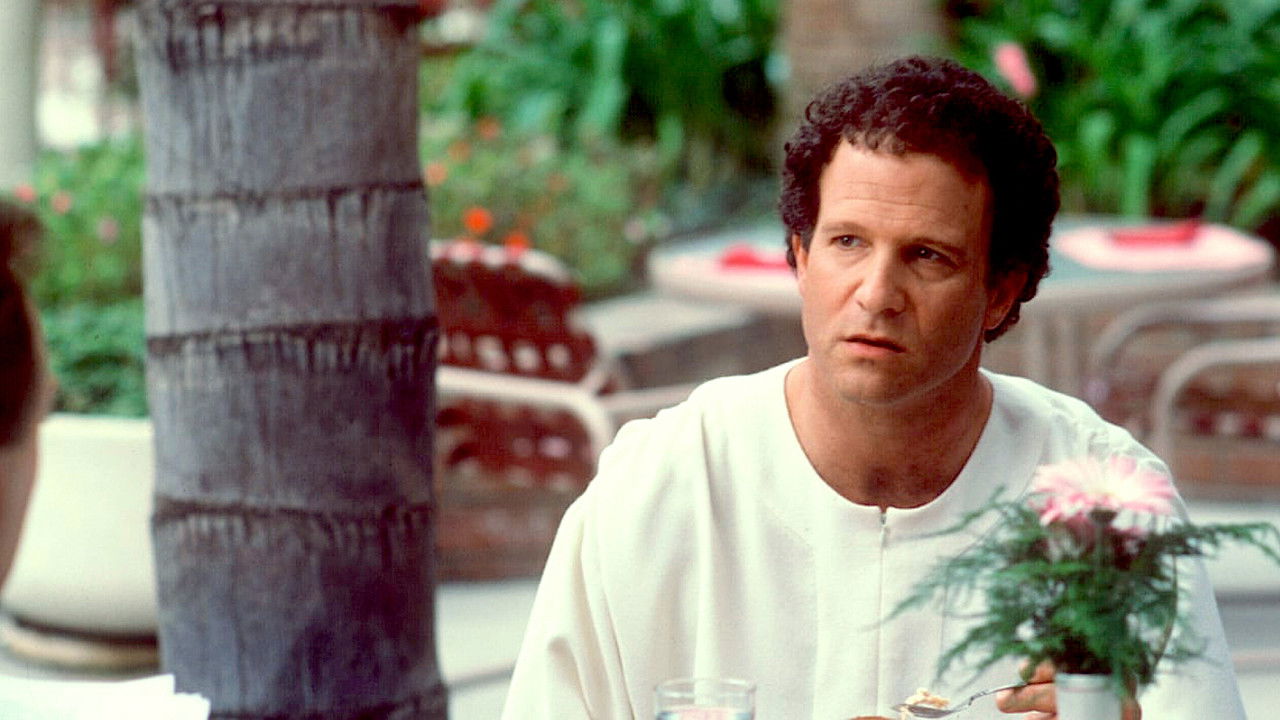
Daniel, bless his anxious heart, is not exactly a profile in courage. His life seems to be a series of small capitulations to fear, hilariously and painfully showcased during his 'trial'. Brooks, revisiting the kind of insightful neurotic humor he perfected in films like Lost in America (1985), plays Daniel not as a caricature, but as instantly recognizable. We see our own hesitations, our own rationalizations for playing it safe, reflected in his journey. It’s this relatability that grounds the fantastical premise.
Finding Connection in the Cosmos
Daniel's defense is spearheaded by the affable, confident Bob Diamond (Rip Torn, absolutely stealing scenes with effortless charisma). Torn embodies the kind of encouraging, slightly exasperated guide you'd hope for in such a predicament. His foil is the sharp prosecutor, Lena Foster (Lee Grant), arguing persuasively that Daniel mostly used his intellect to avoid life rather than engage with it.
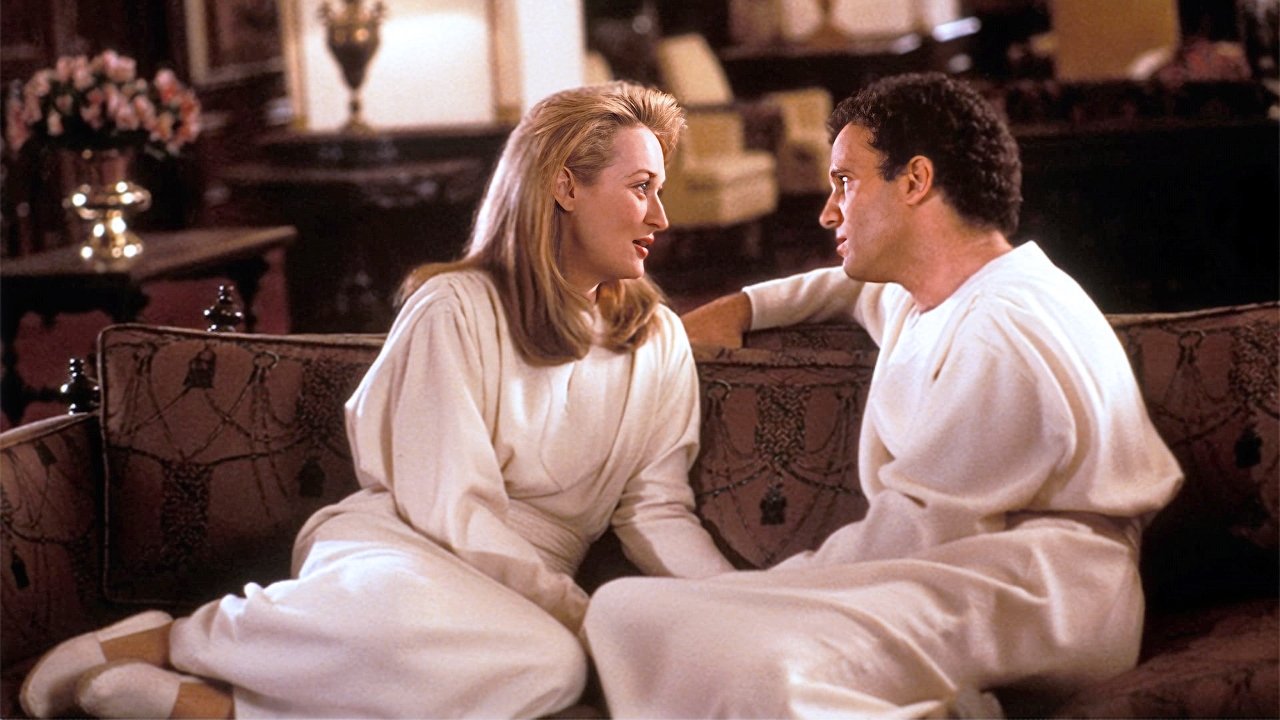
But the film's heart truly ignites when Daniel meets Julia (Meryl Streep). Streep, in a role Brooks reportedly wrote hoping she'd accept, is luminous. It was a delightful turn for audiences accustomed to her dramatic powerhouses (Sophie's Choice (1982), Out of Africa (1985)). Here, she radiates warmth, confidence, and an infectious joy for life (and seemingly, the afterlife). Julia lived fully, embracing experiences with courage and love, making her a shoo-in to move on. Her scenes with Brooks are pure magic – their chemistry is palpable, a meeting of two very different souls finding solace and understanding in the strangest of circumstances. Their burgeoning romance feels earned and incredibly sweet, providing the film's emotional anchor. Watching Streep navigate this lighter, comedic material with such grace reminds you of her incredible range.
More Than Just Laughs
While Defending Your Life is wonderfully funny – the observational humor about the afterlife's amenities (eat anything you want without gaining weight!), the absurdity of having your most embarrassing moments replayed for celestial judgment – it resonates on a deeper level. Brooks isn't just mining the situation for gags; he's genuinely exploring fear's paralyzing effect. What does it mean to be brave? Is it grand gestures, or the accumulation of small, everyday choices to engage rather than retreat? The film suggests the latter.
One fascinating production tidbit is how Brooks managed to balance this philosophical weight with the comedic tone. It never feels preachy or overly sentimental. The wit is sharp, the observations keen. Take the 'Past Lives Pavilion', where characters can glimpse their previous incarnations – handled with a visual gag rather than heavy exposition. The film cost around $20 million to make and had a modest showing at the box office ($16.4 million domestically), but its critical reception was strong (Roger Ebert notably gave it four stars), and its reputation as an intelligent, heartfelt comedy has only grown over the years. It became one of those cherished VHS rentals or late-night cable discoveries that stuck with you long after the credits rolled. I distinctly remember catching it on HBO one weekend and being utterly charmed by its unique blend of humor and heart.
The film’s visual style is deliberately understated. Judgment City isn't overly futuristic or stylized; it’s clean, functional, almost sterile, which cleverly underscores the bureaucratic nature of this particular afterlife. The focus remains squarely on the characters and the ideas.
The Final Verdict

Defending Your Life is that rare beast: a high-concept comedy with genuine soul. It uses its inventive premise not just for laughs, but to explore universal anxieties about mortality, purpose, and the courage it takes to truly live. The performances are pitch-perfect, particularly the wonderful dynamic between Brooks and Streep, and Rip Torn’s delightful turn. It’s a film that feels both uniquely of its time (oh, those early 90s fashions and tech!) and timeless in its concerns. It avoids easy answers, offering instead gentle wisdom and a reminder that perhaps the biggest judgment we face is our own.
Rating: 9/10
Its blend of wit, romance, and existential reflection remains remarkably fresh. Defending Your Life doesn't just entertain; it lingers, prompting a quiet examination of our own choices long after Daniel Miller's fate is decided. What moments would you choose to showcase?