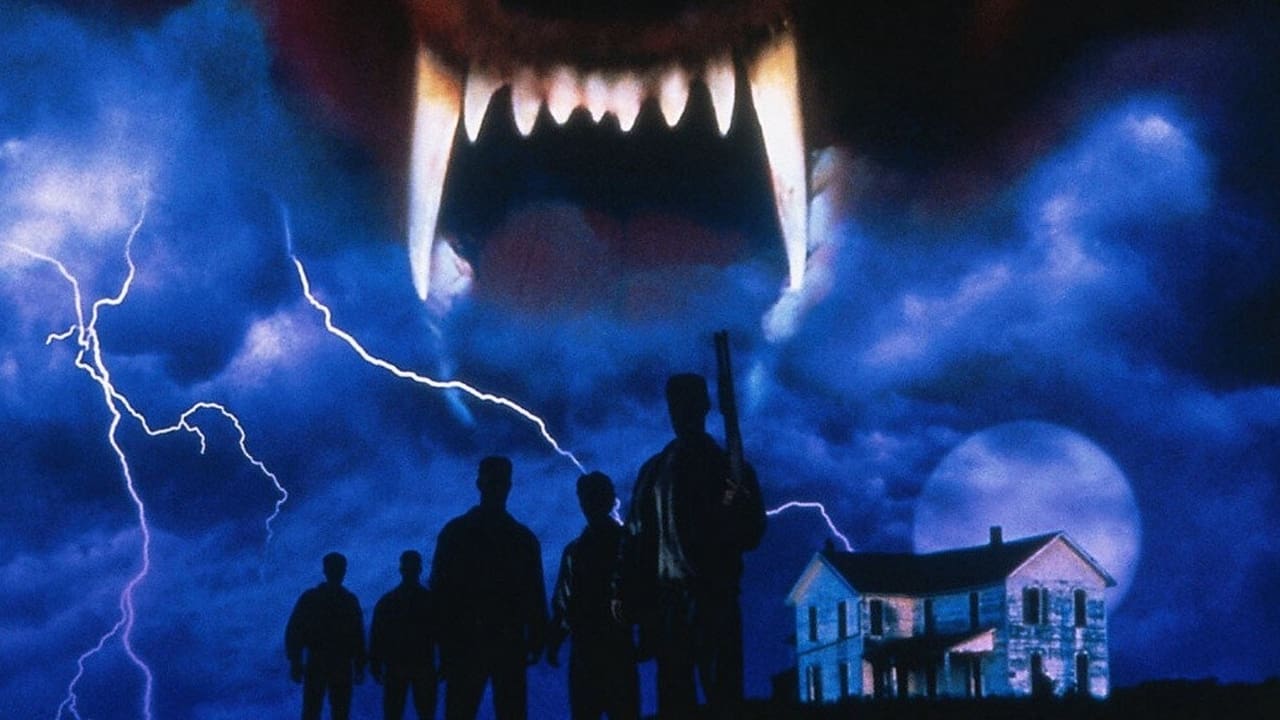
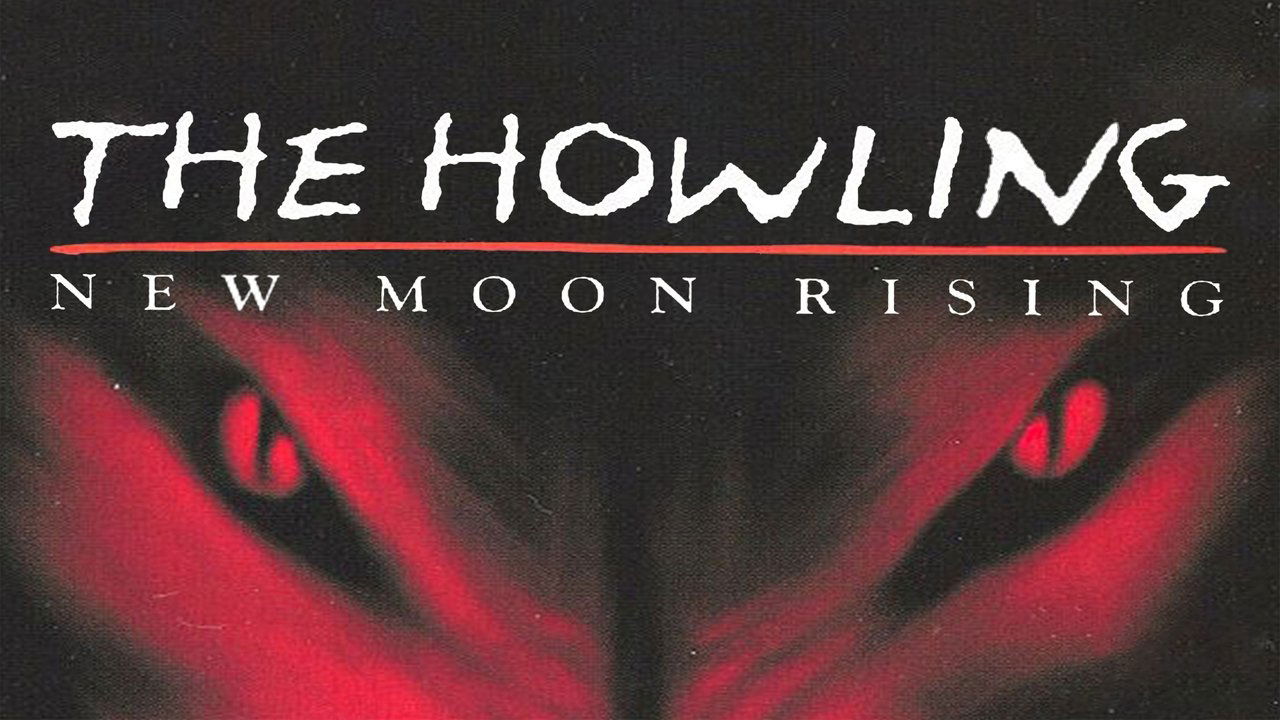
The desert wind carries strange whispers through Pioneertown, a place built on celluloid dreams of the Old West. But sometimes, what echoes back isn't heroic gunfire, but the faint, distorted howl of a franchise losing its way. In the flickering cathode ray glow, certain tapes felt less like movies and more like transmissions from a dimension where narrative logic had fractured. Howling VII: New Moon Rising (often just Howling: New Moon Rising, 1995) is one such tape – a baffling artifact that landed on video store shelves years after its confused inception.
Echoes in the Static
Pulling this tape from the shelf often came with a jolt of cognitive dissonance. Another Howling? Already? Except... this wasn't really new, was it? The unsettling truth behind New Moon Rising is its very construction. Shot predominantly back-to-back with the marginally more coherent Howling VI: The Freaks (1991) but shelved for years, it arrived feeling like a ghost assembled from discarded parts. Large swathes of its runtime are brazenly lifted – not just referenced, but directly recycled – from Howling IV: The Original Nightmare (1988), Howling V: The Rebirth (1989), and Howling VI. The effect isn't nostalgia; it's deeply uncanny, like watching a film argue with its own memories. Did the filmmakers assume we wouldn't notice scenes and characters reappearing, context be damned? This filmmaking approach, driven perhaps by necessity born of a minuscule budget, creates less a narrative and more a bewildering collage.
The Ballad of Father Ted
At the heart of this strange desert saga is writer, director, producer, and star Clive Turner. His character, Father Ted, arrives in this dusty, isolated town investigating a series of gruesome murders that echo the lycanthropic horrors we expect. But the film quickly pivots into something far stranger: a sort of small-town drama occasionally punctuated by bizarre happenings and... line dancing? Yes, one of the most memorable (for all the wrong reasons) aspects of New Moon Rising is its baffling obsession with country music and the local saloon. The attempts at werewolf horror feel almost secondary to the interpersonal dynamics of the quirky townsfolk and extended sequences set at the local watering hole, soundtracked by twangy guitars.
The atmosphere isn't one of creeping dread, but pervasive oddity. The tension comes not from werewolf attacks, but from trying to reconcile the disparate tones and recycled footage. Clive Turner's vision, whatever it truly was, feels obscured by the limitations and the patchwork nature of the production. It's a film seemingly at war with itself, unsure if it wants to be a creature feature, a character study of eccentrics, or a promotional video for Pioneertown's saloon. Horror fans renting this likely felt a profound sense of bewilderment. Remember that feeling? Popping in a tape expecting fang and claw, and instead getting... country line dancing intercut with grainy shots from previous installments?
Familiar Faces, Forgotten Horrors
Amidst the strangeness, a few familiar names drift through. Romy Windsor, who endured the terrors of Howling IV, returns, though her role feels disconnected, another echo from a previous nightmare rather than a continuation. We even get a brief appearance from Michael T. Weiss, who would later find fame as the lead in TV's The Pretender. Their presence adds another layer to the film's bizarre texture, actors caught in a project seemingly untethered from its own series' legacy. The practical effects, when not cribbed from earlier entries, are sparse and indicative of the severe financial constraints. There's little of the visceral transformation horror that defined the original Joe Dante classic The Howling (1981) or even some of its more competent sequels.
One wonders about the on-set reality. Filming back-to-back sequels in a remote location like Pioneertown (a fascinating place, originally built as a live-in Old West motion picture set in the 1940s) must have been a unique challenge. Yet, whatever grit or ingenuity occurred behind the camera feels lost in the final, disjointed product. The "dark legend" here isn't one of cursed productions, but perhaps of creative ambition tragically mismatched with resources and execution, resulting in a film that feels less "made" and more "salvaged."
A Franchise Curio
Howling VII: New Moon Rising isn't just a bad movie; it's a fascinatingly weird one. It represents a strange, almost terminal point for a horror franchise in the direct-to-video era, where brand recognition allowed even the most incoherent ideas to find their way onto VHS. It fails as a horror film, barely functions as a narrative, and utilizes its predecessors' footage in a way that feels almost disrespectful to the audience. The unease it generates isn't from scares, but from its fundamental brokenness. It's the kind of film you might have stumbled upon late one night on a fuzzy cable channel or found lingering unwanted in the rental store bargain bin, a testament to the strange places home video could take us.
VHS Heaven Rating: 1/10
Justification: The rating reflects the film's profound technical and narrative failings. The overwhelming reliance on stock footage from previous entries negates any sense of originality, the plot is largely incoherent, the horror elements are minimal and ineffective, and the tonal shifts into country music drama are jarringly out of place for the franchise. It offers virtually none of the thrills or atmosphere expected from a Howling film, existing primarily as a baffling cinematic oddity.
Final Thought: For hardcore Howling completists or connoisseurs of truly bizarre filmmaking, New Moon Rising holds a certain morbid curiosity, but it stands as a stark warning: sometimes, a franchise howl fades into little more than a confused whimper.