Alright fellow tape travelers, let’s dust off a corner of the shelf that maybe doesn’t get revisited quite as often, but holds its own strange allure. By 1991, the Howling franchise was howling mostly at the moon of the direct-to-video market. After the truly bizarre detour with were-nuns in Hungary for Part V, you might wonder where the series could possibly shamble next. The answer, surprisingly, was somewhere quieter, dustier, and altogether weirder: a forgotten desert town called Canton Bluff and its decaying roadside attraction run by R.B. Harker. Welcome to Howling VI: The Freaks.
### Not Your Average Howl
Pull this tape from its slightly sun-faded clamshell, pop it in the VCR (maybe give the heads a quick clean first, this one might have some tracking issues!), and you’ll find something… different. Gone is the urban terror of the original or the slicker (if sillier) vibes of some sequels. The Freaks, directed by Hope Perello – a rare female director helming a horror sequel back then – feels more like a melancholic, slightly dusty monster fable filtered through a distinctly early 90s DTV lens. It’s slower, moodier, and almost sympathetic to its central lycanthrope.
Our story follows Ian (Brendan Hughes), a gentle drifter who wanders into Canton Bluff looking for work. He’s got a secret, of course – under the light of the full moon, he becomes a werewolf. He finds refuge, of sorts, fixing up the local church for the kindly Dewey (Jered Barclay) and catches the eye of Elizabeth (Michele Matheson), the pastor's daughter. But trouble rolls in with Harker’s Traveling Circus of Lost Souls, run by the sinister R.B. Harker (Bruce Payne, chewing scenery with his usual understated menace) and his even more overtly nasty second-in-command, Winston (Sean Gregory Sullivan). Harker collects 'freaks' for his show, and soon realizes Ian’s hairy little problem could be his star attraction.
### Creatures of Habit (and Latex)
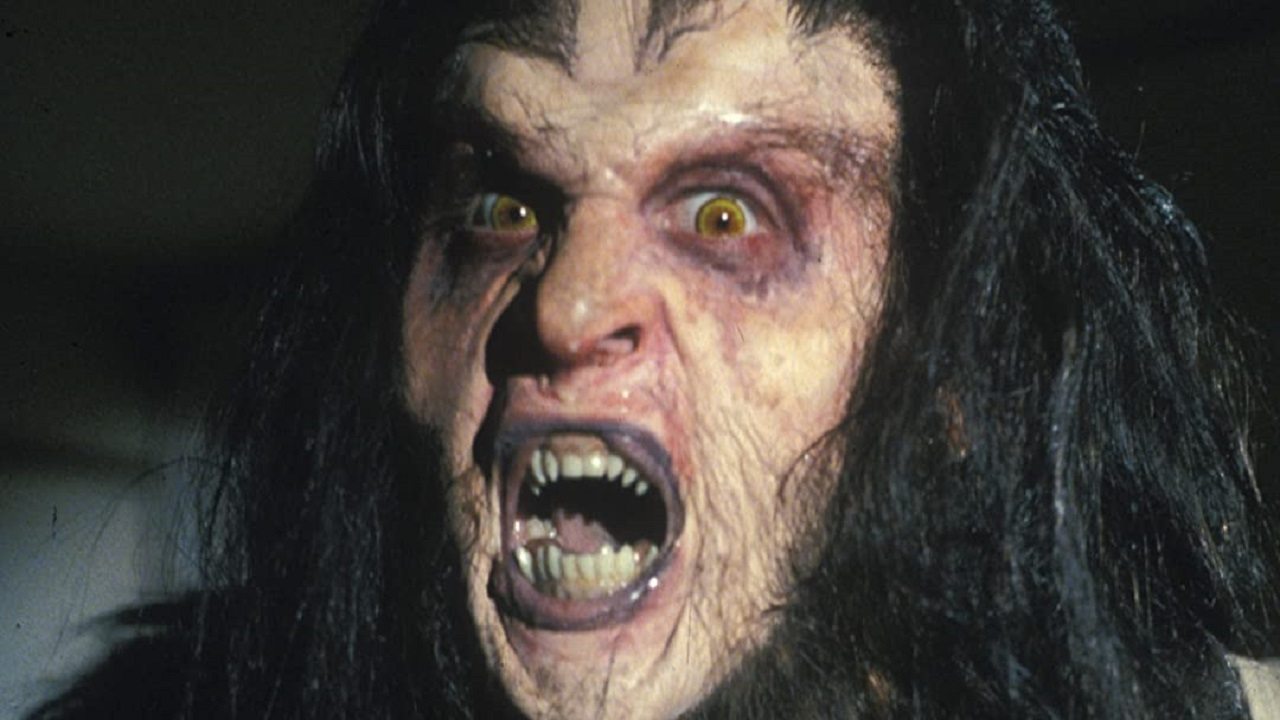
What sets Howling VI apart, besides its strangely somber tone, is its embrace of the 'freaks'. Harker's collection isn't just background colour; they become part of the narrative. We get Alligator Boy, the literal Pinhead (no, not that one), and others realized through that specific brand of early 90s practical makeup effects. They look… well, like dedicated B-movie effects from the era! There's a certain tangible quality, a lumpy reality to them, that you just don't get with modern CGI. They feel like things made by hand, which fits the dusty, handmade feel of the film itself.
And then there’s the werewolf. Let's be honest, nothing was ever going to top Rob Bottin's revolutionary work in the 1981 original. But for a direct-to-video sequel operating on a presumably tight budget (reports suggest it was filmed quickly back-to-back with Howling V using some shared resources and crew, including writer Kevin Rock and the ubiquitous Clive Turner who seemed to haunt these later sequels), the transformation effects here, handled by Steve Johnson's XFX, are surprisingly ambitious. We get stretched skin, popping bones, and a final creature that looks suitably vicious, if perhaps a bit less mobile than its predecessors. Remember how impressive even a decent transformation scene felt on grainy VHS back then? This one delivered enough gooey, painful-looking metamorphosis to satisfy a late-night creature feature craving. It’s a testament to practical effects artists trying to make magic with limited means.
### More Than Just a Monster Mash?
Where The Freaks gets interesting, and maybe a little muddled, is its attempt at pathos. Ian isn't a monster by choice; he’s cursed, tormented, and genuinely trying to do good. Brendan Hughes plays him with a quiet sensitivity that makes you root for him against the cartoonishly evil Harker and Winston. The budding romance with Michele Matheson’s Elizabeth adds a layer of small-town melodrama that feels very… of its time. It slows the pace considerably compared to other action-oriented horror sequels, dedicating time to character moments amidst the monster mayhem.
This shift in focus is likely due to the film’s source material – it’s loosely based on the third novel in Gary Brandner's original Howling book series (confusingly titled The Howling III: Echoes), which itself had a different plot and tone than the wild Australian film Howling III: The Marsupials (1987). This literary connection might explain the more character-driven, gothic-tinged narrative compared to the pure exploitation vibes some might expect from a sixth entry. It wasn’t exactly a box office smash, being DTV, but it found its audience on video store shelves, likely appealing to fans looking for any continuation of the werewolf saga.
Hope Perello directs with a steady hand, making the most of the desolate locations (primarily filmed around Piru, California, a frequent stand-in for dusty anywhere-towns). The film looks decent for its budget, capturing the bleakness of Canton Bluff and the tawdry strangeness of Harker's circus. The final confrontation delivers the expected werewolf action, complete with satisfyingly crunchy practical gore effects – those squib hits and prosthetic bites felt so much more visceral before seamless digital blood became the norm.
### The Verdict
Howling VI: The Freaks is undeniably a product of the early 90s direct-to-video horror boom. It’s got B-movie acting, a sometimes sluggish pace, and effects constrained by budget. Yet, there's an undeniable charm here. It feels like a genuine attempt to tell a slightly different kind of werewolf story, blending creature feature tropes with a melancholic 'outsider' narrative. It stands as a weird, watchable curiosity within a franchise that became increasingly bizarre. I remember grabbing this off the shelf at Blockbuster, intrigued by the 'Freaks' subtitle and the promise of more werewolf action, and finding something unexpectedly… quiet and strange.
Rating: 6/10
Justification: It earns points for its unique tone within the franchise, decent practical creature effects for its DTV constraints, Bruce Payne's enjoyably villainous turn, and its earnest attempt at a sympathetic monster story. It loses points for the slow pacing, uneven performances, and generally low-budget feel that prevents it from reaching greater heights.
Final Thought: In the wild west of VHS sequels, Howling VI was less a savage beast and more a mangy dog with a surprisingly soulful look in its eyes – flawed, but strangely memorable.