Okay, fellow travellers through the tangled wires behind the CRT, let's slide a tape into the VCR that probably didn't get rented quite as often as Terminator 2, but holds a unique, vibrant place in the final act of a truly singular filmmaker. I'm talking about Derek Jarman's Wittgenstein from 1993. Finding this one on the rental shelf, perhaps tucked away in a 'World Cinema' or 'Art House' corner often overlooked, felt like uncovering a secret – a blast of intellectual theatre rendered in startling primary colours against an infinite black void. It wasn't your usual Friday night fare, and maybe that's exactly why it sticks in the mind.

### Philosophy in Primary Colours
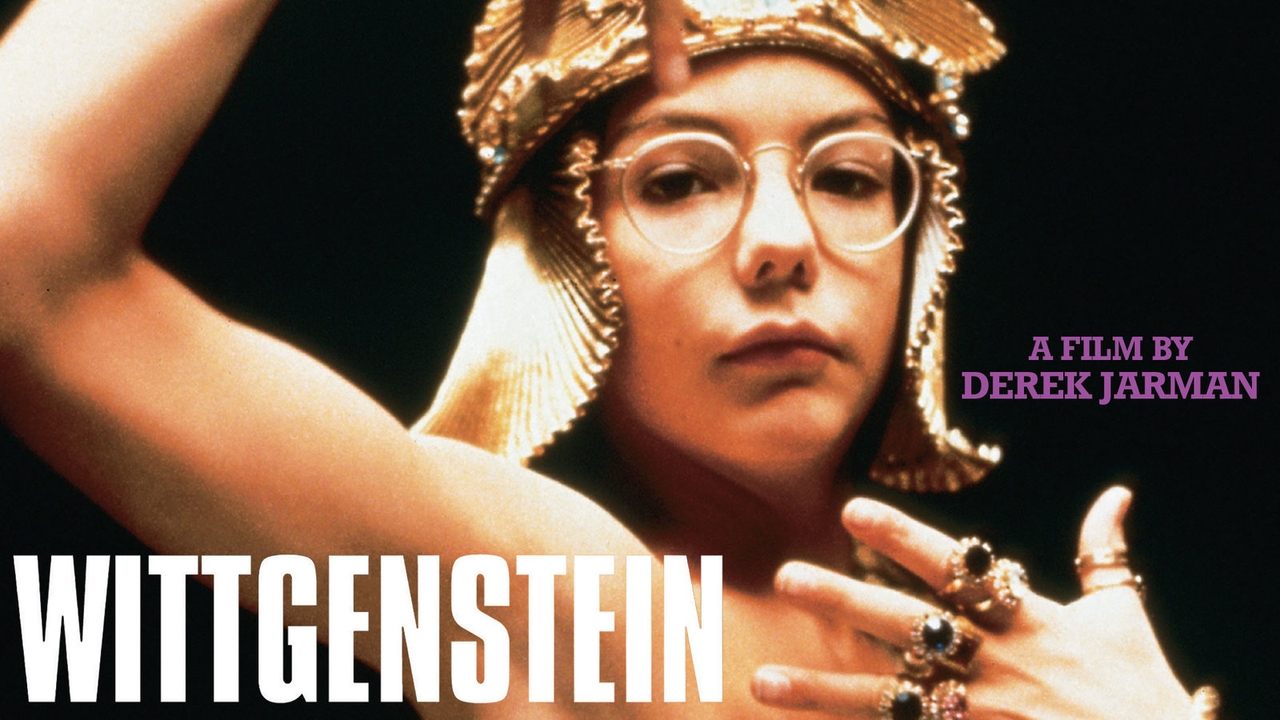
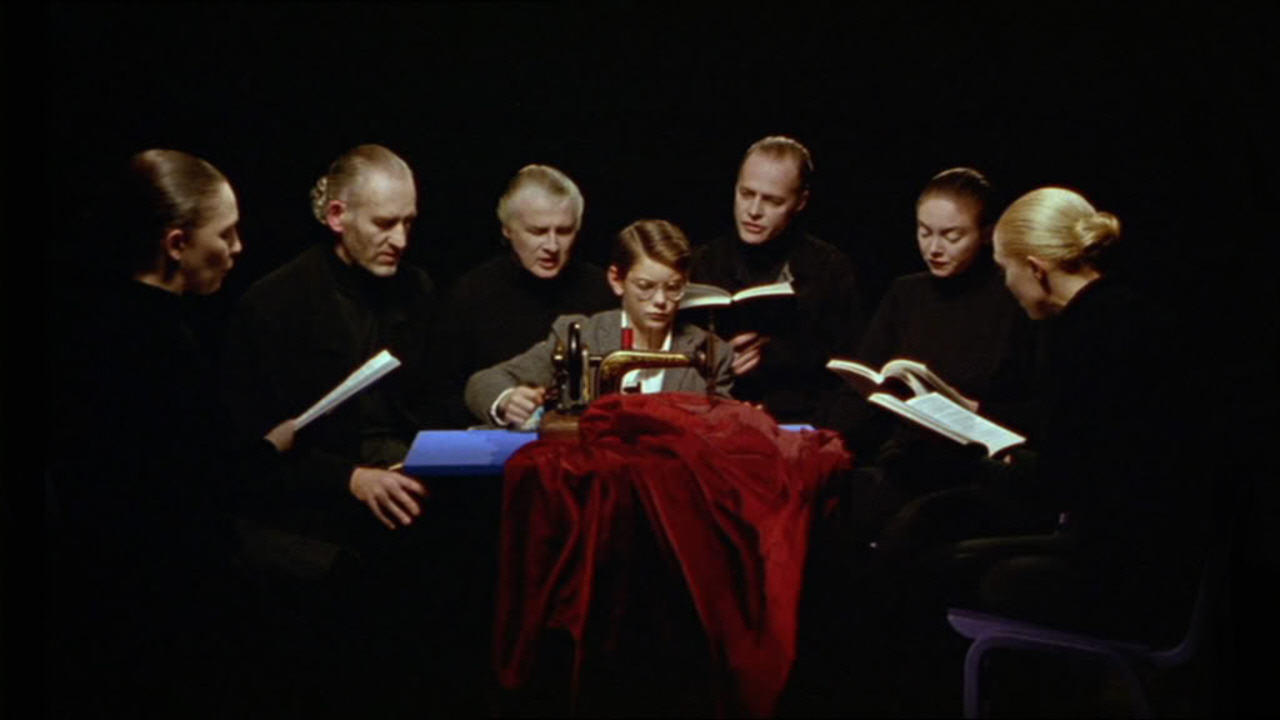
What immediately strikes you about Wittgenstein isn't just the subject matter – a cinematic exploration of the life and thought of one of the 20th century's most formidable and famously difficult philosophers, Ludwig Wittgenstein – but its audacious visual style. Forget realistic period settings. Jarman, ever the punk iconoclast even when tackling highbrow material, presents Wittgenstein's Cambridge, his WWI experiences, and his existential crises on minimalist, stage-like sets. Figures emerge from and recede into pitch blackness, draped in bold, symbolic costumes. It feels less like a traditional biopic and more like a series of philosophical dialogues staged as avant-garde theatre, captured on film.
This wasn't just an aesthetic choice; it was partly born of necessity. Commissioned by Channel 4 as part of a series on philosophers (imagine that getting greenlit today!), the film was made relatively quickly and on a modest budget. Jarman, collaborating with Marxist literary theorist Terry Eagleton (who wrote the initial screenplay) and philosopher Ken Butler, turned constraint into a statement. The black void becomes a canvas for the mind, the primary colours reflecting perhaps the clarity and fundamental nature Wittgenstein sought in language and logic. It’s a bold move that forces you to focus entirely on the characters, their words, and the ideas swirling around them. It’s also pure Jarman – finding beauty and meaning in the stark and unconventional, something he did throughout his career, from Jubilee (1978) to Caravaggio (1986).
### Embodying the Abstract
Bringing Ludwig Wittgenstein to life is no small task. He was a man of intense contradictions: wealthy background yet drawn to simplicity, rigorous logician yet prone to emotional outbursts, homosexual in a repressive era, deeply serious yet capable of surprising absurdity (hence the film's inclusion of a little green Martian as his philosophical interlocutor). Karl Johnson delivers a remarkable performance, capturing Wittgenstein's fierce intellect, his social awkwardness, his tormented spirit, and the sheer exhausting intensity of living inside such a restless mind. He doesn't just recite philosophical concepts; he embodies the struggle behind them. You feel the weight of his quest for meaning, the frustration when language fails him.
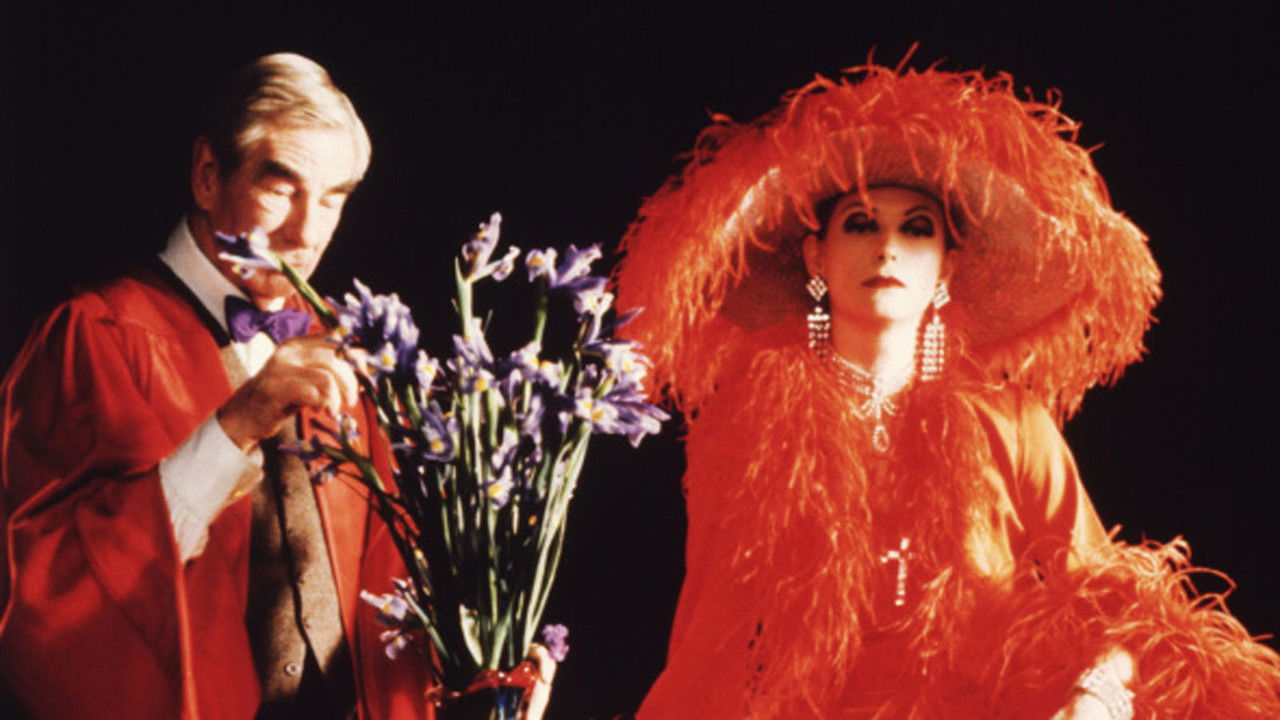
The supporting cast is equally strong, populated by familiar faces from Jarman's cinematic troupe. A luminous Tilda Swinton, already a Jarman regular since Caravaggio, appears as the flamboyant Lady Ottoline Morrell, a burst of aristocratic colour and social energy against Wittgenstein's stark severity. And Michael Gough, memorable from countless films including his turn as Alfred Pennyworth in the Tim Burton Batman series, brings gravitas and a touch of weary wisdom to Bertrand Russell, Wittgenstein's mentor and intellectual sparring partner. Their interactions crackle with the energy of brilliant minds colliding.
### The Jarman Touch: Life on Film's Edge
It's impossible to discuss Wittgenstein without acknowledging the context of its creation. This was one of Derek Jarman's final films, made as he was increasingly ill with AIDS, a battle he documented with characteristic honesty and courage. His penultimate work before the utterly unique Blue (1993) – a film consisting solely of a blue screen and narration – Wittgenstein feels imbued with a certain urgency, a desire to grapple with big questions about life, language, and the limits of understanding. The film's theatricality, its blend of seriousness and playfulness (that Martian!), feels like Jarman distilling his artistic essence.
Some viewers might find the approach distancing or overly stylized, longing for a more conventional narrative. And yes, the philosophical discussions, while simplified for the screen, still demand attention. But the genius lies in how Jarman makes these abstract ideas visual and emotional. The stark sets, the symbolic colours, the intense performances – they create a unique cinematic language perfectly suited to exploring a man who spent his life wrestling with the very nature of language itself. Did you ever stumble upon films like this back in the day, tapes that challenged your expectations of what a movie could be?
### Lasting Impressions
Wittgenstein is not an easy film, nor is it trying to be. It’s a challenging, vibrant, and deeply personal work from a filmmaker who never compromised his vision. It's a biopic that sheds the skin of convention to become something far more resonant: a visual poem about thought, language, and the painful beauty of a brilliant, tormented mind. It asks us to consider how we communicate, what constitutes meaning, and how we represent a life lived wrestling with such fundamental questions. It's the kind of film that might have bewildered some viewers pulling it from the shelf back in '93, but for those willing to engage with its unique wavelength, it offered – and still offers – a rich and unforgettable experience.
Rating: 8/10
Justification: While its highly stylized, theatrical approach and intellectual subject matter might limit its broad appeal, Wittgenstein is a brilliantly conceived and executed piece of art-house cinema. Karl Johnson's central performance is captivating, and Derek Jarman's direction is audacious and visually stunning, turning potential budget limitations into aesthetic strengths. It succeeds remarkably in making complex philosophical struggles feel tangible and emotionally resonant. It's a rewarding watch for those seeking cinema that challenges and provokes.
Final Thought: In an era often defined by formula, Wittgenstein stands as a testament to the power of singular vision – a vibrant, thought-provoking piece that reminds us just how inventive and intellectually stimulating 90s independent cinema could be, even when found on a humble VHS tape. What limits, after all, can truly be placed on understanding?