It begins, as so many transformative encounters do, quite by chance. A glance across Coppelia Park, Havana's famous ice cream parlor. One man chooses strawberry, flamboyant and unconventional; the other, chocolate, staid and conformist. This simple choice, the catalyst for 1993's Strawberry and Chocolate (Fresa y Chocolate), whispers everything we need to know about the collision of worlds about to unfold. This wasn't the typical fare found sandwiched between action blockbusters at the local video store, but discovering it on VHS felt like uncovering a hidden gem, a quiet film with a powerful, beating heart that spoke volumes about connection in the face of division.
An Unlikely Encounter in Havana
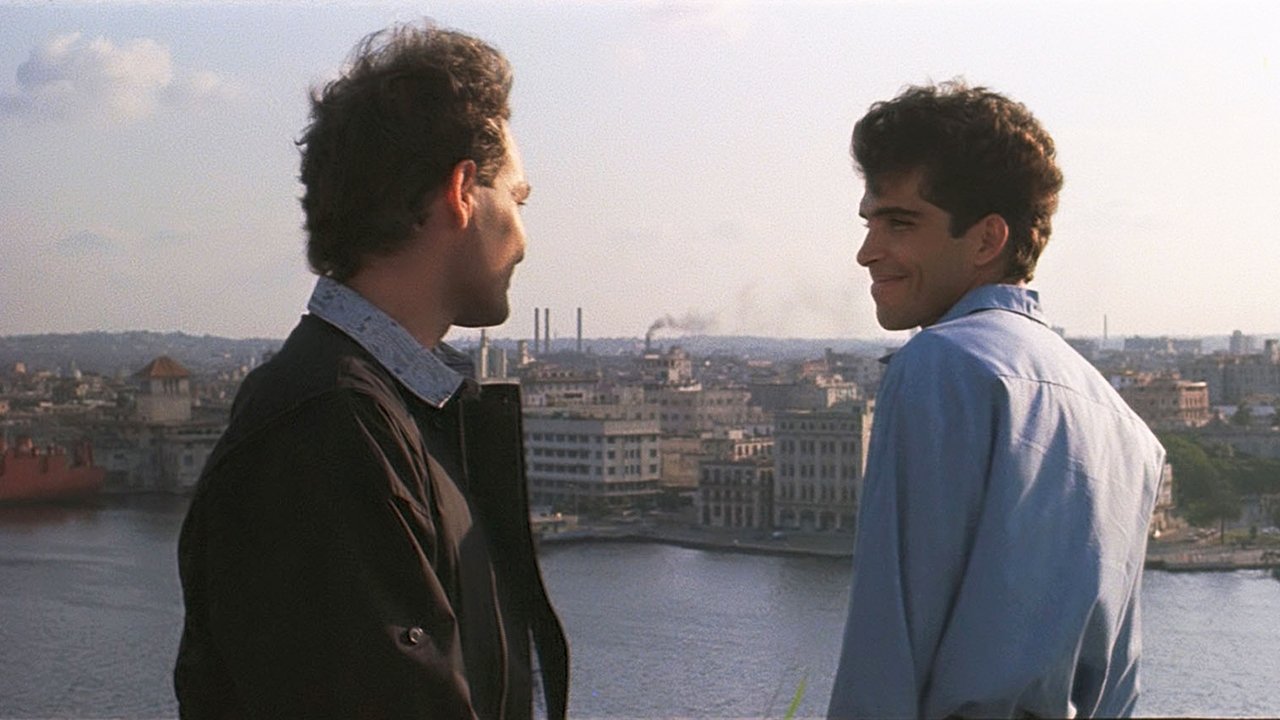
Set in 1979 Havana, the film introduces us to David (Vladimir Cruz), a young, heterosexual university student, fiercely loyal to the Communist regime. His path crosses with Diego (Jorge Perugorría), an older, openly gay artist and intellectual who bristles against the government's restrictions on personal and artistic freedom. Initially, David sees Diego through the lens of state-sanctioned suspicion, even considering reporting him as a potential dissident. Diego, in turn, seems initially drawn to David's youthful beauty. But what starts as a dance of manipulation and mistrust blossoms, haltingly, beautifully, into something far more profound: a genuine, albeit complicated, friendship.
Performance as Revelation

The film rests squarely on the shoulders of its two leads, and their performances are nothing short of magnetic. Jorge Perugorría embodies Diego with a captivating blend of flamboyance, vulnerability, and sharp intelligence. He’s not just a stereotype; he's a fully realized individual yearning for connection and expression in a society that marginalizes him. His apartment, crammed with forbidden books, religious icons, and decadent art, becomes a character in itself – a sanctuary of intellectual freedom. Vladimir Cruz, as David, masterfully portrays the gradual thawing of ideology. You see the initial rigidity melt away, replaced by curiosity, empathy, and finally, genuine affection and respect. His transformation feels earned, a quiet internal revolution sparked by Diego's persistent humanity. We mustn't forget Mirta Ibarra as Nancy, the lonely, middle-aged neighbor who finds solace and understanding in Diego’s unconventional circle; her performance adds another layer of warmth and pathos. The chemistry between the three is palpable, creating moments of humor, tension, and deep emotional resonance.
Beyond the Surface
On the surface, Strawberry and Chocolate is about the tentative friendship between a gay artist and a straight communist student. But beneath that, it’s a deeply moving exploration of tolerance, the importance of art and individual expression, and the courage it takes to bridge ideological divides. Written by Senel Paz, adapting his own short story "The Wolf, The Forest and the New Man," the script navigates these complex themes with nuance and sensitivity. It doesn't shy away from the political realities of Cuba at the time, subtly critiquing the regime's homophobia and repression without resorting to heavy-handed polemics. The film asks us: can genuine human connection transcend political dogma? Can we learn to see the person behind the label?
A Testament to Collaboration
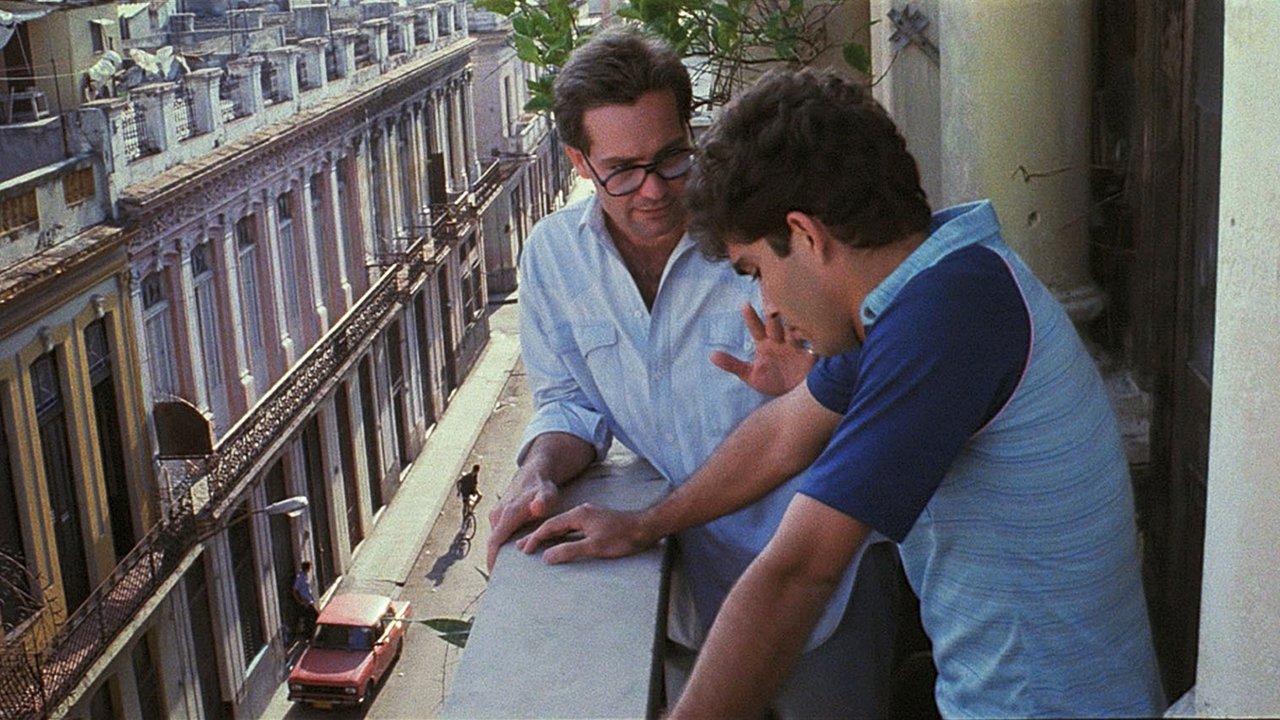
The film's production itself is a story worth telling. Directed initially by the legendary Cuban filmmaker Tomás Gutiérrez Alea (known for Memories of Underdevelopment), his declining health led to Juan Carlos Tabío stepping in to co-direct and complete the picture. This collaboration resulted in a seamless vision, capturing the specific atmosphere of Havana – its faded beauty, its vibrant street life, the underlying tensions. Filming in Cuba during the economically challenging "Special Period" following the collapse of the Soviet Union surely presented unique hurdles, yet the final product feels rich and authentic. It’s a testament to the resourcefulness and passion of Cuban filmmakers. Interestingly, the film’s title isn’t just a metaphor; it literally refers to the ice cream flavors the characters choose at Coppelia, a small detail that immediately signals their opposing outlooks.
A Landmark Achievement
Strawberry and Chocolate achieved remarkable international success, culminating in Cuba's first and only Academy Award nomination for Best Foreign Language Film in 1995. It was a watershed moment, bringing Cuban cinema to global attention and sparking conversations about LGBTQ+ rights and freedom of expression within the country. Its stars, Perugorría and Cruz, became icons. Watching it back then, even on a fuzzy VHS tape rented from the slightly intimidating 'World Cinema' aisle, felt significant. It offered a perspective rarely seen, a human story that resonated far beyond its specific cultural context. It wasn't about flashy effects or car chases; its power lay in the quiet moments, the shared glances, the difficult conversations.
Rating: 9/10
This rating reflects the film's exceptional performances, particularly from Jorge Perugorría, its brave and nuanced exploration of complex themes, and its historical significance as a landmark of Cuban cinema. The direction sensitively balances personal drama with social commentary, creating a deeply affecting and atmospheric piece. While perhaps a touch slow for those accustomed to faster pacing, its deliberate rhythm allows the central relationship and its implications to fully blossom.
Strawberry and Chocolate remains a poignant reminder that empathy and understanding can flourish even in the most restrictive environments. It's a film that stays with you, prompting reflection on the nature of friendship, tolerance, and the enduring power of the human spirit to connect across any divide – a timeless message discovered, for many of us, in the quiet glow of a CRT screen, thanks to a simple plastic cassette.