It arrives not with a bang, but with a weary sigh in a desolate parking lot. Danny DeVito, as the fictional loyalist Bobby Ciaro, waits for his boss, the man whose orbit defined his entire life. That’s how Hoffa (1992) unfolds – not as a straightforward cradle-to-grave biopic, but as a series of potent memories recalled under the shadow of impending doom. It’s a film that feels less like a history lesson and more like an attempt to grapple with the myth and the messy reality of one of 20th century America’s most formidable and mysterious figures: James R. Hoffa. Pulling this tape from the shelf at the video store, you knew you were in for something heavy.
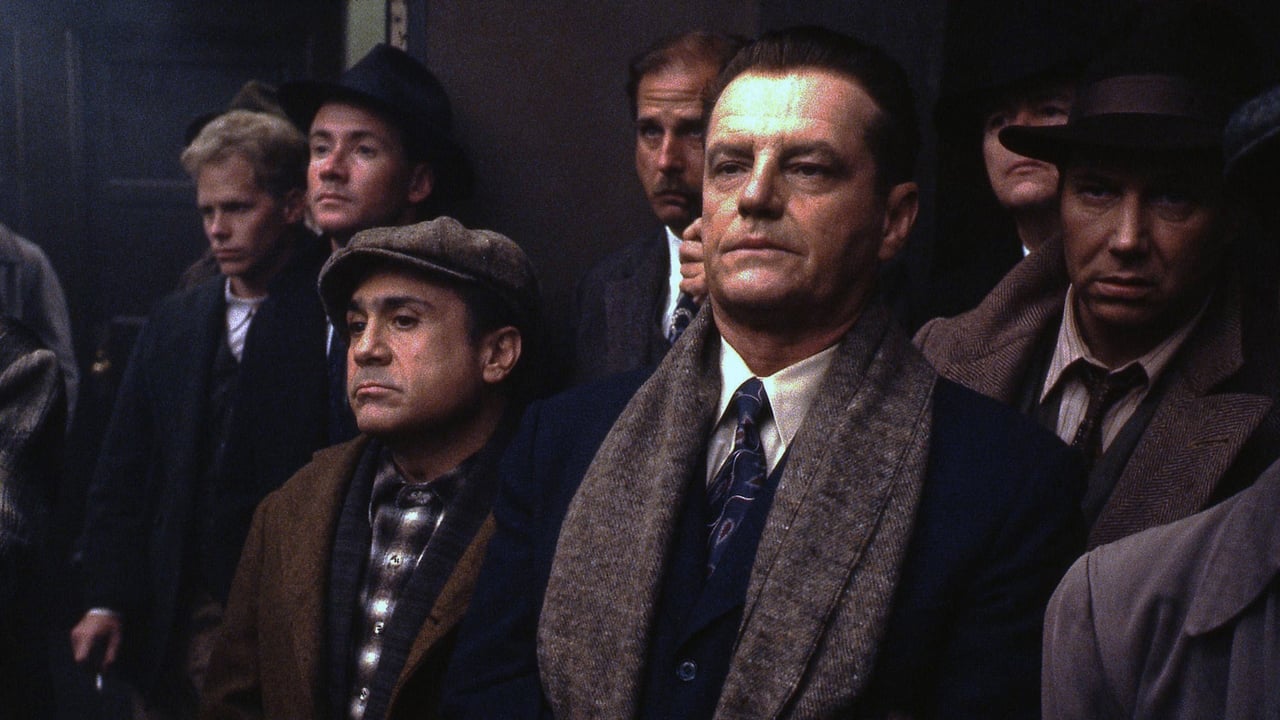
The Weight of a Legend
Tackling Hoffa was never going to be easy. He was a lightning rod – a working-class hero to Teamster members, a corrupt thug to his enemies, a man who wielded immense power and ultimately vanished without a trace. Danny DeVito, stepping behind the camera after the deliciously dark The War of the Roses (1989), aimed for something ambitious, almost operatic. He enlisted the formidable Jack Nicholson, his old compatriot from One Flew Over the Cuckoo's Nest (1975), to embody the man himself. And to shape the narrative, he brought in playwright David Mamet, known for his razor-sharp, often profane dialogue about power and masculinity. An intriguing, if somewhat unconventional, team for a major studio picture.
Nicholson Unleashed
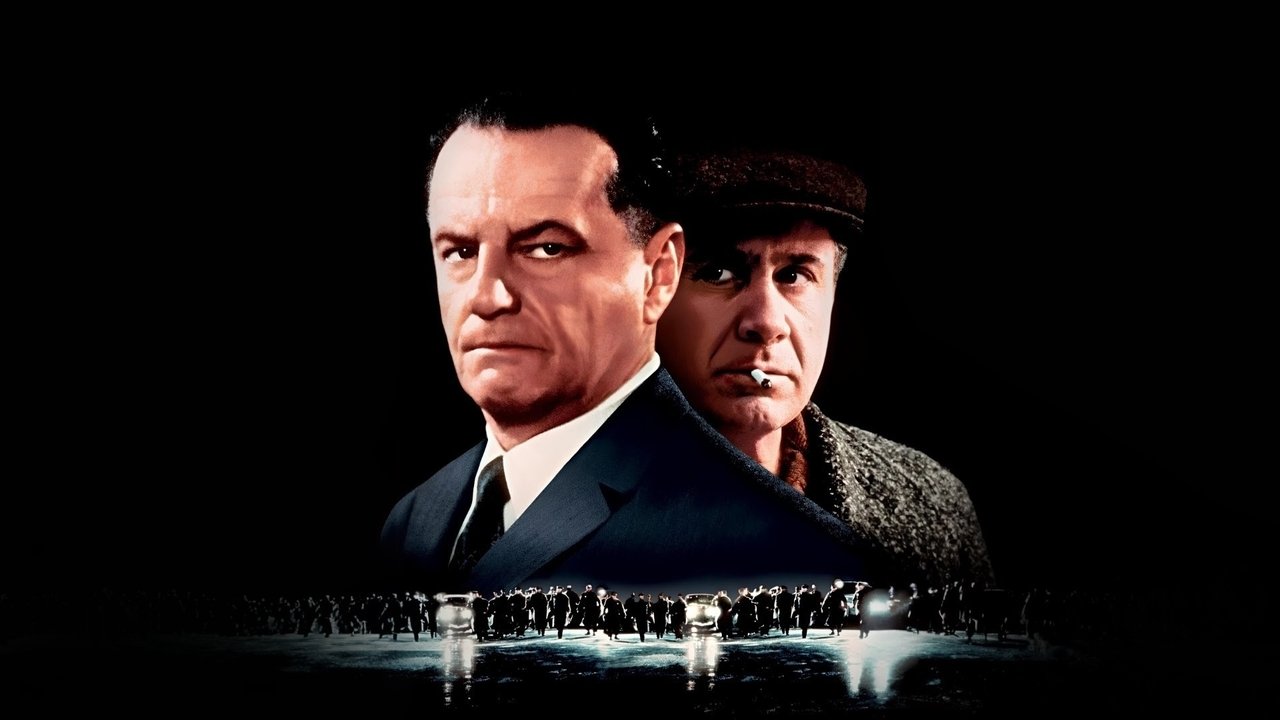
Let's be honest: when you cast Jack Nicholson, you get Jack Nicholson. But in Hoffa, buried under impressive Oscar-nominated makeup and prosthetics (that nose! those teeth!), he delivers something more than just his trademark charismatic menace. He captures Hoffa's volcanic energy, the unwavering self-belief, the genuine connection he could forge with the rank-and-file, and the chilling ruthlessness that simmered just beneath. It’s a performance of immense scale, dominating every frame he’s in. Does it sometimes feel like Nicholson playing Hoffa rather than disappearing completely? Perhaps. But the sheer force of personality feels true to the larger-than-life figure Hoffa cultivated. It’s a magnetic, if not entirely subtle, portrayal of unshakeable conviction curdling into dangerous hubris. Watching him command a union rally or stare down Robert F. Kennedy (played by Kevin Anderson) feels utterly authentic to the power dynamics of the era.
A Friend's Eye View
DeVito’s choice to frame the story through the eyes of Ciaro, his own character, is crucial. Ciaro is the unwavering disciple, the man who sees Hoffa not just as a boss, but as a force of nature, a protector, maybe even a surrogate father. DeVito plays him with a touching, dog-like loyalty that provides the film’s emotional anchor. It’s his Hoffa we see – flawed, volatile, but ultimately deserving of fierce allegiance. This perspective shapes the entire film, making it less an objective account and more a subjective tribute, albeit one aware of the darkness. DeVito the director handles the sprawling timeline – jumping from picket lines to prison yards, from smoky backrooms to gilded hotels – with considerable skill, aided by Stephen H. Burum's evocative, Oscar-nominated cinematography that gives the proceedings a burnished, almost mythic glow.
Mamet's Rhythms, Hoffa's World
David Mamet's script is undeniably Mamet. The dialogue often has that clipped, stylized rhythm, focusing on power plays and coded language. Does it always sound like how people actually talked in union halls or mob sit-downs? Probably not. There are moments where the stylization feels slightly imposed on the historical sweep. Yet, it effectively underscores the film’s central themes: loyalty tested, the corrosive nature of power, the brutal calculus of survival in a world where unions, politics, and organized crime (Armand Assante smolders effectively as mobster Carol D'Allesandro) were deeply intertwined. The script doesn’t shy away from Hoffa’s ruthlessness or his dangerous alliances, but filtered through Ciaro’s devotion, the condemnation is often muted.
Retro Fun Facts: The Making of a Myth
- DeVito had Nicholson in mind from the start; it’s hard to imagine anyone else tackling the role with such bravado back then.
- The film boasted a hefty $35 million budget (around $76 million today), reflecting its epic scope and period detail. Much of it was shot in Pittsburgh, Pennsylvania, convincingly standing in for Detroit and other locales.
- Despite the star power and ambition, Hoffa underperformed at the box office, grossing about $29 million domestically (around $63 million today). Perhaps its dense, morally ambiguous narrative and deliberate pacing weren’t what mainstream audiences were looking for in late 1992.
- The initial critical reception was decidedly mixed. Some lauded the performances and directorial ambition, while others found it emotionally distant or structurally uneven – a debate that continues among fans today.
- DeVito specifically sought out Mamet, believing his unique ear for dialogue could capture the tough, confrontational world Hoffa inhabited.
What Lingers?
Watching Hoffa again after all these years, perhaps on a screen much sharper than the old CRT TV I first saw it on, what strikes me is its unwavering focus. It’s not trying to solve the mystery of Hoffa’s disappearance; it accepts it as the grimly inevitable endpoint of a life lived perpetually on the edge. Instead, it’s fascinated by the nature of the man, the source of his power, and the fierce loyalty he inspired, even as his actions led toward destruction. Does the film fully capture the complexities of the real Jimmy Hoffa? It’s debatable. As Ciaro’s reminiscence, it’s inherently biased, a portrait painted in admiration and regret.
The film might feel a bit cold to some, its episodic structure occasionally hindering momentum. Mamet’s dialogue, while sharp, can sometimes create a barrier rather than an invitation. Yet, there's an undeniable power to Nicholson's performance and a sincerity in DeVito's direction. It feels like a throwback – a big, serious, adult drama built around a complex character, the kind of movie studios seemed more willing to take risks on back in the VHS days. My own worn tape saw quite a few plays; it was the kind of film that demanded attention, even if it left you with more questions than answers.
Rating: 7/10
Hoffa earns its 7 for its sheer ambition, Nicholson's towering central performance, DeVito's committed direction and performance, and its atmospheric recreation of a turbulent era. It’s a flawed but fascinating attempt to wrestle with a legend, anchored by the powerful, if subjective, lens of loyalty. Points are deducted for the slightly detached emotional tone and a script that occasionally prioritizes stylistic flourish over naturalism, potentially keeping the audience at arm's length.
It remains a compelling, if imperfect, slice of 90s filmmaking – a reminder of a time when studios backed challenging stories about difficult men, leaving us to ponder the enigma long after the tape clicked off.