Okay, settle in. Remember that feeling of sliding a fresh tape into the VCR, the whirring sound a promise of escape? Some tapes felt heavier, somehow, imbued with a certain magic even before the previews started. Moonstruck (1987) always felt like one of those tapes. There’s a glow about this film, isn't there? A luminescence that seems to emanate not just from that impossibly large moon hanging over Brooklyn, but from the very heart of its characters. It asks us, gently but persistently, what happens when the life we’ve carefully planned gets beautifully, passionately derailed by… well, by life itself.

Under the Spell of La Luna
From the opening strains of Dean Martin crooning "That's Amore," director Norman Jewison (In the Heat of the Night, Fiddler on the Roof) plunges us into a specific world: the vibrant, chaotic, and deeply interconnected lives of the Castorini family in Brooklyn Heights. The atmosphere is everything here. It’s working-class grit meets operatic grandeur, a place where simmering resentments and unspoken desires bubble just beneath the surface of everyday rituals – making coffee, going to the bakery, visiting the Met. Jewison captures the textures of this life, the tightly knit community, the weight of tradition, but laces it with a kind of heightened, almost magical realism, presided over by that watchful, mischievous moon. It suggests that perhaps, just perhaps, destiny has a hand to play, especially when love is involved.
An Unlikely, Unforgettable Spark

At the center is Loretta Castorini, played by Cher in a performance that rightly earned her an Academy Award. It’s easy to forget, amidst her iconic status, just how nuanced and vulnerable she is here. Loretta is pragmatic, almost resigned, planning a safe, sensible marriage to the pleasant but dull Johnny Cammareri (Danny Aiello). She’s convinced she has bad luck in love and is determined not to make the same mistake twice. But fate, in the form of Johnny’s estranged, tormented younger brother Ronny (Nicolas Cage), has other ideas.
Their first meeting crackles with an intensity that feels both dangerous and inevitable. Nicolas Cage, even then forging his path of fearless eccentricity, is a force of nature as Ronny – brooding, wounded (literally, having lost a hand in a bread-slicer accident he blames on Johnny), and utterly consumed by passion. His famous volcanic monologue about love ("Love don't make things nice… it ruins everything!") is pure Cage, yet it works perfectly within the film’s operatic framework. Cher’s reaction, her grounded practicality warring with an undeniable pull, is magnetic. The chemistry between them is unconventional, almost jarring at first, but utterly believable. It’s not cute; it’s raw, messy, and transformative. And yes, that iconic kitchen scene culminating in "Snap out of it!" remains one of cinema's great moments of romantic intervention.
A Flawless Family Portrait

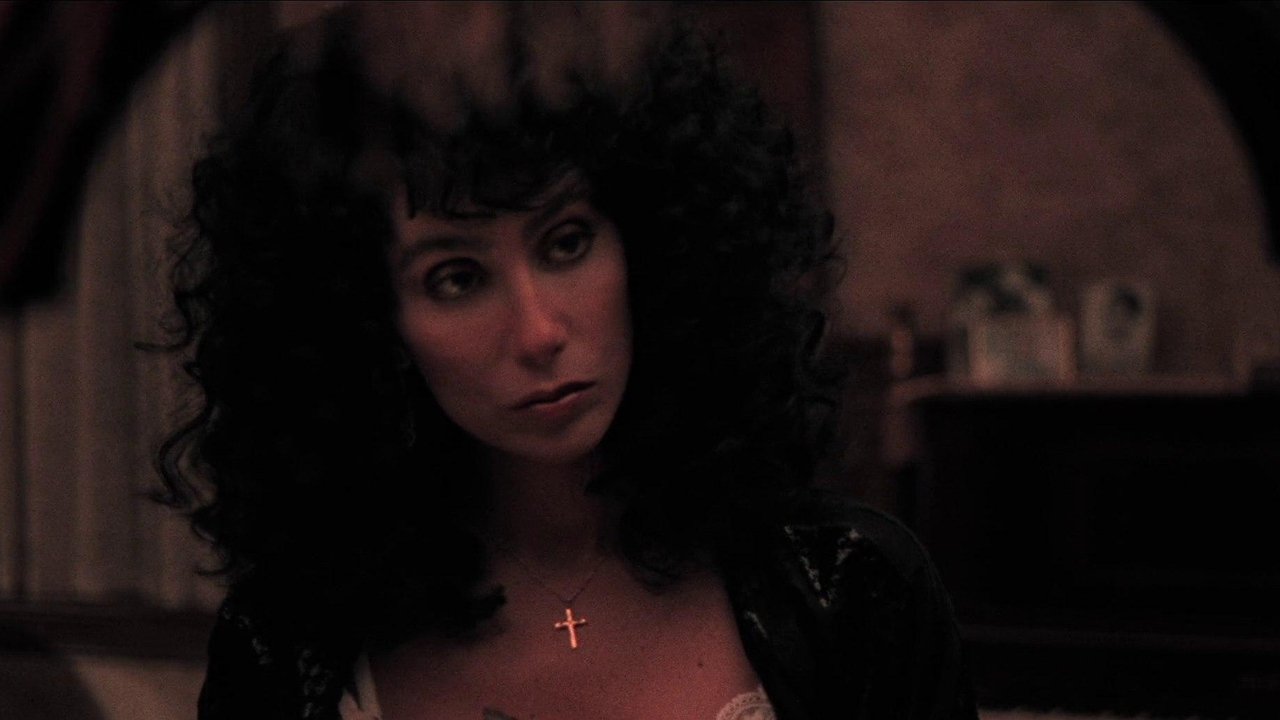
While Cher and Cage provide the fiery core, Moonstruck is truly an ensemble masterpiece. Olympia Dukakis delivered a career-defining, Oscar-winning performance as Rose, Loretta’s wise, weary mother. Her quiet observations about love, fidelity, and why men chase women ("Because they fear death!") are delivered with such wry resignation and profound insight. Watching her navigate her own husband Cosmo's (Vincent Gardenia, also Oscar-nominated) suspected infidelity provides the film's melancholic counterpoint to Loretta's burgeoning passion. Their dynamic, filled with years of shared history and unspoken understanding, feels incredibly authentic. Every member of the extended family, down to the bit players, feels perfectly cast, contributing to the rich tapestry of Italian-American life that John Patrick Shanley's brilliant, Oscar-winning script paints with such affection and wit.
Illuminating the Magic: Retro Fun Facts
It's fascinating how this near-perfect film came together. Shanley reportedly wrote the script listening to Puccini's La Bohème, infusing the everyday drama with operatic scope – a detail that shines through in the characters' grand emotions and the film's climax at the Metropolitan Opera. Cher, initially, wasn't sure she was right for the plain, weary Loretta, thinking herself too glamorous. It took Jewison's conviction to get her onboard, and thank goodness he persisted. He also encouraged Cage's raw, almost feral energy, recognizing it was exactly what the tortured character of Ronny needed. That wooden hand Cage wears? It became an inseparable part of the character's physical and emotional baggage.
Filmed largely on location in Brooklyn Heights (with some interiors shot in Toronto), the sense of place is palpable. You can almost smell the bakery and feel the chill of the New York winter air. Made for around $15 million, Moonstruck became a surprise critical darling and box office smash, pulling in over $80 million domestically – a huge success in 1987/88. Its sweep at the Oscars (Best Actress, Best Supporting Actress, Best Original Screenplay) felt like a coronation, cementing its place in cinematic history. A little side note of trivia: during the Oscar ceremony where Olympia Dukakis won, her cousin, Michael Dukakis, was in the midst of his campaign for President of the United States, making her shout-out "OK, Michael, let's go!" a particularly memorable moment of the era.
The Enduring Glow
Moonstruck is more than just a romantic comedy; it's a film about embracing the messy, unpredictable beauty of life and love. It understands that passion often arrives uninvited, disrupting our carefully laid plans in the most wonderful ways. The performances are stellar across the board, the script is a marvel of wit and heart, and Jewison’s direction perfectly balances the mundane and the magical. It’s funny, moving, and deeply romantic without ever feeling cloying or formulaic. Rewatching it now, it feels both like a product of its time and utterly timeless. It captures a specific cultural milieu but speaks to universal truths about family, commitment, and the risks we take for love.

Rating: 9.5/10
This score reflects the film's near-perfect execution across the board. The screenplay is sharp and insightful, the direction masterful in balancing tone, and the performances – particularly from Cher, Dukakis, and Cage – are unforgettable and award-worthy. It loses perhaps half a point only in the sense that its very specific blend of heightened reality and ethnic focus might not resonate identically with every single viewer, but its craft and heart are undeniable.
Moonstruck remains that rare, precious thing: a truly intelligent, adult romantic comedy that feels like a warm embrace, reminding us that sometimes, the best thing we can do is surrender to the moonlight. What lingers most is that feeling of warmth, of family, and the thrilling possibility that love, in all its crazy, inconvenient glory, might be waiting just around the corner.