There’s a rhythm to it, a terrible, hypnotic cadence. A figure walks, purposeful but unhurried, down a corridor, across a bleak landscape, into an ordinary building. The camera follows, often from behind, a silent, persistent observer. Then, swift, brutal violence erupts, economical and shocking. The figure walks away. And the cycle repeats. This is the stark, unforgettable essence of Alan Clarke’s 1989 television film, Elephant, a piece of cinema that feels less like a story and more like a scar left on the viewer’s memory.
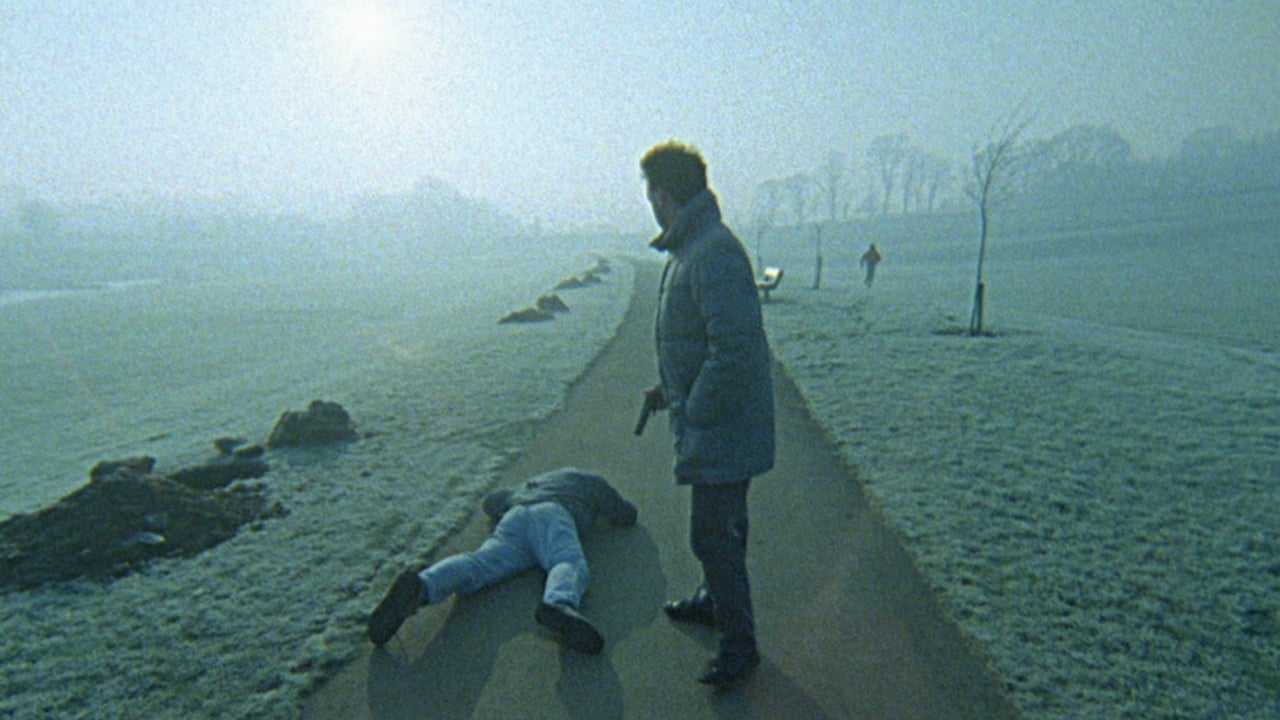
Commissioned by BBC Northern Ireland during the height of the Troubles, Elephant doesn’t offer explanations, context, or character arcs. It presents eighteen sectarian killings, one after another, linked only by the chillingly mundane way they are carried out and the relentless Steadicam work, masterfully handled by operator John Ward, that forces us into the role of disquieting witness. We follow the killers, anonymous men (and they are almost exclusively men), through leisure centres, workplaces, petrol stations, and private homes. We are with them right up until the moment of impact, the sudden blast of gunfire shattering the quiet, before walking away with them, leaving the aftermath often unseen or merely glimpsed.
The Unspoken Terror
What makes Elephant so profoundly disturbing, even decades later, is its deliberate refusal to editorialize or explain. There’s virtually no dialogue. We don’t know the victims or the perpetrators, their affiliations, their motives, their histories. Clarke, a director known for his unflinching gaze on societal friction in works like Scum (1979) and Made in Britain (1982), strips away everything but the act itself. This absence is precisely the point. The title, famously, comes from writer Bernard MacLaverty’s description of the Troubles as “the elephant in our living room” – an enormous, terrifying reality that daily life simply learned to navigate around, to ignore. Clarke puts that elephant centre frame, forcing us to look at the raw, repetitive horror without the comfort of narrative justification.
Does this detachment risk desensitization? It’s a valid question the film forces us to ask. As the killings mount, each staged with a similar cold efficiency, a strange numbness can creep in. Yet, beneath that, there’s a growing sense of dread and profound unease. The repetition doesn't normalize the violence; rather, it underscores its cyclical, almost mechanical nature within the context of the conflict. It suggests how violence, when endemic, can become a grim routine, a task performed with chilling dispassion. The lack of emotional cues from the film itself – no dramatic music, no anguished close-ups held for effect – throws the emotional response entirely back onto the viewer. How do you react when confronted with this, stripped bare?
A Bleak Artifact of its Time
Watching Elephant today, perhaps on a worn VHS transferred copy or a streaming service that thankfully preserves such challenging works, feels like unearthing a particularly bleak time capsule. It aired on BBC television, a stark contrast to the usual programming. This wasn't a tape you’d casually rent for entertainment; it felt more like essential, albeit harrowing, viewing. Its influence has been acknowledged, perhaps most notably by Gus Van Sant, who borrowed the title and aspects of the observational, long-take style for his own 2003 film about a school shooting – another exploration of inexplicable violence.
Shot reportedly in just 20 days, the production itself mirrors the film's stark efficiency. Clarke knew exactly what he wanted: to show the brutal reality without flinching, using the long takes not for aesthetic flourish, but to immerse the viewer in the grim reality of the journey towards violence. There are no heroes or villains here in the conventional sense, only the relentless machinery of conflict grinding individuals into dust. It’s a demanding watch, undoubtedly. Its 39-minute runtime feels far longer, weighed down by the gravity of its subject and the deliberate, unyielding pace.
Lasting Resonance
Elephant doesn't offer easy answers or catharsis. It leaves you with a knot in your stomach and unsettling questions about the nature of violence, observation, and the societal structures that allow such horrors to become almost routine. It’s a powerful example of film as a political and social statement, using the medium not to preach, but to present an unvarnished, deeply uncomfortable truth. Its starkness is its strength, its silence more eloquent than any dialogue could be.
Rating: 9/10
The score reflects the film's undeniable power, masterful execution of its bleak vision, and lasting impact as a piece of confrontational filmmaking, rather than conventional entertainment value. Alan Clarke crafts a chillingly effective portrayal of violence stripped bare, using repetition and detachment not to numb, but to horrify in a profound, lingering way. It perfectly justifies its near-perfect score through its unwavering commitment to its difficult premise and its technical precision in achieving a unique, unforgettable effect.
Elephant remains a vital, if deeply unsettling, piece of British film history – a stark reminder of a painful past, crafted with a brutal honesty that refuses to look away. What lingers most is the silence after each gunshot, pregnant with all the unspoken tragedies of the conflict it depicted.