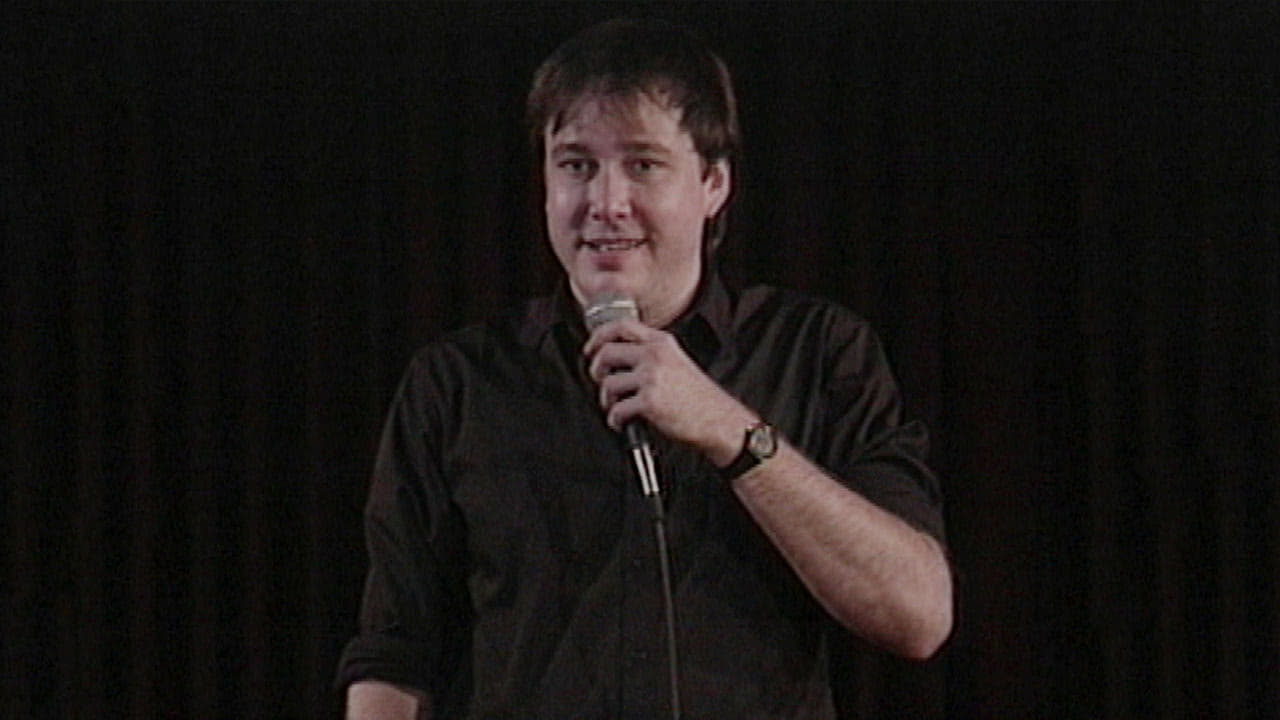
There's an immediate, almost confrontational intimacy to watching Bill Hicks: Sane Man. Even decades later, viewed through the slightly fuzzy lens of memory or maybe an actual worn-out VHS tape, the man radiates a kind of restless energy that feels incredibly potent. Captured live in 1989, this isn't just a comedy special; it feels more like witnessing a raw nerve being exposed, a furious intellect grappling with a world he found baffling, infuriating, and occasionally, darkly hilarious. Forget slick production; this is pure, uncut Hicks, prowling the stage, cigarette often in hand, delivering broadsides that still land with startling force.
From the Austin Sweatbox
Filmed by Kevin Booth, a lifelong friend who understood Hicks implicitly, Sane Man has an wonderfully unpolished, almost bootleg quality that perfectly suits its content. You can practically feel the close, smoky air of the Laff Stop comedy club in Austin, Texas, where this performance was immortalized. There are no elaborate sets or flashy camera moves, just Hicks and his microphone, holding court. Booth’s direction is unobtrusive, letting Bill be Bill. This wasn't about capturing slick perfection; it was about capturing lightning in a bottle, the volatile energy of Hicks live, unfiltered. This raw aesthetic, born partly of necessity (these early specials often operated on shoestring budgets), became part of its charm on VHS – it felt authentic, immediate, like you were crammed into that dark club yourself, witnessing something vital. I distinctly remember the buzz around tapes like this back in the day, passed hand-to-hand, feeling like you were discovering a secret truth-teller the mainstream hadn't yet fully grasped.
More Than Just Jokes
While undeniably funny, reducing Sane Man to mere "jokes" feels inadequate. Hicks wasn't just crafting punchlines; he was dissecting American culture with a scalpel honed by outrage and observation. His routines – legendary bits on anti-intellectualism, the manufactured evils of the war on drugs, the vapidity of advertising ("You do a commercial, you're off the artistic roll call forever."), the hypocrisy he saw in organized religion, and his passionate defense of smokers – were miniature manifestos. He asks questions that linger long after the laughter fades. Is relentless positivity a form of denial? Why do we accept mediocrity in our media and our leaders? What does it mean to truly be "free"? These weren't abstract philosophical points; they were woven into blistering comedic assaults, often punctuated by moments of surprising vulnerability or surreal flights of fancy (like his famous "positive drug stories" bit).
The Power of Presence
What truly elevates Sane Man is Bill Hicks himself. His stage presence is magnetic. He uses his physicality – the pacing, the intense stares, the sudden shifts in volume and tone – as instruments alongside his words. There's a rhythm to his delivery, building tension, releasing it with a perfectly timed punchline or a moment of shocking clarity. He could be confrontational, yes, but there was always an underlying intelligence, a plea for critical thinking. You never felt he was just being angry for anger's sake; the fury stemmed from a deep disappointment in humanity's potential versus its reality. Watching him, you see the comedian as social critic, as philosopher, as a rock-and-roll shaman exorcising demons – both personal and collective. It's a performance of startling authenticity, one that feels less like an act and more like eavesdropping on a brilliant mind working itself out in real-time. It's easy to see why he became such a touchstone for later generations of comics seeking more substance than mere observation.
Legacy on Magnetic Tape
Viewed today, some references naturally feel dated – the specific political figures or pop culture ephemera of the late 80s. Yet, the core message, the righteous anger at ignorance and manipulation, feels unnervingly relevant. Sane Man wasn't Hicks' most polished work – later specials like Relentless (1992) and Revelations (1993) would feature tighter sets and larger venues – but it captures a crucial moment in his evolution. It's raw, hungry, and bursting with the ideas that would define his tragically short career. For many of us who discovered him via worn VHS copies, Sane Man remains the quintessential Hicks document – the furious prophet railing against the dying of the light, daring us to wake up and think for ourselves. Does his relentless challenging of the status quo still hold power? Absolutely.
Rating: 9/10
This rating reflects the sheer, undiluted power of Hicks' performance and the enduring relevance of his core message. It’s not technically perfect filmmaking, but its raw energy and intellectual honesty make it a landmark piece of stand-up history. It's a vital snapshot of a comedian operating at peak intensity, just before wider fame beckoned.
Sane Man isn't just funny; it's necessary. It leaves you thinking, questioning, and maybe just a little bit angrier – in the best possible way. What higher compliment can you pay a comedian?