Here we go, another spin in the VCR time machine, landing squarely in 1988. Tonight's feature isn't the usual car-chase extravaganza or synth-heavy sci-fi epic, but something altogether different, yet still unmistakably a product of its time and starring one of the era's most charismatic European icons: Claude Lelouch's Itinerary of a Spoiled Child (original title: Itinéraire d'un enfant gâté). There's a certain weight to this film, a quiet melancholy that settles in long after the evocative theme music by Francis Lai fades. It asks something profound: what happens when the man who seemingly has everything decides he has nothing left to lose, except perhaps himself?

A Journey Beyond the Horizon
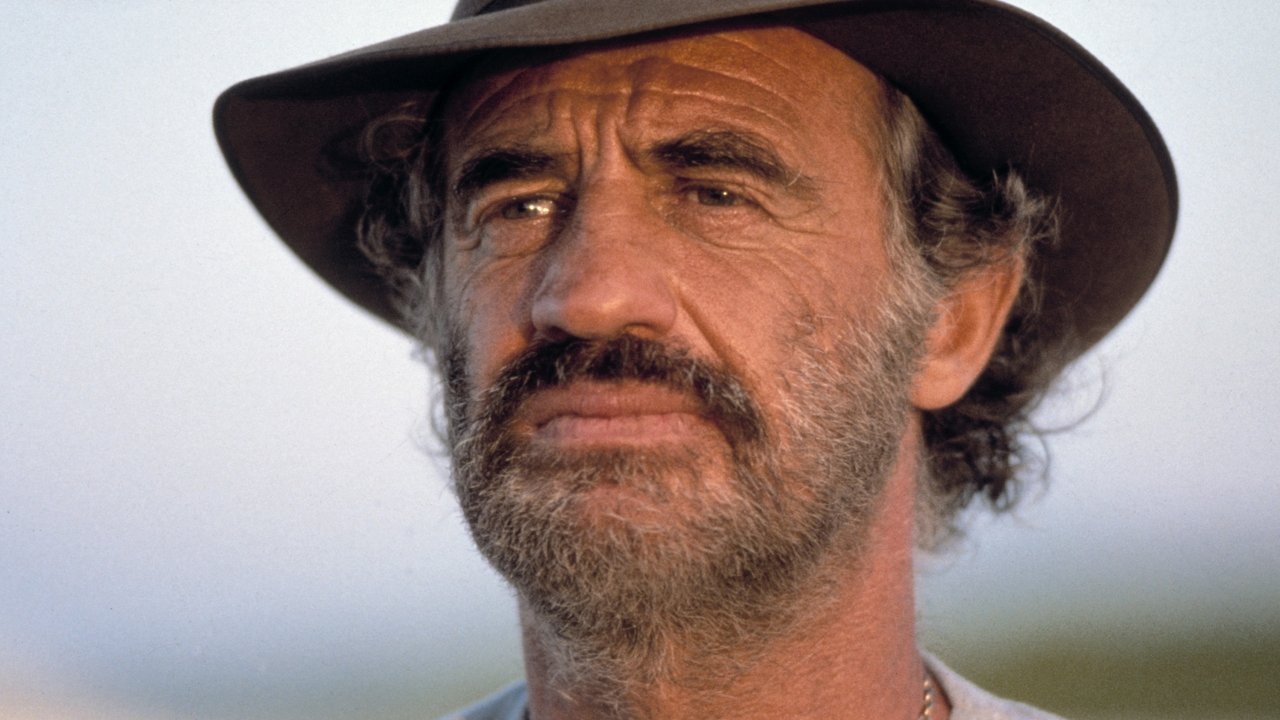
The film introduces us to Sam Lion, played by the legendary Jean-Paul Belmondo in a role that feels both familiar and startlingly new. We know Belmondo as the effortlessly cool action hero, the rogue with a twinkle in his eye from films like Breathless (1960) or The Professional (1981). Here, at 55, that charisma is still present, but it's weathered, layered with the fatigue of a life lived perhaps too fully, too fast. Sam is a former circus performer who built a global cleaning empire from scratch, a self-made man burdened by success. Overwhelmed and disillusioned, he orchestrates his own disappearance, faking his death at sea to escape the crushing weight of his own legacy. It's a dramatic premise, one that could easily veer into melodrama, but Lelouch, ever the observer of human caprice and connection, steers it towards introspection.
The early scenes establishing Sam's empire and his decision feel almost dreamlike, punctuated by Lai's wistful score. Lelouch, known for his fluid camera work and knack for capturing spontaneous moments (often favouring improvisation over rigid scripting), gives these sequences a sense of lived-in reality, even amidst the grandeur of Sam's life. We see the world through Sam's tired eyes – the boardrooms, the strained family dynamics, the hollow applause. His escape isn't just geographical; it's existential. Seeing him sail off alone, leaving behind a manufactured corporate identity, resonates with a certain fantasy many might harbor – the ultimate reset button.
An Unlikely Kinship Under the African Sun
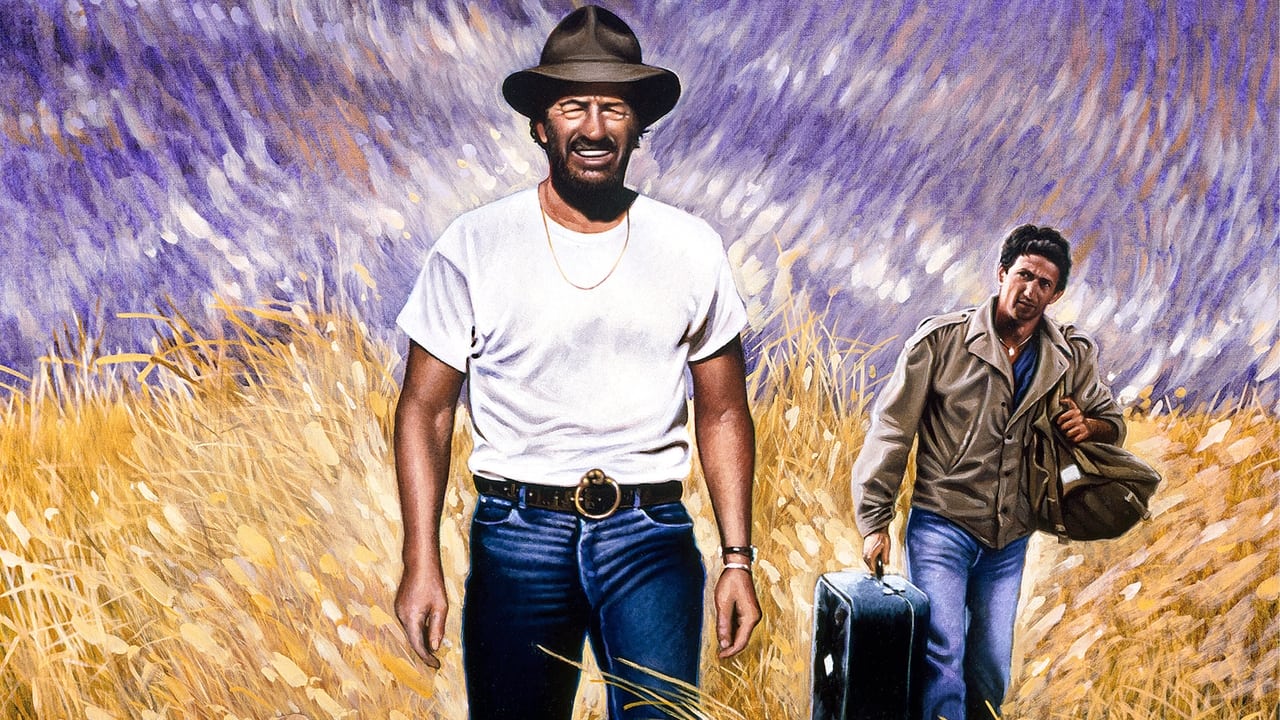
The film truly finds its heart when the 'disappeared' Sam, now adrift in Africa under an assumed identity, crosses paths with Albert Duvivier, portrayed with nervous energy and touching vulnerability by Richard Anconina. Albert is a former employee of Sam's company, recently fired and trying to find his footing. Their chance encounter, and the subsequent mentorship that develops as Sam takes Albert under his wing, forms the emotional core. It's here that Belmondo truly shines. He sheds the action-hero bravado for something quieter, more paternal. The easy chemistry between him and Anconina (who previously won a César for Lelouch's gritty Tchao Pantin (1983)) feels authentic, a meeting of two lost souls finding unexpected solace in each other.
There's a beautiful irony in Sam teaching Albert the very business principles he himself fled. Is he trying to create a successor, relive his past successes vicariously, or simply find connection in his self-imposed exile? The film doesn't offer easy answers. Instead, it lets us watch these two men navigate their complex relationship against stunning backdrops, from the spray of Victoria Falls in Zimbabwe to the bustling streets of Cologne and the serene beauty of Tahiti. The extensive location shooting wasn't just for show; it grounds Sam's journey in a tangible reality, making his escape feel vast and consequential.

Belmondo's Triumph, Lelouch's Touch
This film marked a significant moment for Jean-Paul Belmondo. It earned him the César Award (France's Oscar equivalent) for Best Actor – his only competitive win. In a move as iconoclastic as some of his characters, Belmondo famously refused the award. The story goes that he held a long-standing disapproval of the trophy's sculptor, César Baldaccini, who had apparently slighted Belmondo's own father, Paul Belmondo, a respected sculptor himself. Trivia like this reminds us of the personalities behind these films, adding another layer to our appreciation. But award or no award, his performance here is a masterclass in nuance, conveying volumes with a weary smile or a haunted look in his eyes. It felt like a deliberate shift, proving his dramatic depth beyond doubt.
Lelouch's signature style is evident throughout – the long takes, the naturalistic dialogue, the focus on fleeting moments of connection. He seems less interested in plot mechanics than in capturing the emotional truth of his characters. Some might find the pacing leisurely, particularly viewers accustomed to tighter Hollywood narratives, but it allows the themes of regret, identity, and the search for meaning to breathe. This wasn't just another star vehicle; it felt personal for Lelouch too, echoing themes of fate and reinvention present in much of his work, perhaps even touching on aspects of his own life journey. The film was a major success in France, drawing over 3 million viewers – a testament to its resonance with audiences who perhaps saw a reflection of their own desires for escape or second chances.
The Lasting Echo
Watching Itinerary of a Spoiled Child today, perhaps on a well-worn VHS tape pulled from the back of the shelf, evokes a particular kind of nostalgia. It’s not just for Belmondo in his prime or the distinct feel of late-80s European cinema, but for a type of filmmaking that prioritizes character and mood over spectacle. It’s a film that lingers, prompting questions about what truly constitutes a life well-lived. Can you ever truly escape who you are? And what value does success hold if it brings isolation?

The film isn't flawless; its episodic nature might frustrate some, and the ending leaves certain threads deliberately unresolved. But its strengths – the magnificent central performances, Lai's unforgettable score, Lelouch's empathetic direction, and its thoughtful exploration of life's second acts – far outweigh any minor quibbles. It's a reminder that sometimes the most compelling journeys are the internal ones.
Rating: 8/10
This score reflects the film's powerful performances, particularly Belmondo's career-defining dramatic turn, Lelouch's distinctive directorial vision, and its moving exploration of profound themes. While the pacing might not suit all tastes, its emotional depth and beautiful execution make it a standout. It’s a film that rewards patience, offering a rich, reflective experience that feels both uniquely French and universally human. What stays with you most isn't the plot, but the quiet wisdom in Belmondo's gaze, a man who ran away from everything only to find himself.