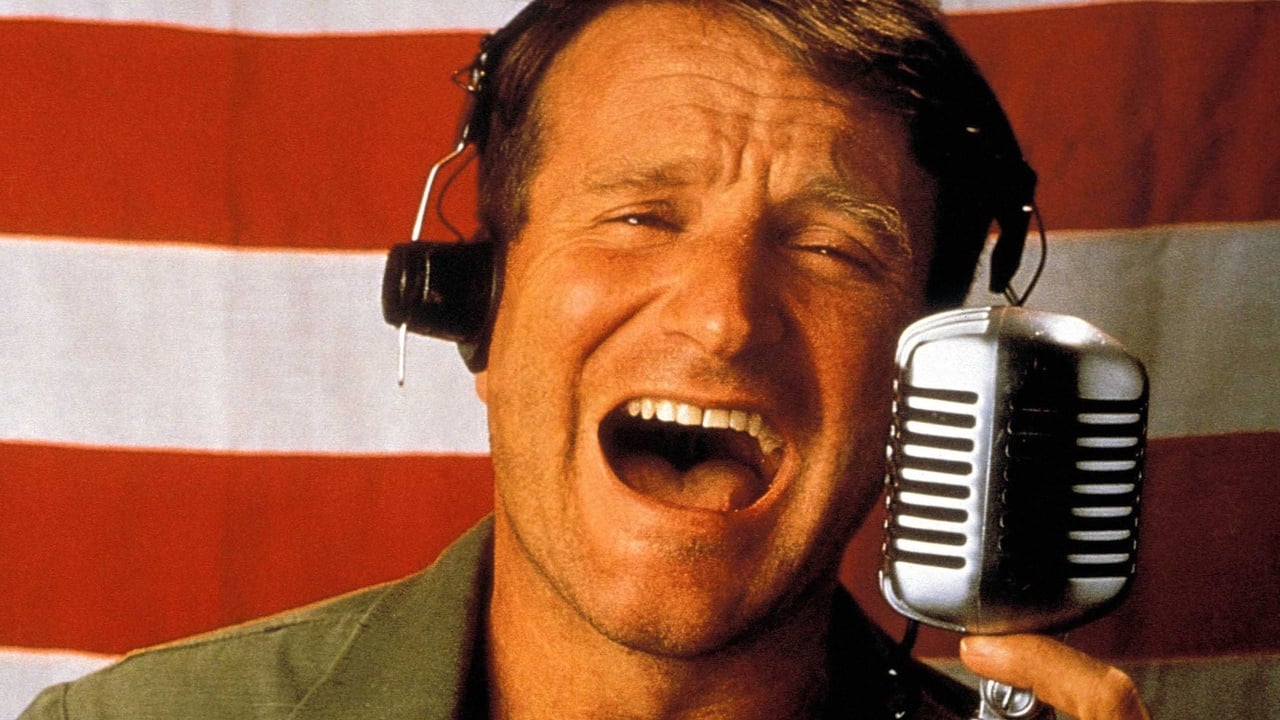
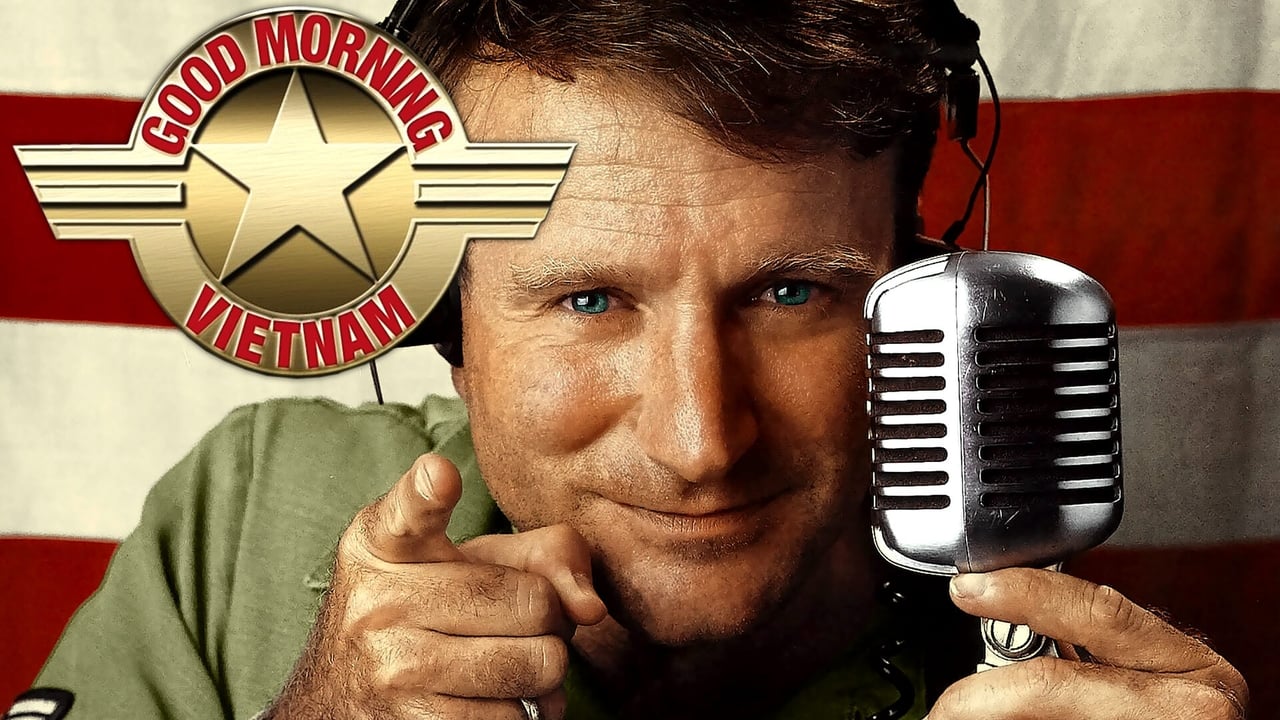
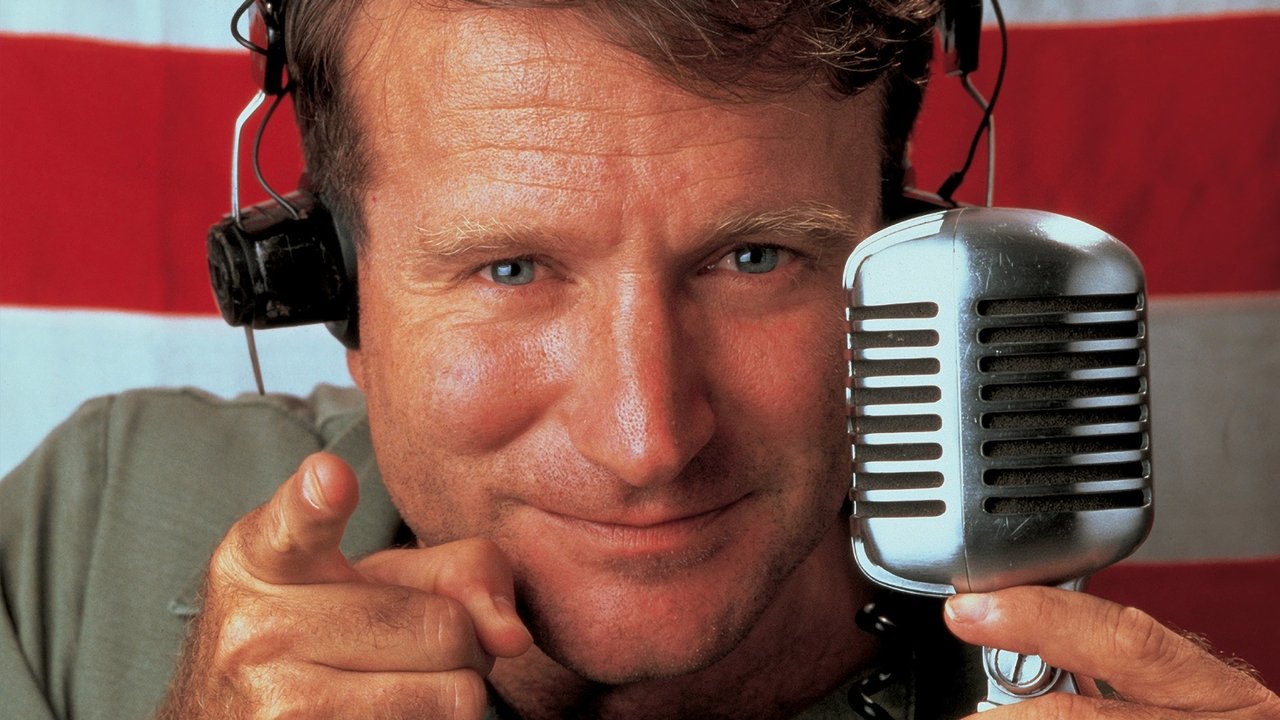
It erupts from the speakers, a sonic boom cutting through the humid Saigon air and the static conformity of military radio: "GOOOOOOOOD MORNING, VIETNAM!" That iconic, explosive greeting isn't just the film's title; it's the sound of a force of nature unleashed, the whirlwind arrival of Adrian Cronauer, as channeled through the singular, incandescent energy of Robin Williams. Watching Good Morning, Vietnam again, decades after first sliding that tape into the VCR, the power of that performance, and the delicate tightrope the film walks, feels just as potent, perhaps even more poignant now.
A Hurricane Named Cronauer
At its heart, the film, directed with a sensitive touch by Barry Levinson (who gave us the fantastic Baltimore stories Diner (1982) and Tin Men (1987) around the same time), is about the collision between individuality and institutional rigidity, set against the increasingly grim backdrop of the Vietnam War in 1965. Williams is Cronauer, an Air Force DJ flown in to inject some life into the Armed Forces Radio Service. And inject he does – with manic impressions, irreverent humor, and a rock 'n' roll soundtrack that sends the staid military brass (personified perfectly by J.T. Walsh as Sgt. Major Dickerson and Bruno Kirby as the clueless Lt. Hauk) into fits of apoplexy.
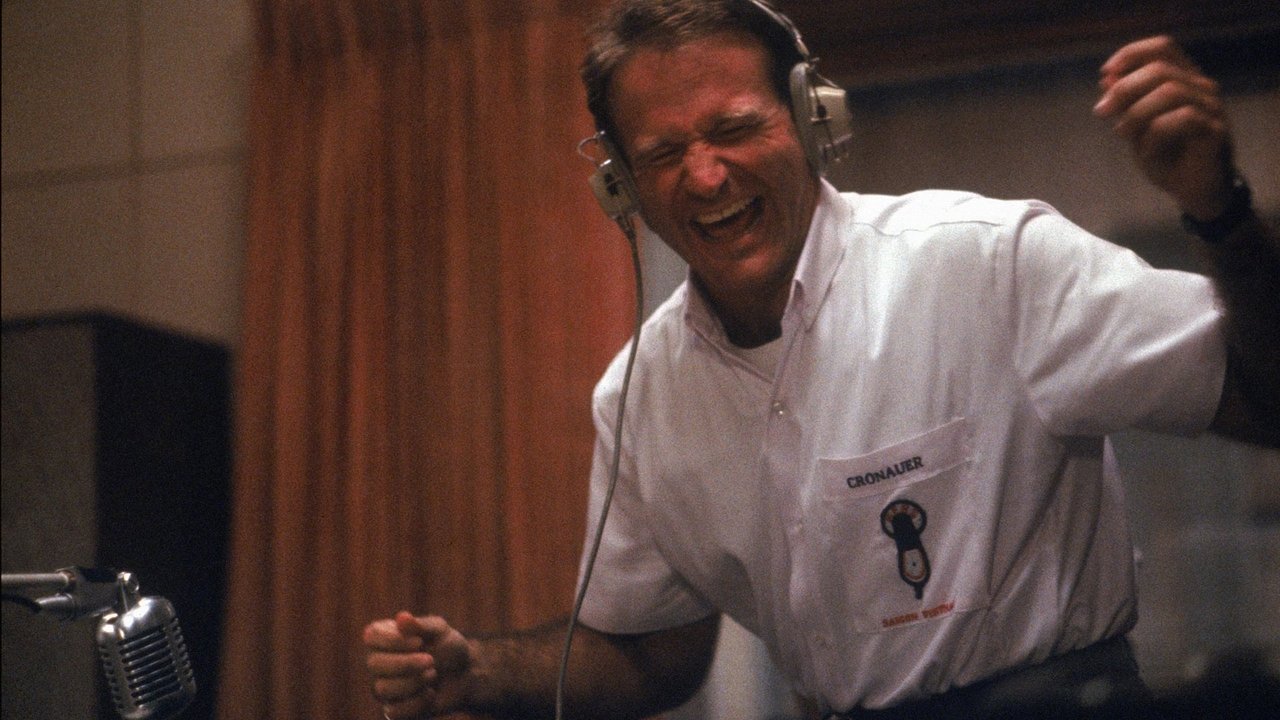
What remains astonishing is how much of Williams' on-air segments were improvised. Levinson reportedly just let the cameras roll, capturing comedic lightning in a bottle. It's pure, uncut Williams – a cascade of voices, jokes, and riffs that feel genuinely spontaneous and electrifying. This wasn't just acting; it felt like witnessing a brilliant mind firing on all cylinders. It’s fascinating to note that the real Adrian Cronauer, while indeed a popular DJ who bucked some authority, was reportedly nowhere near the anti-establishment volcano Williams portrayed. The filmmakers took the core idea and amplified it, creating a character perfectly suited to Williams' unique talents, a decision that undoubtedly propelled the film's success. Costing a relatively modest $13 million, it became a massive hit, pulling in nearly $124 million at the box office (that's around $330 million in today's money!), proving audiences were hungry for this blend of laughter and reality.
Beneath the Laughter, a Growing Unease
But Good Morning, Vietnam isn't just a showcase for Williams' comedic genius. It’s the moments outside the broadcast booth that give the film its enduring weight. Cronauer’s friendship with the earnest, kind Private Edward Garlick, played with lovely understatement by a young Forest Whitaker, provides a human anchor amidst the chaos. His pursuit of Trinh (Chantal nonspecific Vietnamese last name here), a Vietnamese woman, and his subsequent friendship with her brother Tuan (Tung Thanh Tran) opens Cronauer's eyes – and ours – to the complexities and dangers lurking just beyond the official military narrative.
Levinson masterfully navigates the film's tonal shifts. One minute we're laughing hysterically at Cronauer’s antics, the next we're confronted with the sudden, brutal reality of the conflict – a bombing at a GI bar, the palpable tension in the streets, Tuan's hidden life. The film doesn't shy away from the ugliness, but filters it through Cronauer's dawning awareness. Filming in Bangkok, Thailand, to convincingly double for Saigon, Levinson uses the vibrant, chaotic street life and the ever-present military presence to create a specific, immersive atmosphere. The juxtaposition of upbeat period rock songs like Martha Reeves & The Vandellas' "Nowhere to Run" against scenes of military convoys or simmering tension is incredibly effective, contributing to a soundtrack album that became almost as iconic as the film itself.
The Echoes of Improvisation and Reality
The film wisely avoids easy answers. Cronauer isn't presented as a flawless hero; his initial motivations are largely self-serving, focused on meeting girls and shaking things up. His evolution feels earned, driven by his personal connections and his confrontation with the truths the military machine tries to suppress. Doesn't this journey resonate? How often do we find our perspectives shifted not by grand pronouncements, but by personal encounters that challenge our assumptions?
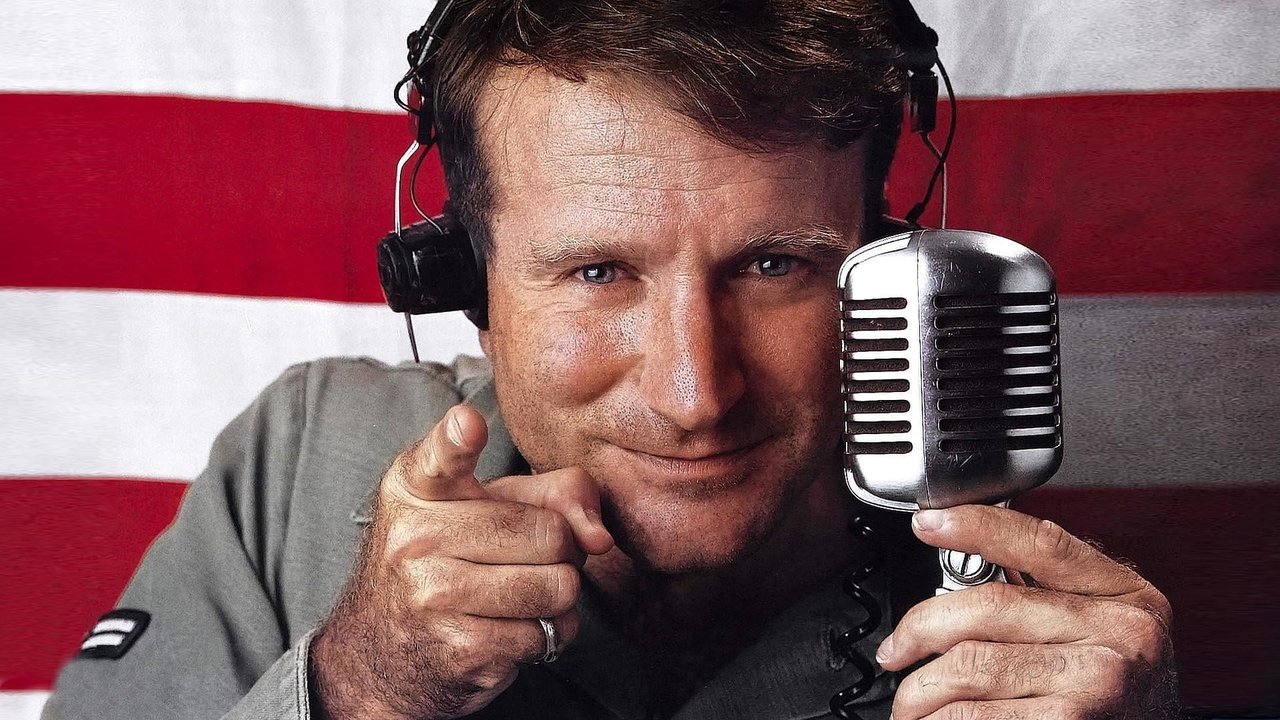
Williams' performance earned him a well-deserved Academy Award nomination for Best Actor. It was a role that allowed him to unleash his comedic persona but also demanded vulnerability and dramatic depth, showcasing a range many hadn't fully appreciated before. Watching him navigate Cronauer’s arc – from brash entertainer to someone grappling with the moral ambiguities of his situation – is captivating. There's a profound sadness flickering beneath the manic energy, a sense that the laughter is both a weapon and a shield against encroaching darkness.
Rating: 8.5/10
This score reflects the film's powerhouse central performance, its masterful handling of tricky tonal shifts, and its intelligent exploration of humor and truth amidst the tragedy of war. Williams is simply unforgettable, carrying the film with an energy that leaps off the screen even today. The supporting cast, particularly Whitaker and Tran, provide crucial emotional grounding. While perhaps some elements of the plot feel a touch simplified by modern standards, Levinson’s direction ensures the core message and emotional impact remain strong. It successfully uses comedy not to diminish the seriousness of the setting, but to highlight the human need for connection and honesty, even – perhaps especially – in the darkest of times.
Good Morning, Vietnam remains more than just a "Robin Williams movie." It's a snapshot of a specific time and place, crackling with energy, laughter, and an undercurrent of sorrow. It lingers, much like Cronauer's voice over the airwaves, asking us what role humor plays when facing the unthinkable, and reminding us of the individual sparks that can illuminate even the most oppressive environments.