Okay, fellow tape travelers, let’s rewind to a time when the final frontier felt tantalizingly close, achievable even with a summer camp T-shirt and a can-do attitude. Imagine popping that well-worn cassette into the VCR, the satisfying clunk echoing as the screen flickered to life, promising an adventure that tapped right into that universal kid-dream: going to space. For many of us, 1986's SpaceCamp was exactly that gateway drug to orbital fantasies, even if its journey to our screens was shadowed by events far more sobering than anything depicted on film.
### Summer Camp, Zero G Style
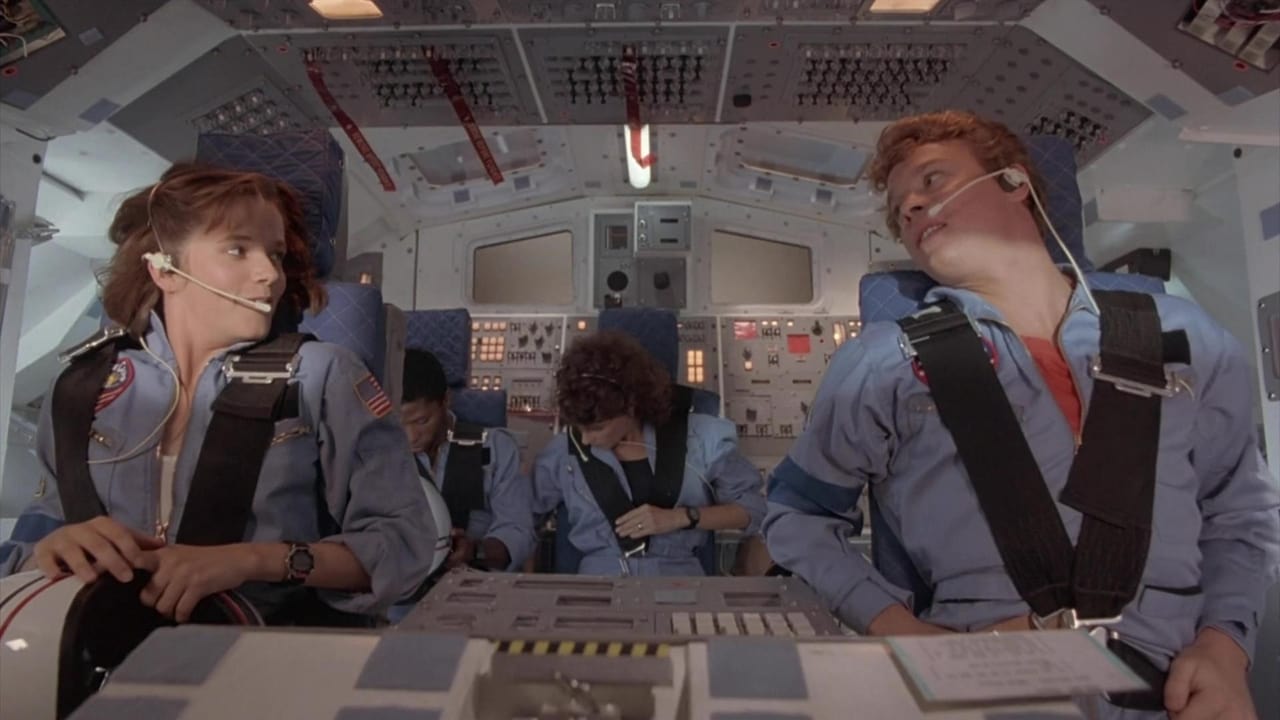
The premise itself is pure wish-fulfillment catnip. Forget mosquito bites and lanyard weaving; the US Space & Rocket Center in Huntsville, Alabama (yes, they really filmed there!) offered a summer program where eager teens could simulate astronaut training. Our diverse crew includes the driven Kathryn (Lea Thompson, fresh off her iconic role as Lorraine Baines in 1985's Back to the Future), the cool-girl aspiring pilot Tish (Kelly Preston, radiating effortless 80s charm), the enthusiastic Rudy, the intelligent Kevin, and the youngest, Max (Joaquin Phoenix, then credited as Leaf Phoenix, in one of his earliest screen appearances).
Leading this band of hopefuls is Andie Bergstrom (Kate Capshaw, who audiences knew from Indiana Jones and the Temple of Doom two years prior), a dedicated astronaut frustrated by mission delays but passionate about inspiring the next generation. Overseeing them is her husband, NASA veteran Tom (Tom Skerritt). The setup hums with the optimistic energy of the era – kids learning about shuttle systems, experiencing centrifuge G-forces, and dreaming of touching the stars. Director Harry Winer captures this initial phase with a bright, hopeful lens, establishing the bonds and aspirations of the group before things take an unexpected turn.
### "Prepare for Launch... Wait, Really?"
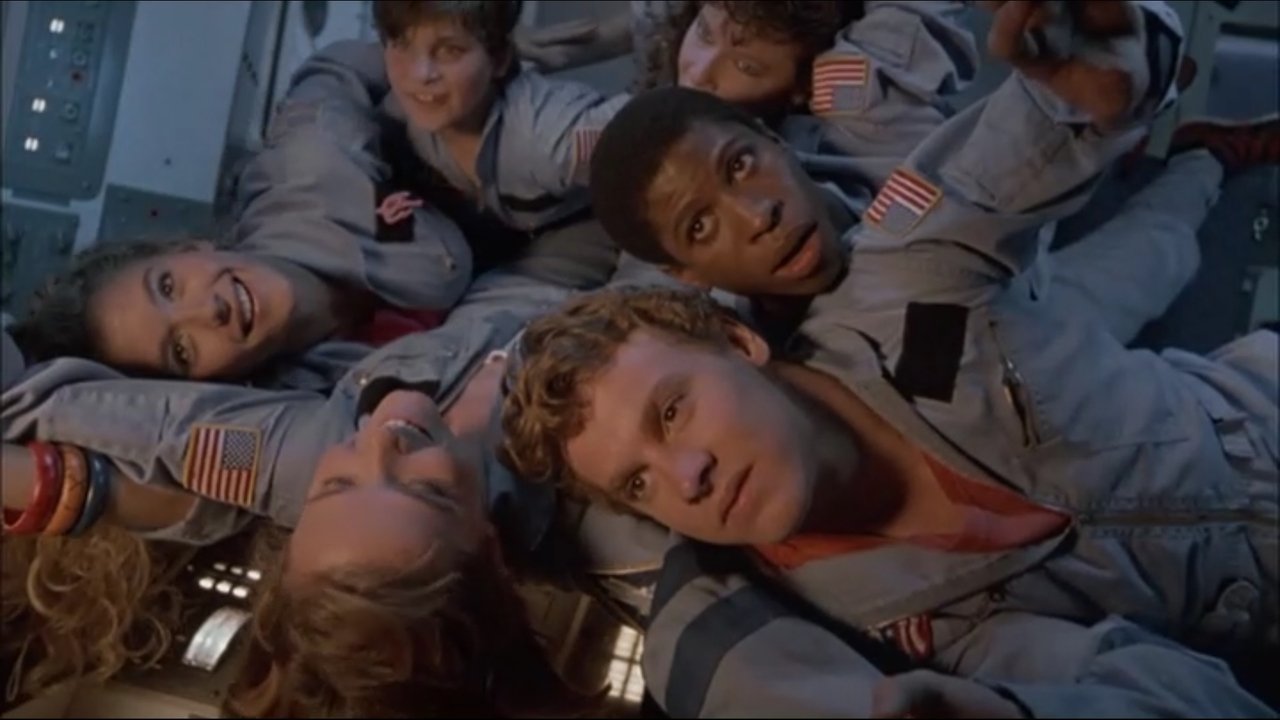
The film’s narrative heart kicks in thanks to a well-meaning (if slightly malfunctioning) robot named Jinx and a critical thermal curtain failure aboard the shuttle Atlantis during an engine test... with our young campers and Andie strapped inside for the 'thrill'. What was supposed to be a static demonstration suddenly becomes terrifyingly real as they are accidentally launched into orbit. Penned by Clifford Green, Casey T. Mitchell, and Larry B. Williams, the script pivots from training montage to high-stakes survival thriller.
Suddenly, the simulations are over. Oxygen is limited, communication is patchy, and these kids, guided by a reluctant Andie who never actually wanted to go up under these circumstances, have to apply everything they learned (and then some) to stay alive and figure out a way home. This is where SpaceCamp truly shines for its target audience – watching relatable teens forced to become heroes, pooling their knowledge, overcoming fears, and working together under unimaginable pressure. Remember the tension of trying to secure that extra oxygen tank from the unfinished space station? It felt genuinely perilous watching it on a fuzzy CRT back in the day.
### A Film Shadowed by Tragedy
Now, we can't talk about SpaceCamp without addressing the heartbreaking context surrounding its release. Filmed with NASA's cooperation and intended as an inspiring family adventure, its planned summer 1986 debut fell just months after the devastating Space Shuttle Challenger disaster on January 28th. Understandably, the public appetite for a movie depicting astronauts (even fictional teens) in peril was significantly dampened.
The studio, 20th Century Fox, delayed the release from June to August, but the shadow remained. Costing around $18 million, the film ultimately grossed less than $10 million domestically – a commercial disappointment directly attributable to tragic timing. It’s a poignant example of how real-world events can profoundly impact a film's reception, regardless of its own merits. Watching it now, knowing this history, adds a layer of bittersweetness to its earnest optimism. Interestingly, despite the box office struggles, initial audience scores reported via CinemaScore were actually quite positive (a "B+"), suggesting those who did see it often enjoyed the ride.
### Practical Effects and 80s Earnestness
Visually, SpaceCamp is a product of its time. The space sequences rely heavily on model work, wire work, and practical effects to simulate zero gravity. While perhaps not as seamless as modern CGI, there's a tangible quality to these effects that holds a certain charm. The shots inside the shuttle cockpit, the spacewalks, the looming presence of Earth outside the windows – it all felt impressively real to young eyes glued to the screen. The design of the shuttle interior, the spacesuits, and even the lovable, slightly clunky robot Jinx, all scream mid-80s tech-optimism.
The performances match the film's earnest tone. Lea Thompson brings a relatable determination to Kathryn, while Kelly Preston embodies effortless cool, even in zero G. Kate Capshaw effectively portrays Andie's journey from frustrated instructor to capable commander, grappling with her own stalled ambitions while trying to keep everyone alive. And seeing a very young Joaquin Phoenix as the overly enthusiastic Max, whose eagerness inadvertently contributes to their predicament, is a fascinating piece of casting history. He desperately wanted that trip to space, didn't he? And, in a way, he got his wish, perhaps a little too effectively.
### Still Worth the Trip?
SpaceCamp isn't a perfect film. Some dialogue feels a bit on-the-nose, and the plot relies on a few convenient contrivances (hello, Jinx!). But its heart is undeniably in the right place. It champions intelligence, teamwork, and bravery, presenting young characters who rise to an extraordinary challenge. It taps into that powerful, inspiring dream of space exploration that captivated so many during the shuttle era.
For those of us who caught it on VHS, perhaps rented from a corner store shelf lined with possibilities, it often evokes fond memories. It was exciting, a little scary, and ultimately uplifting. It captured a specific moment of aspiration, tinged now with the knowledge of real-world events that make its story resonate differently.
VHS Heaven Rating: 7/10
Justification: SpaceCamp earns a solid 7 for its genuine heart, engaging premise, and strong appeal to the kid-adventurer in all of us. The performances are earnest, the practical effects have retro charm, and the core story of teamwork under pressure still works. While hampered by slightly dated elements and forever linked to the tragic timing of its release which impacted its success, it remains a well-intentioned and often thrilling piece of 80s family entertainment that perfectly encapsulates the era's fascination with the final frontier.
It’s a film that reminds you of looking up at the stars and wondering, "What if...?" – a sentiment perfectly preserved on those magnetic tapes of yesterday.