Okay, picture this: You're wandering the hallowed aisles of your local video rental palace, maybe a 'Video Village' or 'Blockbuster' if you were lucky. Your eyes scan past the big-budget action flicks, the familiar comedies, and land on it. A cover promising subterranean adventure, maybe a hint of sci-fi, featuring a very recognizable supermodel. The title? Alien from L.A. (1988). Curiosity piqued, you grab the tape, maybe chuckling at the slightly goofy premise described on the back. Little did you know, you were about to embark on one of the strangest, most bewildering cinematic journeys the late 80s had to offer – a quintessential example of a certain kind of VHS magic.

### Down the Rabbit Hole... to Atlantis?
Directed by the undeniably prolific Albert Pyun, a name synonymous with a particular brand of ambitious, often low-budget genre filmmaking under the Cannon Group banner (and later, others), Alien from L.A. throws us headfirst into the life of Wanda Saknussemm. Played by supermodel Kathy Ireland in one of her earliest leading roles, Wanda is initially presented as a quintessential Valley Girl type, albeit one working in a diner and grappling with a recent breakup. She's nerdy, clumsy, wears oversized glasses, and speaks in a voice so uniquely high-pitched and grating, it becomes less an accent and more a defining characteristic of the entire film.
When Wanda receives news that her explorer father has vanished, presumed dead after falling into a bottomless pit somewhere in Africa, she naturally flies out to investigate. It's here the film takes its bizarre left turn. She stumbles, quite literally, into the same pit and plummets... not to her demise, but into the lost subterranean city of Atlantis! This isn't the gleaming, technologically advanced Atlantis of myth, mind you. This is a punk-rock, vaguely post-apocalyptic underground world filled with strange characters, oppressive government agents, and a general air of dusty, dimly lit confusion. Wanda, utterly out of her depth, becomes the titular "alien" – an outsider searching for her dad and a way home.

### A Voice Heard 'Round the World (Or At Least the Living Room)
Let's address the elephant in the room, or rather, the helium balloon: Kathy Ireland's performance, specifically her vocal delivery. It's... a choice. Reportedly, the almost chipmunk-esque squeak was an intentional decision to make Wanda seem more awkward and alienating, both on the surface world and especially in Atlantis. Whether it works is highly debatable. For many viewers, it’s the single most memorable (and perhaps infamous) aspect of the film. It’s nails-on-a-chalkboard territory for some, endearingly weird for others. Regardless, it cemented Wanda's character in the annals of cult cinema oddities. Beyond the voice, Ireland certainly commits to the physical comedy and wide-eyed bewilderment the role demands, navigating the bizarre sets and stranger characters with a game, if somewhat stunned, energy. Supporting actors like William R. Moses as a charming Atlantean ally do their best amidst the strangeness.
### Pyun's Underground Vision on a Budget
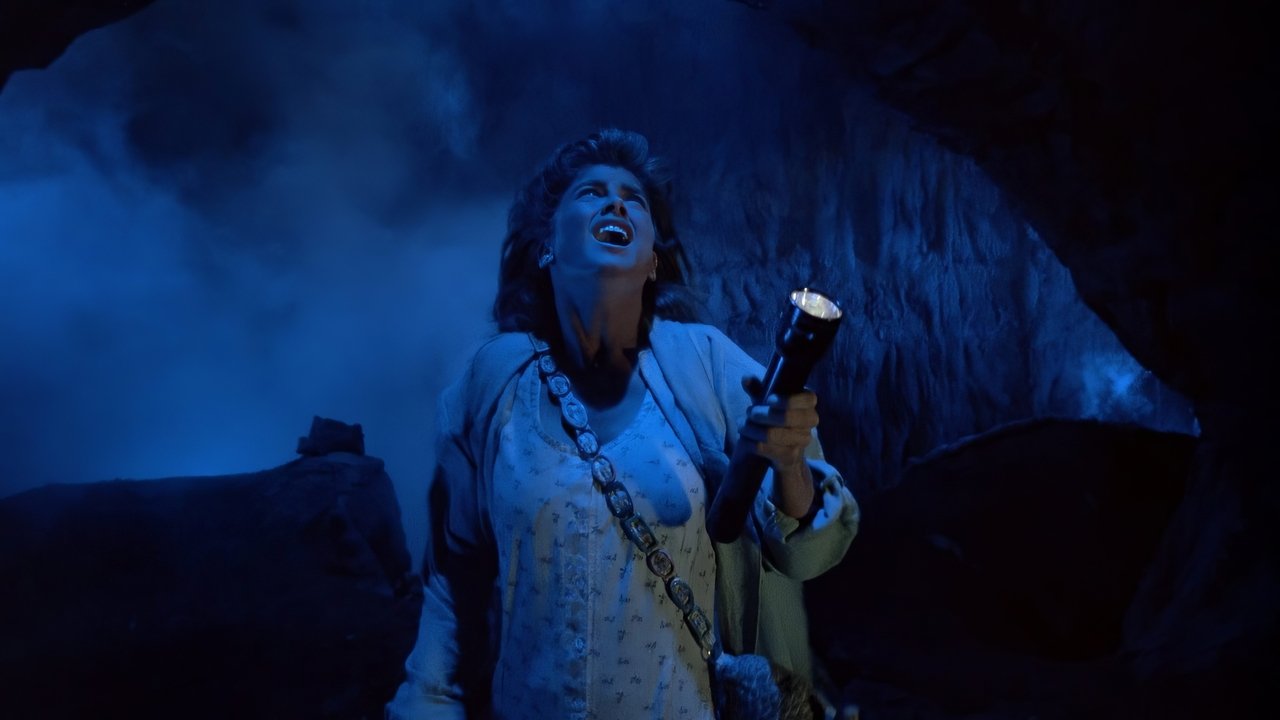

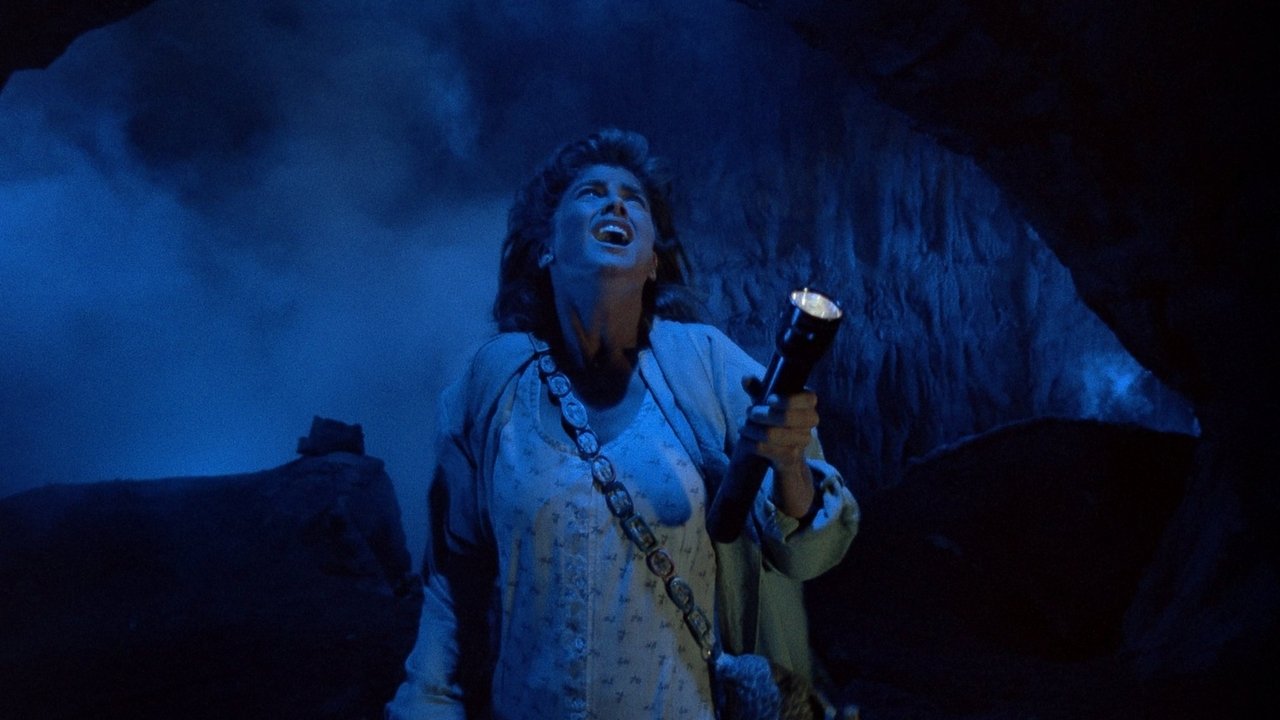
Albert Pyun was known for stretching budgets and working fast, and Alien from L.A. showcases this approach. Shot largely in Johannesburg, South Africa, the film attempts to create an entire underground civilization on what were likely limited resources. The result is a distinct aesthetic – lots of corrugated metal, steam, bizarre fashion choices seemingly pulled from a low-rent Mad Max cosplay convention, and claustrophobic, dimly lit environments. It's ambitious, you have to give it that. Pyun tries to build a world, complete with its own politics and social structure, even if it often feels murky and underdeveloped. The synth-heavy score tries its best to inject some 80s atmosphere into the proceedings.
One fascinating bit of trivia highlighting Pyun's resourcefulness (or perhaps Cannon's frugality): much of the Atlantean world-building and even Kathy Ireland herself were immediately recycled for Pyun's next film, Journey to the Center of the Earth (released in 1989, though filmed back-to-back). If you ever felt déjà vu watching that one after seeing Alien from L.A., you weren't imagining things! It was practically an unofficial sequel, using the same sets and star to tell a loosely connected story.
### Legacy of the Lovably Strange
Did Alien from L.A. set the box office on fire? Not exactly. It quietly appeared on video store shelves, destined for cult status rather than mainstream adoration. Its IMDb score hovers around a telling 3.3/10, and Rotten Tomatoes reflects similar critical sentiment. But its true legacy, for many, was cemented when it received the royal treatment on Mystery Science Theater 3000 (Season 5, Episode 16). Mike, Tom Servo, and Crow T. Robot had a field day with Wanda's voice, the nonsensical plot, and the general cheapness, introducing the film to a whole new audience ready to appreciate its unintentional comedy.
Yet, there's an undeniable charm to Alien from L.A. for fans of a certain kind of 80s B-movie. It’s earnest in its weirdness, a product of a time when studios like Cannon were throwing bizarre concepts at the wall (or down a pit) to see what stuck. It's a film that could only have emerged from that specific era of video store discovery, where something so profoundly strange could find its way into your VCR on a Friday night.
***
VHS Heaven Rating: 3.5/10
Justification: Let's be clear: Alien from L.A. is not a "good" film by conventional standards. The plot is thin, the world-building murky, and Kathy Ireland's voice performance is legendary for perhaps the wrong reasons. However, for sheer 80s B-movie weirdness, ambition exceeding its grasp, and its eventual embrace by the MST3K crowd, it holds a special, albeit bizarre, place in VHS history. The rating reflects its technical flaws and narrative shortcomings, balanced by its undeniable cult status and unintentional entertainment value. It's a fascinating artifact.
Final Thought: It might not be high art, but grabbing this tape felt like unearthing a truly strange treasure – a quirky, subterranean adventure fueled by hairspray, synths, and one unforgettable voice echoing from the depths of Atlantis... or at least, from Albert Pyun's imagination. A must-see for connoisseurs of cinematic oddities.