There's a certain kind of rain-slicked street, isn't there? The kind that reflects neon signs in a greasy smear, promising little warmth and hinting at stories unfolding in the shadows between dilapidated buildings. That's the Dublin we're thrown into in Frank Deasy and Joe Lee's 1986 film, The Courier. It’s a city rendered not with tourist-brochure charm, but with a raw, palpable sense of mid-80s economic anxiety and simmering desperation. Watching it again, decades later on a format far removed from the cinema screens it first flickered on, that atmosphere feels remarkably potent, a time capsule of a specific mood.

Through Streets Broad and Narrow
Our guide through this urban maze is Mark (Padraig O'Loingsigh), a motorcycle courier whose daily grind involves navigating the city's arteries, delivering packages with detached efficiency. His world is small, defined by the roar of his engine and the brief transactions that punctuate his day. But the relative innocence of his routine is shattered when he gets entangled with Val (Gabriel Byrne), a chillingly smooth operator who represents the insidious spread of heroin in the city. Mark finds himself drawn into Val's orbit, initially perhaps by a mixture of fear and fascination, and inevitably becomes a pawn in a dangerous game far removed from simple package delivery.
What strikes you immediately about The Courier is its unvarnished quality. This isn't a glossy Hollywood thriller; it feels like a film made on the ground, capturing the textures and tensions of its environment with an almost documentary-like feel at times. Shot on a shoestring budget (reportedly around £500,000 – a minuscule sum even then), its limitations arguably become strengths. The lack of polish forces a reliance on mood and performance, creating a sense of gritty realism that feels authentic to the era and the subject matter. This was part of a small wave of independent Irish filmmaking trying to reflect contemporary Ireland, a far cry from the pastoral visions often exported.
Faces in the Crowd
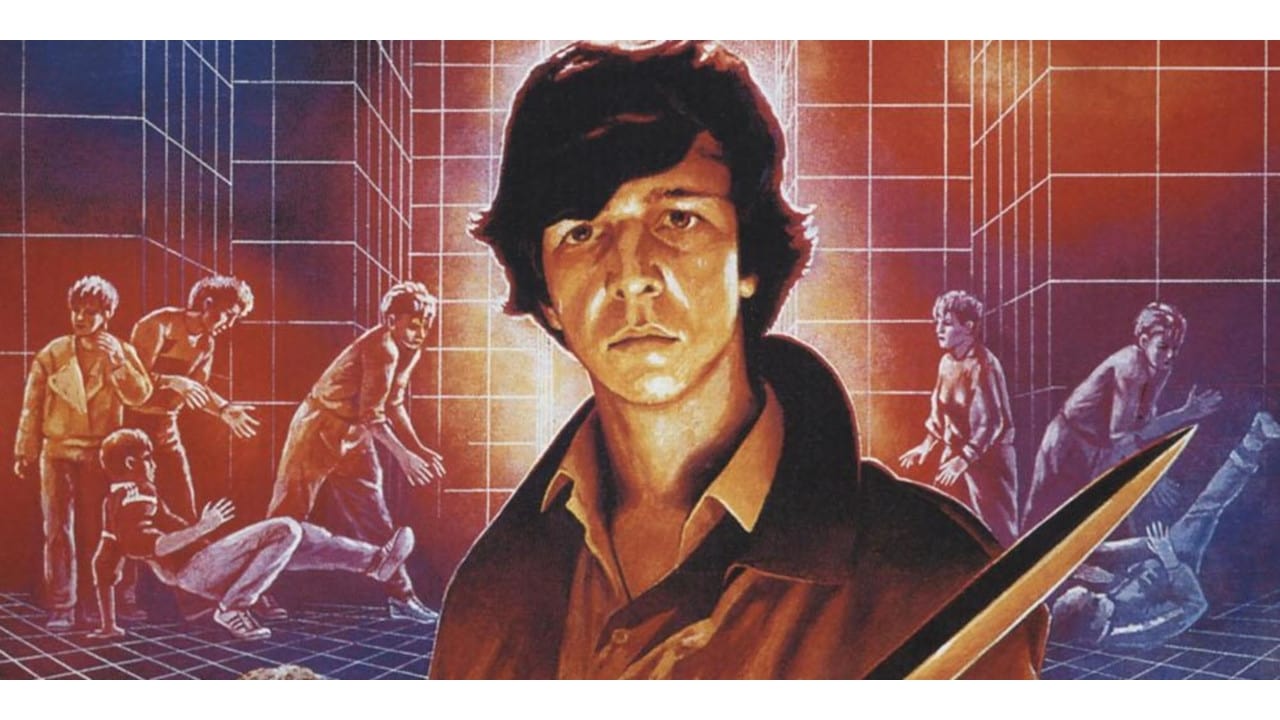
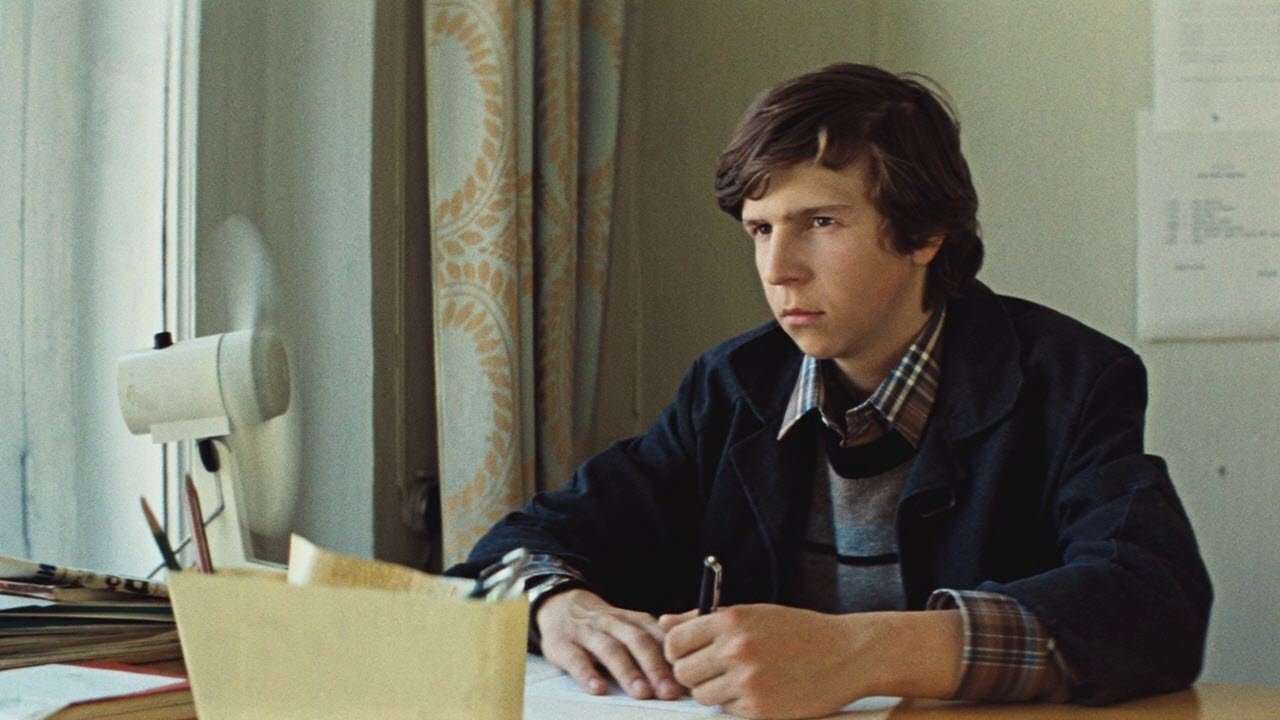
The casting feels inspired, leaning into a kind of raw authenticity. Padraig O'Loingsigh, in what remains his most significant role, carries the film with a brooding, almost minimalist intensity. Mark isn't a traditional hero; he's often passive, reactive, seemingly adrift in circumstances he barely understands. O'Loingsigh conveys this internal struggle – the conflict between a desire for something more and the paralysis of fear – with subtle conviction. It’s a performance that feels lived-in, unshowy, making his eventual moments of action feel earned. His relative obscurity after this film adds a layer of poignant 'what if' to the viewing experience.
Opposite him, Gabriel Byrne, already a rising star known for roles in films like Defence of the Realm, is magnetic as the drug lord Val. Byrne doesn't play him as a cackling caricature; Val’s menace lies in his calm control, his calculating eyes, and the way he exudes a quiet authority that makes his potential for violence all the more terrifying. He embodies the corrupting influence that has seeped into the city's cracks. And then there's Cait O'Riordan, bassist and vocalist for the iconic Celtic punk band The Pogues, as Mark's girlfriend, Colette. Her presence lends the film an immediate shot of punk rock energy and street-level credibility. While her role isn't huge, she brings a naturalism and weary resilience that grounds Mark's world, representing a potential anchor amidst the chaos. Her casting felt like a brilliant move, bridging the gap between Ireland's vibrant music scene and its burgeoning independent cinema.
The Pulse of a City
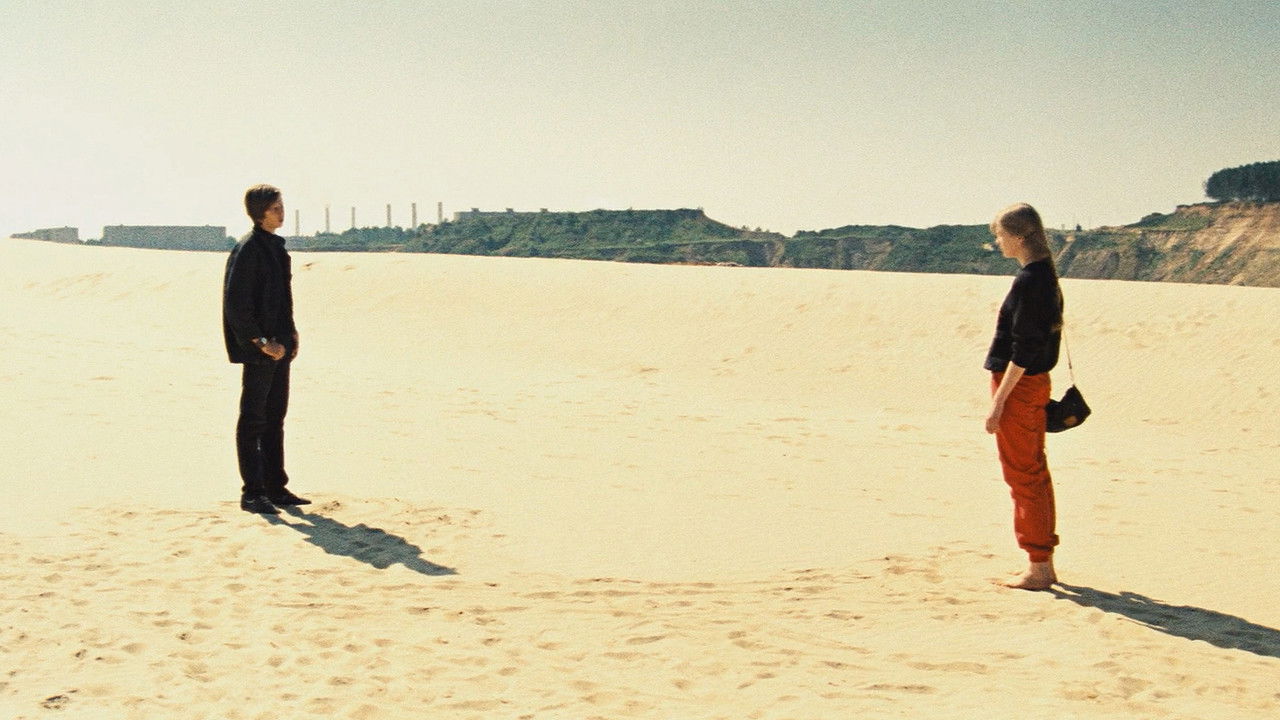
The direction by Frank Deasy (who also wrote the screenplay and later penned acclaimed works like TV's Prime Suspect) and Joe Lee captures the rhythm of Dublin – the constant movement, the brief moments of stillness, the looming presence of familiar landmarks like the Poolbeg Chimneys rendered stark and imposing rather than picturesque. The synth-heavy score, typical of the period, sometimes feels a little dated, yet often effectively underscores the tension and Mark's mounting anxiety. It’s a soundscape that firmly places the film in its time, evoking memories of countless other 80s thrillers that populated video store shelves.
The Courier isn't without its flaws. The plot mechanics can occasionally feel a little thin, relying more on atmosphere than intricate plotting. Some character motivations remain slightly opaque. Yet, these rough edges almost contribute to its power. It feels less like a perfectly constructed narrative machine and more like a snapshot of a particular time and place, wrestling with real-world issues that felt urgent then and, depressingly, still resonate today. Doesn't the desperation born from economic hardship often pave the way for dangerous temptations?
It’s fascinating to think this film emerged from a writer, Frank Deasy, who would go on to such prominent television work. You can see the seeds of his interest in complex characters operating in morally grey areas, even in this early, low-budget feature. It might not have set the box office alight, but The Courier remains a significant piece of 80s Irish cinema, a cult favourite for those who appreciate its bleak mood, strong central performances, and unflinching look at the darker side of Dublin life during a challenging decade. It’s a film that sticks with you, less for intricate plot twists, and more for the feeling it evokes – the chill of the wind off the Liffey and the weight of unspoken anxieties.
---
Rating: 6/10
Justification: The Courier earns its points for its powerful sense of atmosphere, capturing a specific gritty 80s Dublin reality with authenticity. Strong performances from O'Loingsigh and especially Byrne anchor the film, and its low-budget, independent spirit is palpable. However, it's held back slightly by sometimes thin plotting and pacing issues common in low-budget productions of the era. It's a compelling, atmospheric piece, but not without its rough edges.
Final Thought: A stark, atmospheric journey into the heart of 80s Dublin's underworld, more potent for its mood and performances than its narrative drive, leaving a lingering chill long after the tape stops rolling.