Okay, let’s rewind the tape. Remember browsing those towering shelves at the local video store, the smell of plastic cases and maybe stale popcorn in the air? Sometimes, nestled between the big-budget blockbusters, you’d find a cover that just screamed… something else. Maybe it was the promise of adventure, maybe it was a familiar face (or figure), but you just had to take it home. For many of us digging through the racks in the early 80s, John Derek’s Tarzan the Ape Man (1981) was exactly that kind of discovery – a film promising jungle thrills but delivering something altogether stranger, glossier, and undeniably focused on its leading lady.
### Not Your Father's Lord of the Jungle
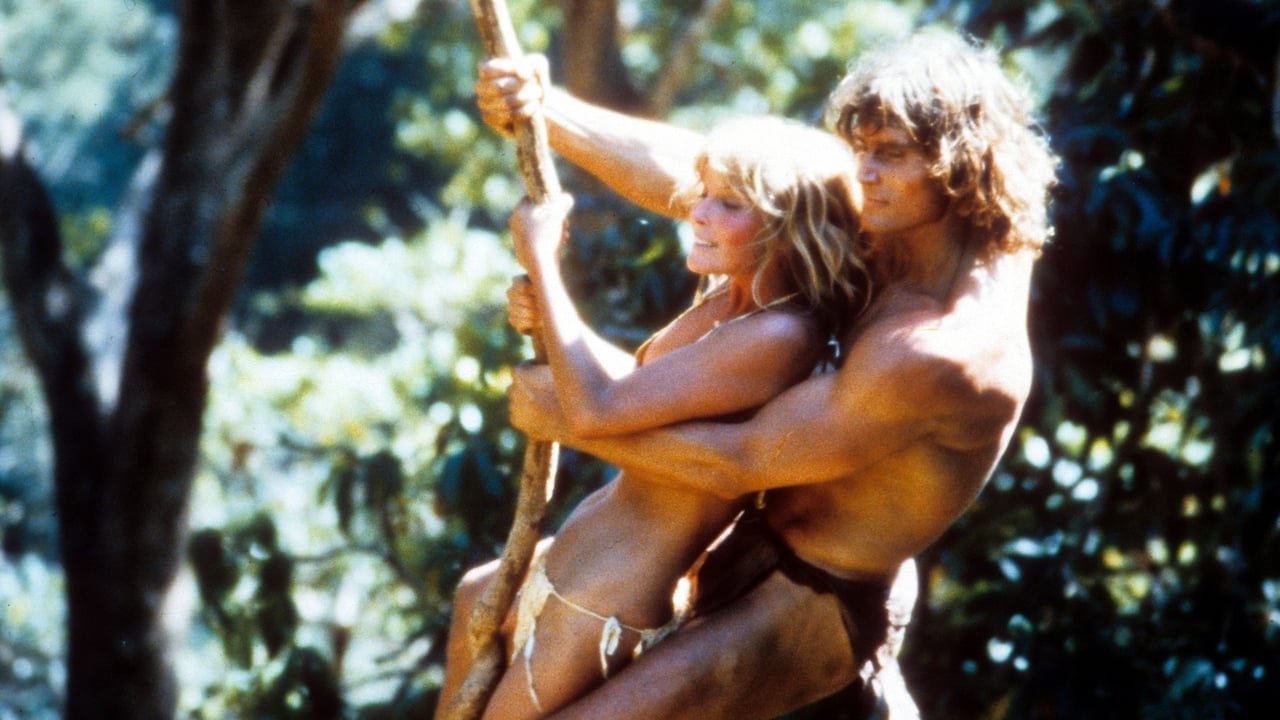
Forget the vine-swinging heroics of Johnny Weissmuller you might have caught on Saturday morning TV. This Tarzan, directed with a singular, almost obsessive gaze by John Derek, is less about the Ape Man and far, far more about the Woman – specifically, his wife at the time, Bo Derek. Fresh off her iconic, slow-motion beach run in 10 (1979), Bo was catapulted into stardom, and this film feels deliberately engineered as her next big showcase. The plot loosely follows the Edgar Rice Burroughs template: Jane Parker (Bo Derek) arrives in Africa seeking her estranged father, the eccentric adventurer James Parker (Richard Harris), who’s obsessed with finding the mythical "white ape." Along the way, dangers arise, natives attack, and yes, eventually, Tarzan appears.
But let's be honest, the narrative often feels secondary to the visuals, meticulously crafted by director Derek to highlight his wife’s beauty. The cinematography lingers, often in slow motion, on Bo navigating the jungle, bathing in waterfalls, or getting artistically smeared with mud. It’s less jungle adventure, more 80s fashion magazine spread come to life, albeit one set in a surprisingly tangible wilderness. Retro Fun Fact: The film was shot primarily on location in the lush landscapes of Sri Lanka and the Seychelles, giving it an authentic, pre-CGI sense of place that you just don’t get anymore. That sweat? Probably real. Those mosquito bites? Definitely real.
### The Curious Case of the Silent Ape Man
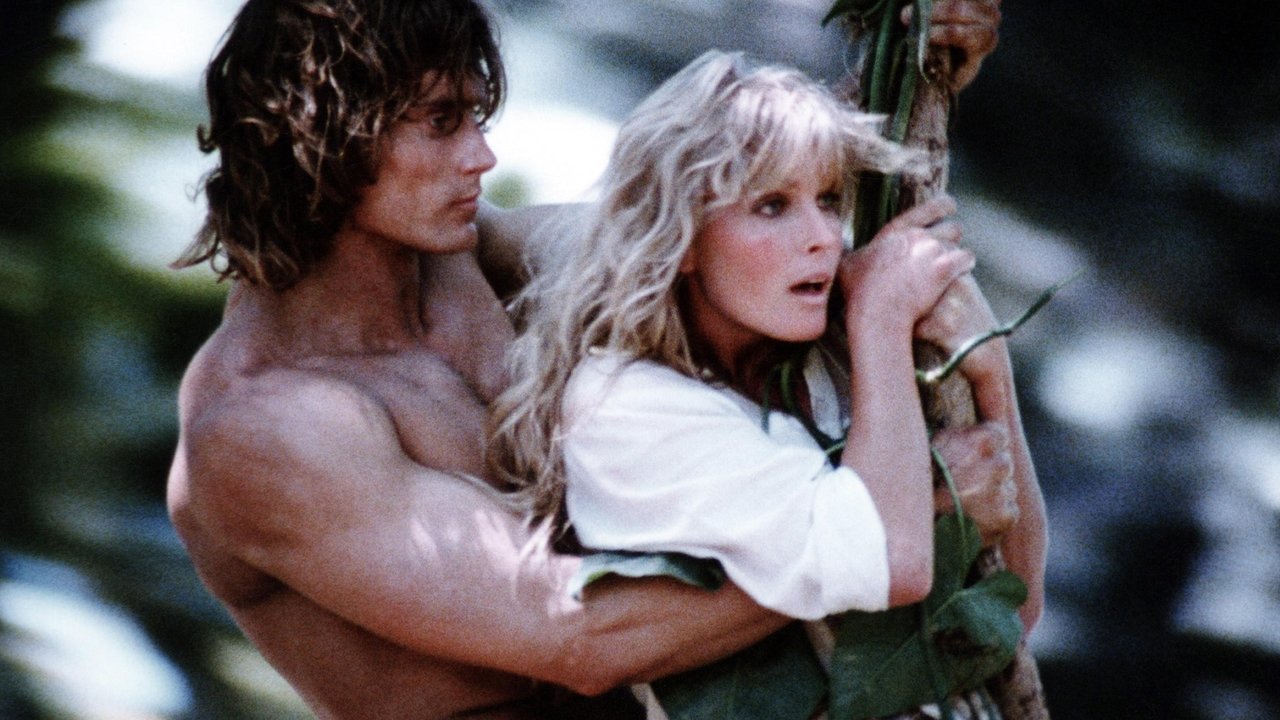
So, where is Tarzan in all this? Well, he’s played by newcomer Miles O'Keeffe, a former football player apparently chosen more for his physique than his dialogue delivery skills. And that's putting it mildly. Tarzan is largely a non-verbal presence here, appearing sporadically to rescue Jane or grunt meaningfully. It’s a bizarre choice for the title character, reducing him to almost a plot device in Jane’s story. Retro Fun Fact: Legend has it that O'Keeffe wasn't fully aware his role would be almost entirely silent until filming was well underway, leading to some understandable frustration. It certainly makes for a unique, if slightly underwhelming, portrayal of the jungle king.
While Bo is the undeniable center, veteran actor Richard Harris throws himself into the role of James Parker with gusto. His performance is… well, it’s big. Is he hamming it up knowingly, or just trying to inject some energy into the proceedings? It’s hard to say, but he’s certainly memorable, chewing scenery with the same enthusiasm he might reserve for a tough piece of jungle jerky. Another Retro Fun Fact: Rumours swirled about friction between the classically trained Harris and the directorial style of John Derek on set, which perhaps adds another layer to Parker's often manic energy. Supporting actor John Phillip Law (known to cult film fans from Danger: Diabolik) is also present as Holt, but largely gets lost in the shuffle.
### Jungle Realism, 80s Style
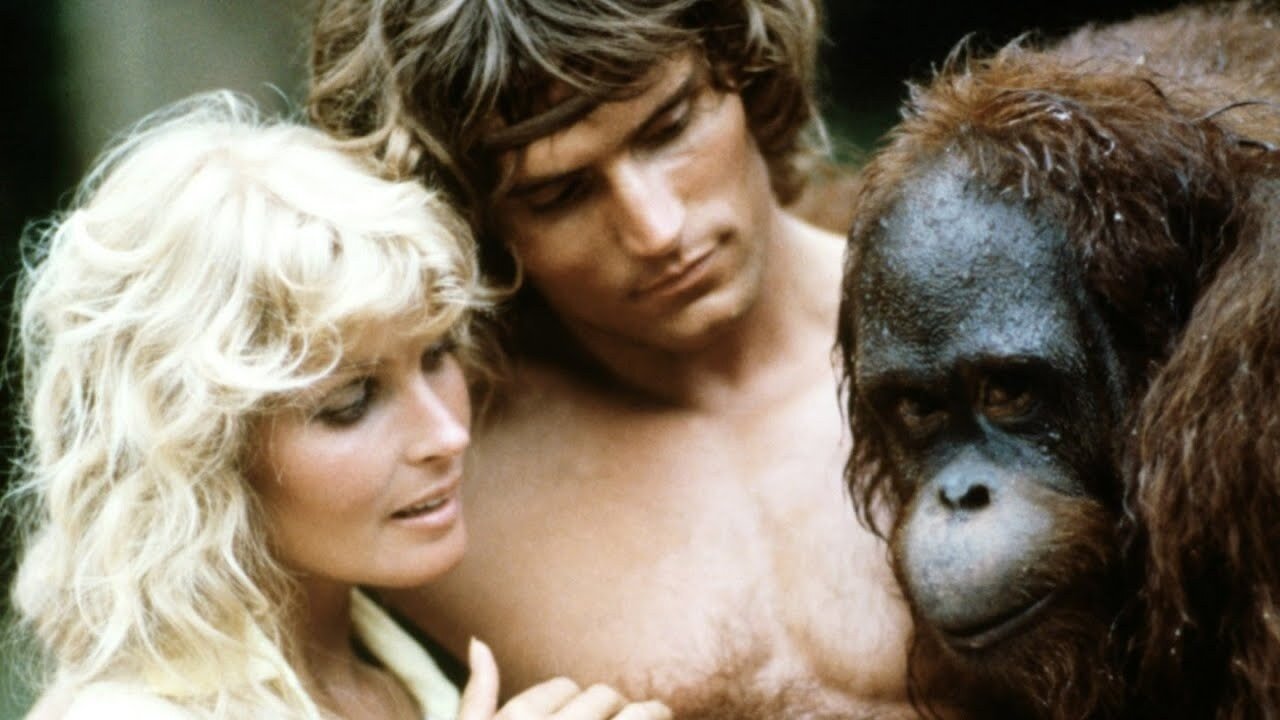
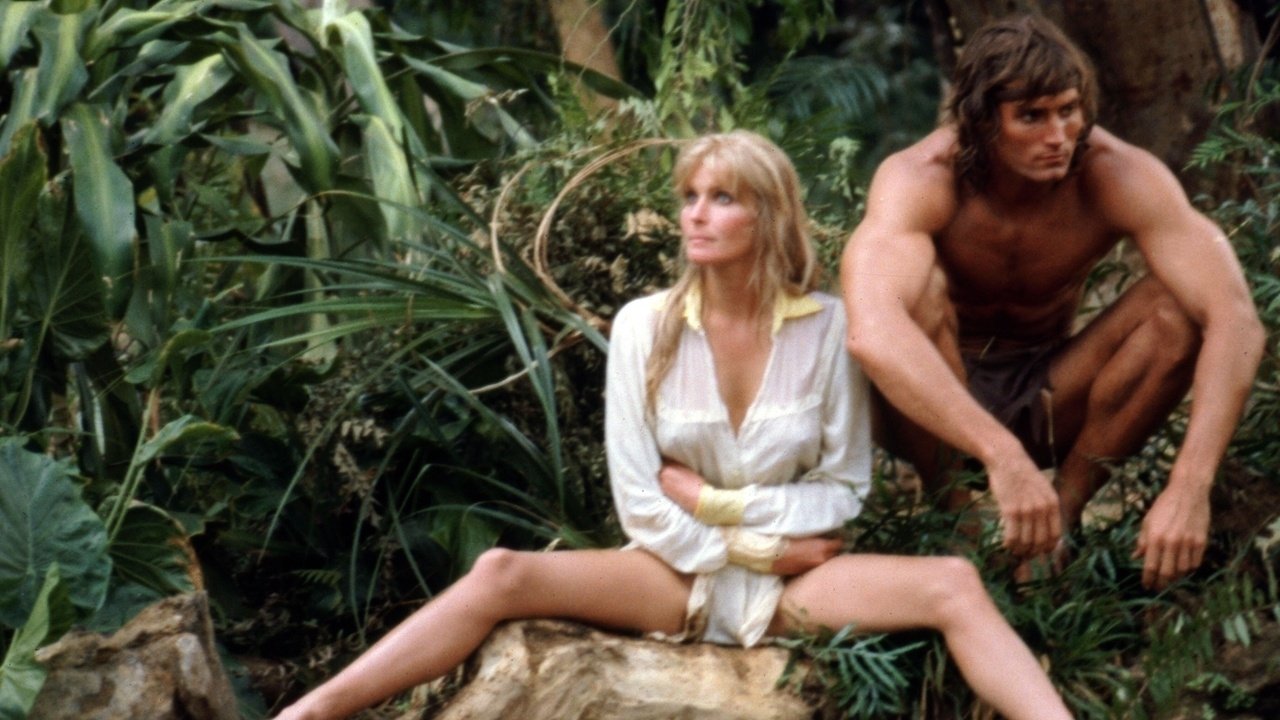
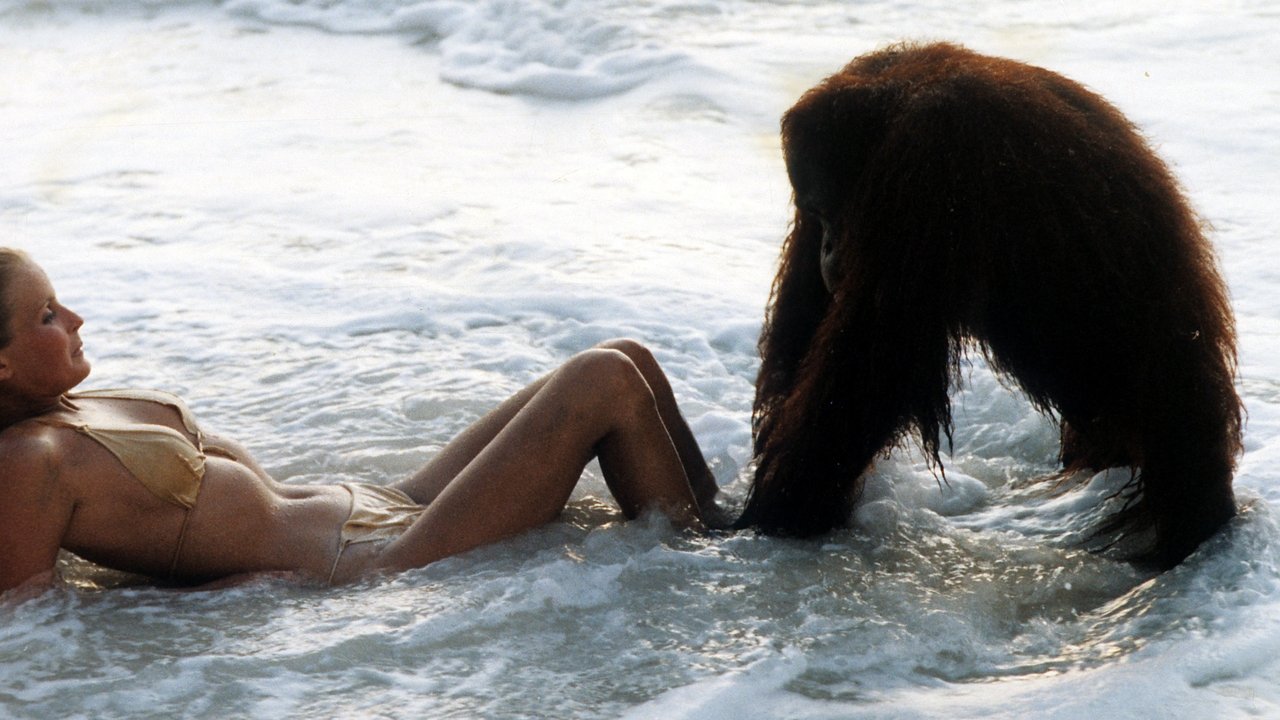
Despite the focus on glamour shots, the film does feature some moments that felt ruggedly real back in the VHS era. The tribal attack sequence, while relying on uncomfortable stereotypes common at the time, has a certain chaotic energy built on practical stunts and large numbers of extras. There's a rawness to the physical encounters and the animal interactions (including that infamous scene with the orangutan, which remains unsettling) that simply wouldn't be rendered the same way today. You feel the humidity, the grit, the real danger involved when stunt performers interacted directly with the environment and animals, something often lost in the sterile perfection of modern digital effects. The score by Perry Botkin Jr. tries to match the epic sweep, sometimes successfully, sometimes feeling a bit overwhelmed by the sheer strangeness on screen.
Critically, the film was savaged upon release, earning Bo Derek a Golden Raspberry Award for Worst Actress. Yet, audiences turned up. Made for around $6.5 million, it pulled in over $36 million at the box office – a solid return that proved Bo’s star power, even if critics weren't buying what the Dereks were selling. It became a staple of late-night cable and video store shelves, a curiosity whispered about more for its perceived exploitation and camp value than its storytelling prowess.
### Final Reel
Tarzan the Ape Man (1981) is a fascinating time capsule. It's undeniably a vanity project, oddly paced, and features a Tarzan who barely registers. Yet, there’s something hypnotic about its single-minded focus, the lush (if sometimes problematic) visuals, and the sheer audacity of it all. It captures a specific moment in early 80s filmmaking where glamour, exploitation, and old-fashioned adventure filmmaking collided in a strange, humid fever dream.
Rating: 4/10
Justification: While visually distinct thanks to its locations and John Derek's unwavering focus on Bo, the film suffers from a weak script, underdeveloped characters (especially the title one!), questionable taste, and often sluggish pacing. Richard Harris provides some unintentional entertainment, but it's largely memorable for its bizarre choices rather than its quality as a Tarzan adaptation or adventure film. The rating reflects its status as a cult curiosity – worth seeing for its sheer 80s oddity and specific aesthetic, but objectively flawed.
VHS Verdict: A uniquely bizarre artifact from the jungle section of the video store – more Bo's Jungle Adventure than Tarzan, but an unforgettable, if often bewildering, watch from the era when practical beauty (and questionable decisions) reigned supreme.