Okay, settle in, fellow VHS voyagers. Let’s rewind to a time when a certain one-eyed sailor, known more for his animated antics and spinach-fueled strength, landed on the big screen in a way nobody quite expected. Forget the clean lines and bright colours of the Fleischer cartoons for a moment. Imagine instead a grimy, bustling, lived-in seaside town, populated by characters looking like they’d stepped right off E.C. Segar’s original comic strip pages, albeit filtered through a uniquely cinematic, almost melancholic lens. That’s the peculiar magic, and perhaps the initial bewilderment, of Robert Altman’s 1980 musical adventure, Popeye.

### Welcome to Sweethaven (Mind the Grime)
Right from the opening frames, as Robin Williams’ Popeye rows into the ramshackle port town of Sweethaven, you know you’re not in Kansas anymore – or even the brightly sanitized world of most family films of the era. This wasn't your typical Hollywood fare. This was Robert Altman, the maverick director behind gritty, naturalistic classics like MASH* (1970) and Nashville (1975), tackling… a cartoon sailor? The sheer audacity is something to behold. The world he and screenwriter Jules Feiffer (a celebrated cartoonist himself, deeply respectful of Segar's original work) created feels incredibly tangible. Built entirely on the island of Malta, the sprawling Sweethaven set was a Herculean effort, costing a significant chunk of the film’s $20 million budget. It wasn’t just a backdrop; it was a fully realized, slightly dilapidated character in itself, and you can almost smell the salt air and, well, maybe the questionable sanitation. This commitment to a grounded, almost dreary realism for such fantastical source material is the film’s defining, and most divisive, characteristic.
### A Cast Straight from the Funny Pages
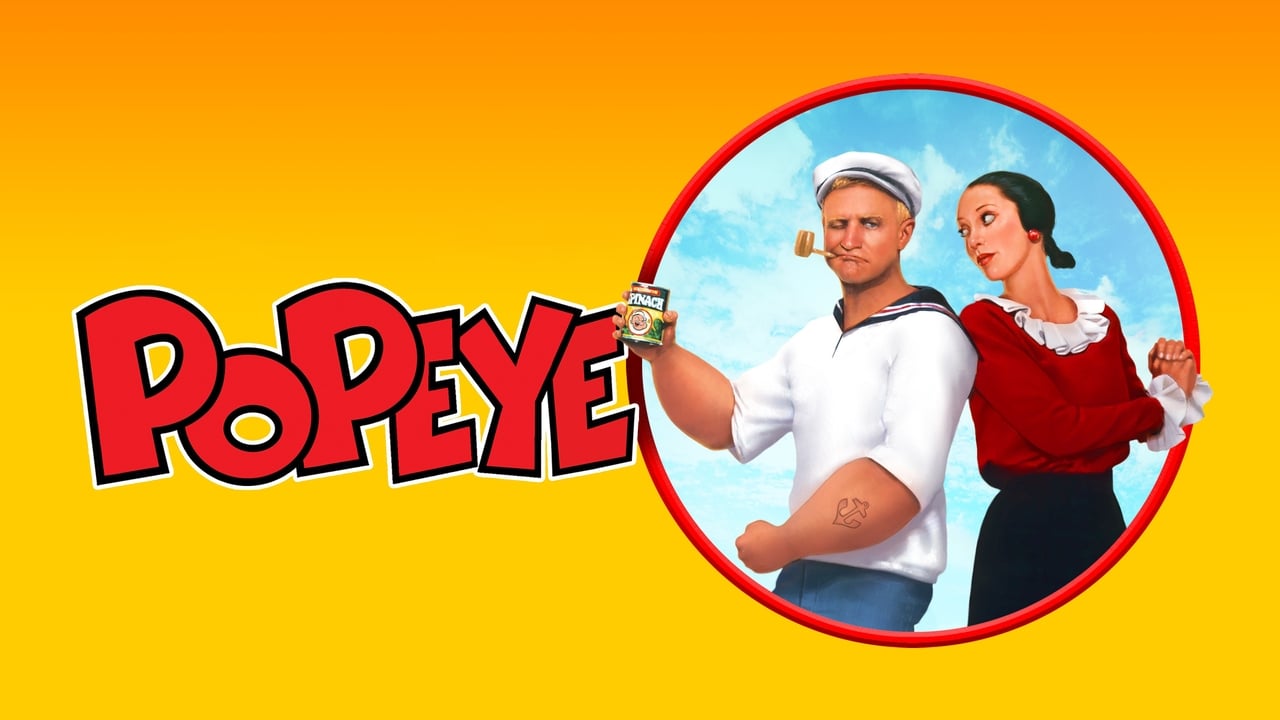
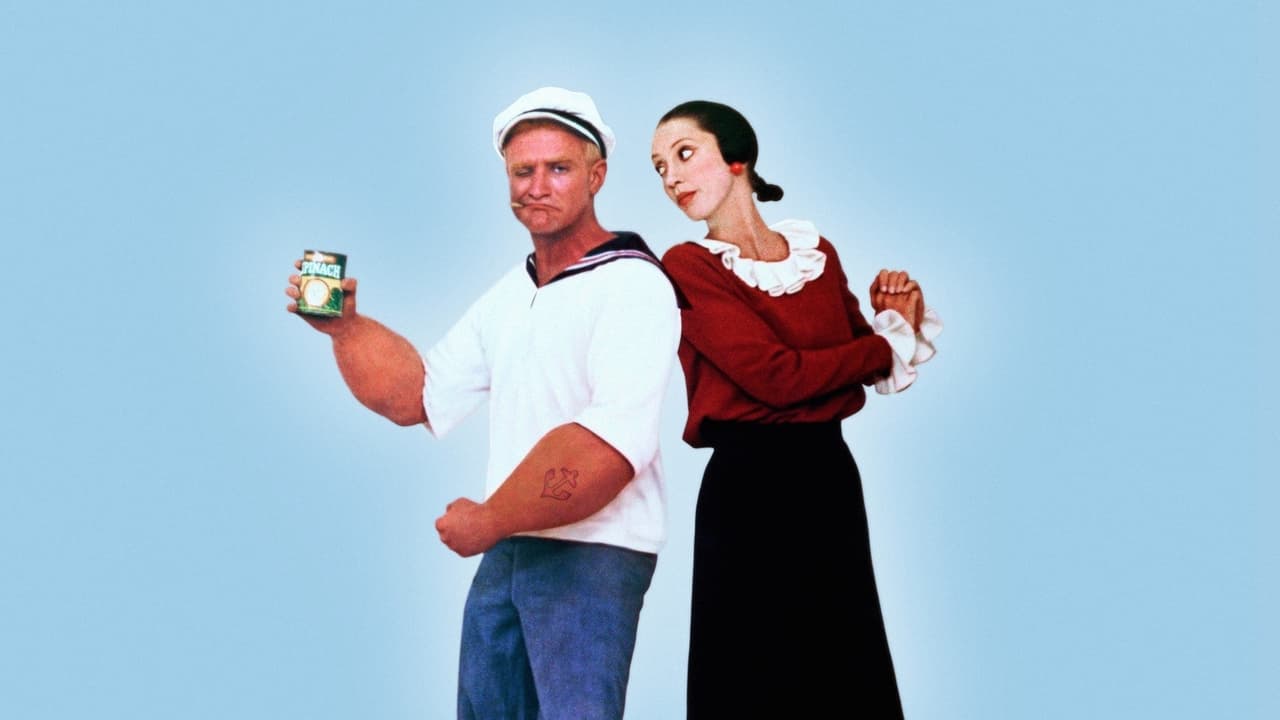
Anchoring this quirky world is the late, great Robin Williams in his first major starring role. Fresh off his Mork & Mindy success, Williams faced the monumental task of bringing Popeye to life. It’s a fascinating performance to watch now; you see glimpses of the manic energy he’d later unleash, but here it’s channelled into Popeye’s distinctive mumbling voice (reportedly a strain to maintain) and his surprisingly powerful, prosthetic-enhanced forearms. He looks the part, squint and all, even if the performance feels occasionally constrained by the physical mimicry.
Yet, if Williams is Popeye, then Shelley Duvall embodies Olive Oyl. It’s one of those perfect casting moments that feels almost preordained. With her wide eyes, lanky frame, and uniquely fluttering voice, Duvall (who Altman had directed previously in Brewster McCloud and Nashville) simply was Olive, bringing a vulnerability and sweetness to the character that grounds the film’s more cartoonish elements. Watching her drift through Sweethaven, pursued by the hulking, genuinely menacing Bluto (Paul L. Smith, channelling brute force), is a delight. Add in Ray Walston (forever known to many as TV's My Favorite Martian) having a ball as the crusty Poopdeck Pappy, and you have an ensemble that fully commits to Altman’s vision, muttering and overlapping dialogue included.
### Songs Sung Sideways
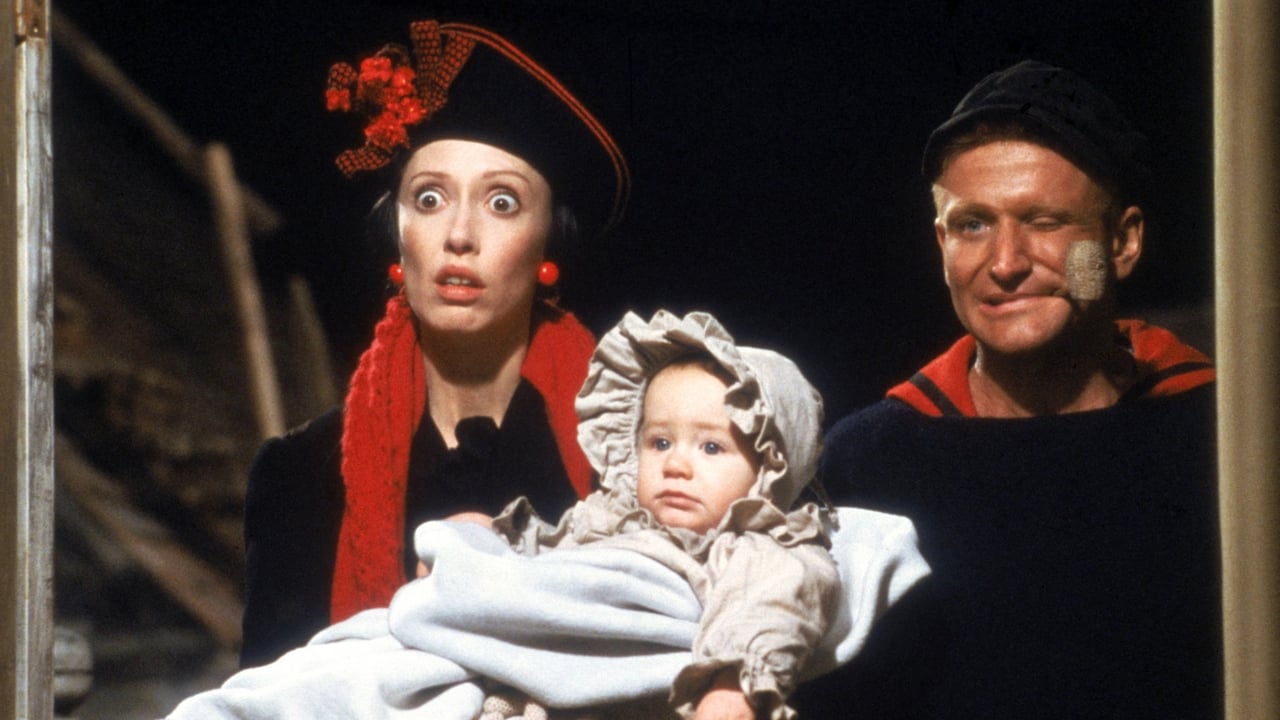
And then there’s the music. Penned by the brilliant and eccentric Harry Nilsson, the songs in Popeye are… well, they’re Nilsson songs. They don’t follow traditional musical structures. They’re often rambling, conversational, and possess a strange, melancholic catchiness. Tunes like Popeye’s introductory "I Yam What I Yam," Olive’s wistful "He Needs Me" (famously re-appropriated decades later in Paul Thomas Anderson's Punch-Drunk Love), or the ensemble piece "Everything Is Food" perfectly match the film’s off-kilter tone. They’re not belting showstoppers, but rather extensions of the characters' quirky inner lives. Hearing the actors, many not known for singing, deliver these numbers adds to the film’s unique, homespun charm. It feels less like a polished Hollywood musical and more like a slightly eccentric seaside village decided to put on a show.
### Retro Fun Facts & Production Oddities
The journey to bring Sweethaven to life wasn't without its squalls. That massive Malta set, while visually stunning, faced harsh Mediterranean weather, adding complexity to the shoot. Interestingly, the set wasn't torn down; it still exists today as a tourist attraction called "Popeye Village." While the film pulled in a respectable $49.8 million domestically (around $175 million today), making it profitable against its $20 million budget, it wasn't the runaway smash Paramount Pictures might have hoped for, perhaps due to its unconventional nature clashing with audience expectations for a family-friendly blockbuster. Initial reviews were decidedly mixed (it sits at 60% on Rotten Tomatoes today), with critics unsure what to make of Altman’s singular interpretation. Did you know Dustin Hoffman was reportedly considered for Popeye early on? It’s hard to imagine anyone but Williams mumbling his way through those iconic lines. And the physical demands, especially Williams’ Popeye arms and walk, required considerable effort, adding another layer to the performance.
### An Enduring, Oddball Charm
Watching Popeye today, perhaps on a slightly fuzzy stream that mimics that old VHS quality, is a curious experience. It’s undeniably slow in parts, the plot meanders, and Altman’s signature overlapping dialogue can sometimes obscure key lines (a common Altman trait!). Yet, there’s an undeniable heart to it. It feels handcrafted, personal, and completely unlike any other comic book adaptation before or since. It doesn't pander, it doesn't slick down the edges; it presents Popeye's world with a strange, melancholic beauty. For those of us who encountered it on video shelves back in the day, perhaps nestled between E.T. and Raiders of the Lost Ark, it stood out precisely because it was different. It wasn't trying to be cool; it was just… Popeye, in all its peculiar glory.
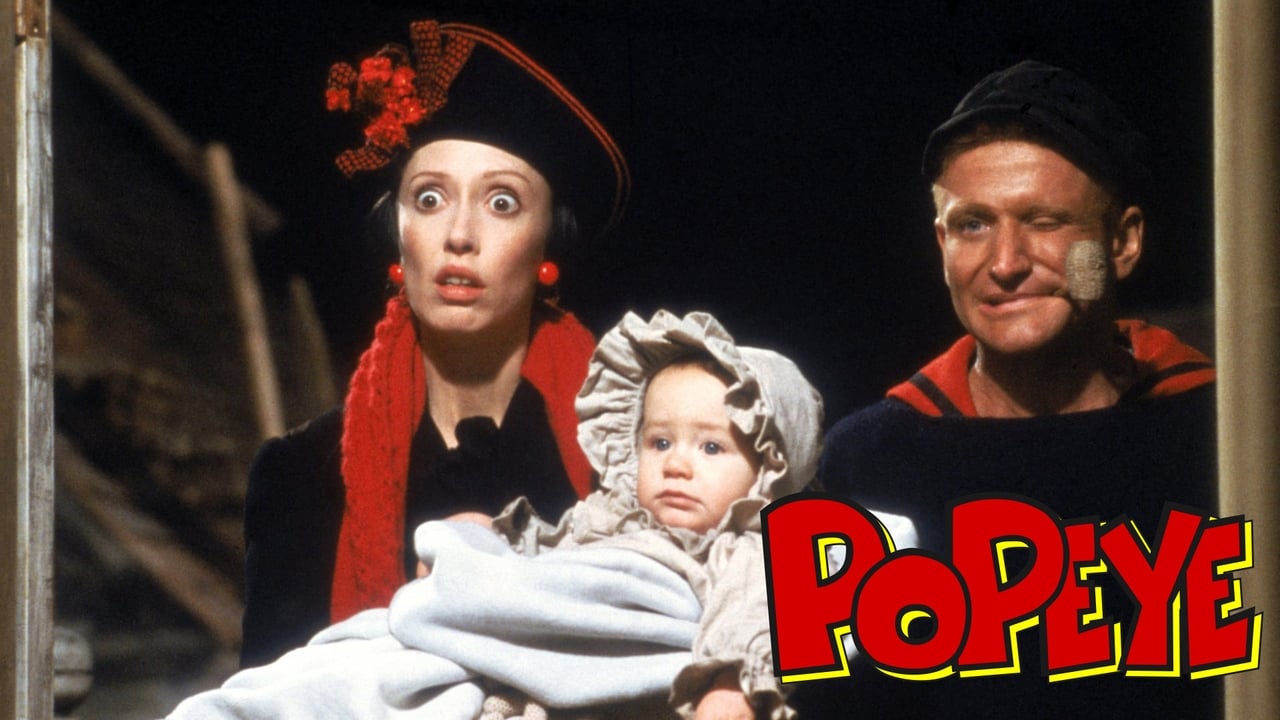
VHS Heaven Rating: 7/10
This score reflects Popeye's status as a truly unique and ambitious experiment. It earns points for its incredible production design, Shelley Duvall's definitive Olive Oyl, Robin Williams' committed early performance, and Robert Altman's sheer artistic courage in bringing his distinct style to mainstream family fare. The deduction comes from the undeniable pacing issues and the fact that its specific, sometimes downbeat, flavour isn't for everyone. It’s a film whose charms reveal themselves more fully with age and appreciation for its singular vision.
Ultimately, Popeye remains a fascinating curio from the dawn of the 80s – a quirky, visually rich, and surprisingly heartfelt adaptation that dared to be different. It might not have been the spinach-powered blockbuster some expected, but like a well-worn VHS tape, its unique character and strange magic continue to resonate with those who appreciate its offbeat journey.