Alright fellow travellers on the magnetic tape highway, let's dust off a slightly newer cassette today, one that bridges the grand Bollywood romance of the 90s with the dawn of a new millennium. It arrived just as VHS tapes were starting to share shelf space more prominently with those shiny new VCDs and DVDs, but the feeling? Pure, unadulterated cinematic spectacle that resonated deeply in that era. I'm talking about Aditya Chopra's ambitious follow-up to his genre-defining Dilwale Dulhania Le Jayenge (1995) – the sprawling, symphonic clash of ideologies that is Mohabbatein (2000).
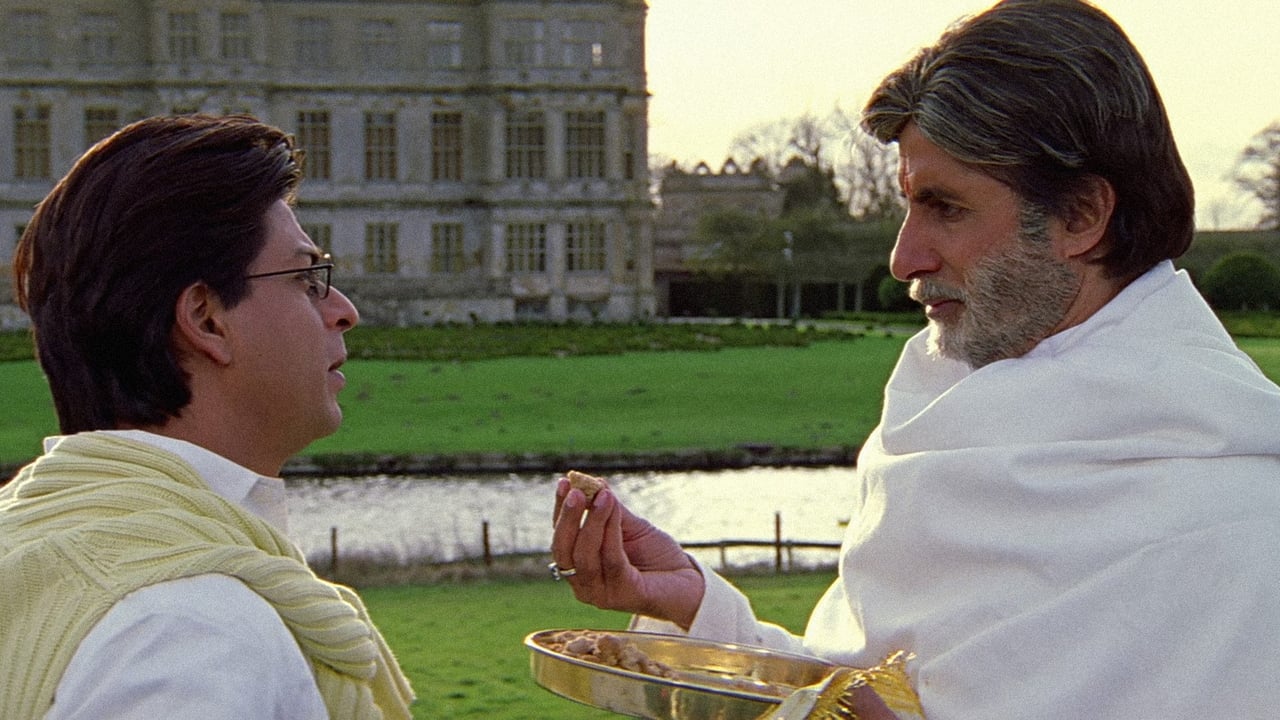
Some films announce their central conflict not with a whisper, but with the resonant clash of titans. Mohabbatein does exactly that, setting the stage within the imposing, hallowed (and decidedly austere) halls of Gurukul, perhaps the most prestigious, and certainly the most feared, all-boys university in India. Its iron-fisted discipline is the long shadow cast by its principal, Narayan Shankar, a man whose belief in "Parampara, Pratishtha, Anushasan" (Tradition, Honour, Discipline) is absolute, forged in personal tragedy and leaving no room for the frivolities – or perceived dangers – of love. What happens, then, when a breath of fresh air, carrying a violin case and an unwavering belief in the power of love, walks through those gates?
A Battle of Wills, Etched in Starlight
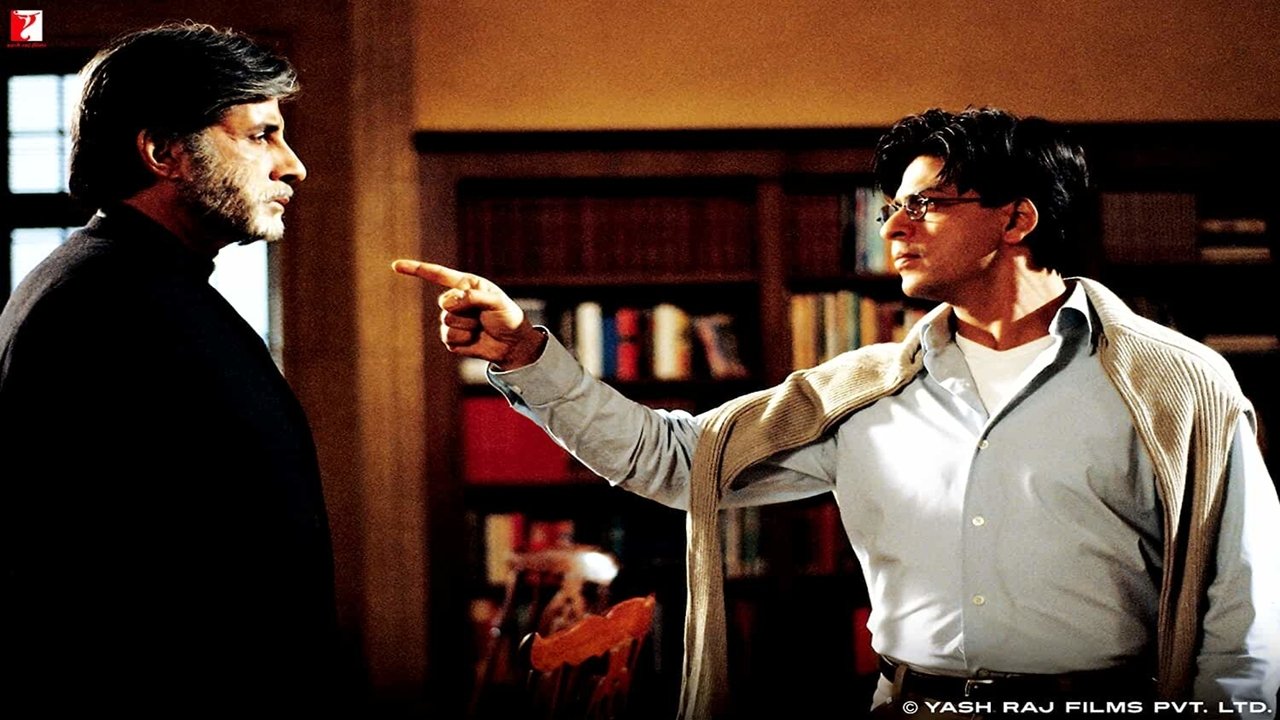
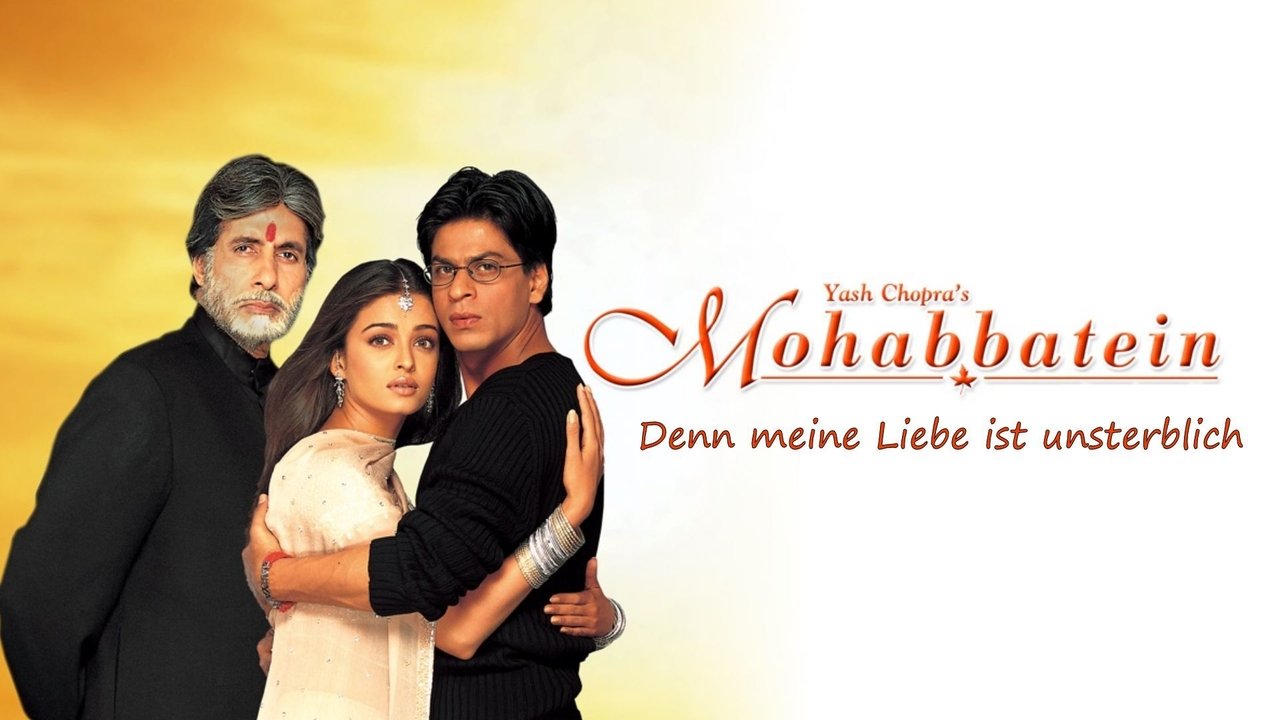
The film’s undeniable core, the magnetic force that drew audiences in droves, is the confrontation between two of Indian cinema’s biggest stars. Amitabh Bachchan, returning to prominence after a quieter period, embodies Narayan Shankar with a gravitas that feels carved from stone. His posture is rigid, his gaze piercing, his voice resonating with unwavering conviction and barely concealed pain. Every line delivery feels weighted, every gesture deliberate. It was a role that reminded everyone of Bachchan's towering presence, a patriarch embodying tradition pushed to its extreme. You feel the history in his performance, the years of self-imposed isolation hardening his resolve.
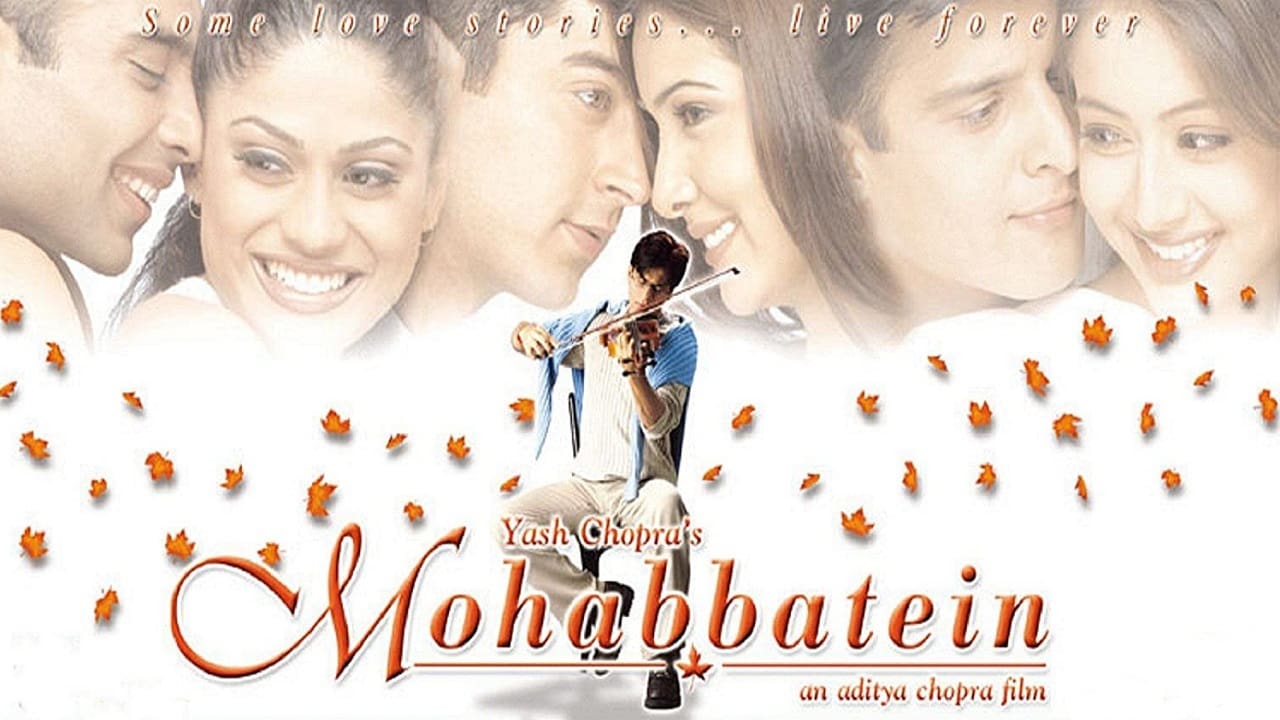
And then arrives Shah Rukh Khan as Raj Aryan Malhotra, the new music teacher. Khan, already the reigning king of 90s romance, is all mischievous smiles, twinkling eyes, and defiant charm. He’s the irresistible force meeting Bachchan’s immovable object. Raj Aryan doesn't just teach music; he teaches life, encouraging the students to listen to their hearts, to embrace love, even within Gurukul's forbidding walls. The chemistry between Bachchan and Khan isn't romantic, obviously, but it's electric – a philosophical duel played out with simmering intensity and contrasting performance styles. Their scenes together are the film's backbone, crackling with unspoken history and ideological opposition. Does tradition suffocate life? Can love truly conquer all, even deeply ingrained fear? The film lays these questions bare through their interactions.
Echoes of a Love Lost, Seeds of Loves Found
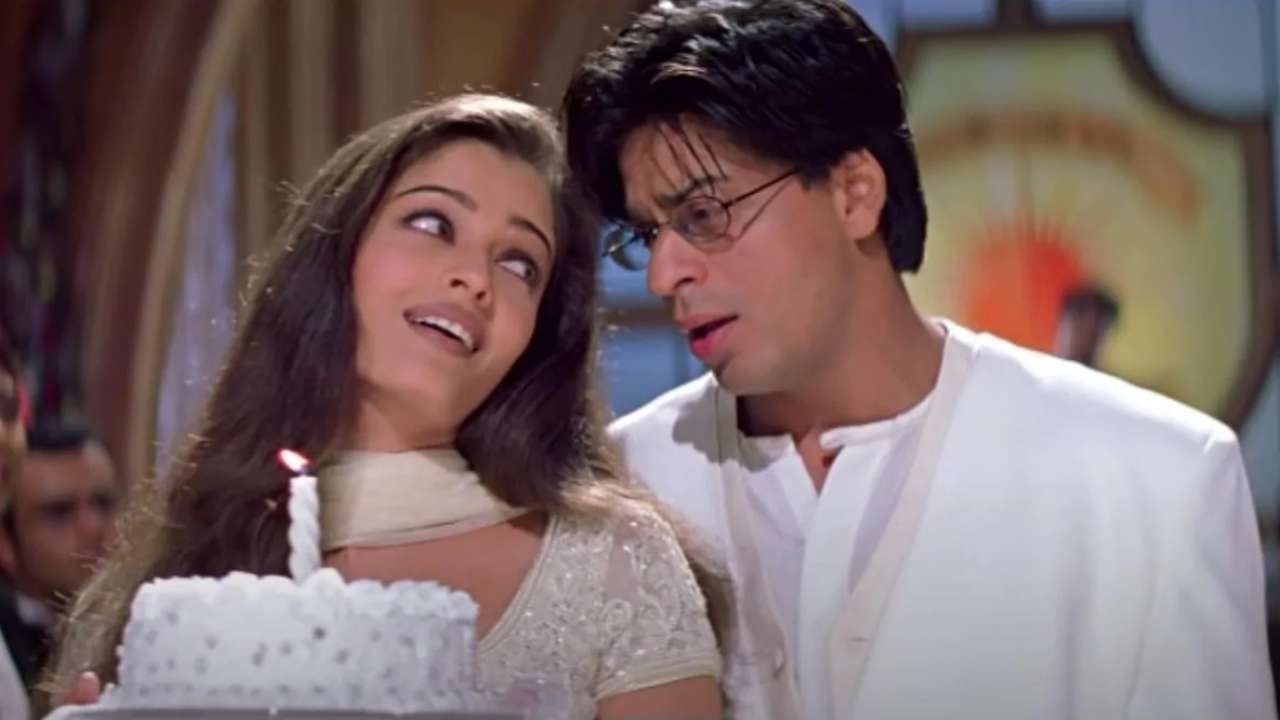
Woven into this central conflict is the ethereal presence of Megha, played by Aishwarya Rai. Appearing mostly in flashbacks and as a spectral guide for Raj Aryan, Megha represents the love that Narayan Shankar tragically stamped out, the very reason for his fortress of discipline. Rai brings a luminous, almost otherworldly quality to the role, embodying the idealised, enduring love that fuels Raj Aryan’s quiet rebellion.
Supporting this are three burgeoning love stories among the Gurukul students, featuring a host of then-newcomers (Uday Chopra, Jugal Hansraj, Jimmy Shergill, Shamita Shetty, Kim Sharma, Preeti Jhangiani). While these subplots serve primarily to illustrate Raj Aryan's influence and challenge Narayan Shankar's rules, they also provided a launchpad for several careers. Let's be honest, revisiting the film now, these romances can feel a bit formulaic, their resolutions somewhat inevitable within the film's grand design. Yet, they serve their purpose, acting as the battlegrounds where Raj Aryan’s philosophy of love directly confronts Narayan Shankar's decree of fear.
The Soundtrack of Rebellion
You simply cannot talk about Mohabbatein without bowing down to its music. The soundtrack by composer duo Jatin-Lalit, with lyrics by the legendary Anand Bakshi, wasn't just a collection of songs; it was a phenomenon. From the defiant energy of "Soni Soni" to the haunting melancholy of "Humko Humise Chura Lo" and the infectious rhythm of "Pairon Mein Bandhan Hai," the music is the film's soul. It perfectly encapsulates the yearning, the rebellion, and the romantic idealism at the heart of the story. I distinctly remember the cassette (and later, the CD) being everywhere – playing in shops, cars, homes. It was inescapable, and for good reason. The songs don't just accompany the narrative; they drive it, articulate its core emotions, and became anthems for a generation. The choreography by Farah Khan also brought these numbers to vibrant life, particularly the large ensemble pieces.
Crafting an Epic: Behind the Gates
Pulling off a film of this scale was no small feat. Aditya Chopra, following the monumental success of DDLJ, clearly aimed for something grander, more epic in scope. Fun fact: the imposing exterior of Gurukul wasn't a set in India but the stunning Longleat House, a stately home in Wiltshire, England, lending the film a unique, almost fantastical visual quality. Made on a significant budget for the time (around ₹19 crore, which is roughly ₹75-80 crore or $9-10 million USD today), its massive box office success (grossing approximately ₹90 crore worldwide, about ₹350-370 crore / $42-45 million USD adjusted for inflation) cemented its status as a blockbuster event. The casting itself was a masterstroke – bringing Bachchan back in such a powerful role opposite the reigning superstar, SRK, created a buzz that was palpable even before the first frame flickered on screen. It felt like a cinematic summit meeting.
A Bridge Between Eras
Watching Mohabbatein today feels like revisiting a specific moment in time. Released in 2000, it carries the DNA of the sweeping Yash Raj Films romances of the 90s – the grand locales, the emphasis on family (or lack thereof), the heightened emotions, the centrality of music – but its sheer scale and the Bachchan-Khan face-off felt like an escalation. It arrived just as home entertainment was shifting; many of us might have first experienced its nearly three-and-a-half-hour runtime not on a worn VHS, but perhaps on a crisp VCD, marking a transition in our own viewing habits. Does the film feel long by today's standards? Absolutely. Is its idealism sometimes overwhelming? Perhaps. But its earnestness is undeniable.
The film asks us to believe in the transformative power of love against seemingly insurmountable odds. It champions individual expression over blind adherence to tradition. While the methods might seem grandly cinematic, don't those core tensions – between generations, between fear and openness, between conformity and individuality – still echo in our own lives?
Rating: 8/10
Mohabbatein earns a solid 8 out of 10. While its length can test patience and the younger romances feel somewhat secondary, the powerhouse performances from Amitabh Bachchan and Shah Rukh Khan, the unforgettable Jatin-Lalit soundtrack, Aditya Chopra's ambitious direction, and its sheer cultural impact make it a landmark film of its time. The central conflict is compellingly drawn, and the production values are lush. It delivered exactly what it promised: a grand, emotional, musical spectacle powered by star wattage and a resonant theme.
It remains a film that, despite its flaws, possesses a potent nostalgic charm and represents a fascinating bridge – a blockbuster love letter concluding one era of Bollywood romance while stepping confidently into the next. It’s a reminder of a time when mainstream cinema dared to be this unapologetically grand and romantic.