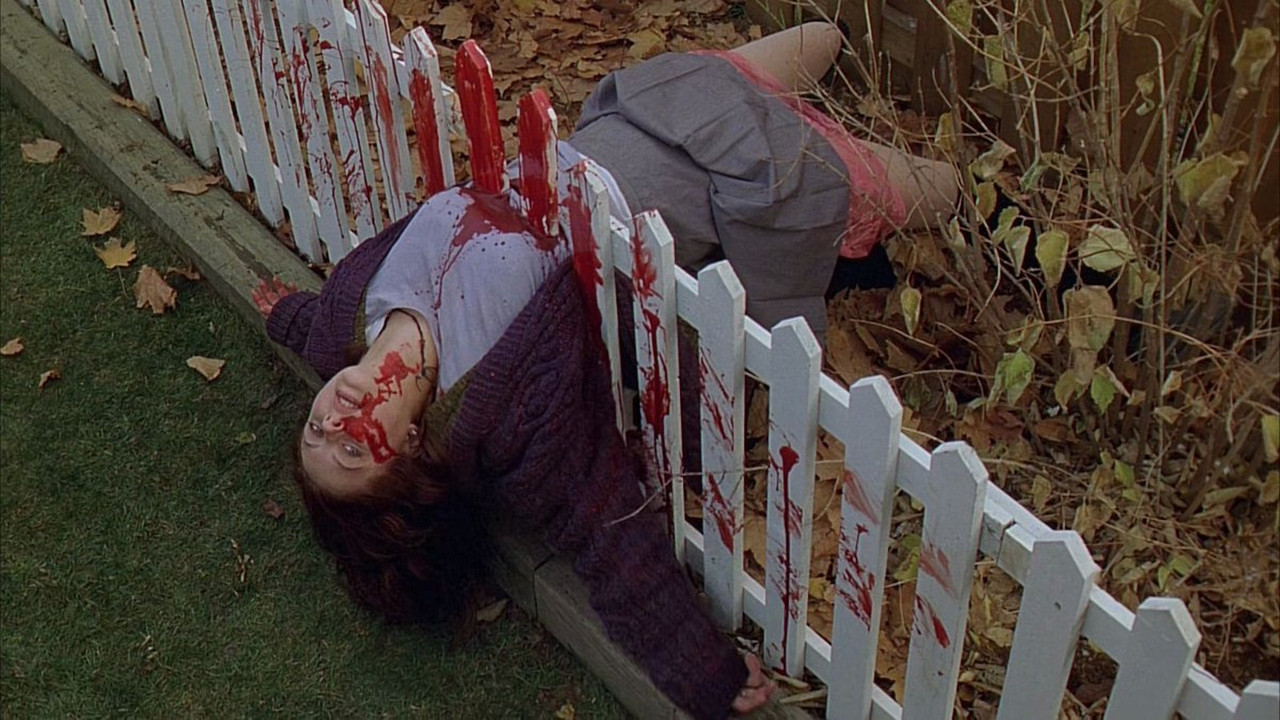
The silence of Bailey Downs is deceptive. It’s the suffocating quiet of manicured lawns and identical houses, a suburban stillness that breeds secrets and festers beneath the surface. And into this placid nightmare step Ginger and Brigitte Fitzgerald, sisters bound by blood, adolescent angst, and a shared, almost performative, obsession with death. Ginger Snaps doesn't just begin; it bleeds onto the screen, its opening montage of staged death photos setting a tone of macabre beauty that lingers like the metallic tang of fear. Arriving in 2000, just as the flickering glow of the VCR was starting to fade for many, this Canadian gem felt like a vital, visceral throwback – a creature feature with teeth, brains, and a startlingly relevant bite.

Blood Sisters, Suburban Nightmares
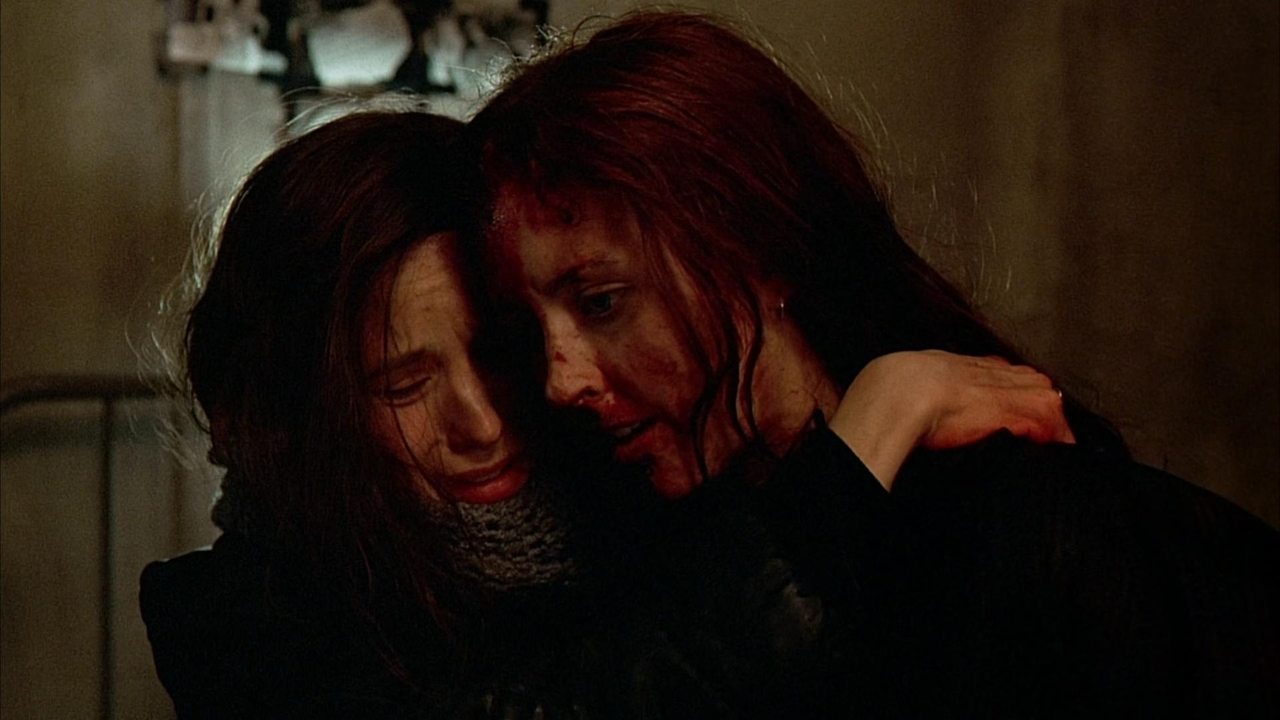
At the heart of the film is the intense, almost suffocating relationship between Ginger (Katharine Isabelle) and Brigitte (Emily Perkins). They are outsiders by choice, their pact "Out by sixteen or dead in the scene, but together forever" a shield against the perceived horrors of conformity and burgeoning womanhood. Director John Fawcett (who would later co-create Orphan Black) and writer Karen Walton craft a world where the mundane anxieties of high school – social hierarchies, burgeoning sexuality, the terrifying onset of puberty – are amplified into genuine horror. The genius of Ginger Snaps lies in its central metaphor: lycanthropy as a brutal, uncontrollable allegory for menstruation and female maturation. It's a concept so potent, so darkly clever, it feels astonishing it hadn't been explored with such ferocity before. Remember the sheer awkwardness and body betrayal of those years? This film takes that feeling and twists it into something feral.
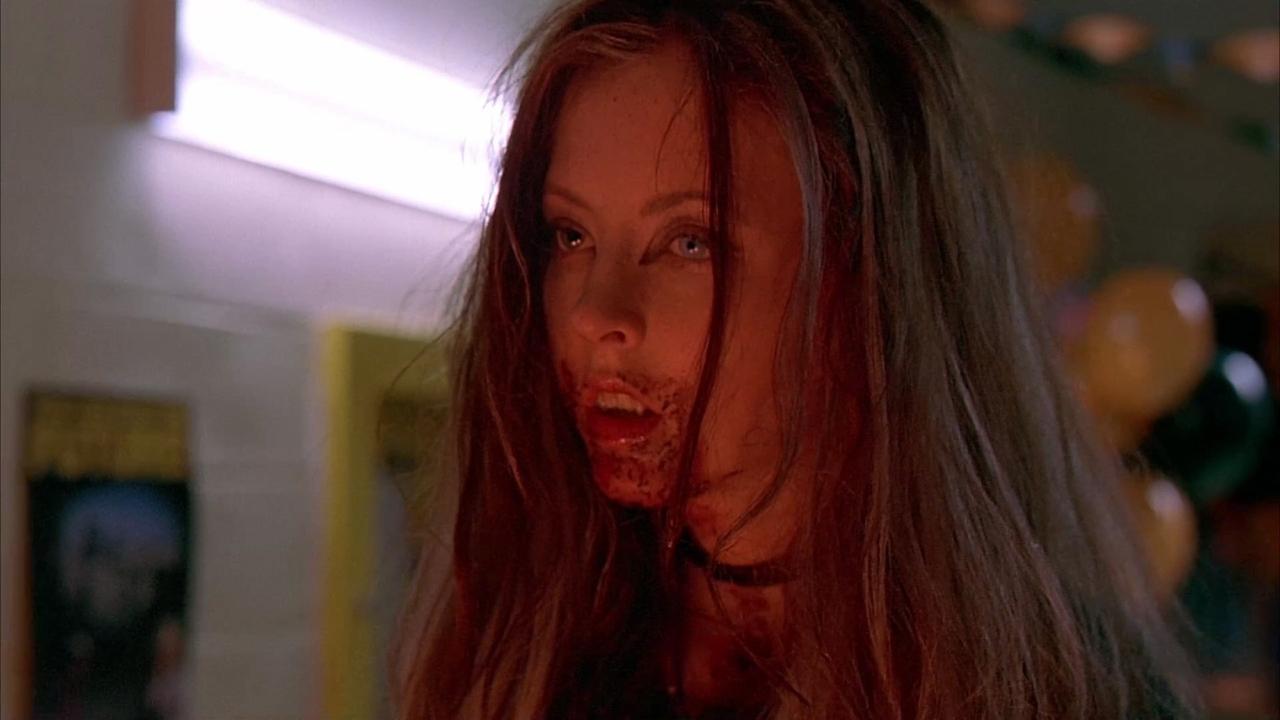
Isabelle’s transformation as Ginger is phenomenal. She shifts from sullen goth girl to something predatory and dangerously alive, her initial confusion giving way to a terrifying embrace of her new power. But it’s Emily Perkins as the mousy, fiercely loyal Brigitte who anchors the film’s emotional core. Her desperate attempts to understand, control, and ultimately save her sister from the beast within are heartbreaking. Their chemistry is electric, the believable intimacy of their sisterhood making the unfolding tragedy all the more impactful. Supporting players like Kris Lemche as Sam, the local drug dealer with a surprising knowledge of botany and folklore, add texture without ever pulling focus from the central dyad.
The Beast Within the Budget
Filmed on a modest budget (around $5 million CAD), Ginger Snaps is a masterclass in making limitations work. The werewolf effects lean heavily on practical makeup and creature design, eschewing slick (and often quickly dated) CGI for something more tangible and unsettling. The gradual nature of Ginger's transformation – the sprouting hair, the tailbone growth, the shifting features – feels disturbingly organic, rooted in body horror rather than fantasy spectacle. There’s a raw, Cronenbergian quality to it that sticks with you. Reportedly, the complex practical effects required Katharine Isabelle to endure hours in the makeup chair, a testament to the commitment involved in bringing this creature to life so convincingly before digital took over completely. The creature designs themselves, while perhaps not the hulking beasts of Hollywood lore, possess a lean, desperate viciousness that feels perfectly suited to the film's tone. Doesn't that slightly uncanny, practical look often feel more genuinely wrong than pixel-perfect monsters?
Feminist Fangs and Lasting Bite
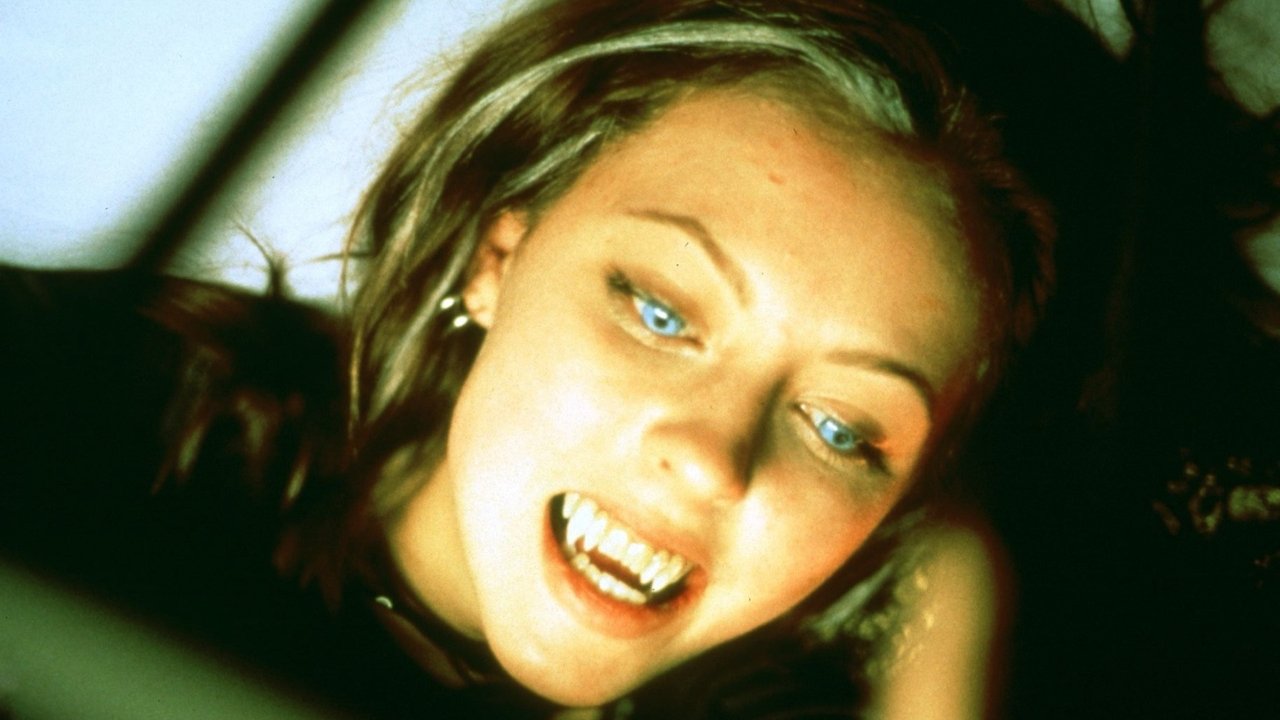
Ginger Snaps wasn't just another monster movie; it felt like a vital injection of female perspective into a genre often dominated by male anxieties. Karen Walton's script is sharp, witty, and unflinching in its exploration of female bodily experience, societal expectations, and the often-fraught dynamics between young women. It cleverly subverts horror tropes, presenting the monstrous not just as an external threat, but as an internal, biological force intertwined with identity itself. Its initial release was somewhat muted, struggling to find distributors who understood its unique blend of horror, drama, and dark satire. Yet, like many films we cherish from the era, it found its audience – fiercely loyal and growing – through home video and word-of-mouth, cementing its status as a cult classic. Did its sharp, female-centric take initially throw distributors who were expecting something more conventional? It certainly feels like a film that had to fight for its place.
The film’s atmosphere is thick with autumnal dread, John Fawcett making excellent use of the bleak Canadian landscape and the sterile conformity of suburbia. The score by Michael Shields enhances the mood, shifting from melancholic undertones to jarring bursts of aggression. It’s a film that understands that true horror often lurks not in the shadows, but in the brightly lit kitchens and seemingly safe school hallways where monstrous changes are taking place.
VHS Heaven Rating & Final Thought
Ginger Snaps earns a solid 9/10. It's intelligent, visceral, and emotionally resonant horror filmmaking. The central performances are outstanding, the practical effects are effectively gruesome, and its allegorical depth elevates it far beyond typical creature feature fare. While technically a 2000 release, its spirit, its practical effects focus, and its journey to cult status via home video feel intrinsically linked to the best discoveries from the late VHS era.
Ginger Snaps remains a potent and relevant piece of horror cinema, a savage coming-of-age story wrapped in werewolf skin that still feels sharp, smart, and chillingly effective today. It's a reminder that sometimes, the most terrifying transformations are the ones happening right under our own skin.