The static hiss of the ocean storm on screen is almost comforting, a familiar sound from countless late nights bathed in the glow of a rented tape. But the comfort quickly curdles. There's a specific kind of cold dread that permeates Virus (1999), a film that arrived like a rogue wave at the tail end of the 90s, leaving a slick of machine oil and something far more sinister in its wake. It wasn't subtle, it wasn't particularly deep, but it tapped into a primal fear: the violation of the flesh by the cold, indifferent logic of the machine. Watching it again now evokes that same uneasy feeling, the chill that creeps up your spine when exploring the dark, echoing corridors of its central, doomed vessel.

Adrift in a Sea of Steel and Gore
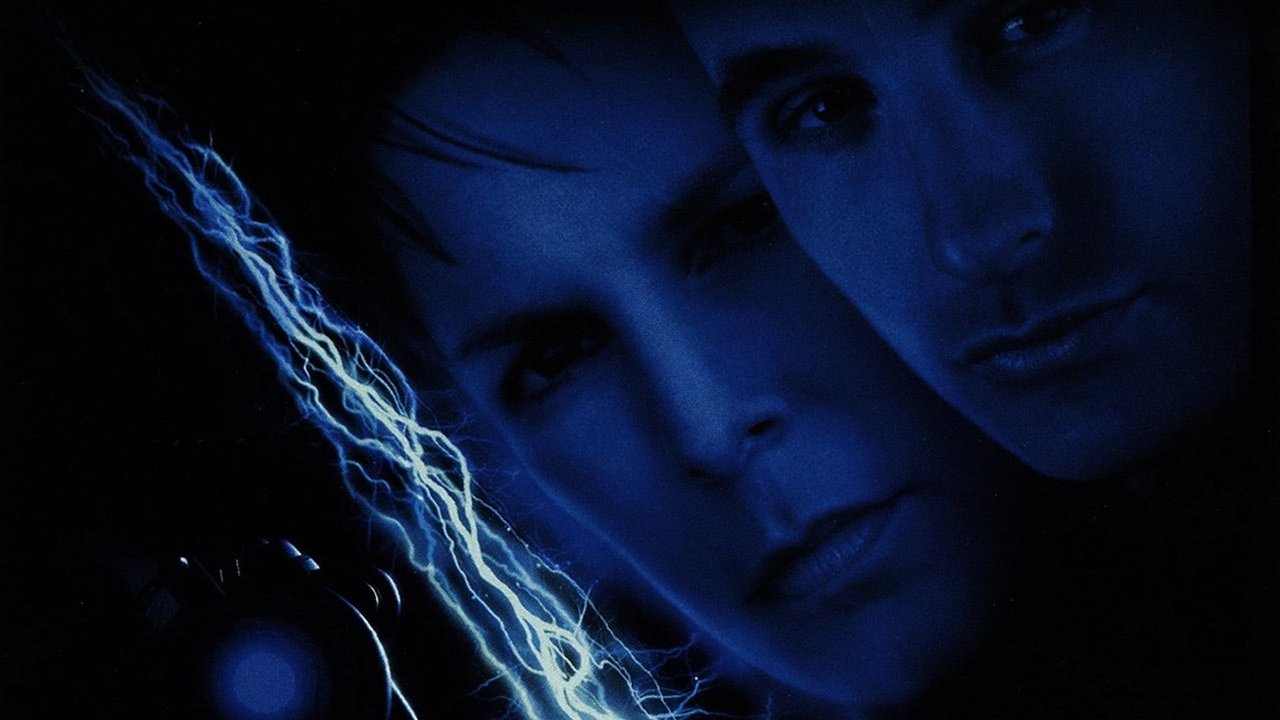
The premise is pure pulp survival: a battered American tugboat, the Sea Star, caught in a typhoon, stumbles upon a seemingly deserted Russian satellite-tracking ship, the Akademic Vladislav Volkov. Led by the pragmatic Captain Everton (Donald Sutherland) – practically vibrating with avarice at the thought of a multi-million dollar salvage claim – and featuring stalwart navigator Kit Foster (Jamie Lee Curtis) and skeptical engineer Steve Baker (William Baldwin), the crew boards the derelict. What they find isn't treasure, but a charnel house. An extraterrestrial energy lifeform, transmitted via satellite, has commandeered the ship's systems and, more horrifyingly, its crew, converting them into grotesque biomechanical monstrosities. It views humanity as nothing more than a "virus," spare parts for its relentless expansion.
Director John Bruno, an Academy Award winner for his visual effects work on James Cameron's The Abyss, brings a certain tactile grisliness to the proceedings. This isn't the sleek, digital menace that would soon dominate cinema; Virus revels in the tangible horror of its creations. The film feels drenched – in seawater, in blood, and in the pervasive damp chill of the dying ship. The production design of the Volkov is a character itself: a labyrinth of rusted gantries, sparking control panels, and claustrophobic crew quarters, perfectly capturing the feeling of being trapped miles from anywhere with something utterly hostile. The score and sound design amplify this, mixing the groaning protests of the ship with the unnerving skittering and grinding of the biomechanical horrors stalking the crew.

The Beauty of the Abomination
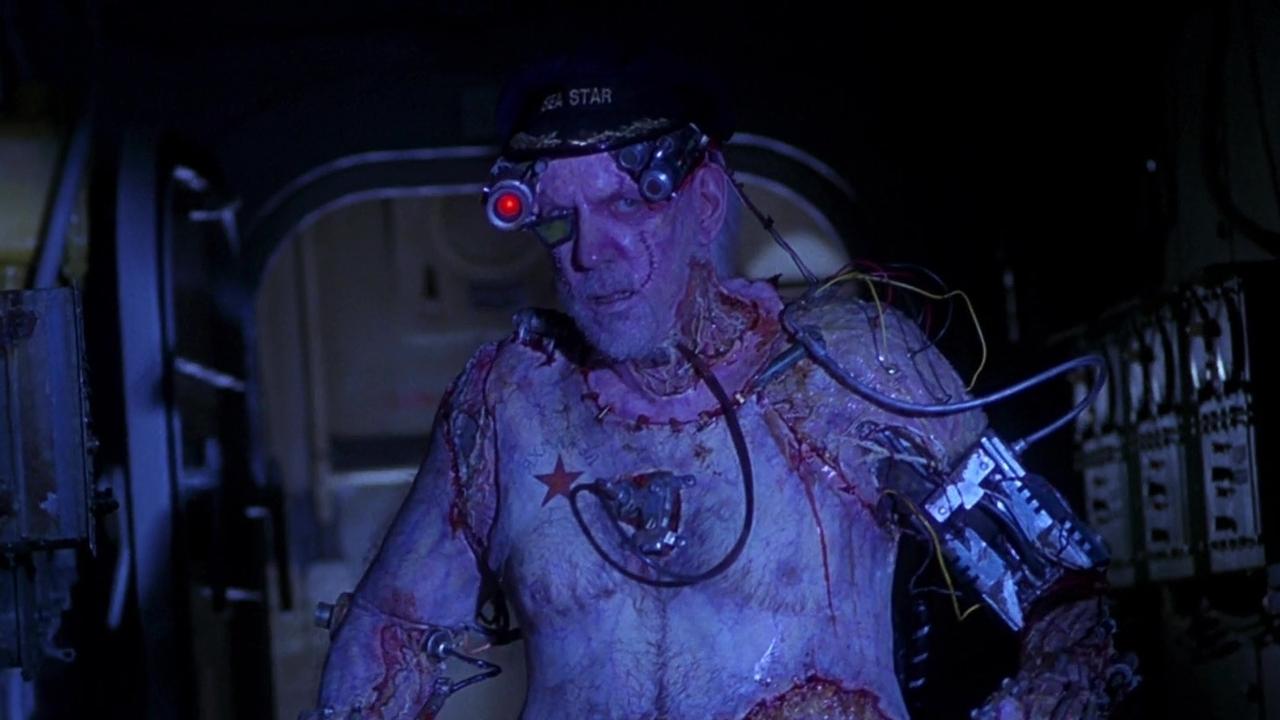
Let's be clear: the star of Virus is the creature design and the phenomenal practical effects work. Originating from a Dark Horse comic series by Chuck Pfarrer (who also co-wrote the screenplay), the film's antagonists are nightmarish cyborgs – fusions of human tissue and salvaged ship parts. Automated workshops churn out these horrors, grabbing screaming victims and integrating them into whirring, sparking weapons platforms or multi-limbed killing machines. There's a disturbing weight and physicality to these creations, from the smaller, scurrying recon units to the truly imposing "Goliath" robot cobbled together in the ship's machine shop.
This dedication to practical realization wasn't easy. The production was notoriously troubled, plagued by weather delays, creative differences, and a ballooning budget (reportedly soaring towards $75 million – a hefty sum for the era, roughly $140 million today). Creating the complex animatronics and puppets pushed the boundaries of late-90s tech. John Bruno's effects pedigree is evident; you can feel the clanking menace, the slimy integration of flesh and metal. Does it still hold up perfectly? Perhaps not against modern CGI scrutiny, but the feel of it, the sheer Cronenbergian body-horror ingenuity, remains potent. That unsettling scene where a crewmate is forcibly integrated into a machine? It still carries a visceral jolt that pixels often struggle to replicate.
Humanity Under Pressure
Against this mechanical onslaught, the human element struggles. Jamie Lee Curtis, a genre legend thanks to Halloween (1978) and fresh off Halloween H20: 20 Years Later (1998), brings her signature resilience and intelligence to Foster. She’s the anchor of competence in a sea of rising panic and greed. It's widely known that Curtis herself wasn't fond of the final film, reportedly calling it a "piece of shit" and the worst experience of her professional life – a sentiment perhaps reflecting the arduous shoot or dissatisfaction with the script's B-movie leanings rather than the technical craft on display. William Baldwin serves adequately as the slightly generic male lead, while Donald Sutherland gleefully devours the scenery as the increasingly unhinged Captain Everton, his obsession with salvage overriding basic survival instincts. His descent adds a layer of human fallibility amidst the alien threat.
The script, co-written by Pfarrer and Dennis Feldman (Species), isn't the film's strongest asset. Dialogue can be clunky, and character arcs are fairly predictable. It functions primarily as a delivery system for tense set pieces and creature encounters. Yet, within that framework, it generates genuine moments of suspense – the initial exploration of the silent ship, the first shocking reveals of the cyborgs, the desperate final stand. It leans heavily into the classic "monster stalks the dwindling survivors in a confined space" trope, familiar from Alien and The Thing, but gives it a unique technological twist.
Legacy of a Misfire?
Virus was a significant box office bomb upon release, grossing only around $30 million worldwide against its hefty budget, and critical reception was largely scathing. It seemed destined to be forgotten, a casualty of pre-millennium studio excess. Yet, time and the comforting glow of VHS nostalgia have been somewhat kind. For enthusiasts of practical effects, creature features, and dark, atmospheric sci-fi horror, Virus offers something substantial. It's an ambitious, if flawed, attempt to blend high-concept sci-fi with visceral body horror and action. It stands as a fascinating artifact from an era when studios would still gamble huge sums on R-rated, effects-heavy genre pictures banking on practical wizardry.
The dread it evokes isn't psychological or existential; it's primal and physical. It’s the fear of being disassembled, repurposed, reduced to mere components by an unfeeling intelligence. It's the clank of metal in the dark, the spark of welding torches where eyes should be, the cold logic of the machine overriding the warmth of life.
VHS Heaven Rating: 6/10
Justification: While hampered by a standard script and uneven pacing, Virus earns its points through sheer atmospheric dread, outstanding practical creature effects that remain impressive in their tangible horror, and a committed performance from Jamie Lee Curtis. It successfully creates a claustrophobic, hostile environment and delivers some genuinely unsettling biomechanical nightmares. Its troubled production and status as a notorious flop add a layer of fascinating retro history, but fundamentally, it delivers enough intense creature feature moments and late-90s practical effects artistry to warrant a look, especially for genre devotees who remember the heft of those elaborate animatronics.
Final Thought: Virus may not be a perfect organism, but its grotesque, practical heart still beats with a cold, mechanical menace that lingers long after the tape stops rolling. It’s a reminder of a time when cinematic monsters felt disturbingly, wonderfully real.