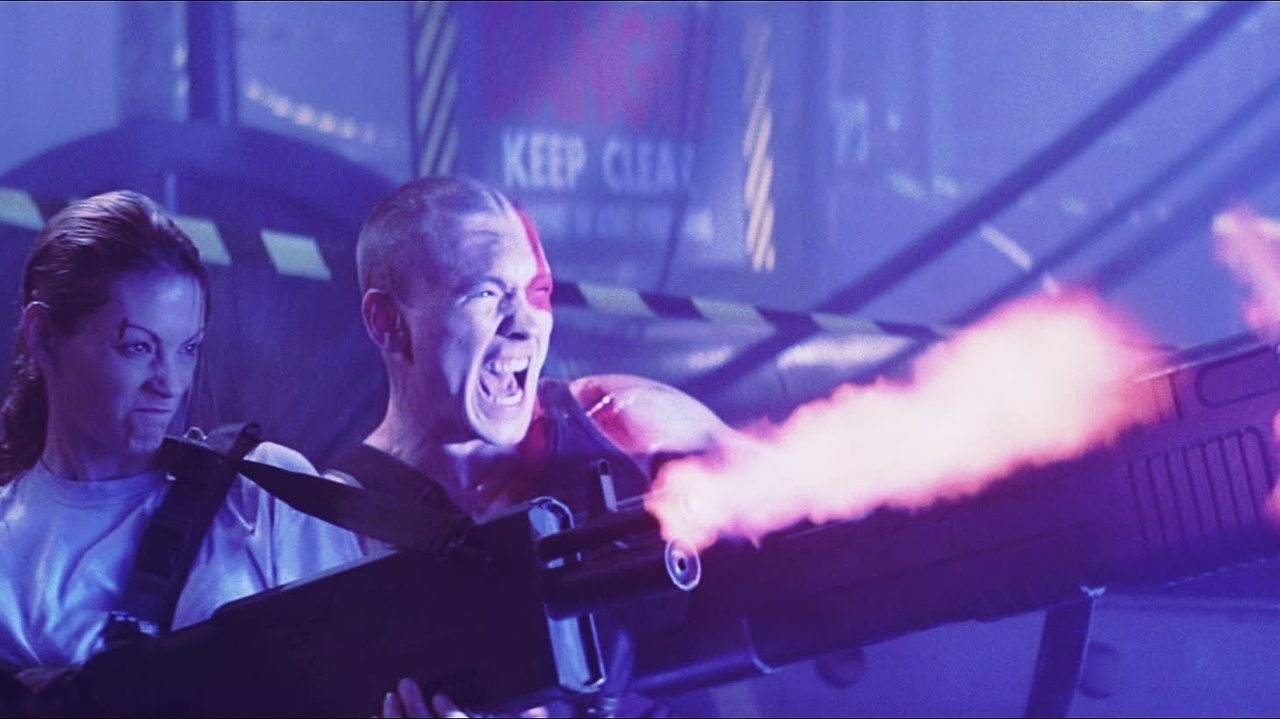
The flickering fluorescent lights of the Chaank Armaments Corporation barely illuminate the steel corridors, casting long, distorted shadows that promise more than just corporate drudgery. Within these walls, something truly monstrous is brewing, not just in the circuits and steel of advanced weaponry, but in the fractured mind of its creator. Death Machine (1995) plunges us headfirst into this techno-dystopian nightmare, a film that feels like it crawled directly out of a forgotten corner of the video store, smelling faintly of stale popcorn and ozone.
Corporate Hell, Cyberpunk Heart
The setup is classic cyberpunk-infused paranoia. The monolithic Chaank Corp, run by the ethically bankrupt Hayden Cale (a perfectly slimy William Hootkins, familiar from Batman (1989) and Raiders of the Lost Ark (1981)), is playing fast and loose with human lives in the name of profit. When a new executive, the idealistic (and perhaps naive) Raimi (Ely Pouget), discovers the company's lethal secrets – particularly the illegal "Project Hardman" cyborg supersoldiers and the even more terrifying "Frontline Morale Destroyer" – she finds herself marked for death. Her only potential allies are a ragtag group of eco-terrorists who've infiltrated the building. But the real terror isn't just corporate malfeasance; it's the man behind the machine.
Dourif Unleashed
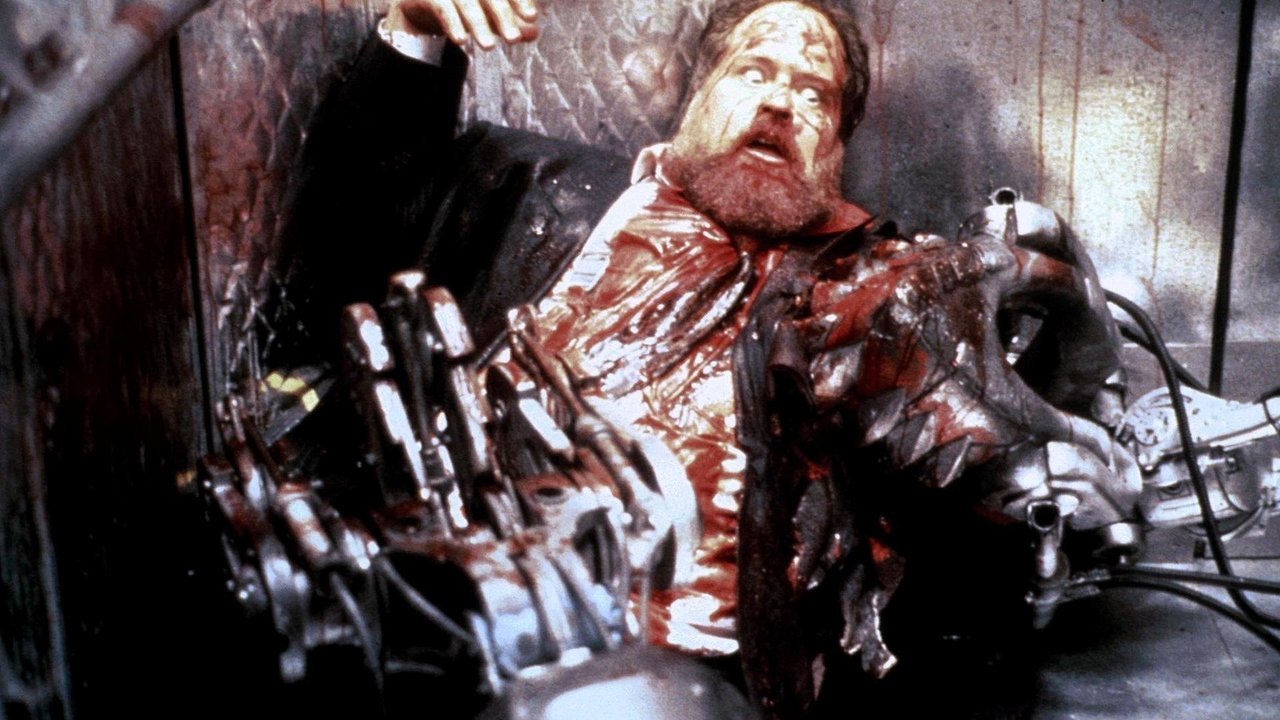
Enter Jack Dante, played with mesmerising, unhinged glee by the legendary Brad Dourif. Already a genre icon thanks to his chilling voice work as Chucky in Child's Play (1988) and his unforgettable Oscar-nominated turn in One Flew Over the Cuckoo's Nest (1975), Dourif absolutely devours the role of the weapons designer pushed over the edge. Dante is a grotesque figure, a socially inept genius with mommy issues, a penchant for quoting philosophers, and a workshop filled with deadly toys. His descent from disgruntled employee to vengeful puppet master, unleashing his ultimate creation upon his perceived enemies trapped within the locked-down Chaank building, is the black, beating heart of the film. Dourif doesn't just chew the scenery; he grinds it into metal filings and spits it back with psychotic intensity. It’s a performance that elevates the entire proceedings, making Dante a truly memorable 90s movie villain.
Birth of the Warbeast
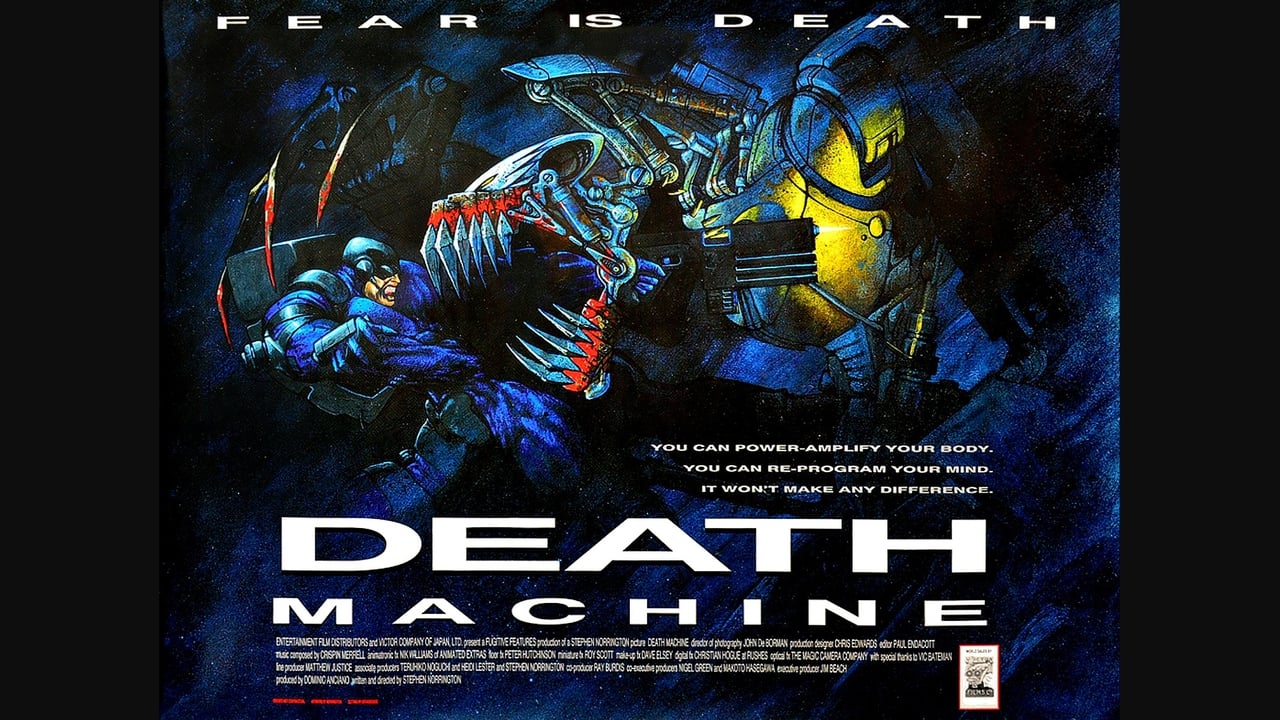
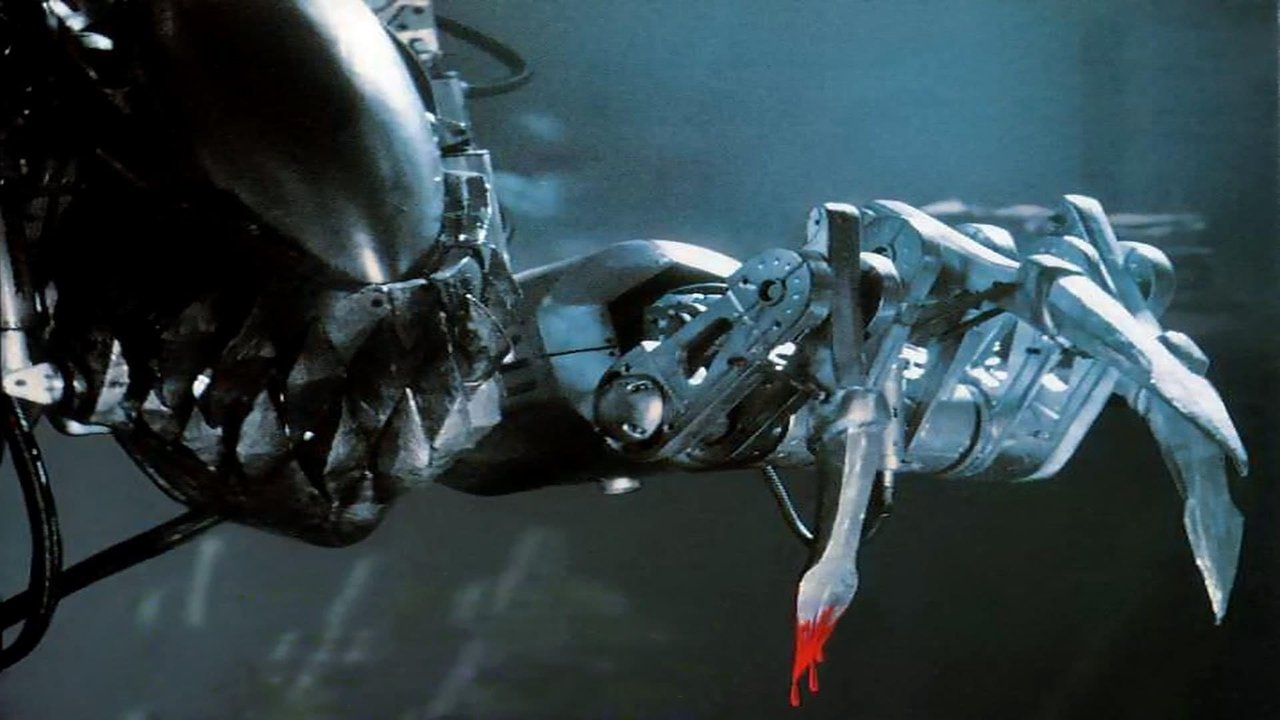
And then there's the titular machine itself. Officially the "Frontline Morale Destroyer," but affectionately known to fans as the Warbeast, this thing is pure, distilled 90s practical effects menace. A hulking monstrosity of metal teeth, claws, and whirring blades, it’s like H.R. Giger’s Alien had a drunken one-night stand with ED-209 from RoboCop (1987). Directed by Stephen Norrington in his feature debut – years before he brought Blade (1998) to sleek, stylish life and infamously helmed the troubled production of The League of Extraordinary Gentlemen (2003) – Death Machine revels in the physicality of its creation. Made for a relatively modest budget (around $3 million), the Warbeast looks genuinely dangerous, a tangible threat stomping through claustrophobic hallways. You feel the weight, the screech of metal on metal. Norrington, who also wrote the script, clearly poured his passion for creature features and gritty action into this debut, even if the narrative sometimes struggles to keep pace with its own ambition. Reportedly, the Warbeast suit was cumbersome and hot for the operator, a classic challenge of the practical effects era that often translates into a certain lumbering, unstoppable feel on screen.
Retro Fun Facts: Dante's Playground
- The film was shot primarily at Pinewood Studios in the UK, giving it that distinct, slightly industrial European sci-fi aesthetic common in some genre films of the era.
- Character names like John Carpenter, Sam Raimi, and Scott Ridley are blatant, affectionate nods to horror and sci-fi directing legends. It’s a film made by fans, for fans.
- The longer Director's Cut (often found on European releases) restores about 15 minutes of footage, fleshing out some character motivations and adding a bit more connective tissue, though the core chaotic energy remains the same.
- Despite its cult following now, Death Machine received mixed reviews upon release and wasn't a box office smash, solidifying its status as a quintessential VHS discovery. Its tagline often screamed: "Humanity's Last Stand... Has Already Begun!"
Flawed Gem, Enduring Charm
Let's be honest, Death Machine isn't perfect. The plot sometimes feels like a greatest hits compilation of late 80s/early 90s sci-fi action tropes (Aliens, Terminator, Predator all get visual or thematic nods). Some of the supporting characters feel underdeveloped, serving primarily as fodder for Dante's creations. The dialogue occasionally dips into pure B-movie territory. Yet, these imperfections are part of its charm. It wears its influences on its sleeve but injects enough manic energy, propelled by Dourif's performance and the impressive creature design, to carve out its own identity. The third act, essentially a non-stop chase through the darkened building with the Warbeast relentlessly hunting the survivors, is a masterclass in low-budget, high-impact tension. Remember how genuinely unnerving those practical monster effects could feel back then, before CGI saturation? Death Machine delivers that feeling in spades.
It’s the kind of film I remember discovering on a dusty shelf, drawn in by the promise of cybernetic carnage and Brad Dourif’s wild eyes on the cover. Renting it felt like unearthing a hidden treasure, something raw and unfiltered compared to the polished blockbusters. Watching it late at night, the clanking footsteps of the Warbeast echoing in the dark… it definitely left an impression. Doesn't that monster design still feel unnerving, even knowing it's hydraulics and foam latex?
Rating: 7/10
Death Machine earns its score through sheer audacity, Brad Dourif's unforgettable performance, and a genuinely menacing practical monster that stands as a testament to 90s creature craft. While derivative in parts and rough around the edges, its relentless energy, claustrophobic atmosphere, and B-movie heart make it a standout slice of cyber-horror from the VHS era. It’s a potent reminder of Stephen Norrington’s early, raw talent and a film that still delivers visceral thrills for fans of gritty, practical sci-fi action. It may not be high art, but damn, it's a fun ride through corporate hell.