The message arrives cloaked in the language of mathematics, a whisper from the void promising knowledge, maybe even salvation. Instead, it delivers a blueprint for something else entirely. Something hungry. Something terrifyingly efficient. 1995's Species didn't just tap into our fascination with extraterrestrial life; it twisted it into a primal fear, wrapping biological horror in a package that was dangerously, deceptively beautiful.
Genesis of Dread
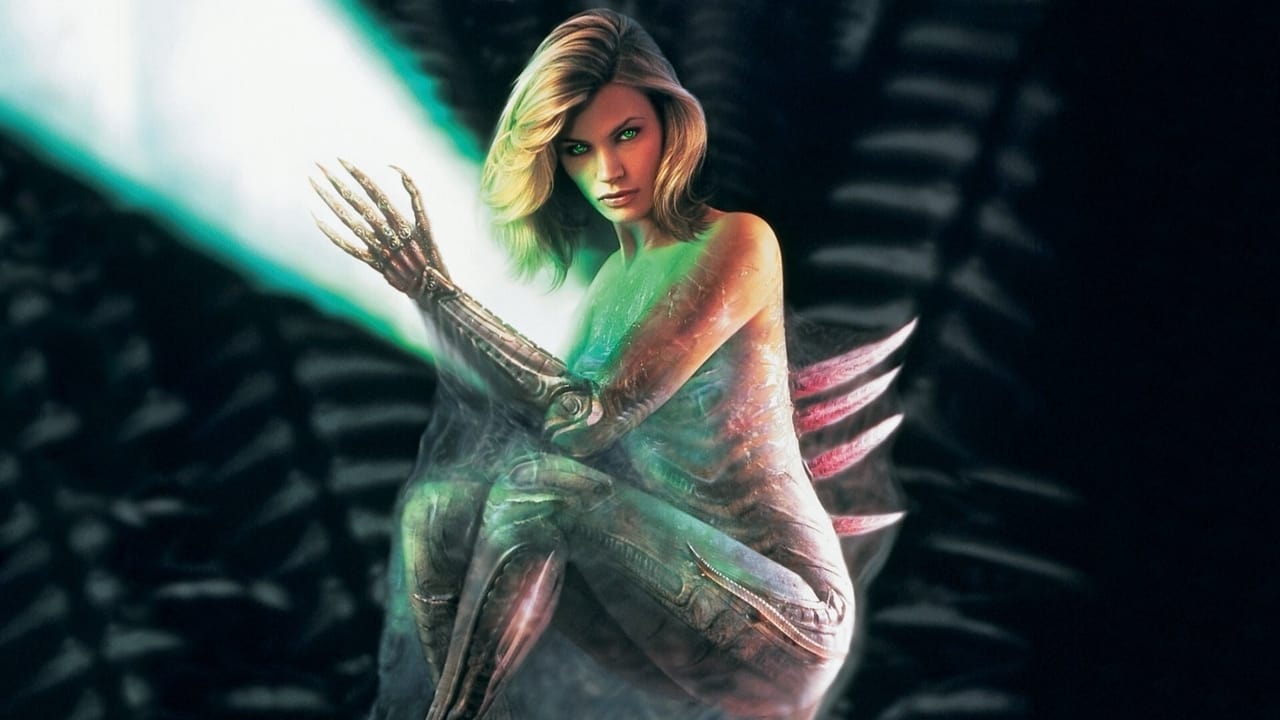
From the sterile confines of a government lab, the nightmare unfolds. Scientists, led by the intense Xavier Fitch (Ben Kingsley, bringing a surprising gravitas usually reserved for more prestigious fare), follow instructions beamed from across the stars, splicing alien DNA with human. The result is Sil, a being that grows at an exponential rate, morphing from infant to young woman in mere months. When her containment is inevitably breached, the race is on. Fitch assembles a motley crew – a cynical government assassin (Michael Madsen, perfectly cast in his signature laconic cool), a sensitive empath (Forest Whitaker), a pragmatic anthropologist (Alfred Molina), and a biologist (Marg Helgenberger) – to track Sil down before she can fulfill her biological imperative: mate and propagate. It’s a premise ripe for exploitation thrills, and director Roger Donaldson (No Way Out, Dante's Peak) delivers a slick, fast-paced B-movie elevated by its concept and creature design.
The Siren's Song
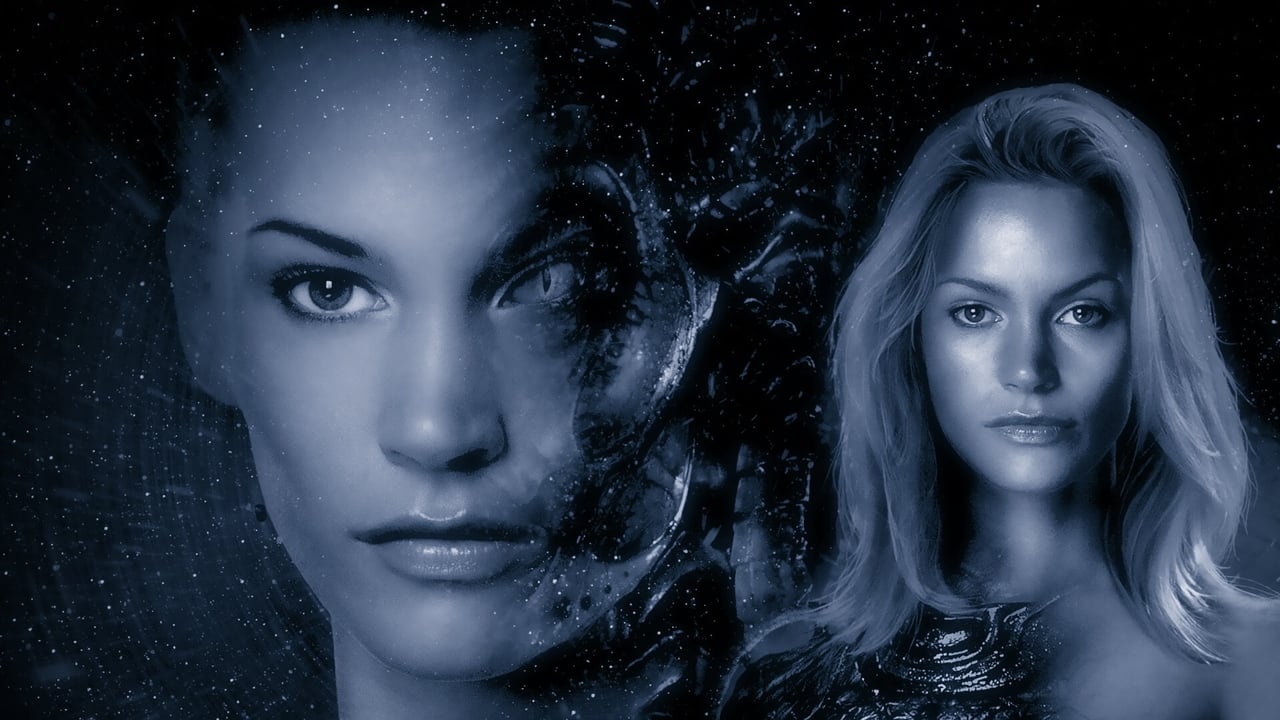
At the heart of the film's unsettling power is Natasha Henstridge in her striking debut role. Sil is a predator disguised as prey, learning human behavior with terrifying speed, primarily focused on finding a suitable male to continue her lineage. Henstridge navigates this challenging role with an otherworldly presence, embodying both naive curiosity and cold, calculating lethality. Her performance is largely physical, conveying Sil's alien nature through subtle movements and an unnerving stillness. The film leans heavily into the sexual aspect of Sil's drive, making her allure a key part of her threat – a decision that certainly caught attention back in '95 and feels distinctly of its era, pushing the boundaries of mainstream sci-fi horror. Remember the palpable tension in those scenes where Sil assesses potential mates? It wasn't just about violence; it was about an invasive biological imperative playing out in disturbingly familiar human settings.
Giger's Ghost in the Machine
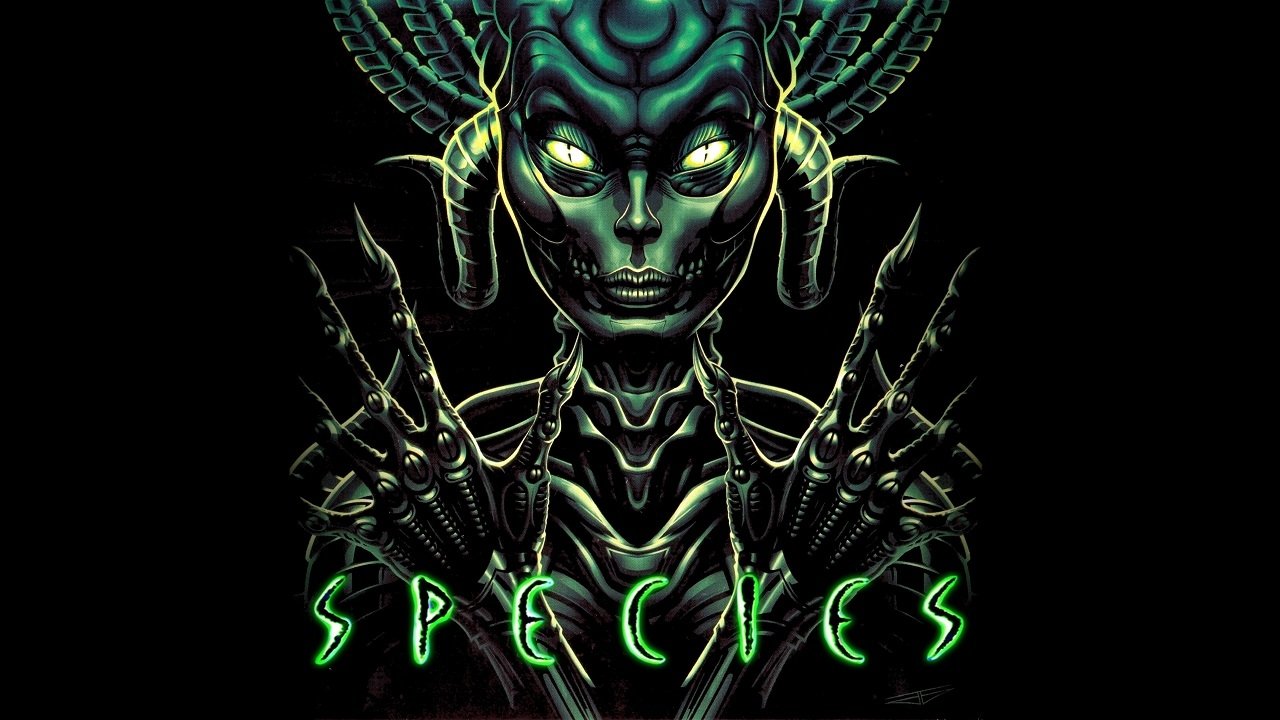
You can't talk about Species without invoking the name H.R. Giger. Fresh off his iconic, Oscar-winning work for Alien (1979), the Swiss surrealist was brought in to design Sil's alien form. His signature biomechanical aesthetic – that disturbing fusion of flesh and machine, organic and artificial – permeates the creature's look. While the limitations of mid-90s effects technology meant Giger's full vision wasn't always perfectly realized on screen (a blend of practical suits, puppetry, and nascent CGI was employed), his design philosophy is undeniable. The translucent skin, the skeletal framework, the strangely elegant yet horrifying appendages – it all bears his unmistakable mark. Reportedly, Giger was initially unhappy with some interpretations of his designs, feeling the studio softened certain elements, but his core contribution gives Species its most enduring and nightmarish imagery. Doesn't that alien design still possess a unique kind of biological revulsion? The practical suit work, especially, holds a tactile creepiness that pure CGI often struggles to replicate.
The Urban Hunt
The chase takes the team through the neon-lit streets and shadowy corners of Los Angeles, turning the familiar urban landscape into a hunting ground. Donaldson keeps the pace brisk, intercutting the team's methodical (and sometimes clumsy) pursuit with Sil's increasingly desperate and violent attempts to reproduce. There are some genuinely tense sequences, particularly Sil's transformations, which often erupt with little warning. The supporting cast does solid work grounding the fantastical elements. Madsen brings his effortless cool, Molina adds intellectual weight, and Whitaker's empath character provides a unique, if somewhat underdeveloped, angle on tracking the alien. Fun fact: the script apparently went through several iterations, with early drafts potentially featuring an even bleaker tone. The final version strikes a balance between scientific thriller and creature feature, aiming for broad appeal, which it certainly found, grossing over $113 million worldwide against a $35 million budget – a solid hit back in the day.
Retro Effects and Lasting Impressions
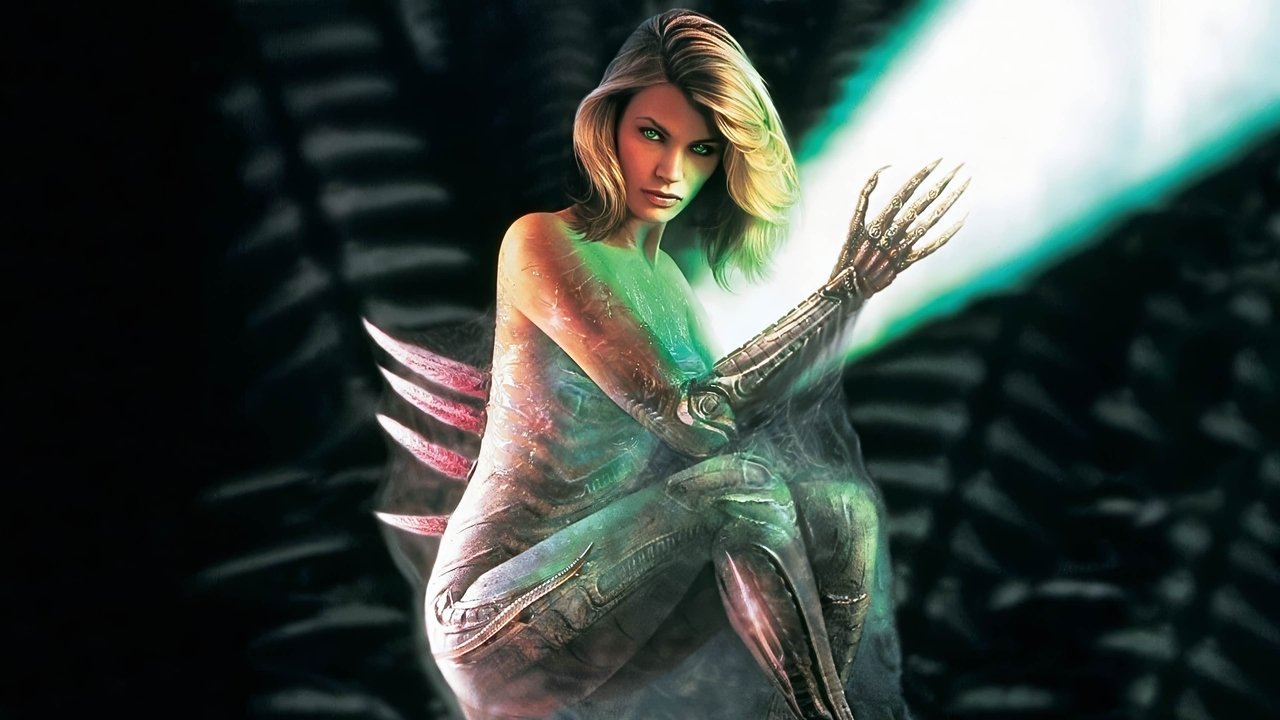
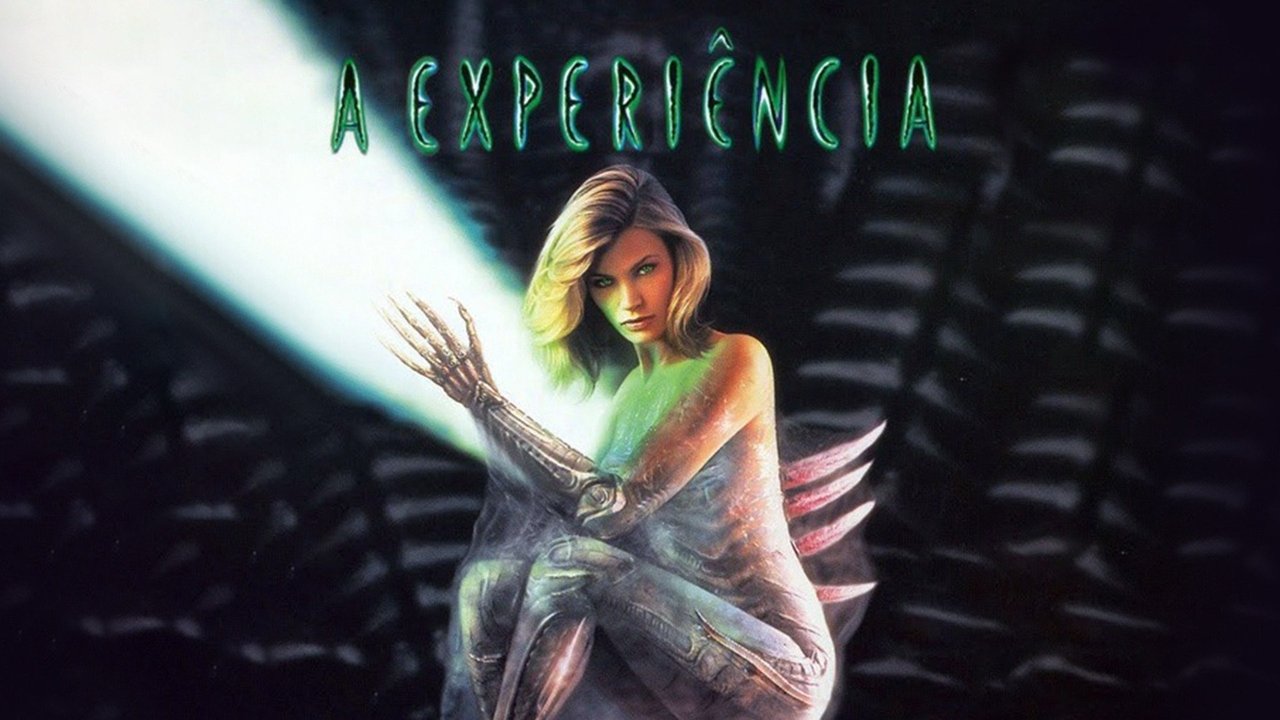
Watching Species today is a fascinating time capsule of mid-90s filmmaking. The blend of practical effects and early computer graphics is sometimes seamless, sometimes jarringly obvious, but always earnest. There's a certain charm to seeing those ambitious attempts to bring Giger's monstrous creation to life before CGI became ubiquitous. Christopher Young's score effectively underscores the dread and action, adding another layer to the film's tense atmosphere. While perhaps not reaching the philosophical depths of Alien or the sheer intensity of The Thing (1982), Species carved out its own niche. It was a sleeker, sexier, and distinctly 90s take on the alien invasion trope. It spawned several sequels, though none quite captured the specific alchemy of the original – that potent mix of high-concept sci-fi, body horror, and Giger's unforgettable design work. I distinctly remember renting this one from Blockbuster, the lurid cover art promising exactly the kind of creature feature thrills perfect for a Friday night.
VHS Heaven Rating: 7/10
Species isn't high art, nor does it pretend to be. Its characters aren't deeply complex, and the plot relies on familiar beats. However, it succeeds admirably as a stylish, effective, and often genuinely creepy sci-fi horror thriller. Natasha Henstridge's star-making turn, H.R. Giger's iconic creature design, and a solid dose of suspenseful action make it a standout of its time. The blend of practical and early digital effects is a fascinating snapshot of the era, and the core concept remains undeniably unnerving. It might feel dated in places, but its power to deliver slick, Giger-infused creature feature thrills remains potent. For fans of 90s genre cinema, it’s a tape well worth rewinding.