Okay, let's rewind the tape to the curious corner of late 90s Italian cinema, a place where television behemoths tried to conquer the big screen, sometimes with wonderfully bizarre results. Remember stumbling upon those odd foreign language tapes in the rental store, the covers promising something utterly different? That's the feeling evoked by Paolo Costella's 1999 film, Tutti gli uomini del deficiente (roughly, All the Idiot's Men), a cinematic venture deeply rooted in the specific comedic soil of its homeland. It’s less a straightforward movie and more a chaotic, sometimes baffling, but undeniably unique transmission from another comedy dimension.
From Small Screen Giants to Feature Film Gamble
To understand this film, you first need to understand the phenomenon of the Gialappa's Band – the trio of Marco Santin, Carlo Taranto, and Giorgio Gherarducci who co-wrote the screenplay with director Costella. In Italy during the 80s and 90s, these guys were comedy royalty, primarily known for their hilarious, often merciless voice-over commentary on everything from football matches (Mai Dire Gol being their legendary show) to reality TV and B-movies. Their wit was sharp, cynical, and deeply embedded in Italian pop culture. Tutti gli uomini del deficiente was their ambitious attempt to bottle that lightning for the cinema. Did it work? Well, like many ambitious translations from one medium to another, the results are... complicated.
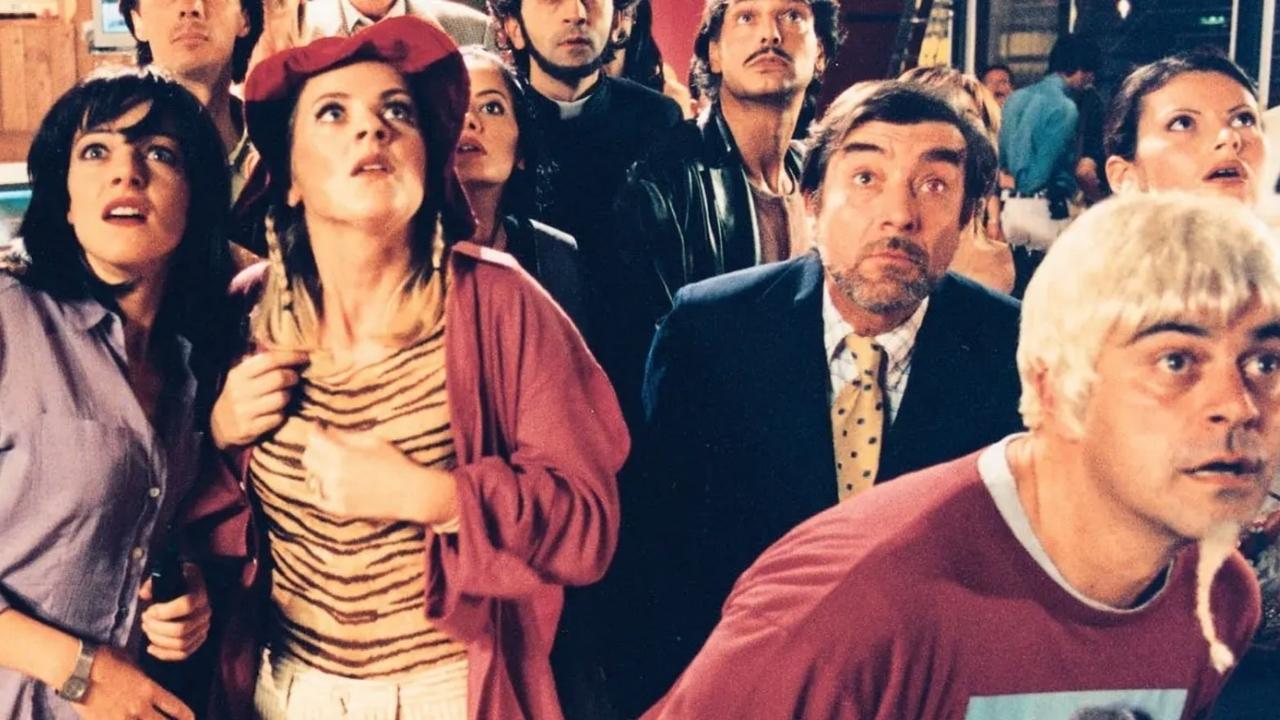
The film itself ditches a conventional narrative for something more akin to their TV sketch work. It loosely revolves around the enigmatic billionaire Leone Stella (Arnoldo Foà), a Howard Hughes-like figure who, nearing the end of his life, seeks an heir. His peculiar method involves observing various candidates through hidden cameras, judging their levels of 'deficienza' (deficiency, inadequacy, or sheer idiocy). This provides the framework for a series of interconnected vignettes showcasing a gallery of oddball characters caught in absurd situations. Think less cohesive plot, more channel-surfing through the Gialappa's collective id.
A Parade of Eccentrics
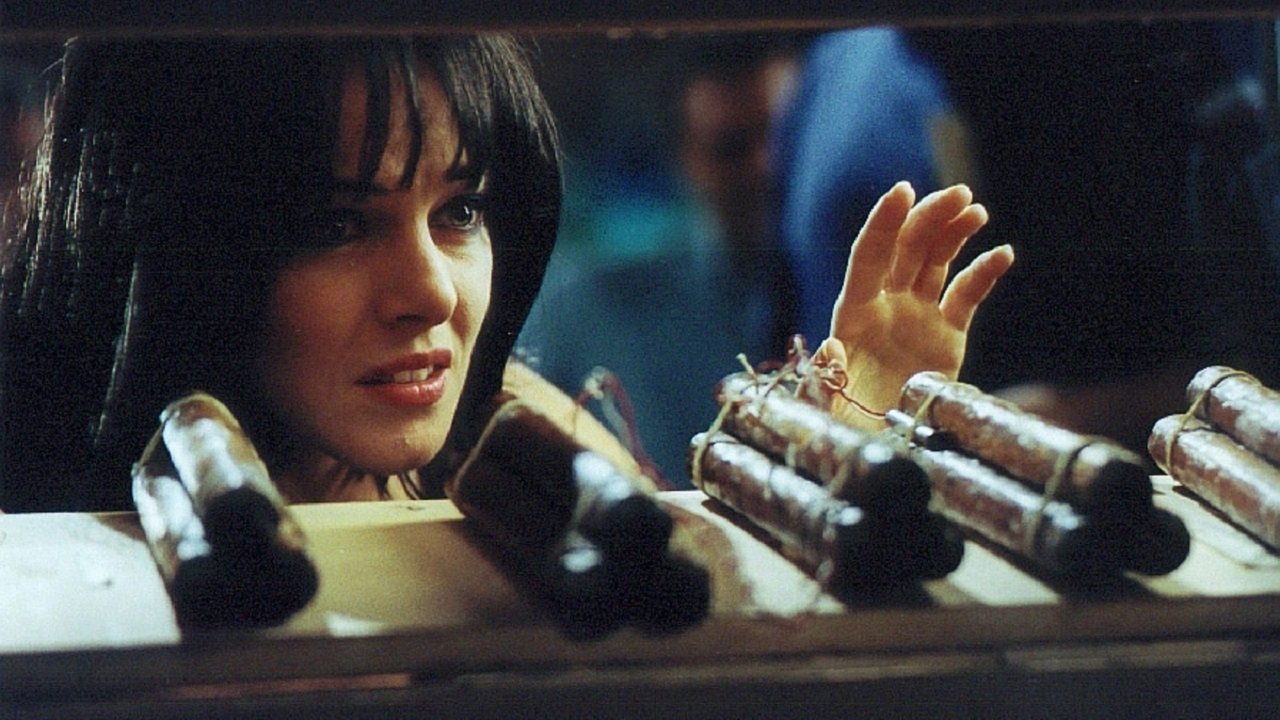
The cast is packed with faces familiar to Italian audiences of the era. We get a typically vibrant performance from Claudia Gerini as Stella Leone, a 'candidate' navigating the strange tests. Gerini, who had already made waves in films like Viaggi di nozze (1995), brings her usual energy, though the episodic structure gives her less room for deep character work than we might hope. Comedian Paolo Hendel appears as Don Bastiano, offering his brand of physical comedy, and the legendary Arnoldo Foà, a true giant of Italian stage and screen, lends considerable gravitas to the eccentric billionaire premise, even if the role itself is more conceptual than character-driven.
Part of the fun, especially if you were tuned into Italian comedy back then, is spotting cameos from rising stars like Luciana Littizzetto and Fabio De Luigi, who would become major figures themselves. The Gialappa's Band themselves contribute their signature off-screen commentary and pop up in fleeting on-screen appearances, reminding viewers whose peculiar universe this is. It’s a film that feels less directed in a traditional sense and more curated, a collection of comedic ideas thrown at the screen, linked by Stella's voyeurism and the Gialappa's narration.
Lost in Translation?
Watching Tutti gli uomini del deficiente now, particularly outside of Italy, is an interesting exercise. Much of the humour is incredibly specific – riffs on Italian regional stereotypes, media personalities, and social quirks that might fly over the heads of an international audience. It doesn’t always possess the universal absurdity of, say, Monty Python. The humour often leans towards the surreal and nonsensical, sometimes landing with a bizarre punchline, other times just feeling disjointed. The very title, a play on the serious investigative thriller All the President's Men (1976), signals its satirical, almost parodic intent from the outset.
It’s easy to see why contemporary critics felt it resembled extended TV sketches more than a cinematic whole. The pacing is uneven, and the tonal shifts between vignettes can be jarring. Yet, there’s a certain anarchic energy here, a willingness to be weird and poke fun at the media-saturated landscape of the late 90s. You get the sense the creators threw everything they had at the wall, fueled by their TV success (the film reportedly had a decent budget for an Italian comedy of the time, though pinpointing exact figures is tricky; it ultimately didn't set the box office alight as hoped). One wonders if tighter editing or a stronger central narrative thread could have elevated it. Was there a more focused version left on the cutting room floor, perhaps?
A Curiosity for the Adventurous Renter
So, why feature this oddity on VHS Heaven? Because it embodies a certain kind of film that thrived, or at least existed, in the rental era. It’s not a lost masterpiece, nor is it necessarily "so bad it's good." It’s a genuine cultural artifact – a snapshot of a specific comedy scene trying to break its formula, a time capsule of late 90s Italy, and a testament to the Gialappa's Band's unique brand of irreverence. It’s the kind of tape you might have picked up purely out of curiosity, drawn by the strange title or perhaps recognizing a familiar face on the cover (Claudia Gerini was gaining international notice around then). You might not have fully grasped all the jokes, but you'd likely remember the sheer strangeness of the experience.
Rating: 5/10
This score reflects the film's identity as a fascinating, flawed experiment. It earns points for its sheer audacity, its connection to the significant Gialappa's Band phenomenon, and the presence of Arnoldo Foà and Claudia Gerini. The stacked cast of Italian comedians is also a plus for those familiar with the scene. However, it loses points for its disjointed structure, humour that often feels impenetrable without specific cultural context, and its failure to truly translate the Gialappa's magic into a cohesive cinematic experience. It often feels like less than the sum of its talented parts.
Ultimately, Tutti gli uomini del deficiente is a deep cut, a curiosity best appreciated by hardcore Gialappa's fans or adventurous viewers seeking a truly unusual slice of late 90s European comedy. It’s a reminder that not every tape in the rental store was a guaranteed hit, but sometimes the weirdest ones linger in the memory the longest, prompting the question: what exactly was that billionaire looking for in an heir, anyway?