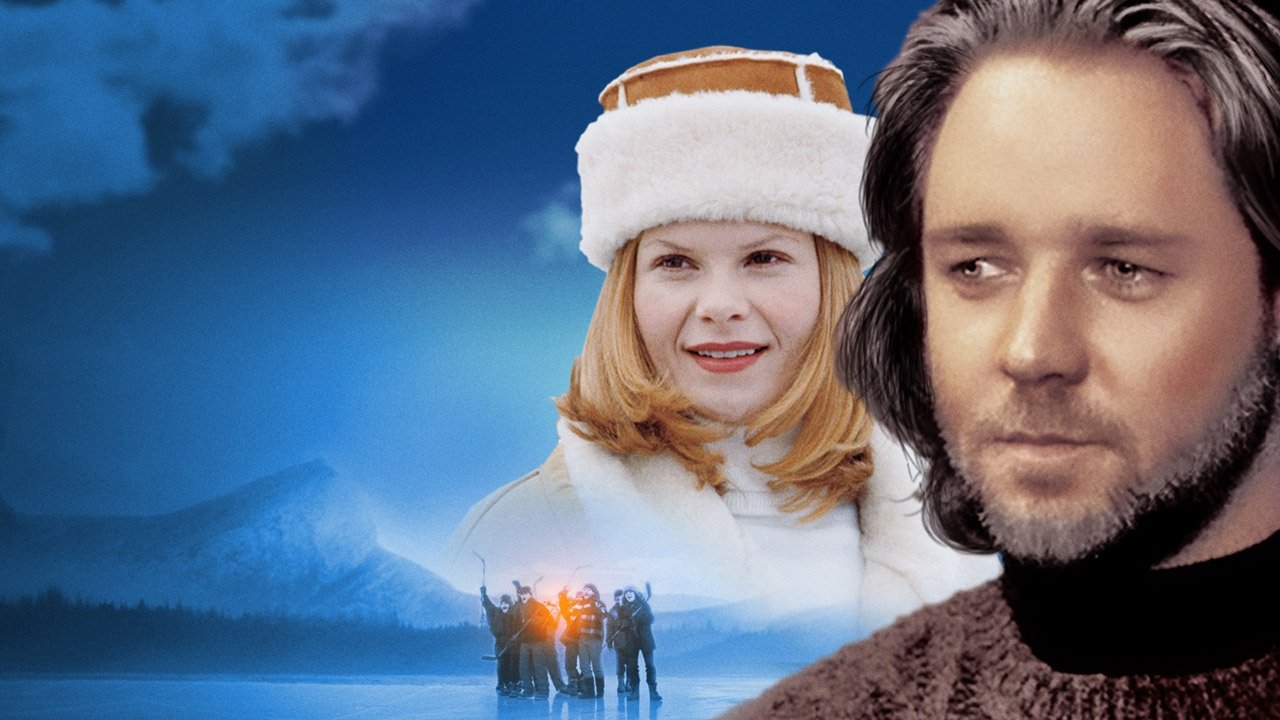
Okay, settle in, grab a beverage – maybe something warm, thinking about this one – because we're heading way up north today, dusting off a late-90s tape that might have slipped under the radar for some: Mystery, Alaska (1999). It’s a film that arrives with a premise seemingly ripped from a sports movie playbook – small town versus the pros – but unpacks something quirkier, more character-driven, something that lingers in a way you might not expect. What happens when the blinding spotlight of national attention swings onto a place defined by its isolation?

More Than Just a Puck Drop
Right away, you feel the signature touch of writer David E. Kelley (the mind behind TV hits like Picket Fences and Ally McBeal). Mystery isn't just a setting; it's a character in itself. A town huddled against the Alaskan wilderness, where life revolves around the Saturday Game – a high-stakes, often brutal, pond hockey match that settles scores and defines local hierarchies. Director Jay Roach, fresh off the vibrant absurdity of Austin Powers: The Spy Who Shagged Me (1999) and before finding huge success with Meet the Parents (2000), navigates this quirky blend of small-town drama and sports spectacle with a surprisingly gentle hand. He lets the town's eccentricities breathe, capturing both the claustrophobia and the deep-seated loyalty of a community where everyone knows everyone's business, successes, and heartbreaks.
The Weight on Biebe's Shoulders

At the center stands Sheriff John Biebe, played by a pre-Gladiator (2000) Russell Crowe. And what a performance it is. This isn't the swaggering Maximus; Biebe is a man burdened by quiet responsibility, a former hockey hopeful whose dreams never quite left Mystery. Crowe imbues him with a stoic intensity, conveying the weight of the town's expectations, his complicated history with former flame Donna (a brilliantly grounded Mary McCormack), and his own unresolved ambitions. You see the conflict warring within him – the duty to his town, the Ghosts of What Might Have Been, the sudden, ridiculous pressure of facing the New York Rangers. It’s a performance built on subtle reactions and weary gazes, far more resonant than flashy heroics. Watching him navigate the tangled relationships, particularly with McCormack's Donna (now married to his best friend), feels authentic and messy in a way few sports films dare to be.
City Slicker Meets Saturday Night
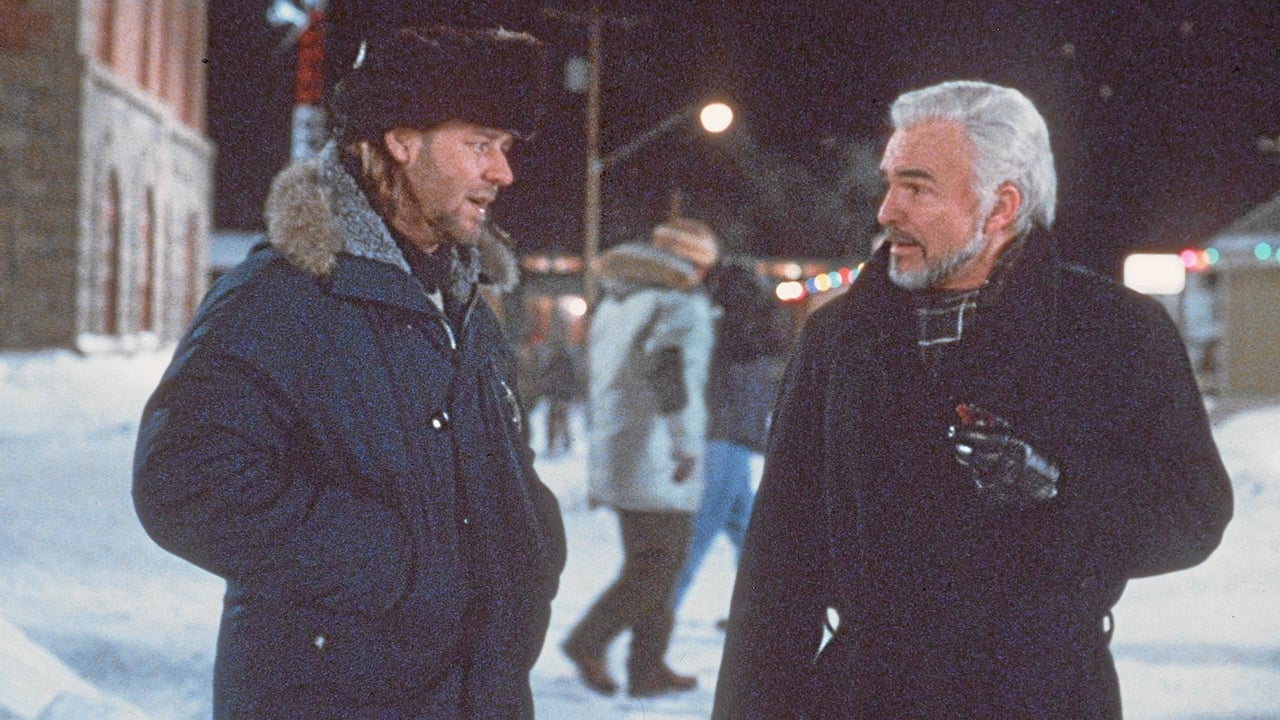
Into this insulated world drops Charles Danner (Hank Azaria), a former resident turned big-shot magazine writer whose article inadvertently sparks the whole NHL exhibition match fiasco. Azaria, ever versatile, perfectly captures Danner's initial cynical detachment melting into a grudging affection for the town he left behind. He serves as our eyes, initially rolling them at the local customs, but gradually understanding the profound meaning behind the seemingly trivial Saturday Game. His interactions, especially with the formidable Judge Walter Burns, played with irascible charm by the legendary Burt Reynolds, provide much of the film's humor and heart. Reynolds, in one of his better late-career roles, embodies the town's gruff wisdom and fierce pride.

Retro Fun Facts & Frozen Realities
Thinking back, it's easy to see why Mystery, Alaska might not have been a box office smash (grossing just under $9 million against a $28 million budget). It wasn't quite a laugh-out-loud comedy, nor a straightforward underdog sports triumph. It lived somewhere in between, a character study disguised as a hockey movie. Filming didn't actually take place in Alaska, but in the scenic (and suitably cold) town of Canmore, Alberta, Canada. The production team reportedly went to great lengths to capture authentic hockey action, using former junior and college players alongside the actors, who underwent significant skating training. You can feel the chill, the crunch of the snow, the specific energy of hockey played outdoors under the lights – elements that modern CGI often struggles to replicate with the same visceral feel. Interestingly, the initial pitch focused more heavily on the David E. Kelley quirky small-town angle, with the hockey match perhaps being less central than it became in the final marketing push, which might explain some audience disconnect at the time.
The Game Beyond the Game
While the climactic match against the Rangers provides the narrative spine, the film’s real strength lies in the smaller moments: the awkward town meetings, the simmering tensions between teammates, the glimpses into the ordinary, sometimes disappointing, lives behind the hockey pads. It asks interesting questions, doesn't it? What defines a community? How does isolation shape identity? Can a single event truly change everything, or just briefly illuminate what was already there? The film doesn't offer easy answers, preferring to show the messy, complex reality of lives intertwined.
Does it perfectly balance its comedic and dramatic elements? Perhaps not always. Some character arcs feel a bit underdeveloped, and the sheer number of quirky townsfolk occasionally borders on caricature. But there's an undeniable warmth and sincerity that shines through. It’s a film with a genuine affection for its flawed characters and their peculiar little corner of the world.
Rating: 7/10
This score reflects a film that succeeds more as a charming, well-acted character piece than as a conventional sports movie. The performances, particularly from Crowe, McCormack, Azaria, and Reynolds, elevate the material significantly. While it didn't set the box office alight, Mystery, Alaska holds up as a unique and often touching snapshot of small-town life, wrapped in the frosty breath of a late-90s winter. It's a reminder that sometimes the biggest stories unfold on the smallest stages, even if that stage is just a frozen pond under the vast Alaskan sky. It remains a fond memory from the video store shelves, a quirky gem worth rediscovering.