It hits you immediately, not like a polished studio opening, but like found footage from a future already past. The camera isn't where it should be. It's tucked into a handbag, gazing up from the pavement, distorting faces with an ultra-wide lens that seems to swallow the world. This is the unsettling visual signature of Hideaki Anno's Love & Pop (1998), a film that arrived like a digital disruption in the analogue twilight of the VHS era. Fresh off the psychic battlefield of Neon Genesis Evangelion and its cinematic conclusion, The End of Evangelion (1997), Anno turned his lens towards a different kind of existential dread, grounded in the hyper-consumerist streets of late-90s Shibuya.

A Glimpse Through a Fractured Lens
The premise orbits around high school student Hiromi (Asami Miwa) and her friends navigating the complex, morally ambiguous world of enjo-kōsai, or "compensated dating," trying to scrape together money for coveted items – in Hiromi's case, a particular ring. But Love & Pop isn't a straightforward cautionary tale or a salacious exposé. Instead, Anno, adapting a novel by Ryū Murakami, uses this backdrop to explore a pervasive sense of alienation, the dizzying pressures of materialism on young women, and the desperate, often failing, search for connection in a society saturated with disposable interactions. The film unfolds over roughly a single day, immersing us in the bright lights and shadowy corners of Tokyo's youth culture.
What truly defines Love & Pop, making it such a distinct artefact of its time, is Anno’s radical embrace of nascent digital technology. Forget steady cams and carefully composed frames. The film was primarily shot using consumer-grade MiniDV camcorders, specifically the tiny Sony DCR-PC7. Anno and his crew placed these cameras everywhere – on the ground, strapped to actors, hidden in plain sight – creating a chaotic, disorienting mosaic of perspectives. Skewed angles, fisheye distortions, and rapid-fire editing bombard the viewer, mirroring the fragmented consciousness of the characters and the overwhelming sensory input of modern urban life. It’s a style that feels both deliberately experimental and strangely prophetic of the YouTube and smartphone aesthetics that were still years away. Was this purely an artistic choice, or also a necessity born from its reportedly minuscule budget? Likely both, and the result is undeniably potent.

The Anxious Heartbeat of Youth
Beneath the jarring visuals, the film captures something authentic about the teenage experience, albeit a specific, culturally charged version. Asami Miwa as Hiromi offers a performance of remarkable vulnerability. She’s not just a symbol; she’s a young woman adrift, trying to project confidence while grappling with insecurity and the confusing signals of the adult world. Her interactions with her friends (Kirari and Hirono Kudo among them) feel raw and unvarnished, their conversations overlapping, sometimes trivial, sometimes profound, reflecting the fluctuating rhythms of teenage communication. There’s a palpable anxiety running beneath the surface – the pressure to conform, to consume, to find validation in transactions rather than genuine intimacy. Does the film judge these girls? Not overtly. It observes, perhaps with a melancholic empathy, the landscape they inhabit.
A Digital Artefact from the Analogue Sunset
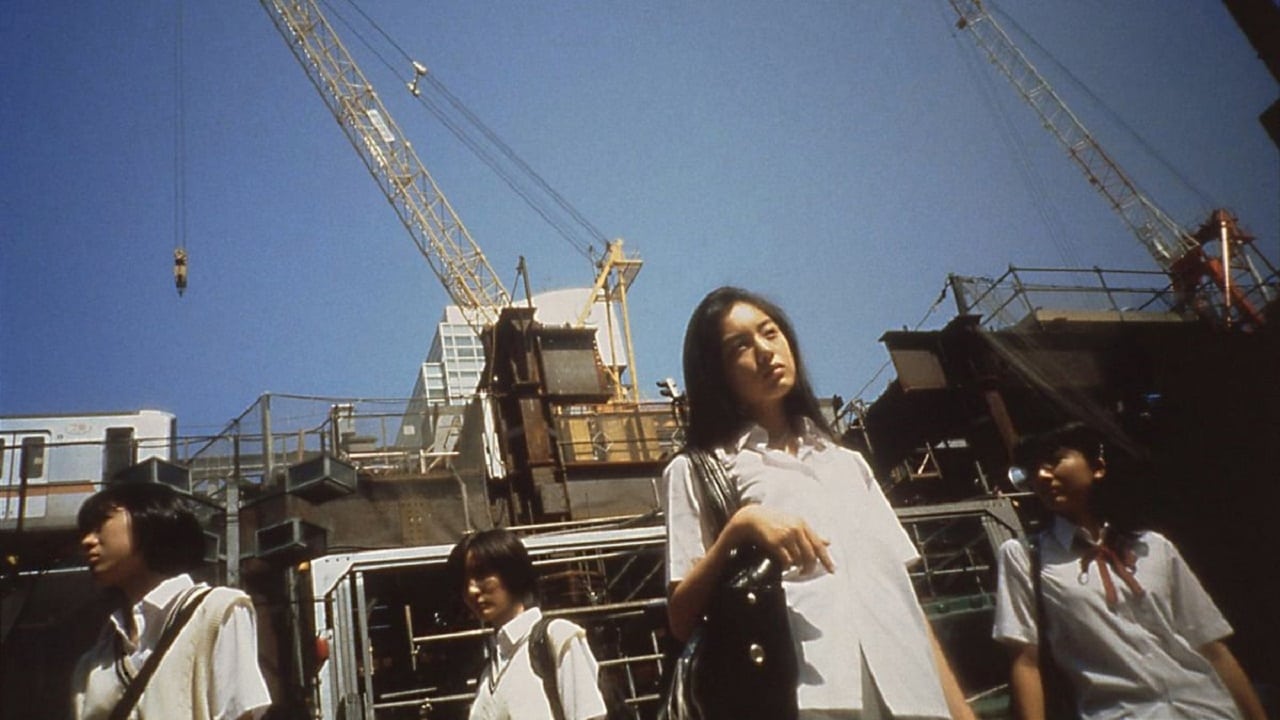

Finding Love & Pop back in the day, perhaps on a copied tape or an imported VCD sourced from a specialist store, felt like unearthing a secret transmission. It was so different from the polished Hollywood fare or even mainstream Japanese cinema filling rental shelves. That low-resolution, occasionally pixelated digital look, now imbued with a specific kind of nostalgia, was jarring then. It didn’t have the warm grain of film or the comforting scan lines of VHS; it felt immediate, almost invasively real, yet simultaneously artificial due to the extreme visual manipulations.
It's fascinating to think that Anno utilized techniques like placing text messages directly onto the screen – something utterly commonplace now, but quite innovative in a 1998 feature film. This choice further emphasizes the mediated nature of the characters' lives, where communication often happens through devices, adding another layer to the theme of detachment. The film becomes a time capsule not just of late-90s Shibuya fashion and slang, but also of a pivotal moment in filmmaking technology, caught between the analogue past and the digital flood to come. One can imagine the initial reactions – perhaps confusion, even frustration, at the relentless visual experimentation. It certainly wasn't aiming for comfortable viewing.
Lingering Static
Love & Pop is not an easy film, nor is it conventionally entertaining. Its fragmented narrative and intentionally abrasive style can be challenging, even off-putting. Yet, it possesses a strange power. It captures a specific cultural moment with unflinching, albeit stylized, honesty. The questions it raises about consumerism, the commodification of human connection, and the search for identity in a technologically saturated world feel, if anything, more pertinent today. What does it mean to seek value and self-worth through material possessions or fleeting, transactional encounters? How does technology shape our perception of ourselves and others?
The film remains a fascinating entry in Hideaki Anno's eclectic filmography, a live-action exploration of anxieties that echo themes found in his landmark anime work, but translated into a starkly different visual language. It’s a demanding watch, a conversation starter, and a potent reminder of that experimental energy buzzing just beneath the surface as the millennium approached.

Rating: 7/10
Love & Pop earns a solid 7 for its audacious formal experimentation and its raw, unsettling snapshot of late-90s Japanese youth culture. The groundbreaking use of consumer DV cameras creates a unique and influential aesthetic that perfectly mirrors its themes of alienation and fractured communication, even if the relentless style can be taxing. While not a comfortable watch, its unflinching gaze and the vulnerable performances, particularly from Asami Miwa, make it a significant and provocative piece of filmmaking from the era.
It lingers not as a comfortable memory, but as a glitchy, intense transmission from a specific moment in time – a challenging artefact that reminds us of the power of film to capture the anxieties of its age through unconventional means.