Alright, pop that tape in the VCR, maybe adjust the tracking just a little… remember that fuzzy static dance? Tonight on VHS Heaven, we’re diving headfirst into the glorious, goofy, and surprisingly physical world of 1997’s Beverly Hills Ninja. If you were anywhere near a video store or a cable box back then, you likely encountered the force of nature that was Chris Farley squeezed into ninja garb, and honestly, wasn't that premise alone worth the rental fee?

This wasn't just another fish-out-of-water comedy; it was strapping Farley’s unique brand of chaotic, vulnerable, full-body commitment onto a martial arts parody framework. The result is something that feels quintessentially 90s – earnest in its silliness, reliant on its star's incredible physical presence, and packed with the kind of practical gags that defined the era.
### The Great White… Hope?
The setup is simple, almost fairy-tale like: Haru (Chris Farley), an orphaned American baby, washes ashore in Japan and is raised by a secret ninja clan. Despite his legendary ineptitude ("I am one with the universe. I am not afraid."), Haru believes himself destined for greatness, fueled by ancient prophecy (or perhaps wishful thinking). When the mysterious Alison Page (Nicollette Sheridan, radiating peak 90s allure) arrives seeking a ninja’s help, Haru leaps – often literally and disastrously – at the chance to prove himself, traveling to the glitz and danger of Beverly Hills.
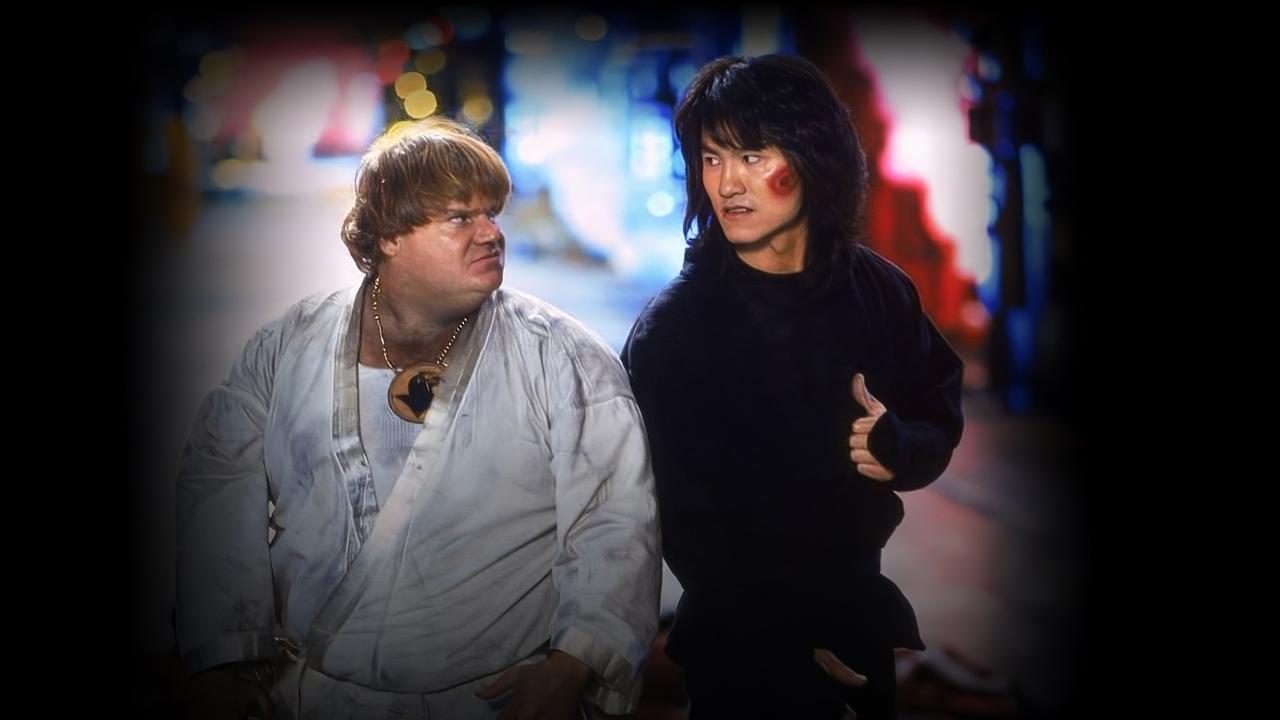
Farley, fresh off his Saturday Night Live fame and films like Tommy Boy (1995), is Haru. It’s a role perfectly suited to his specific genius: the blend of incredible physical agility trapped within a large frame, combined with an almost childlike sweetness and desperation to please. You believe Haru wants to be a great ninja, even as every fiber of his being seems hilariously determined to prevent it. It’s a testament to Farley’s raw talent that even through the pratfalls and calamities, there’s a genuine heart beating beneath the black pajamas.
### Real Falls, Real Laughs
Let's talk about the action, because in its own way, Beverly Hills Ninja delivered. Not in the sleek, balletic style of Hong Kong cinema, obviously, but in the sheer impact of Farley hurling himself into, through, and over things. Remember how real those crashes felt? That’s because, for the most part, they were. Farley, bless his committed soul, performed many of his own stunts. That scene where he tumbles down the stairs? Reportedly, that was him. The numerous trips, falls, and body slams? Largely Farley. This wasn't CGI trickery making things look painful; it was a master physical comedian using his entire body as an instrument of slapstick. There's a raw, almost alarming authenticity to it that you just don't get with today's smoother, safer digital effects. The studio was apparently quite nervous about his insistence on doing stunts, and tragically, the physical toll it took was considerable – Farley often needed oxygen between takes. It adds a layer of bittersweet appreciation watching his dedication now.
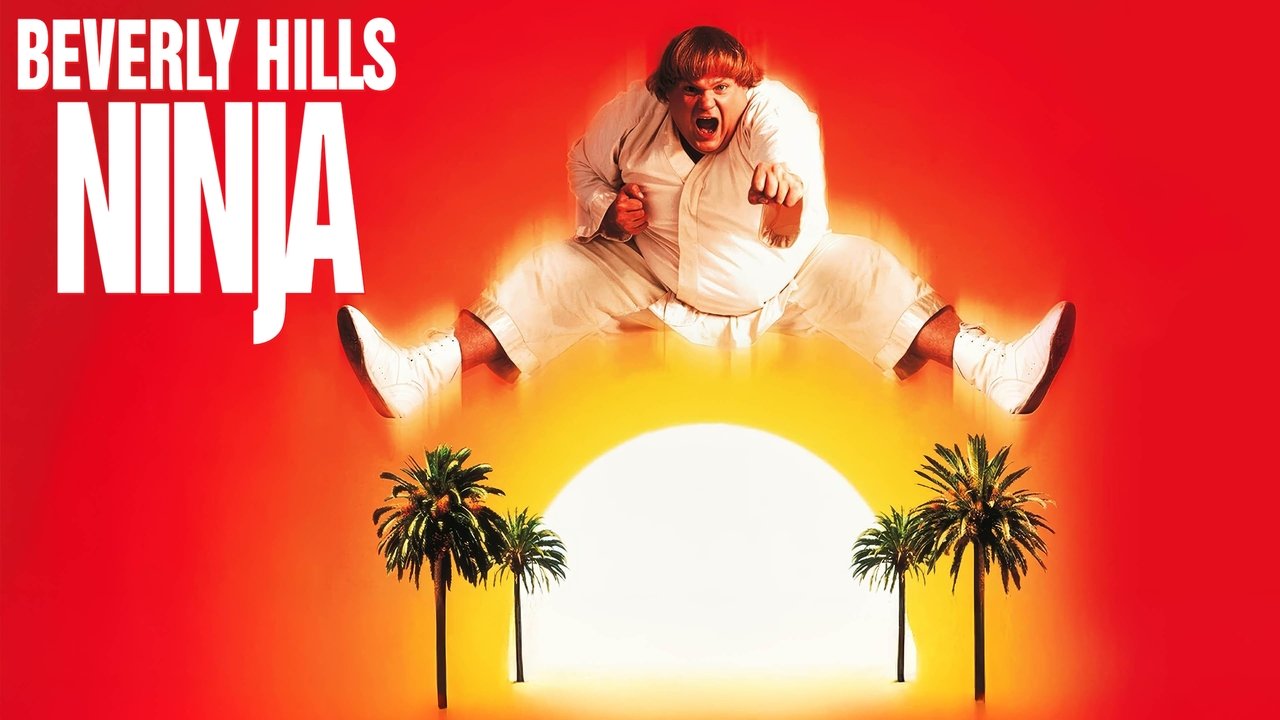

Director Dennis Dugan, who would go on to helm several Adam Sandler hits like Happy Gilmore (1996) and Big Daddy (1999), knew exactly what he had in Farley and structured the film around showcasing that physical prowess. The plot serves primarily as a runway for Haru’s next spectacular failure or accidental success. Dugan keeps things moving at a brisk pace, never lingering too long on any one gag before careening into the next.
### More Than Just Farley
While Farley is undoubtedly the main event, the supporting cast adds crucial flavour. Robin Shou, who martial arts fans knew well as Liu Kang from Mortal Kombat (1995), plays Gobei, Haru’s adoptive brother and a genuinely skilled ninja tasked with secretly protecting him. Their dynamic is surprisingly effective – Shou provides the stoic straight man (and legitimate martial arts chops) to Farley’s whirlwind of incompetence. Shou often spoke warmly of working with Farley, praising his kindness and incredible comedic timing, even amidst the chaos. And let's not forget Chris Rock in a small but memorable role as hotel bellboy Joey Washington, offering Haru some street-smart (and very funny) advice. His presence feels like a quintessential 90s comedy bonus.
The film itself wasn't a critical darling upon release – many reviewers found it juvenile and overly reliant on Farley's shtick. With a budget around $31.5 million, its $37.8 million worldwide gross wasn't exactly blockbuster territory either. But like so many films from this era, Beverly Hills Ninja found its true audience on home video and cable. It became a sleepover staple, a reliable rental pick when you just needed something uncomplicatedly funny. The sheer absurdity of the premise, combined with Farley's utter commitment, earned it a certain cult affection over the years.
### That VHS Charm
Watching Beverly Hills Ninja today is like unearthing a time capsule. The fashion, the technology (or lack thereof), the specific cadence of 90s comedy – it's all there. Yes, some jokes might feel dated, and the plot is thinner than a ninja wire, but the central appeal remains potent: Chris Farley giving his absolute all. It’s a film powered by pure, unadulterated physical comedy, performed by someone who understood intuitively how to make falling down look like an art form. There’s an infectious energy, a goofy sincerity that’s hard to dislike, even when you're groaning at a particularly silly gag. It feels like a movie made before comedy got overly polished or self-aware.
Rating: 6.5 / 10
Justification: While undeniably flawed, simplistic, and deeply reliant on one performer, Beverly Hills Ninja succeeds as a showcase for Chris Farley's unique physical comedy genius. The practical stunts feel authentic in that classic VHS-era way, and there’s a genuine sweetness beneath the slapstick. It's not high art, but it delivers consistent, albeit low-brow, laughs and holds significant nostalgic charm for those who grew up with it. The supporting cast adds value, and the film serves as a poignant, if unintentional, capstone to Farley's specific brand of comedy just before his tragic passing later that same year.
Final Take: A clumsy crane kick straight to the funny bone, Beverly Hills Ninja is pure, uncut 90s Farley – ridiculous, over-the-top, surprisingly physical, and possessing a goofy charm that still raises a smile, fuzzy tracking lines and all.