Okay, let's dim the lights, maybe pop some corn, and talk about a Disney film that truly swung for the fences, aiming for something far grander and darker than your average animated fairy tale. Forget charming princes and simple happily-ever-afters for a moment. In 1996, Disney gave us The Hunchback of Notre Dame, a film that arrived on VHS shelves feeling almost impossibly ambitious, adapting Victor Hugo's sprawling, tragic novel into something... well, still recognizably Disney, but laced with a potent dose of gothic drama and surprisingly mature themes. Remember the buzz? It wasn't just another cartoon; it felt like an event.
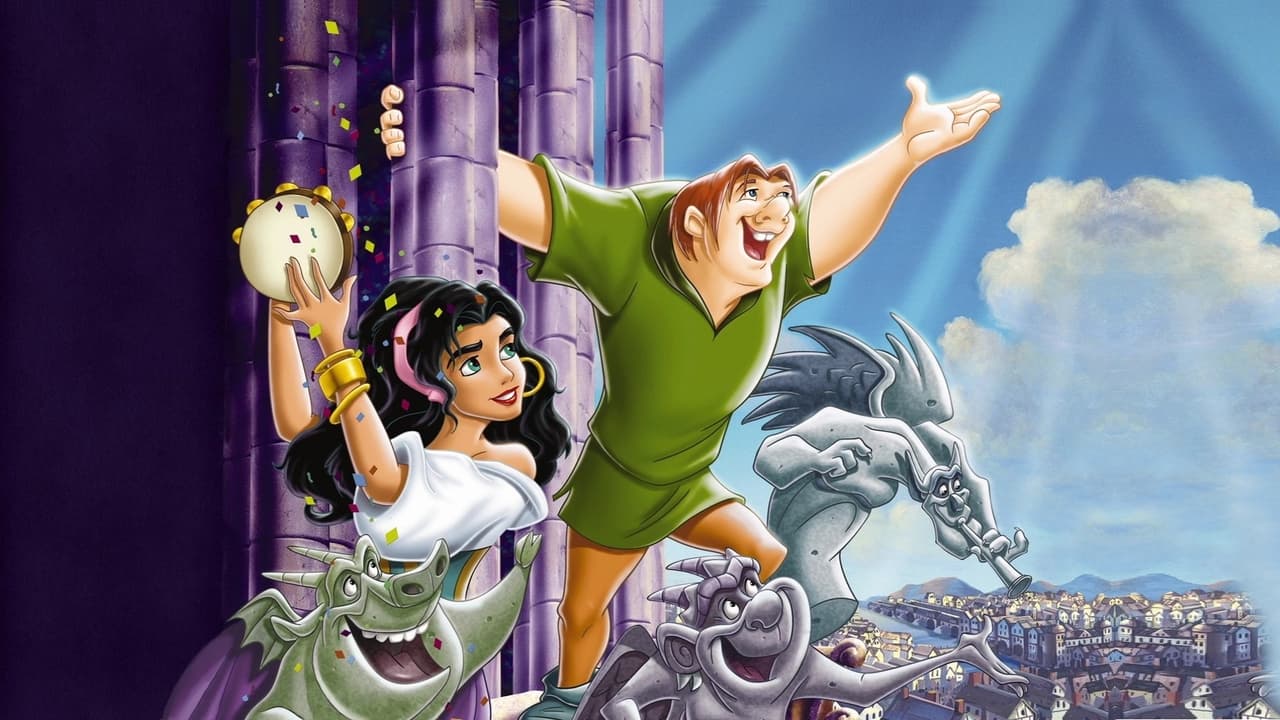
Bells, Bells, Bells!
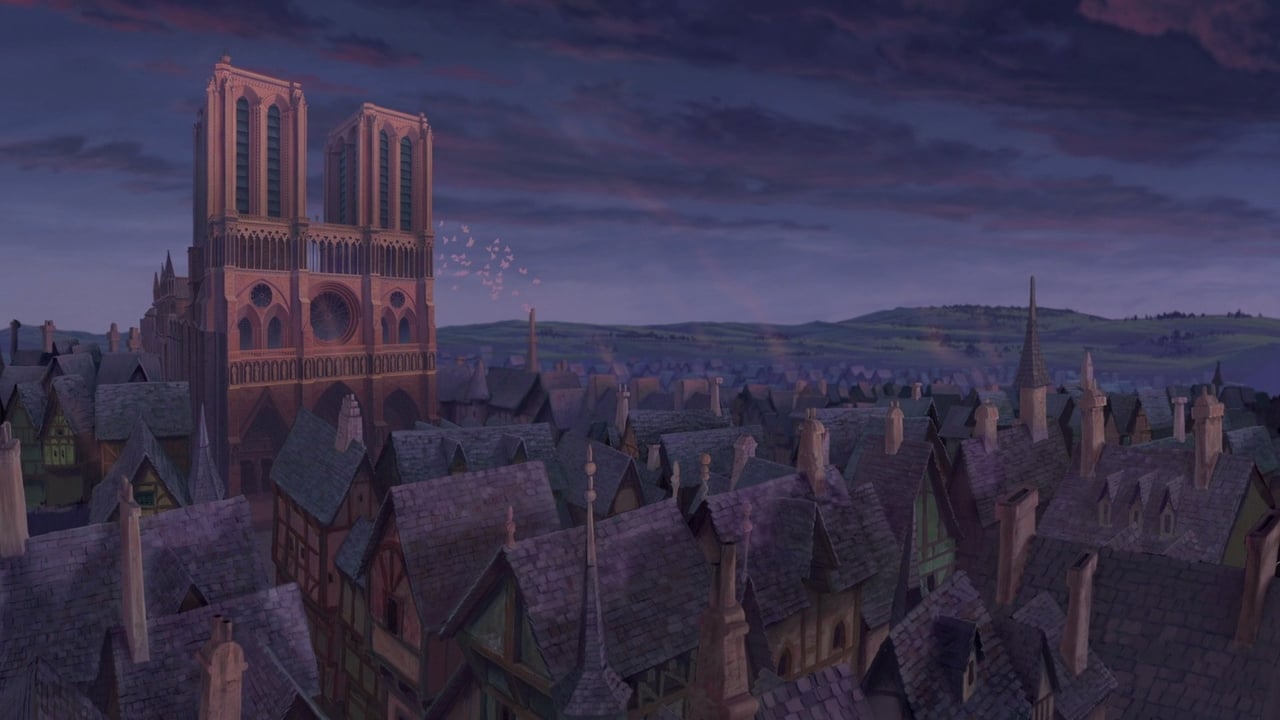
From those opening moments, with Clopin narrating the tragic backstory over that thunderous, operatic score by the legendary Alan Menken (music) and Stephen Schwartz (lyrics), you knew this was different. The sheer scale of the animation, particularly the loving, intricate rendering of Notre Dame cathedral itself, was breathtaking. Directors Gary Trousdale and Kirk Wise, fresh off the monumental success of Beauty and the Beast, weren't just telling a story; they were crafting a visual symphony. The cathedral isn't just a backdrop; it's a character, vast and imposing, sheltering secrets and sorrows within its stone facade. Seeing those soaring buttresses and stained-glass windows rendered with such detail on our trusty CRTs felt like peering into another, far more dramatic world.
A Cast of Outcasts and Obsessions
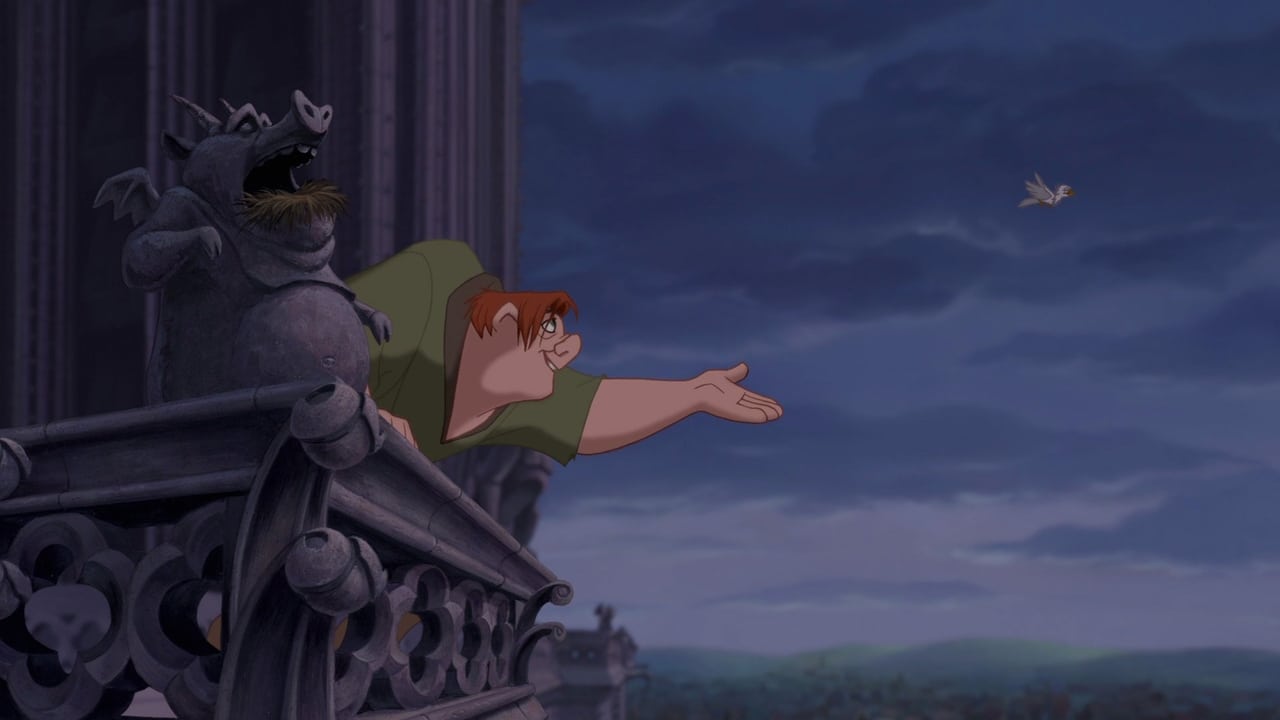
At the heart of it all is Quasimodo, voiced with such heartbreaking vulnerability by Tom Hulce (Amadeus). His longing to be "Out There" among the people, juxtaposed with his physical deformity and the psychological abuse heaped upon him by his guardian, Judge Claude Frollo, forms the film's emotional core. Hulce, known for his Oscar-nominated turn as Mozart, brought a unique sensitivity to Quasi, making his isolation and eventual bravery deeply affecting. Apparently, the directors specifically sought an actor who could convey vulnerability rather than just monstrousness, and Hulce delivered beautifully.
Then there's Esmeralda, voiced with fiery independence by Demi Moore (Ghost, A Few Good Men). In a refreshing turn for the era, Esmeralda wasn't just a damsel in distress; she was a compassionate activist, standing up for Quasimodo and challenging the hypocrisy she saw around her. Moore’s smoky voice gave Esmeralda a maturity and strength that resonated. And opposite them, we have perhaps Disney's most chillingly complex villain: Judge Claude Frollo. Voiced with terrifying gravitas by the late, great Tony Jay (whose voice also graced Megabyte in ReBoot!), Frollo isn't a cackling sorcerer; he's a man consumed by religious piety twisted into fanaticism, prejudice, and forbidden desire.
Retro Fun Fact Alert: Tony Jay had actually auditioned for the role of Cogsworth in Beauty and the Beast but lost out to David Ogden Stiers. However, the directors were so impressed they kept him in mind, later casting him as Monsieur D'Arque, the asylum owner in Beauty, before giving him the monumental role of Frollo. His powerful baritone perfectly captured Frollo's imposing presence and internal torment.

Daring to Be Dark
Let's be honest: this film tackled themes rarely touched by mainstream animation, especially under the Disney banner. Prejudice, religious hypocrisy, lust, social injustice – it's all woven into the narrative. The standout sequence, Frollo's "Hellfire," remains astonishing. Here's a supposed man of God wrestling with his lust for Esmeralda, blaming her for his own feelings, and praying for her destruction if he can't possess her, all while spectral figures chant in Latin around him. It's operatic, terrifying, and visually stunning – a moment that likely flew over kids' heads but left adults stunned.
Retro Fun Fact Alert: The "Hellfire" sequence was notoriously difficult to get past the studio executives and the MPAA. To secure the G rating (which still feels surprising!), the animators cleverly used imagery like the fireplace and Frollo's shadow interacting with the flames to convey the intensity of his forbidden desires without being overly explicit. The song itself, contrasting with Quasimodo's hopeful "Heaven's Light," creates one of the most powerful thematic dichotomies in the Disney canon.
Of course, this is still Disney. To balance the darkness, we got the gargoyles – Victor, Hugo (get it?), and Laverne. Voiced by Charles Kimbrough, Jason Alexander, and Mary Wickes (in her final film role), they provided comic relief. Their presence has always been a point of contention among fans. Were they necessary levity, or did they undercut the film's dramatic weight? Watching it again, they feel like a studio note made manifest, a slightly awkward tonal shift, but their affection for Quasi is genuine, and some of their lines still land a chuckle. It's a compromise, perhaps, but one that likely made the film palatable for its intended wider audience back in '96.
An Ambitious Place in the Pantheon
While it didn't quite reach the box office stratosphere of The Lion King (grossing around $325 million worldwide on a reported $70 million budget – still a success!), Hunchback holds a unique place in the Disney Renaissance. It was a film that took risks, pushed boundaries visually and thematically, and delivered some of Menken and Schwartz's most soaring and complex musical work. It might not be the first Disney film you reach for on family movie night, depending on the kids' ages, but its artistry and boldness are undeniable. It dared to suggest that monsters aren't always the ones who look different, and that true sanctuary can be found in unexpected places.
Retro Fun Fact Alert: Keep your eyes peeled during the "Out There" sequence! As the camera pans across the Parisian streets below Notre Dame, you can briefly spot Belle from Beauty and the Beast walking through the town square, book in hand. It’s a fun little nod connecting the two films directed by Trousdale and Wise.
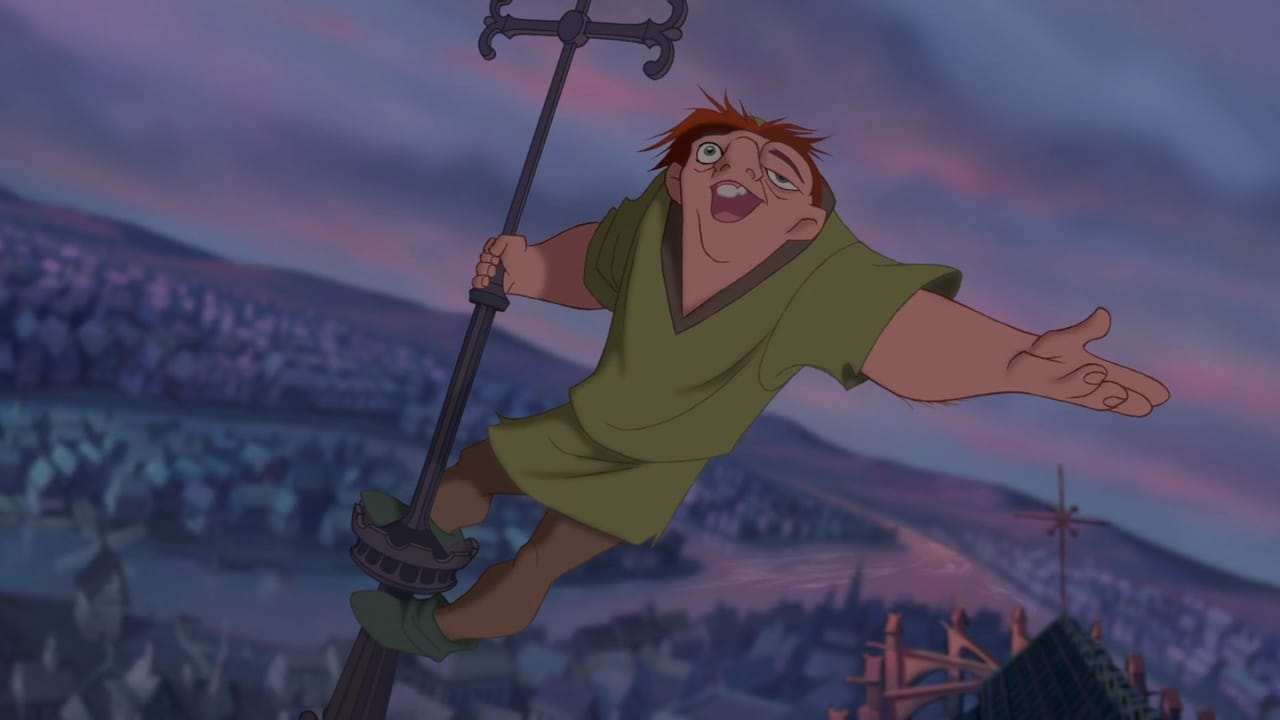
Overall Score: 8/10
Justification: The Hunchback of Notre Dame earns a strong 8 for its sheer artistic ambition, stunning animation, and one of Disney's most complex villains. The score is breathtaking, and the central performances, particularly Hulce and Jay, are superb. It tackles mature themes with surprising depth for a G-rated animated feature. Points are deducted primarily for the sometimes jarring tonal shifts introduced by the gargoyles, which, while perhaps commercially necessary, occasionally dilute the power of the surrounding drama. It’s a beautiful, bold, and sometimes challenging film that represents Disney pushing its own boundaries.
It remains a testament to a time when Disney animation wasn't afraid to embrace the shadows alongside the light, leaving us with haunting melodies and images that linger long after the tape stopped rolling. A truly epic tragedy and triumph, scaled down for the small screen but losing none of its heart.