Okay, settle in and let’s talk about a film that feels less like a story unfolding and more like eavesdropping on desperation itself. Some stage plays translate to the screen with added scope and visual flair. Others, like David Mamet’s blistering 1975 work American Buffalo, seem almost resistant, their power locked tight within the confines of their original setting. When director Michael Corrente brought it to film in 1996, the question wasn't if it could be done, but whether the raw, suffocating tension of Mamet's dialogue and the crumbling psyches of its characters could survive the transition. Could a camera capture the sour air of that dead-end junk shop?
Three Men in a Room
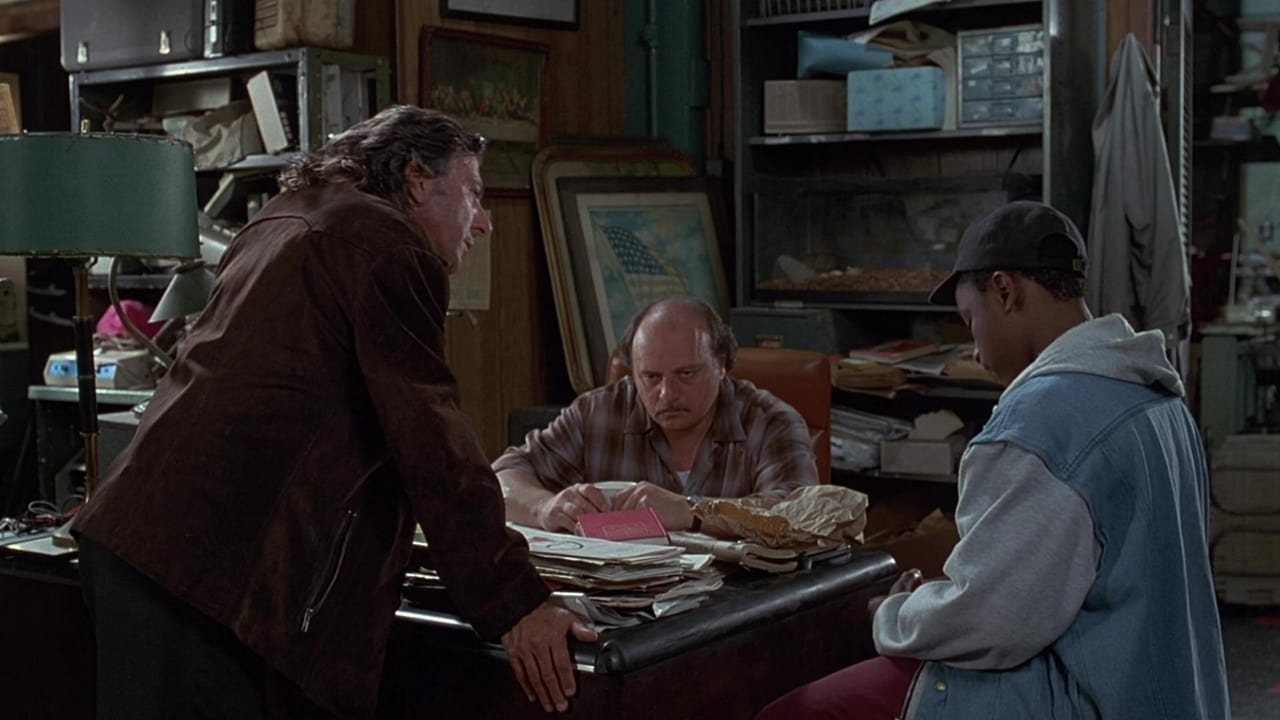
The setup is deceptively simple, almost stark. We're confined almost entirely within Don's Resale Shop, a cluttered kingdom of forgotten objects presided over by Don Dubrow (Dennis Franz). He thinks he’s been cheated out of a valuable buffalo nickel by a customer, and he wants it back. Enter his young, slightly slow gofer, Bob, or Bobby (Sean Nelson), tasked with staking out the customer's house. But the arrival of Don's volatile poker buddy, Walter Cole, better known as Teach (Dustin Hoffman), sends the plan spiraling. Teach, radiating paranoia and barely contained rage, muscles his way into the scheme, escalating a simple retrieval into a full-blown, ill-conceived burglary.
What follows isn’t really about the heist. It's about the disintegration of trust, the pathetic grasping for status amonggesellschaft's cast-offs, and the corrosive effect of empty talk. Mamet, adapting his own play, retains the famously stylized dialogue – the pauses, the repetitions, the brutal poetry hidden within streams of profanity. It’s a language of deflection and aggression, where characters talk at each other, rarely connecting, their sentences fragments of half-formed thoughts and simmering grievances. It’s challenging, yes, but utterly hypnotic once you lock into its rhythm.
A Pressure Cooker of Performance
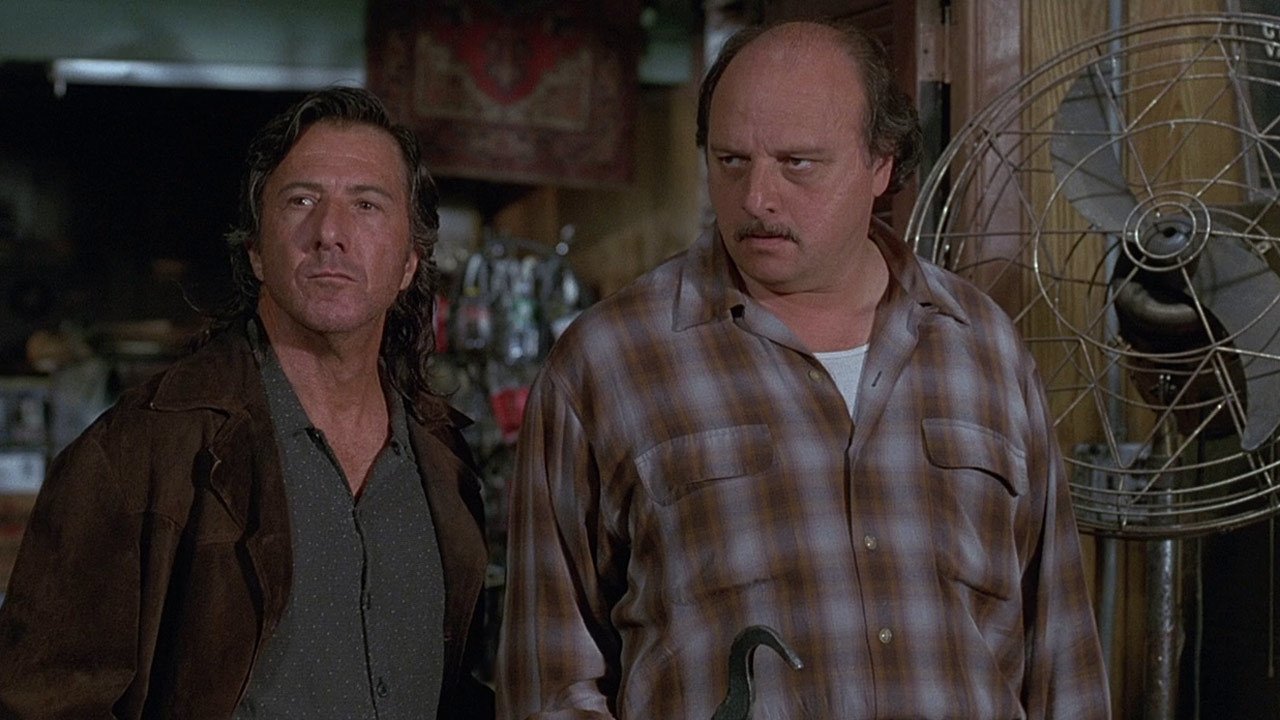
If the film works – and I believe it largely does – it’s because of the three central performances operating at maximum intensity within that confined space. Dennis Franz, largely known then (and now) for his explosive Detective Sipowicz on NYPD Blue, delivers something fascinatingly different here. His Don is outwardly the most stable, the proprietor, the one nominally in charge. But Franz peels back layers of weariness, revealing a man whose authority is built on sand, easily swayed by Teach's manic energy and ultimately incapable of decisive action. There's a profound sadness in his portrayal, a man clinging to the illusion of control in a life offering none.
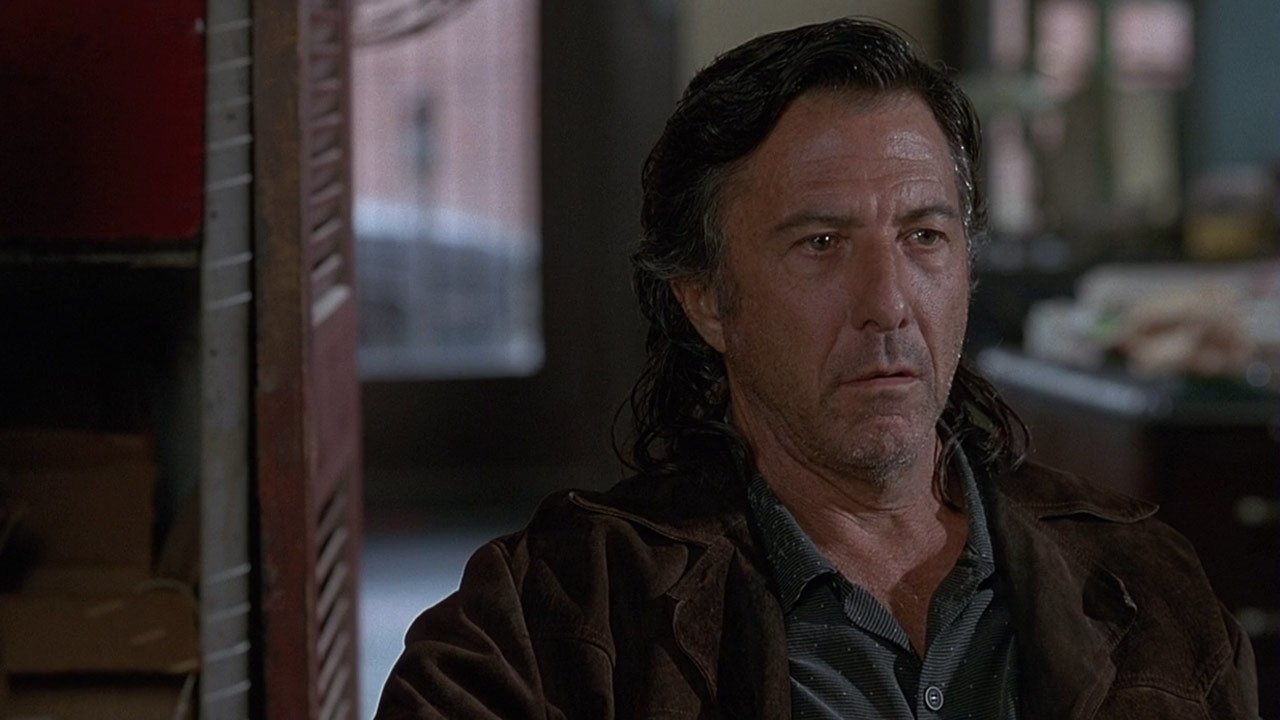
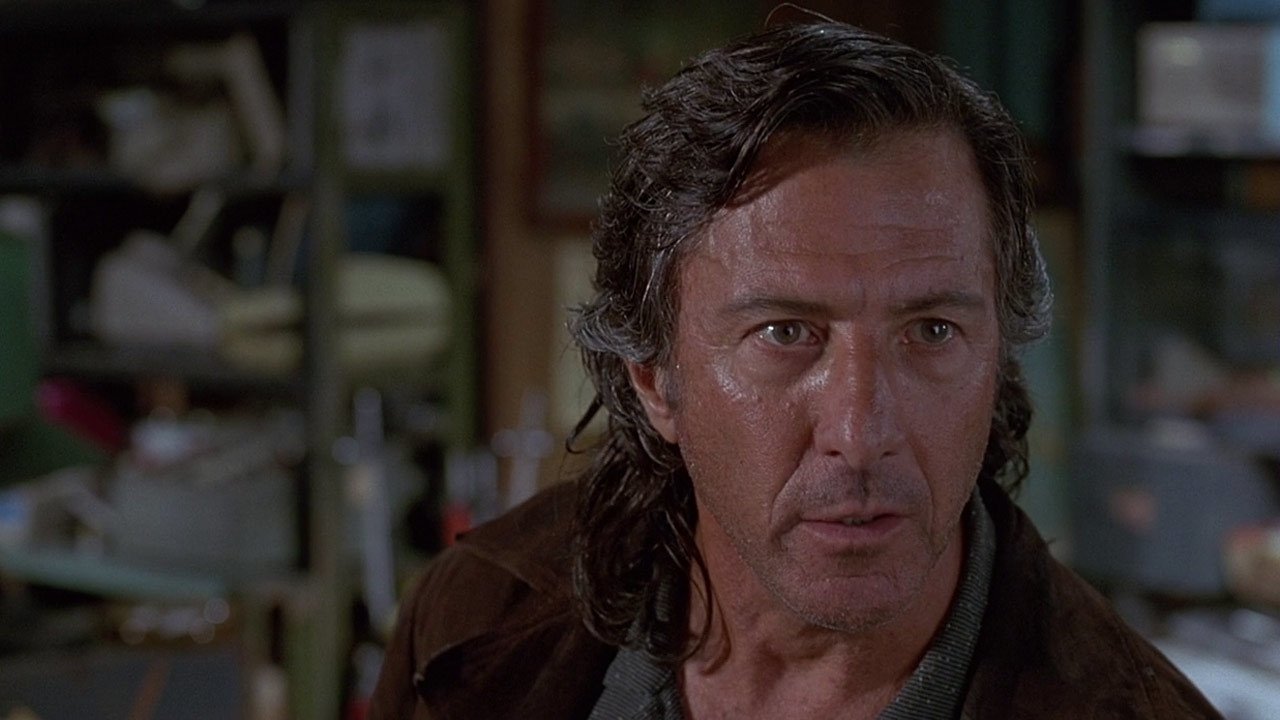
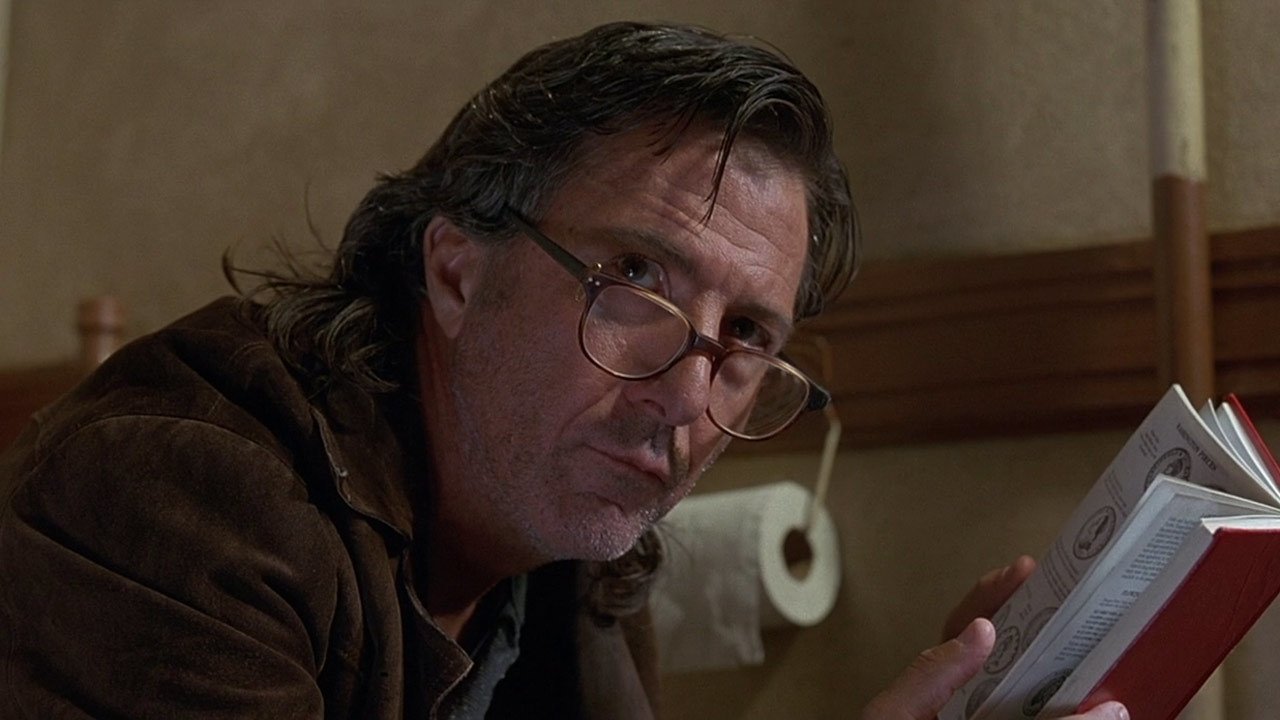
Then there's Dustin Hoffman as Teach. It’s a performance that vibrates with danger. Hoffman fully embodies Teach's desperate need for respect, his hair-trigger temper fueled by deep insecurity. He's all jagged edges and explosive pronouncements, a whirlwind of frustration constantly searching for someone to blame. It's easy to see why Hoffman reportedly found Mamet's intricate dialogue incredibly challenging to master; he apparently carried the script with him constantly during the shoot. That effort pays off – every line reading feels loaded, every gesture significant, capturing a man perpetually on the verge of combustion. It’s a performance that could easily tip into caricature, but Hoffman keeps it grounded in a painful, recognizable humanity.
Caught between these two forces is Sean Nelson as Bobby. It’s a quieter role, but no less crucial. Nelson portrays Bobby's vulnerability and eagerness to please with affecting sincerity. He’s the pawn in their games, the lightning rod for their frustrations, and his wide-eyed confusion often mirrors our own as we navigate the shifting alliances and mounting paranoia. He more than holds his own against the two screen veterans.
Capturing Claustrophobia
Director Michael Corrente, working from a relatively modest budget (around $6 million back then, which is roughly $11.8 million today), makes the wise choice to lean into the play's inherent claustrophobia. Filming primarily within the confines of a meticulously dressed vacant building in Pawtucket, Rhode Island (standing in for Chicago), he uses the cluttered junk shop set almost as a fourth character. The piles of forgotten treasures and dusty relics seem to press in on the characters, mirroring their own trapped circumstances. The camera work is steady, observant, allowing the power to emanate from the dialogue and the actors' faces. It rarely feels overly 'stagey,' instead creating a sense of intense, almost uncomfortable intimacy.
Interestingly, despite the critical acclaim for the play and the star power involved, the film barely made a ripple at the box office, grossing under $700,000 domestically. This likely cemented its status as a discovery on VHS and cable for many of us – a potent, actor-driven piece that demanded more patience than the multiplex crowds of the mid-90s were perhaps willing to give. It found its audience later, among those who appreciate character-driven drama and the unique power of Mamet's voice.
The Lingering Echo
American Buffalo isn't an easy watch. It’s bleak, profane, and spends 90 minutes in the company of deeply flawed, unhappy men circling the drain. There’s no catharsis, no real resolution, just the sour aftermath of broken trust and pathetic ambition. Yet, its power lingers. It’s a stark look at the underbelly of the American Dream, where loyalty is a transaction and communication is a weapon. What does it say about friendship when it’s built on such shaky foundations? How thin is the line between camaraderie and betrayal when desperation takes hold?
The film forces you to confront the ugliness, but also the undeniable truth in these characters. It’s a testament to Mamet’s writing and the searing performances that these small-time losers feel so tragically real.
Rating: 8/10
Justification: The film is a powerful, albeit demanding, translation of a significant stage play, anchored by exceptional performances, particularly from Dustin Hoffman and Dennis Franz. The claustrophobic atmosphere is effectively realized, and Mamet's dialogue retains its unique, brutal impact. It loses points perhaps for its inherently limited scope and potentially alienating bleakness, which might not appeal to all viewers, and its origins as a play are sometimes still evident. However, as a showcase for intense acting and sharp writing, it’s a standout piece of 90s drama that rewards attentive viewing.
Final Thought: It’s a film that sits with you, leaving behind not plot points, but the heavy atmosphere of that cluttered shop and the raw, aching sound of Mamet's characters wrestling with their own failures. A tough find maybe back in the video store days, but a rewarding one.