What happens when the profound mysteries of genetics and destiny collide with the anxieties of modern Manhattan life? Woody Allen’s 1995 film Mighty Aphrodite doesn't just ask this question; it stages it, complete with a literal Greek Chorus weighing in from the ruins of an ancient amphitheater. Pulling this tape off the rental shelf back in the day, perhaps nestled between bigger blockbusters, you might not have known quite what to expect. Was it pure comedy? A relationship drama? It turned out to be a curious, often charming, and surprisingly resonant blend of both, powered by one truly unforgettable performance.

A Father's Folly, A Goddess's Shadow
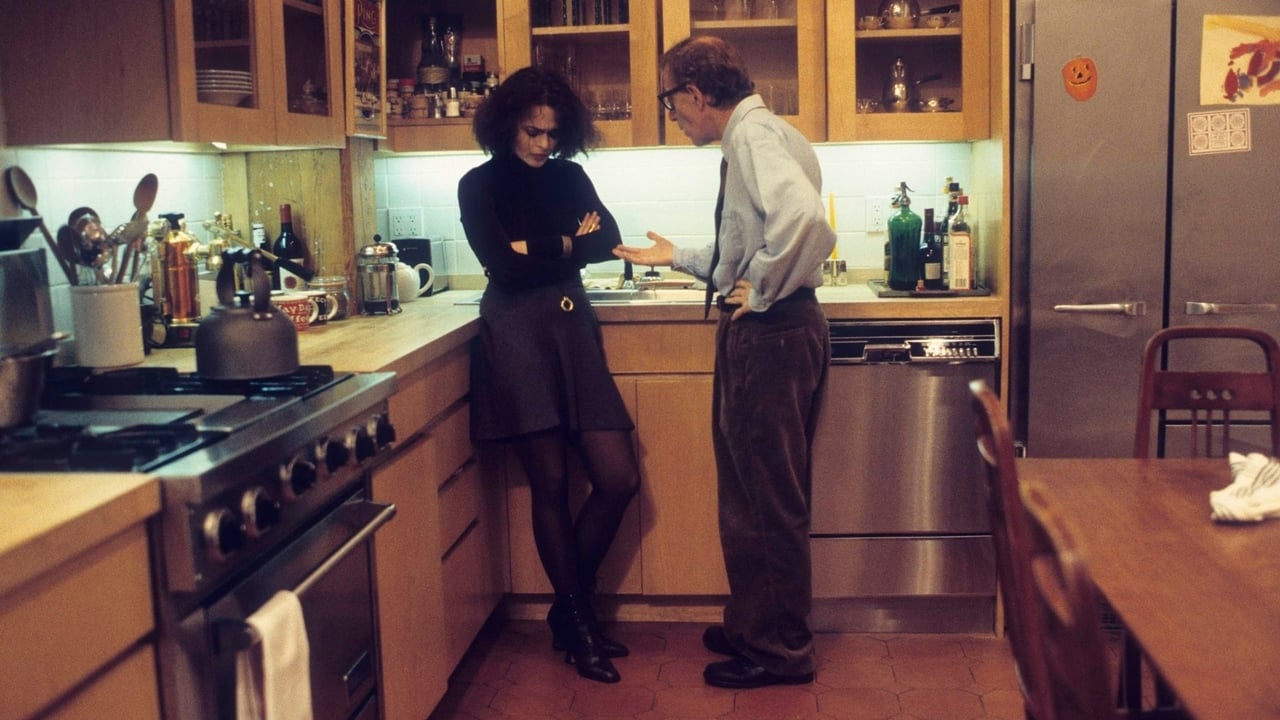
The setup feels instantly familiar if you know Allen’s work: Lenny Weinrib (Woody Allen himself, deploying his signature neurotic intellectual persona) and his ambitious wife Amanda (Helena Bonham Carter, navigating the art world with sharp edges) decide to adopt a baby boy. Max turns out to be bright, wonderful, almost perfect. Lenny, convinced such brilliance must stem from equally brilliant biological parents, develops an obsession with finding Max’s birth mother. It’s a quest driven by a mix of genuine curiosity and perhaps a touch of narcissistic projection. What he finds, however, throws every one of his sophisticated assumptions out the window.
The Arrival of Linda Ash
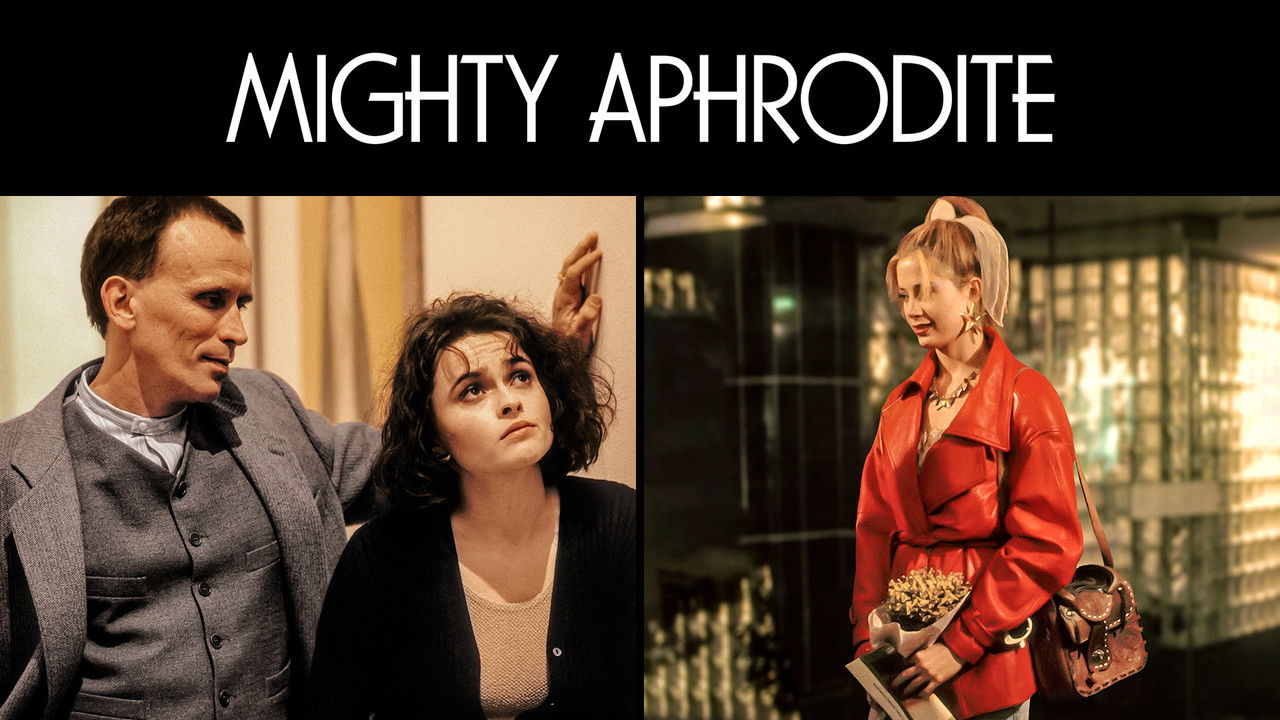
Enter Linda Ash, played by Mira Sorvino in a performance that didn't just steal the movie, it rightfully earned her an Academy Award for Best Supporting Actress. Linda is… not what Lenny envisioned. She’s a part-time prostitute with dreams of acting, possessing a heart far larger than her vocabulary and a voice that could peel paint. Sorvino’s portrayal is a masterclass in finding the humanity beneath the stereotype. Linda could easily have been a caricature – the ditzy blonde, the hooker with a heart of gold – but Sorvino imbues her with such genuine warmth, vulnerability, and unexpected wisdom that she becomes the film’s undeniable soul.
It’s fascinating to recall how Sorvino, relatively unknown then, landed the role. Allen was reportedly impressed by how quickly she nailed Linda's distinctive, high-pitched voice in her audition, a voice that becomes strangely endearing as the film progresses. Her comedic timing is impeccable, delivering lines that could be crass or silly with a disarming sincerity. But it’s the moments of quiet connection with Lenny, the glimpses of her own hopes and disappointments, that truly resonate. We see the person behind the persona, the messy, complicated, fundamentally good human being Lenny initially couldn't comprehend.
When Worlds Collide: Allen & the Chorus
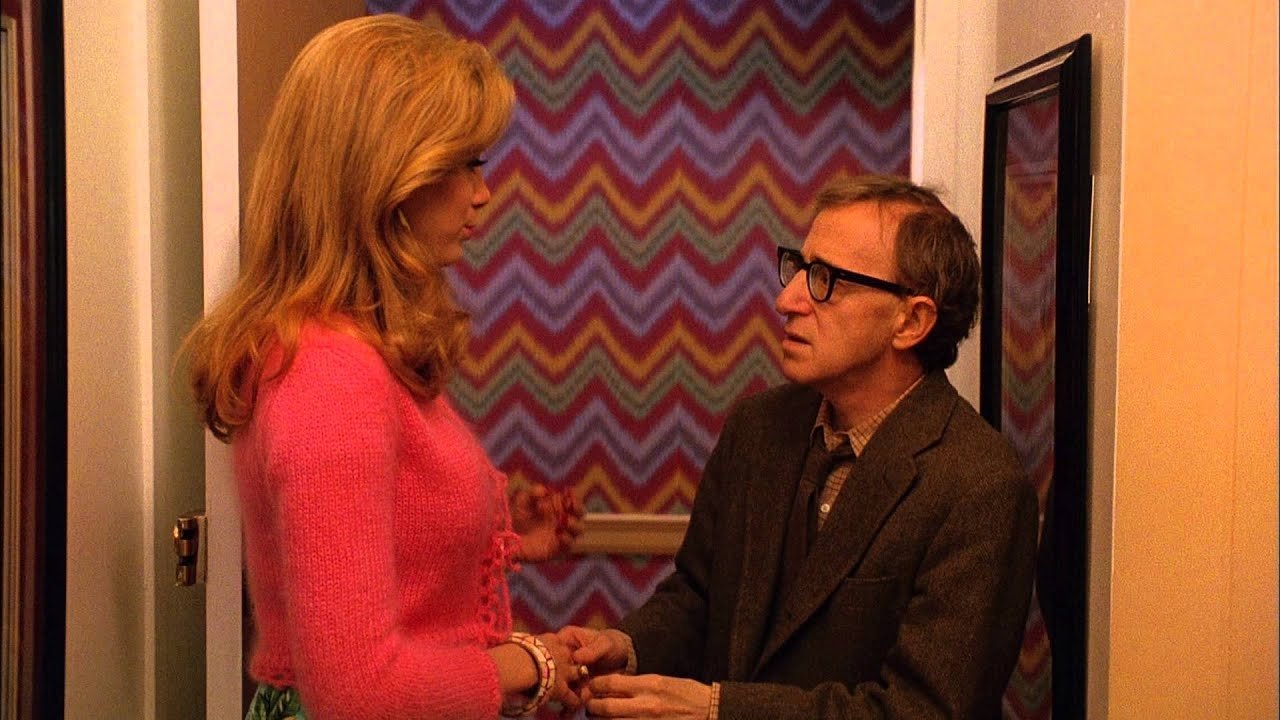
As writer and director, Allen contrasts Linda’s world sharply with Lenny and Amanda’s upscale Manhattan existence. Lenny’s attempts to "fix" Linda’s life – finding her a respectable boyfriend, steering her away from pornographic films towards… well, farming – are played for laughs, but they also touch on themes of condescension and the limits of good intentions. Allen’s performance as Lenny is reliably Woody Allen; if you appreciate his brand of anxious philosophizing, it works. If not, it might wear thin. Helena Bonham Carter, meanwhile, offers a cool counterpoint, representing a more cynical, career-driven perspective that eventually leads the plot in a different direction.
And then there’s the Greek Chorus. Led by F. Murray Abraham (bringing gravitas fresh off his Oscar for Amadeus (1984)), they appear intermittently, commenting directly on the unfolding drama, warning of impending tragedy, and invoking the gods. Filmed on location in Sicily, these segments give the film a unique, almost experimental feel. Does it completely work? That’s debatable. At times, it feels a touch heavy-handed, spelling out themes the narrative already implies. Yet, it undeniably adds a layer of mythic resonance, framing Lenny’s very personal dilemma within the grand sweep of classical fate and human folly. It was certainly a bold choice, contributing to the film’s mixed critical reception at the time – some found it inspired, others strained. Commercially, the film struggled, making only around $6.5 million in the US against a reported $15 million budget, despite Sorvino's awards buzz.
Beneath the Surface: Fate, Connection, and Acceptance
Beyond the quirky premise and Sorvino's luminous performance, Mighty Aphrodite lingers because of the questions it raises. How much are we shaped by our origins versus our choices? What constitutes a "good" parent or a "worthy" person? The film gently suggests that life, like people, is far messier and more unpredictable than our neat theories allow. Lenny seeks intellectual perfection but finds profound connection with someone utterly outside his preconceived notions. The title itself, invoking the goddess of love and beauty, points towards Linda – not conventionally "Aphrodite-like" in Lenny's world, yet embodying a raw, life-affirming energy.
There’s a sweetness here, a surprising optimism that sometimes felt absent in Allen's more cynical works from the period. It acknowledges the absurdity and pain of life but ultimately celebrates the unexpected ways people can touch each other's lives. It’s a film that, like Linda Ash herself, might surprise you with its depth if you give it a chance.
Rating: 7.5/10
This score feels right because while the Greek Chorus gimmick doesn't always land perfectly and the central Allen character treads familiar ground, Mira Sorvino's performance is simply transcendent. She elevates the entire film, turning what could have been a slight, quirky comedy into something genuinely moving and memorable. The film successfully blends humor with pathos, asking interesting questions about fate, connection, and judgment without getting bogged down in heavy-handed messaging. It's a testament to how a single, perfectly realized character can illuminate an entire story.
Mighty Aphrodite remains a fascinating entry in Woody Allen's filmography, a mid-90s curio that feels both typical of its creator and uniquely its own, largely thanks to the unforgettable force of nature that is Linda Ash. It leaves you pondering not just the characters' fates, but the strange, beautiful ways destiny works – or doesn't – in all our lives.