Okay, fellow travellers in time and tape, let's spool back to 1994. Forget gritty realism or complex thrillers for a moment. Instead, picture this: settling in for what feels less like a movie and more like an extended invitation into the heart of the most impossibly perfect, song-filled family gathering imaginable. I’m talking, of course, about Sooraj R. Barjatya's magnum opus of domestic bliss and dazzling musical numbers, Hum Aapke Hain Koun..! (Who Am I To You?). This wasn't just a film; it was a cultural event, a three-and-a-half-hour immersion that redefined the Bollywood family entertainer.
### More Than a Movie, An Experience
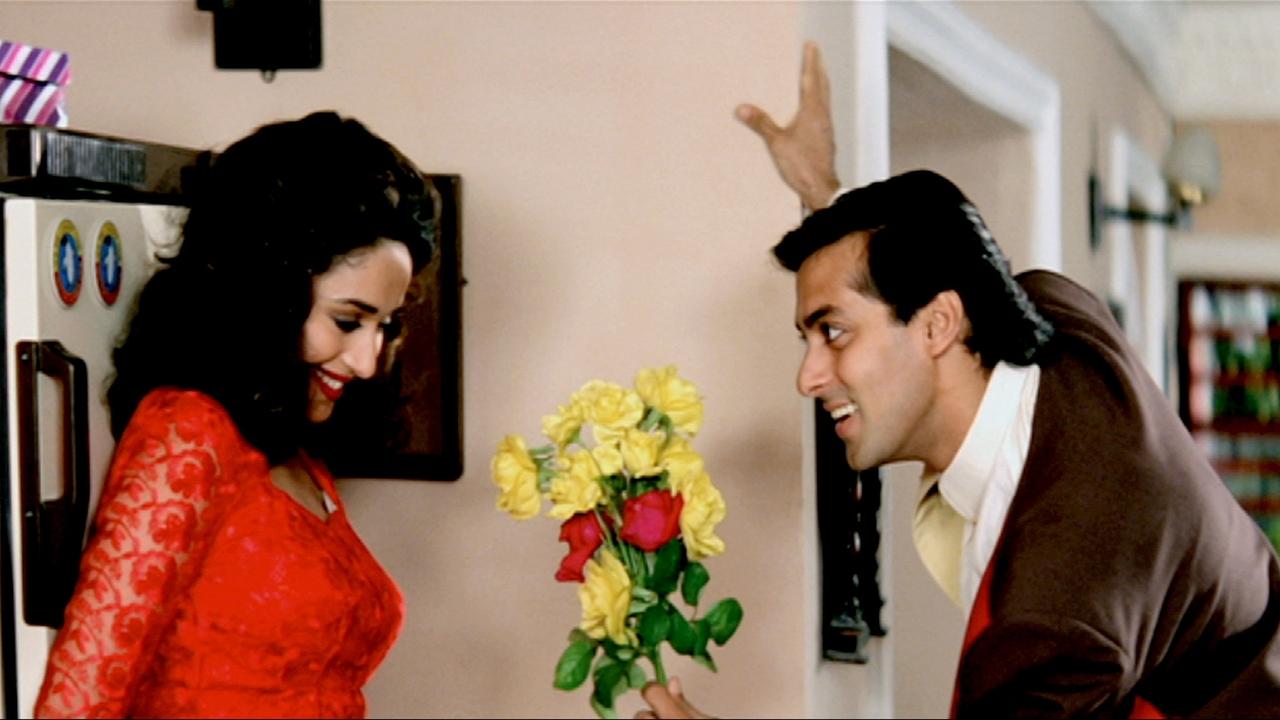
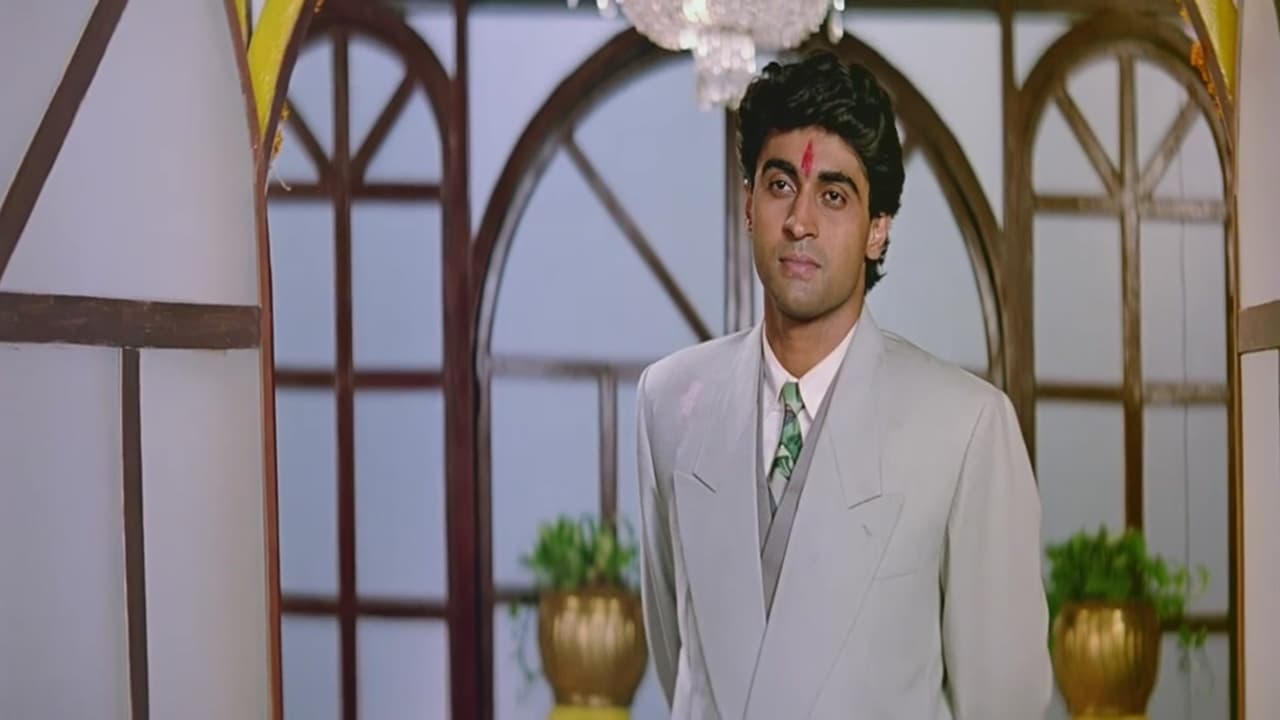
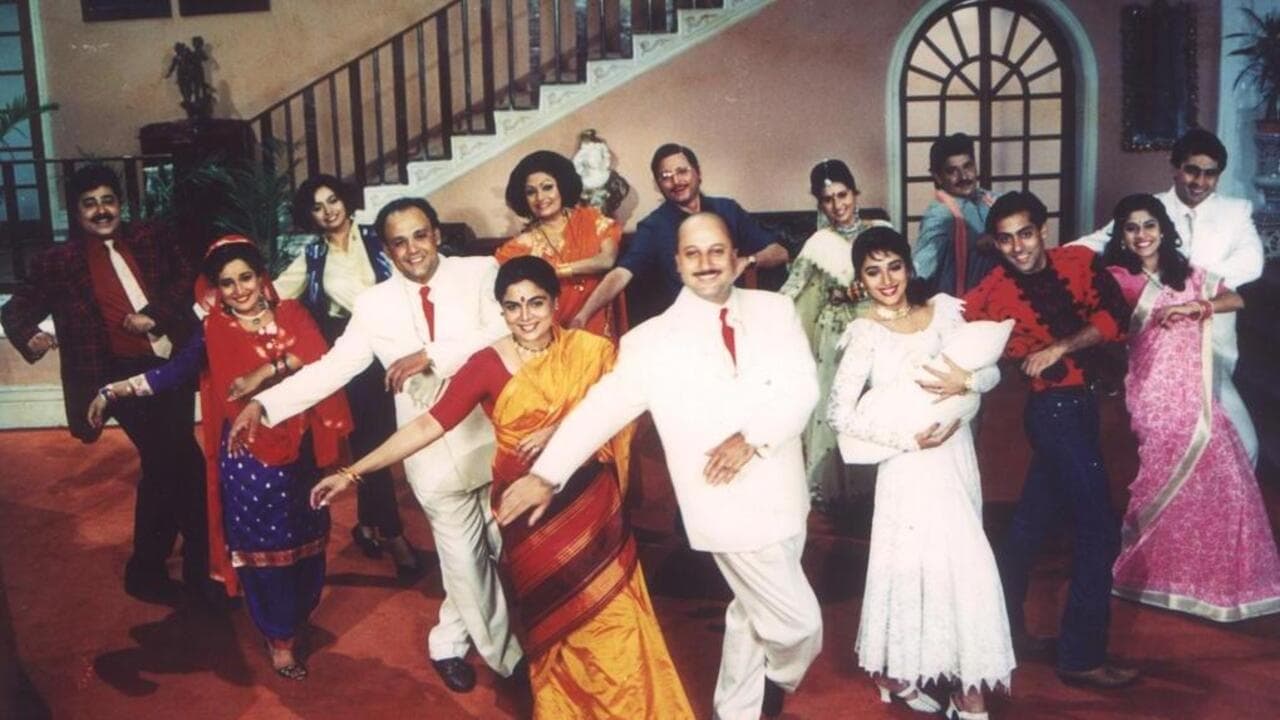
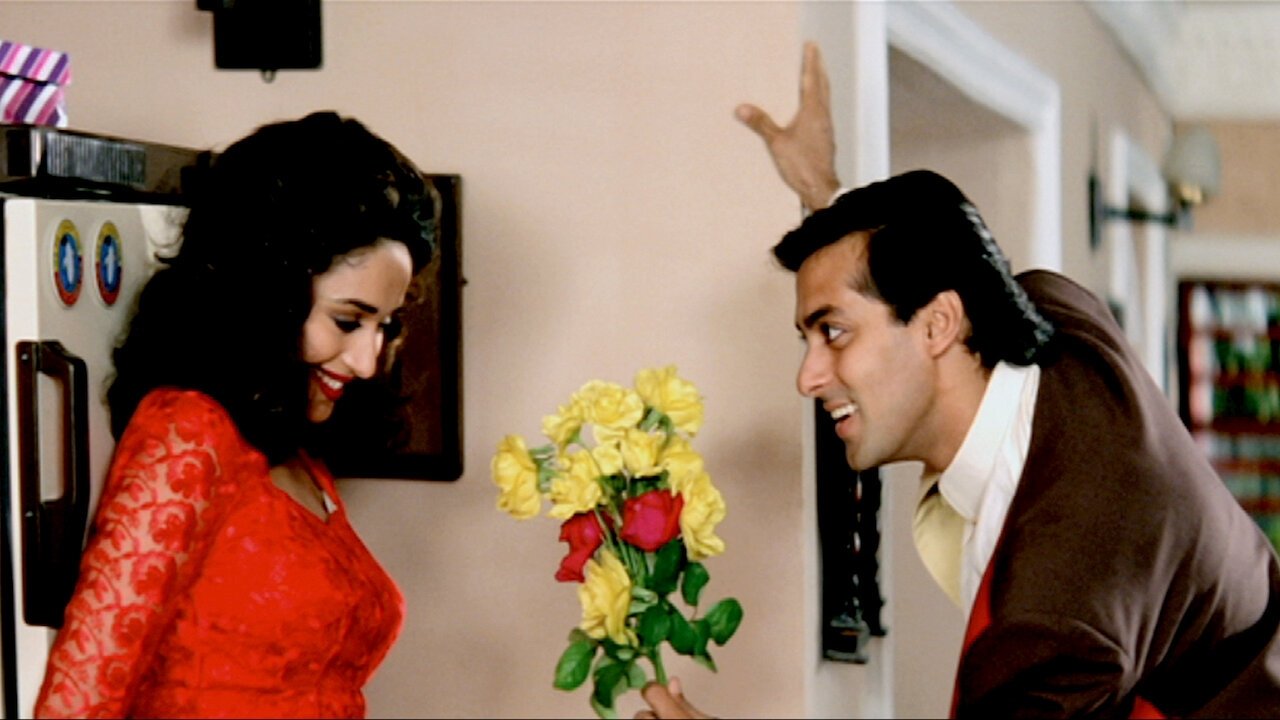
Let's be honest, the plot of Hum Aapke Hain Koun..! isn't exactly labyrinthine. It revolves around the burgeoning romance between Nisha (Madhuri Dixit) and Prem (Salman Khan) amidst the backdrop of their siblings' (Pooja, played by Renuka Shahane, and Rajesh, played by Mohnish Bahl) wedding festivities and subsequent family life. It’s a film built on moments rather than intricate plotting: stolen glances, playful teasing, elaborate ceremonies, shared meals, and yes, lots of songs. Sooraj R. Barjatya, who also penned the script, wasn't aiming for suspense; he was crafting an idealized portrait of familial harmony and burgeoning love, spun out across lavish set pieces and heartfelt interactions. It’s essentially a remake of Rajshri Productions' own earlier, more rustic film, Nadiya Ke Paar (1982), but amplified to an almost operatic scale of sweetness and grandeur for the 90s audience.
### The Radiant Heartbeat: Madhuri and Salman
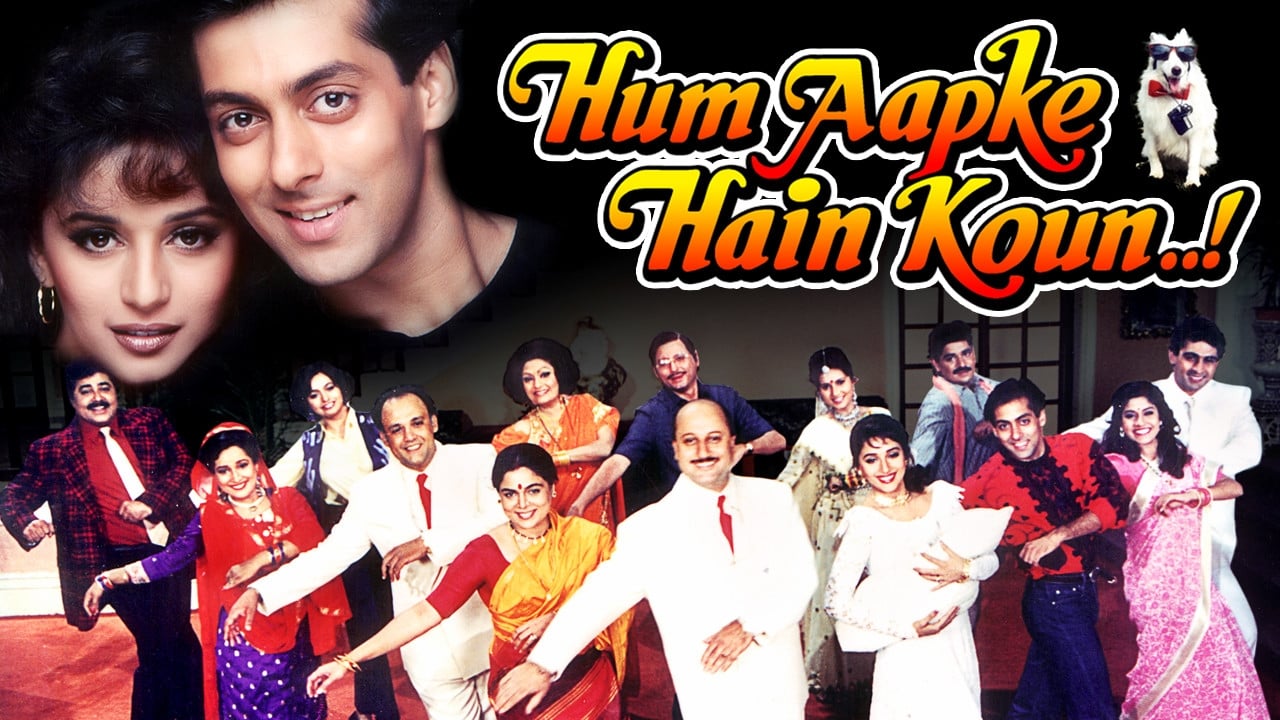
What truly elevates HAHK beyond a simple string of wedding videos is the incandescent star power at its centre. Madhuri Dixit as Nisha is simply luminous. She radiates charm, mischief, and vulnerability, effortlessly navigating the film’s emotional shifts. Her dance sequences, particularly in numbers like the iconic "Didi Tera Devar Deewana," are mesmerising – showcasing not just incredible skill but a palpable joy that leaps off the screen. Remember the frenzy around that purple saree? Madhuri didn't just wear it; she made it a cultural artefact! Opposite her, a young Salman Khan as Prem delivers one of his most enduringly beloved performances. Playful, charming, and possessing a genuine warmth, his chemistry with Madhuri is undeniable. They sparkle together, making their slow-burn romance the engaging core amidst the sprawling family ensemble. Supporting roles from Mohnish Bahl and Renuka Shahane provide a gentle, grounding counterpoint, portraying the established marital bliss that Nisha and Prem aspire to.
### Let the Music Play... And Play... And Play!
You simply cannot talk about Hum Aapke Hain Koun..! without dedicating serious time to its music. Composer Raamlaxman delivered an absolute behemoth of a soundtrack – a staggering 14 songs woven inextricably into the narrative fabric. These weren't just musical interludes; they were the narrative much of the time, expressing emotions, advancing relationships, and celebrating every conceivable milestone. From the playful antakshari battles to the wedding celebrations and poignant moments of longing, the music is omnipresent. The album was a monumental success, reportedly selling millions of cassettes and becoming ubiquitous across India and the diaspora. It’s a testament to the songs' catchiness and emotional resonance that many remain popular even today. Sure, 14 songs in one film is... a lot. It tests the patience, no doubt, especially on repeat viewings. But back then, settling in for HAHK meant settling in for a musical marathon, and we eagerly soaked it all up.
### Retro Fun Facts: The Making of a Megahit
The story behind HAHK's success is almost as fascinating as the film itself. Made on a budget of around ₹4.25 crore (roughly $1.3 million USD in 1994), its eventual gross was astronomical, exceeding ₹72 crore (around $20 million USD then), making it one of the highest-grossing Indian films ever at that point. Adjusted for inflation, its success remains monumental – we're talking figures that would translate to hundreds of crores today! This wasn't just a hit; it was a phenomenon that revitalized the family drama genre and arguably shifted distribution strategies in Bollywood towards fewer prints but higher ticket prices in premium theatres. Some cinemas, like Mumbai's Liberty Cinema, famously ran the film for over a year!
And who can forget Tuffy, the Indian Spitz who becomes an unlikely hero? The dog's role, particularly in the climax, is surprisingly pivotal and became one of the film's most talked-about elements – a furry deus ex machina saving the day! It’s one of those charmingly specific details that lodges itself in your memory. Sooraj Barjatya, relatively young at the time, displayed incredible confidence in his vision of wholesome entertainment, eschewing the violence and cynicism prevalent in many films of the era, and betting big on sentiment and song. It paid off spectacularly.
### A Sugary Sweet Time Capsule?
Watching Hum Aapke Hain Koun..! today is certainly an experience. Its runtime (around 206 minutes) feels even more epic in our era of rapid-fire editing. The relentless optimism and idealized family dynamics can feel almost overwhelmingly saccharine at times. The plot is thin, stretched across those many musical numbers, and the dramatic conflict, when it finally arrives, feels somewhat engineered. Yet, there's an undeniable charm, a sincerity that shines through. It captures a specific moment in time, a vision of unity and celebration that clearly resonated deeply with audiences weary of darker themes. It became the blueprint for countless wedding sequences and family sagas that followed, its influence on popular Indian culture undeniable.
***
VHS Heaven Rating: 8/10
Justification: Hum Aapke Hain Koun..! earns a strong 8 for its sheer cultural impact, iconic performances (especially Madhuri Dixit's), unforgettable music, and its status as the definitive Bollywood family entertainer of its era. The chemistry between the leads is electric, and the film radiates a genuine warmth and celebratory spirit that's hard to resist entirely. Points are deducted primarily for the extremely lengthy runtime and the often paper-thin plot stretched by the sheer volume of songs, which can test modern sensibilities and make repeat viewings a significant time commitment. Its overwhelming sweetness, while part of its identity, might also feel dated or cloying to some viewers today. Nevertheless, its historical significance and enduring charm make it a vital piece of 90s cinema nostalgia.
It’s a film that feels like a warm, extended hug from a slightly over-enthusiastic relative – perhaps a bit much sometimes, but ultimately offered with love and leaving you with a smile. A true time capsule of 90s Bollywood maximalism.