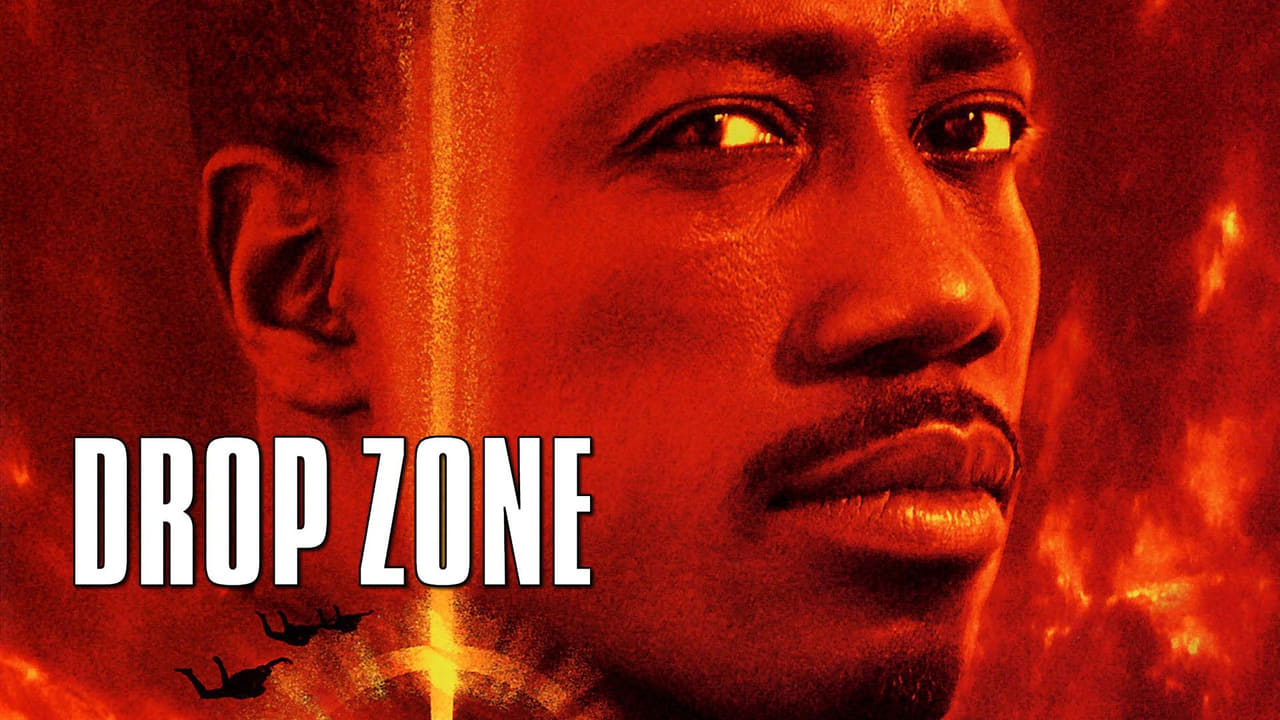
Okay, rewind your mind back to the glorious mid-90s. Video store shelves were groaning under the weight of high-concept action flicks, each trying to outdo the last. Remember that brief, bizarre moment when Hollywood decided skydiving was the next big thing for thrillers? Popping up like a colourful parachute against a clear blue sky was 1994's Drop Zone, a film that strapped Wesley Snipes into a harness and threw him out of a plane, chasing Gary Busey and his band of aerial anarchists. If that premise alone doesn't make you crack a nostalgic grin, you might need to check your tracking.
### Freefallin' into Action
The setup is classic 90s action fare: U.S. Marshal Pete Nessip (Wesley Snipes) and his brother Terry (Malcolm-Jamal Warner, forever Theo Huxtable in our hearts) are transporting a computer hacker prisoner on a commercial flight. Suddenly, chaos erupts. A coordinated attack, masterminded by the menacing ex-DEA lunatic Ty Moncrief (Gary Busey), sees the prisoner extracted via a daring mid-air escape, leaving Terry dead and Pete suspended from duty. Naturally, Pete isn't letting this go. His rogue investigation leads him into the vibrant, adrenaline-fueled subculture of competitive skydiving, where he suspects Moncrief and his crew are hiding in plain sight.
Directed by John Badham, a man who knew his way around tension after giving us WarGames (1983) and the iconic Saturday Night Fever (1977), Drop Zone aims for pure spectacle. And honestly? It often achieves it, especially when it leaves the ground. This film arrived in a curious head-to-head battle with Terminal Velocity, another skydiving actioner starring Charlie Sheen, which hit screens just a few months earlier. While neither film exactly set the box office on fire (Drop Zone pulled in around $28 million domestically against a hefty $45 million budget – that’s roughly $94 million today!), Drop Zone arguably delivers the more memorable aerial sequences.

### The Real Deal in the Sky
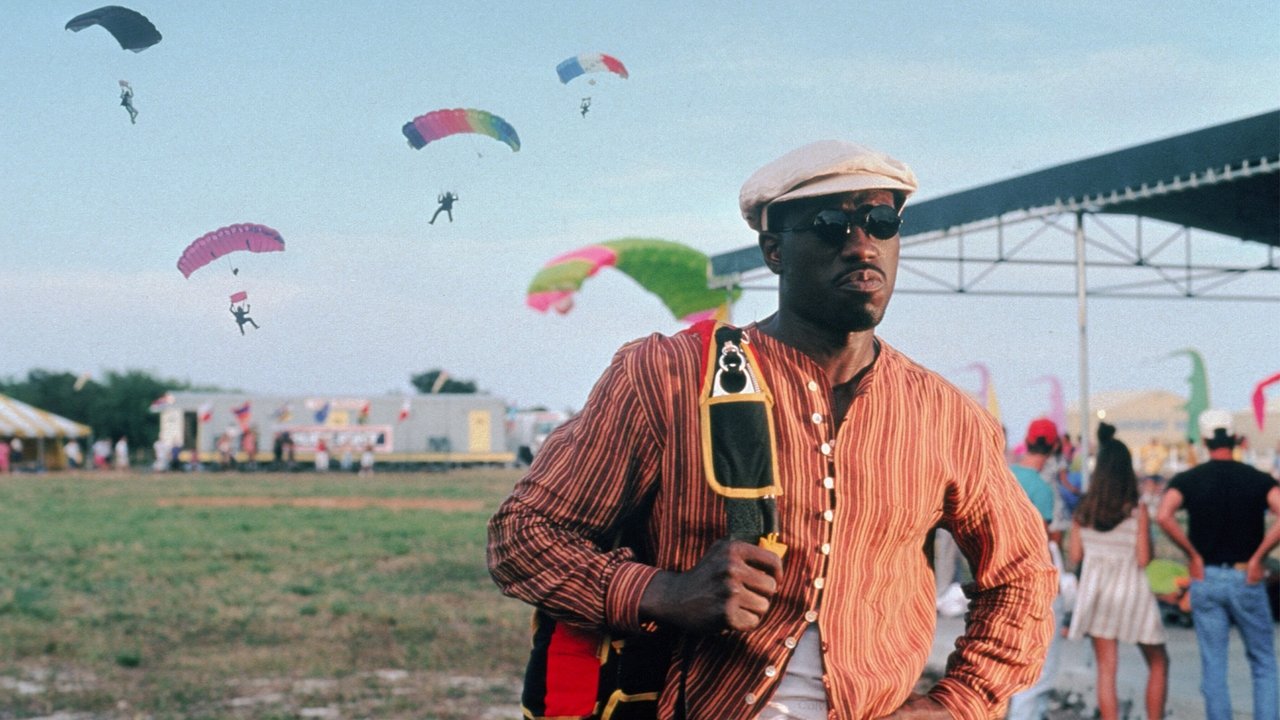
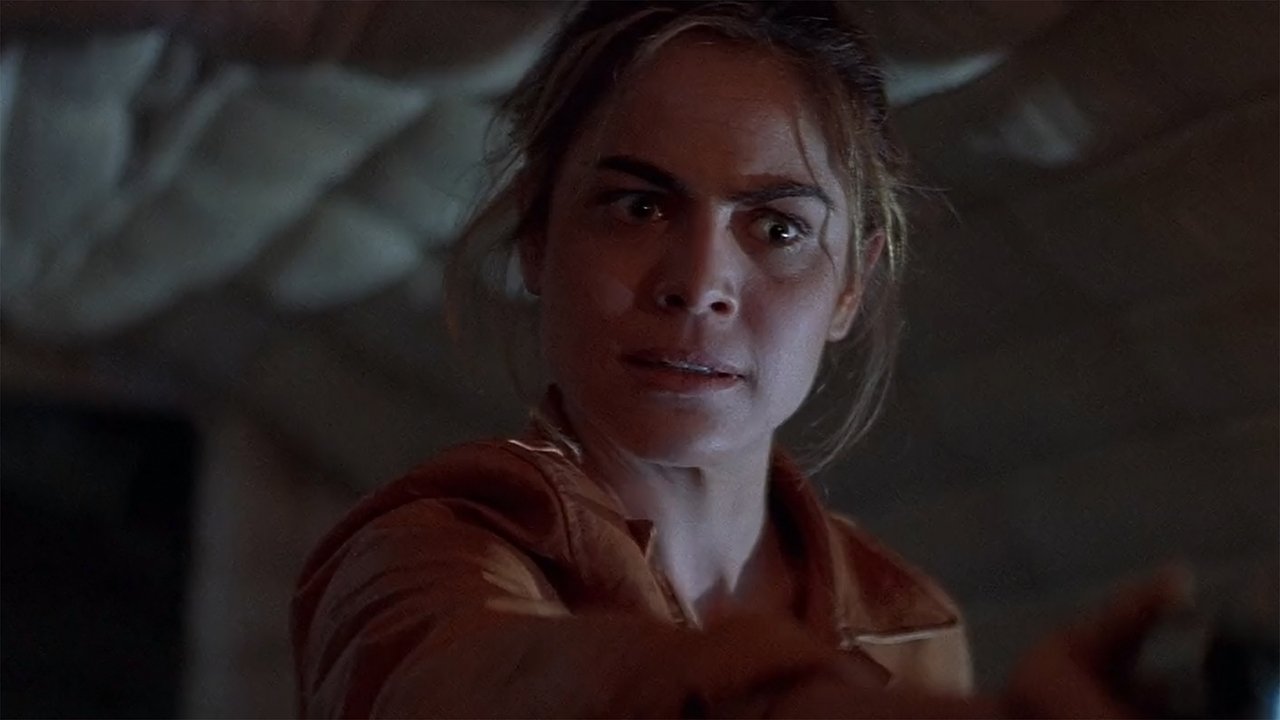
Let's talk about that skydiving. In an era before seamless CGI rendered anything possible (and often, weightless), Drop Zone relied heavily on actual people jumping out of actual planes. Remember how utterly breathtaking those shots felt on your trusty CRT? The sense of speed, the dizzying perspective, the sheer reality of figures tumbling through the vast emptiness – it was genuinely thrilling. A massive chunk of the credit goes to the team of world-class skydivers assembled, including Guy Manos (who even snagged a writing credit, likely for lending his expertise). They employed helmet cams and flew alongside the action in chase planes, capturing footage that still feels visceral today. Seeing Yancy Butler as Jessie Crossman, the tough-as-nails drop zone owner who eventually helps Snipes, actually performing jumps adds a layer of authenticity. You can practically feel the wind buffeting the camera. Compare that raw, slightly chaotic energy to the often overly smooth, physics-defying digital creations of modern blockbusters – there's a tangible difference, a real sense of danger here.
Retro Fun Fact: Filming these complex aerial sequences wasn't just dangerous; it was a logistical nightmare. Coordinating dozens of skydivers, camera operators falling alongside them, and the flight paths of multiple aircraft required immense precision and guts. It's the kind of practical filmmaking effort that feels increasingly rare.
### Snipes vs. Busey: A 90s Showdown
Wesley Snipes, already a bona fide action star thanks to films like Passenger 57 (1992), brings his usual cool intensity and physical presence. Even grounded, he looks ready to unleash some trademark martial arts, though the film wisely keeps him slightly out of his element amidst the skydiving pros. He’s the stoic anchor in a sea of eccentric characters.
And speaking of eccentric, let's talk Gary Busey. Is there any other kind? As Ty Moncrief, Busey delivers exactly the kind of performance you’d expect – wild-eyed, unpredictable, and chewing scenery like it’s his last meal. He’s the perfect embodiment of the slightly over-the-top 90s action villain, spouting pseudo-philosophical nonsense while orchestrating elaborate crimes from 10,000 feet. He’s ridiculous, yes, but undeniably magnetic. The supporting cast, including the always-welcome Michael Jeter providing some quirky comic relief as Earl Leedy, fills out the world nicely. Even the score by Hans Zimmer, already on his way to becoming a legendary composer, adds a driving pulse to the proceedings.
### Predictable Plot, Unforgettable Stunts
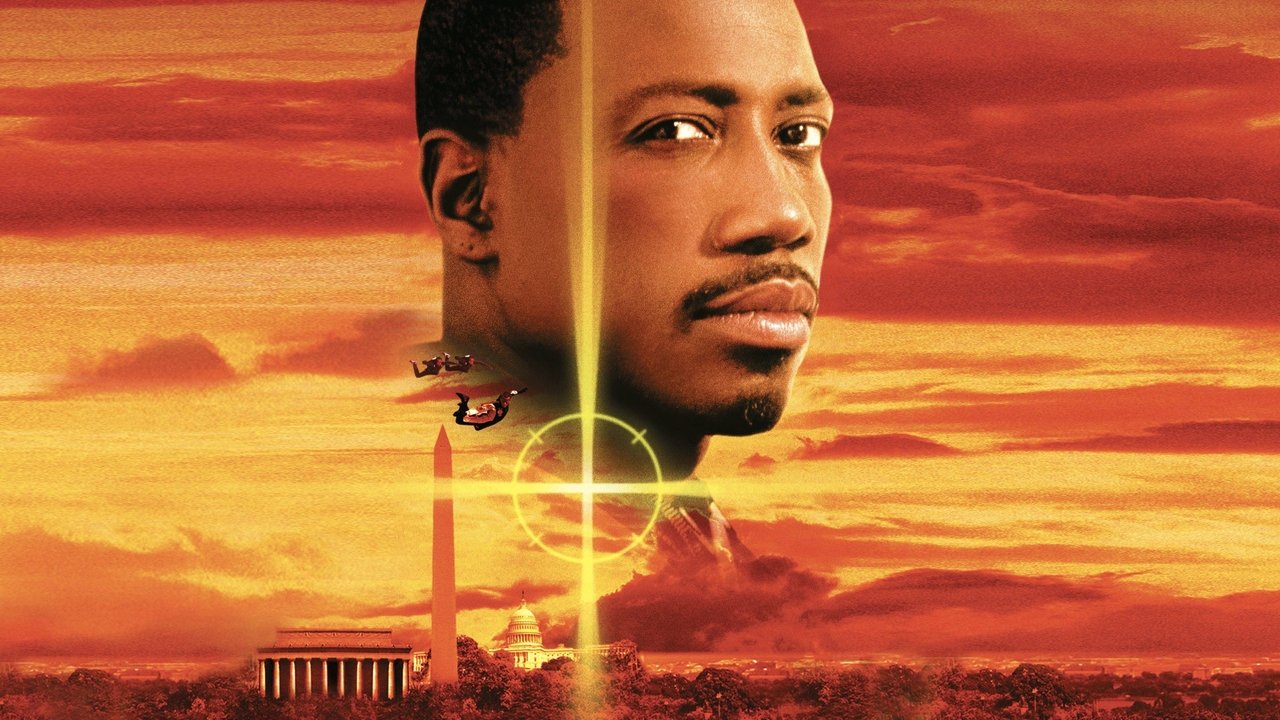
Okay, let's be honest. The plot itself isn't exactly rewriting the action movie playbook. It hits familiar beats: the disgraced lawman seeking redemption, the initial mistrust turning into teamwork, the inevitable final confrontation. Some of the dialogue definitely feels… well, very 1994. But does it matter when you're watching stunt performers execute a complex formation jump onto a skyscraper rooftop at night (filmed over Washington D.C., no less)? For many of us renting this on a Friday night, the answer was a resounding "Nope!"
The film cleverly uses the skydiving theme not just for spectacle but as an integral part of the heist elements, culminating in that audacious D.C. jump where Moncrief's team plans to steal sensitive data by literally dropping into DEA headquarters. It’s preposterous, sure, but it’s entertainingly preposterous, executed with enough practical flair to make you buy into it for two hours. I distinctly remember renting this tape, drawn in by the promise of Snipes and high-altitude thrills, and being completely captivated by the sheer audacity of the aerial work.
Rating: 7/10
Why this score? Drop Zone earns solid points for its genuinely spectacular, practically achieved skydiving sequences, which remain impressive even today. Snipes is a reliable hero, Busey is gloriously unhinged, and the supporting cast adds flavour. It captures that specific mid-90s action vibe perfectly. It loses a few points for a somewhat formulaic plot and dialogue that occasionally dips into cheese territory. However, the sheer commitment to the practical stunts elevates it above standard action fare of the era.
Final Thought: While the story might be grounded in familiar tropes, Drop Zone's heart-stopping practical aerial action truly soared, offering a unique kind of visceral thrill that digital effects often struggle to replicate. It’s a blast from the past that proves sometimes, the old ways of throwing real people out of real planes made for damn good cinema. Worth seeking out if you miss when action movies felt genuinely dangerous.