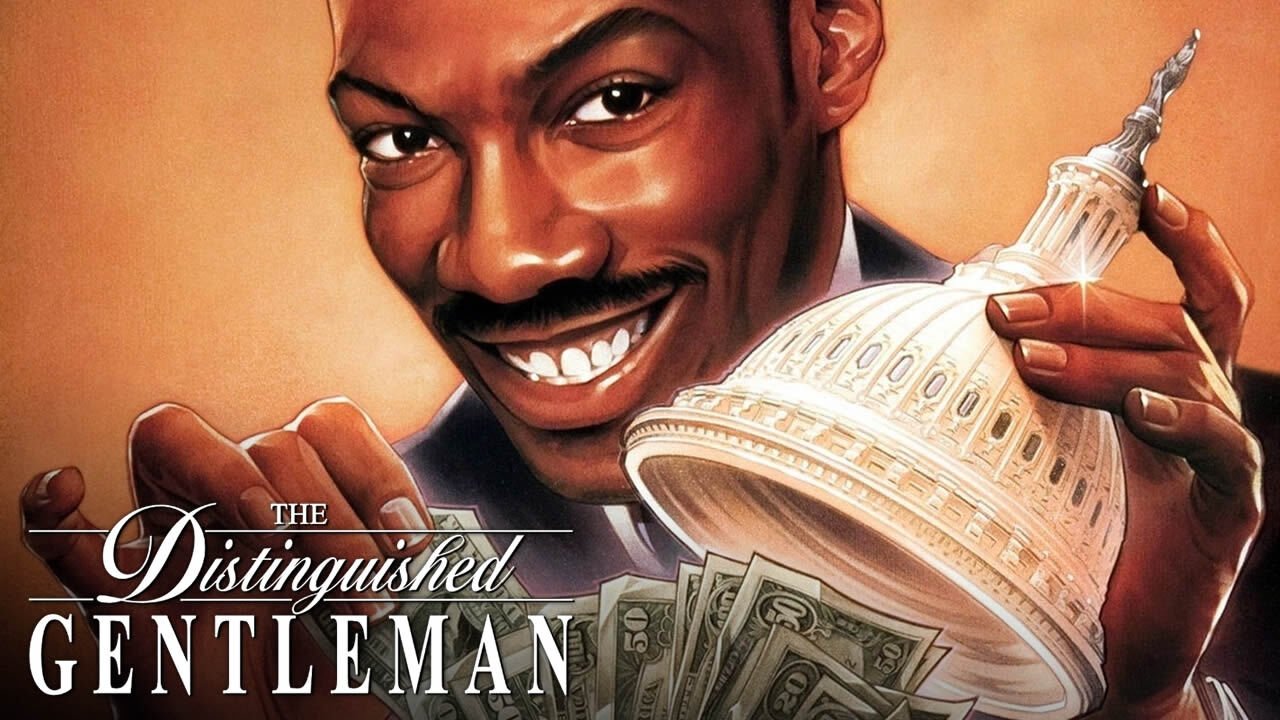
Alright, rewind your minds with me. Picture this: You're browsing the aisles of your local video store, maybe a Blockbuster, maybe a slightly more 'characterful' independent joint. The fluorescent lights hum overhead. You spot the familiar grin, that million-dollar smile, on a VHS box. It's Eddie Murphy, but... wait, he's in a suit? On Capitol Hill? That's the jolt "The Distinguished Gentleman" delivered back in '92. It wasn't Beverly Hills Cop or Coming to America, but it promised Murphy doing what he did best – infiltrating a world he didn't belong in and turning it upside down.
### Smooth Operator Goes to Washington
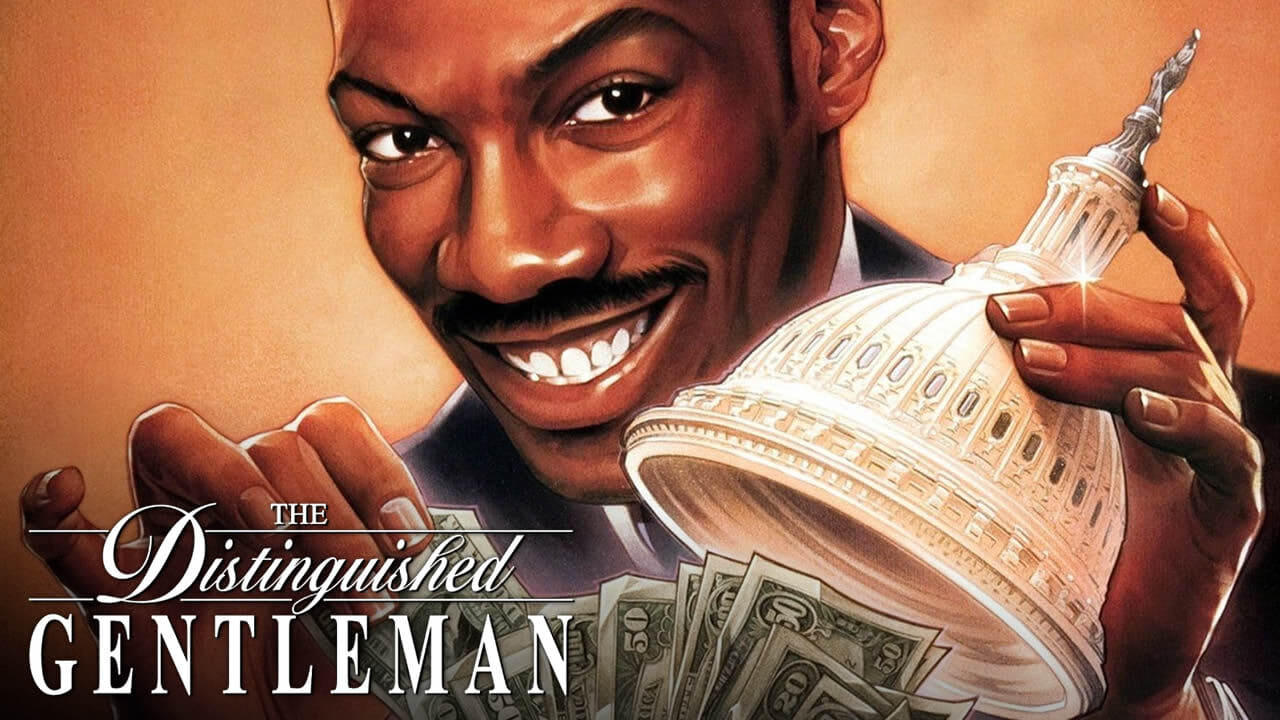
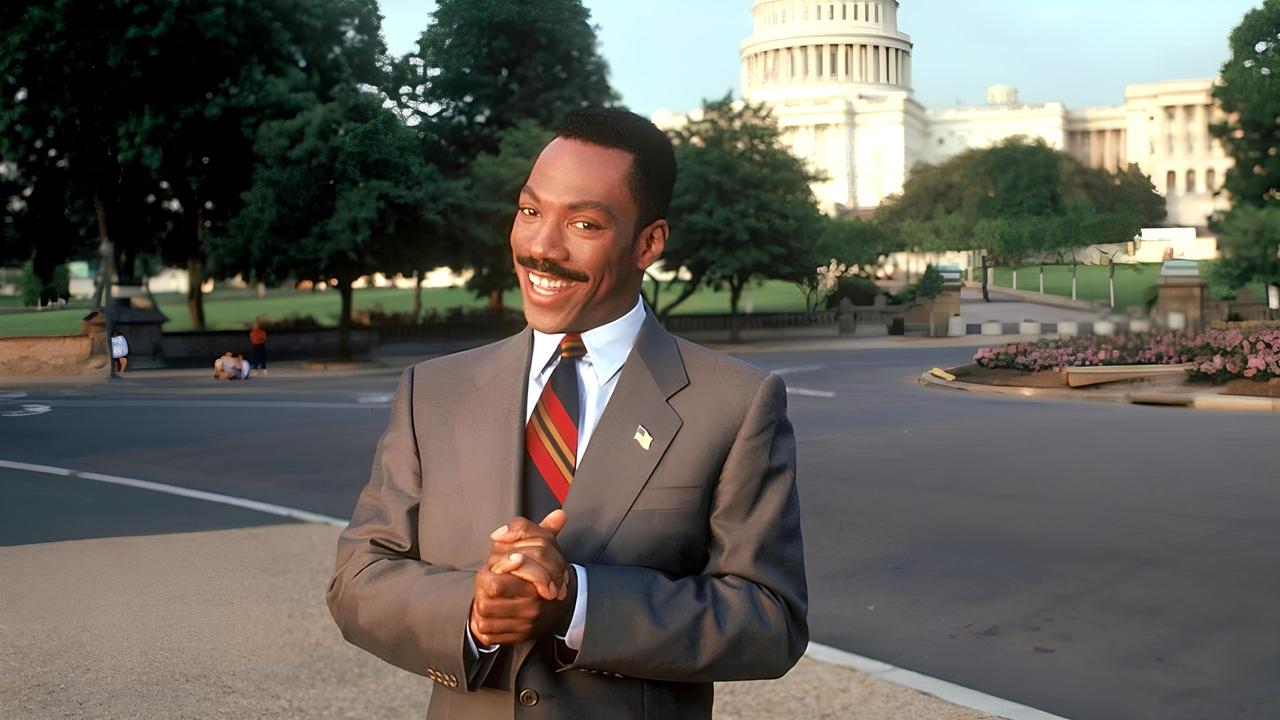
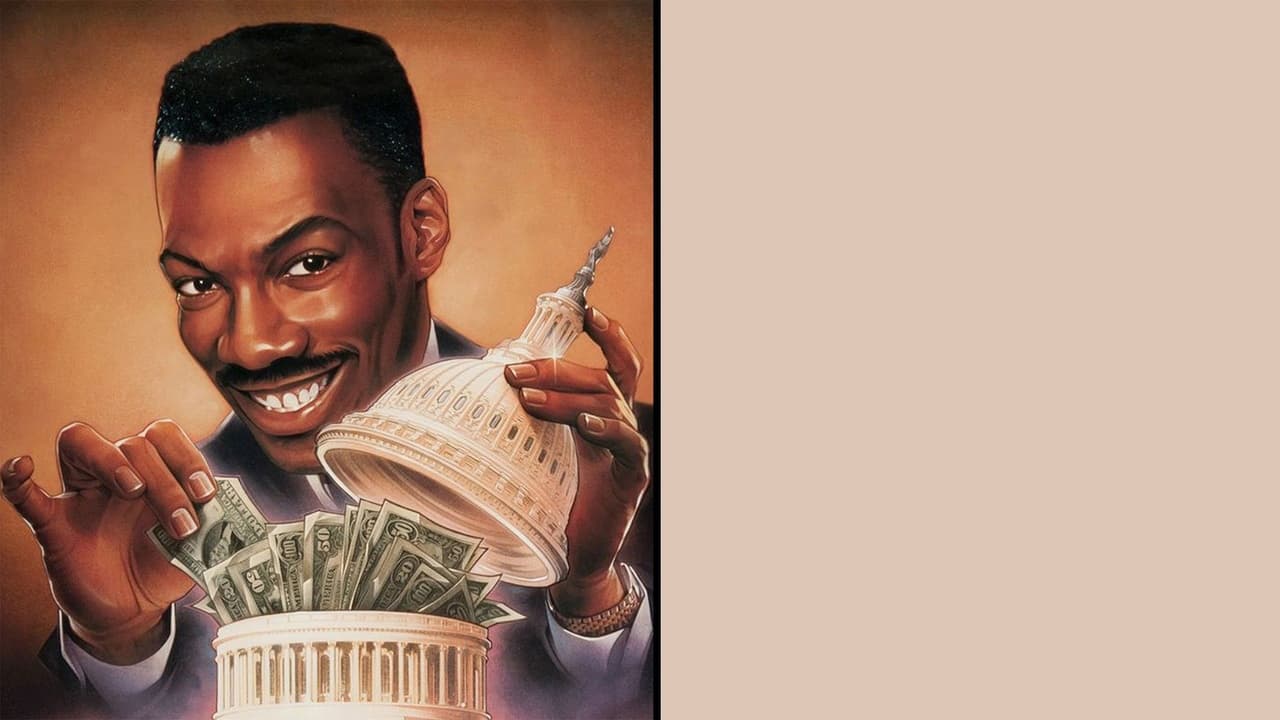
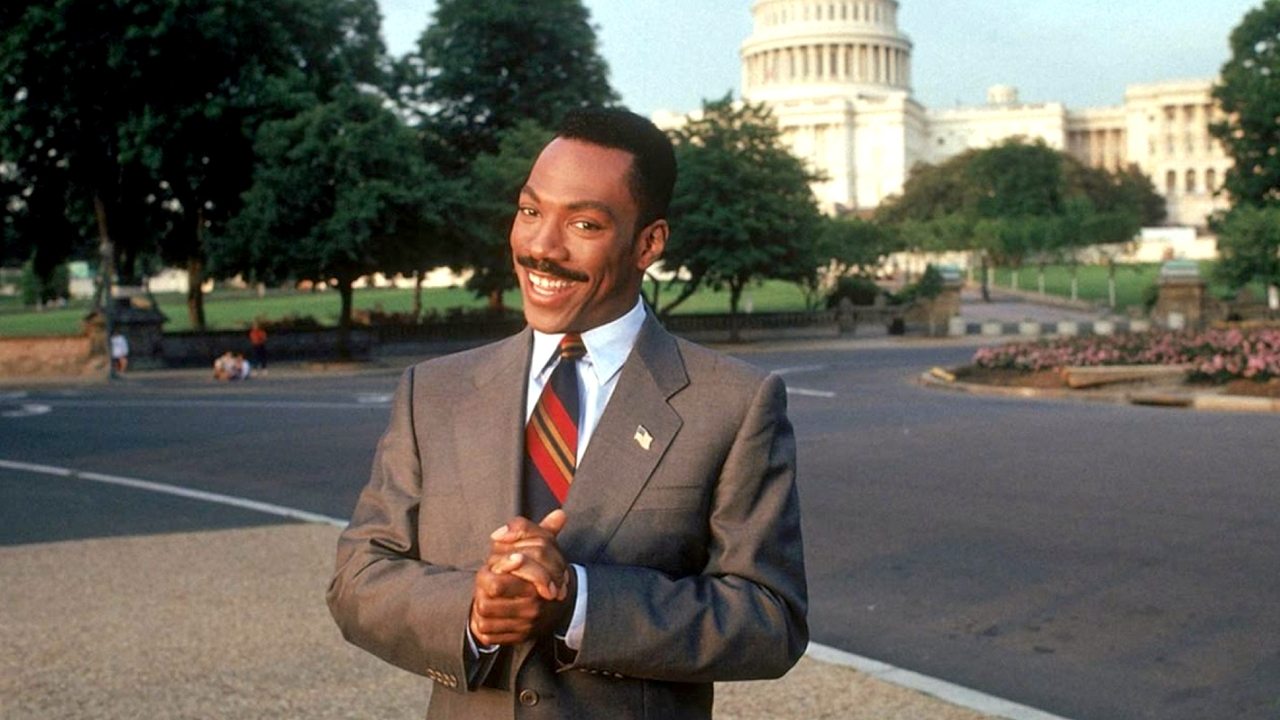
The setup is pure high-concept gold, the kind that practically screamed "early 90s comedy vehicle." Eddie Murphy plays Thomas Jefferson Johnson, a slick Florida con artist who discovers that sharing a name with a recently deceased Congressman (the venerable Jeff Johnson) is his golden ticket. Through a brilliantly executed, if ethically dubious, campaign exploiting name recognition, he cons his way into the hallowed halls of the U.S. House of Representatives. His goal? Simple. Get in on the real graft, the PAC money, the lobbyist gravy train – where the serious bucks are made.
Murphy absolutely shines in these early scenes, dripping with the effortless charisma and fast-talking energy that defined his peak. Remember how magnetic he could be? He sells the con completely, making you root for this charming rogue even as he's bamboozling the entire political system. It’s a different kind of energy than his 80s action-comedy roles, more sly and observational, but still unmistakably Murphy. This felt like him stretching his wings a bit, trying on a slightly more 'adult' comedic persona.
### Navigating the Swamp (Before It Was Cool)
Once in D.C., Johnson finds himself hilariously unprepared for the actual mechanics of Washington power broking, initially seeing it as just a bigger, more lucrative con. Director Jonathan Lynn, fresh off the absolute triumph of My Cousin Vinny (released the very same year – talk about a hot streak!), brings a steady hand and a knack for ensemble comedy to the proceedings. He lets Murphy be the whirlwind, but surrounds him with a fantastic supporting cast who ground the satire.
Chief among them is the late, great Lane Smith as Dick Dodge, the Chairman of the powerful Committee on Power and Industry. Smith is deliciously smarmy, embodying the entrenched, lobbyist-loving corruption that Johnson initially aims to emulate. Their interactions are comedic gold, a clash between the old guard of graft and the ambitious newcomer. And let's not forget Sheryl Lee Ralph as the principled aide Miss Loretta Hicks, who becomes Johnson's unlikely moral compass. Ralph brings dignity and warmth, providing a necessary counterpoint to the surrounding cynicism. Joe Don Baker also makes a memorable appearance as another folksy-but-corrupt lobbyist. It’s a cast stacked with familiar faces from the era.
Interestingly, the script was co-written by Marty Kaplan, who had real-world political experience as a former speechwriter for Walter Mondale. This pedigree likely contributed to some of the sharper observations about lobbying and political maneuvering tucked within the comedy. It wasn't just throwing jokes; there was a layer of knowing commentary that maybe felt a little surprising tucked inside an Eddie Murphy vehicle at the time.
### When Comedy Finds a Conscience
The film takes a turn when Johnson, initially just looking for the biggest payday, stumbles onto a genuine issue: the link between power lines run by a dodgy energy company (represented by Dodge, naturally) and childhood cancer in a constituent's town. This is where "The Distinguished Gentleman" tries to balance its comedic premise with a dose of social commentary. Does it fully succeed? Maybe not perfectly. The shift can feel a little abrupt, and the resolution leans into feel-good Hollywood convention.
But watching it now, especially on a slightly fuzzy transfer reminiscent of the original VHS experience, there's a charm to its earnestness. The film doesn't shy away from naming the game – PACs, lobbyists, quid pro quo – in a way that felt relatively bold for a mainstream comedy back then. It tackled corporate influence with a surprising directness, even if wrapped in Murphy's comedic stylings. Reportedly filmed on a hefty $50 million budget, it made back around $47 million domestically – respectable, but perhaps not the blockbuster numbers Hollywood Pictures was hoping for, indicating maybe audiences weren't quite sure what to make of this blend of satire and star power.
### The Verdict on This Political Con
"The Distinguished Gentleman" isn't top-tier, peak-80s Eddie Murphy. It lacks the raw, electrifying edge of 48 Hrs. or the iconic status of Beverly Hills Cop. Yet, catching it again feels like rediscovering a comfortable, well-worn tape from the back of the shelf. It’s funny, carried by its star's undeniable talent and a surprisingly strong supporting cast. Jonathan Lynn keeps things moving at a brisk pace, and the premise remains clever. The satire might feel a bit gentle by today's standards, but for 1992, it had some bite.
It perfectly captures that early 90s moment where star-driven comedies could still tackle substantial themes, even if they ultimately played it relatively safe. It’s a snapshot of Murphy transitioning, trying to infuse his brand of comedy with a bit more weight.
Rating: 7/10
Justification: While the blend of broad comedy and political satire isn't always seamless, Eddie Murphy's charisma is undeniable, the supporting cast shines (Lane Smith is perfect), and the premise is clever. It’s a genuinely entertaining early 90s comedy with more on its mind than you might initially remember, making it a solid and often funny watch that holds up better than some of its contemporaries.
Final Thought: It might not have changed the political landscape, but finding "The Distinguished Gentleman" on VHS felt like electing pure entertainment – a vote Eddie Murphy almost always won in the 90s.