Alright, settle in, grab your Pizza the Hutt slice (hold the pepperoni... or maybe don't), and let's rewind to a time when spoofing the biggest movie franchise ever felt both audacious and absolutely necessary. I'm talking, of course, about Mel Brooks' 1987 sci-fi comedy classic, Spaceballs. Finding this tape on the rental shelf, maybe tucked between RoboCop and Predator, always felt like striking gold. It promised pure, unadulterated silliness, a sugar rush of jokes aimed squarely at that galaxy far, far away, and boy, did it deliver.
### May the Schwartz Be With You (and Your Tracking Button)
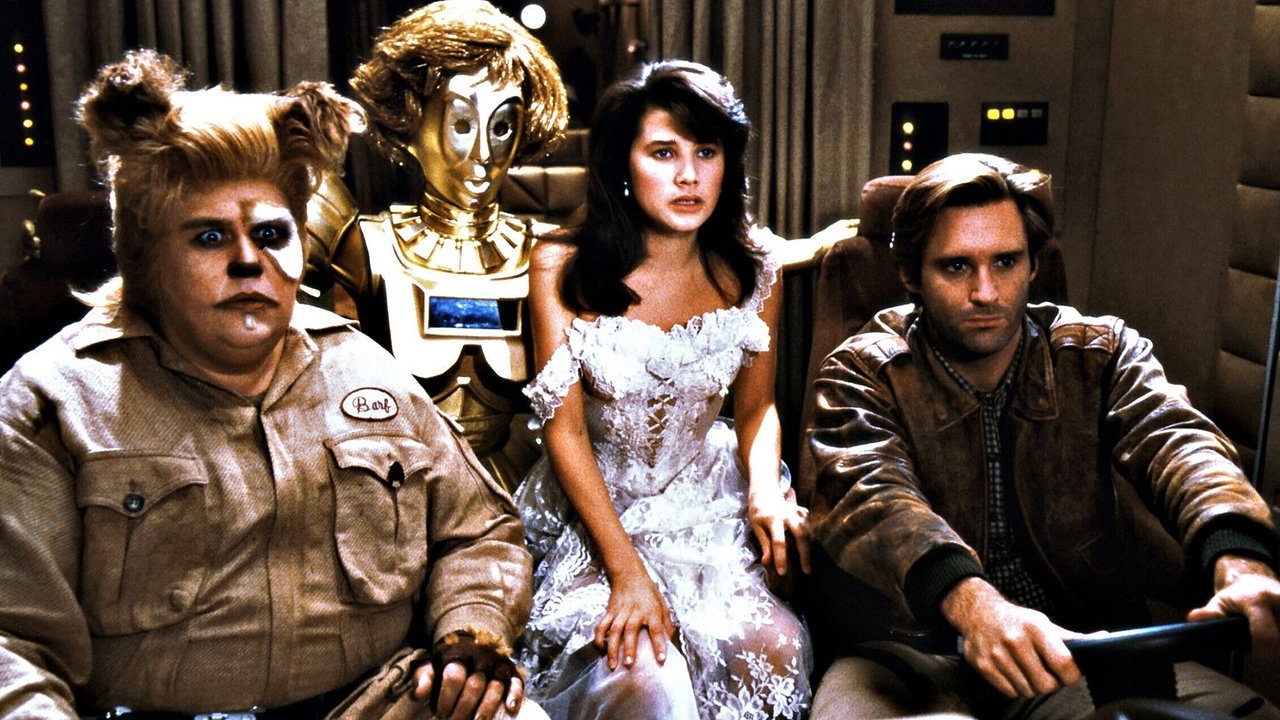
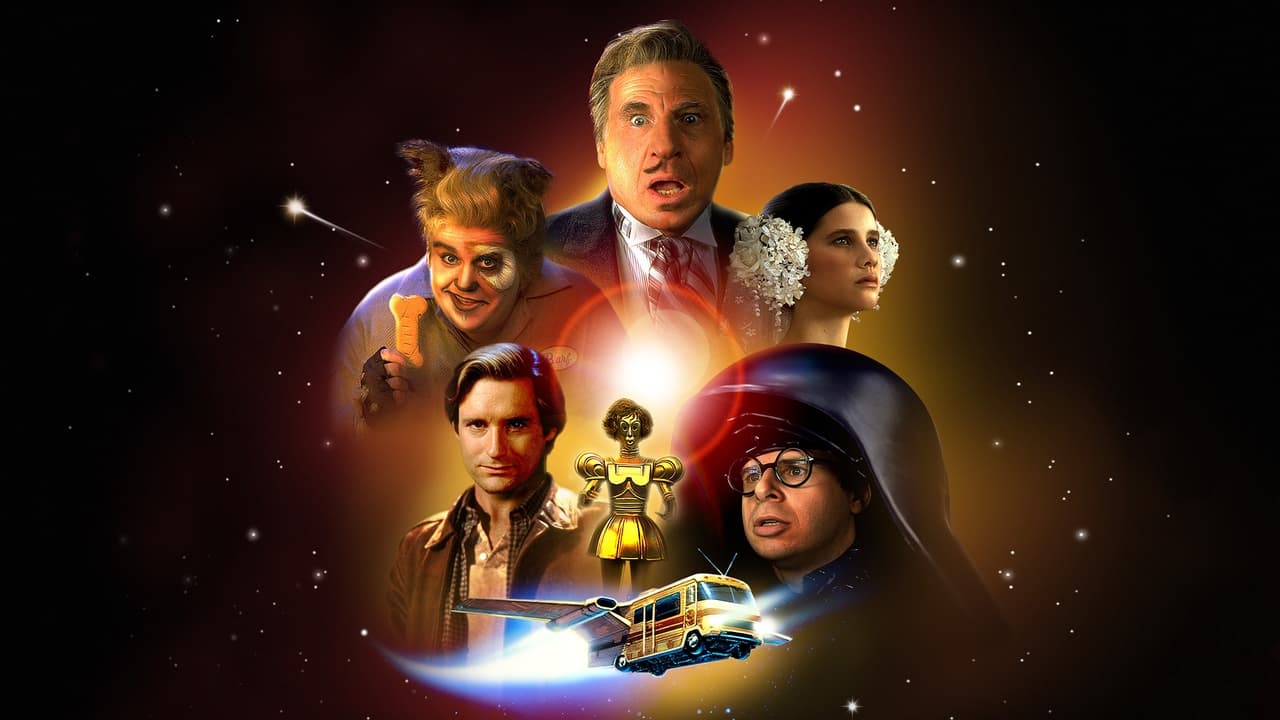
The premise is brilliantly simple: the evil Spaceballs, led by the incompetent President Skroob (Mel Brooks pulling double duty) and the hilariously insecure Dark Helmet (Rick Moranis), plan to steal the fresh air from the peaceful planet Druidia. Their scheme involves kidnapping Princess Vespa (Daphne Zuniga) and demanding Druidia's air code. Who can save her? Only the roguish Lone Starr (Bill Pullman) and his loyal Mawg (half-man, half-dog) sidekick, Barf (John Candy).
It's Star Wars, pure and simple, run through the Mel Brooks blender set to "Liquify". But the genius lies in how affectionate the parody feels. This wasn't a mean-spirited takedown; it was a loving ribbing from a master comedian who clearly respected the source material enough to lampoon it brilliantly. Retro Fun Fact: Brooks actually got George Lucas's blessing for the film. Lucas, a fan of Brooks' work like Blazing Saddles (1974), agreed on one condition: no Spaceballs merchandise that could be confused with actual Star Wars toys. This, hilariously, led to the movie's brilliant meta-jokes about merchandising within the film itself – the lunchbox, the flamethrower, the doll! Pure Brooksian genius.
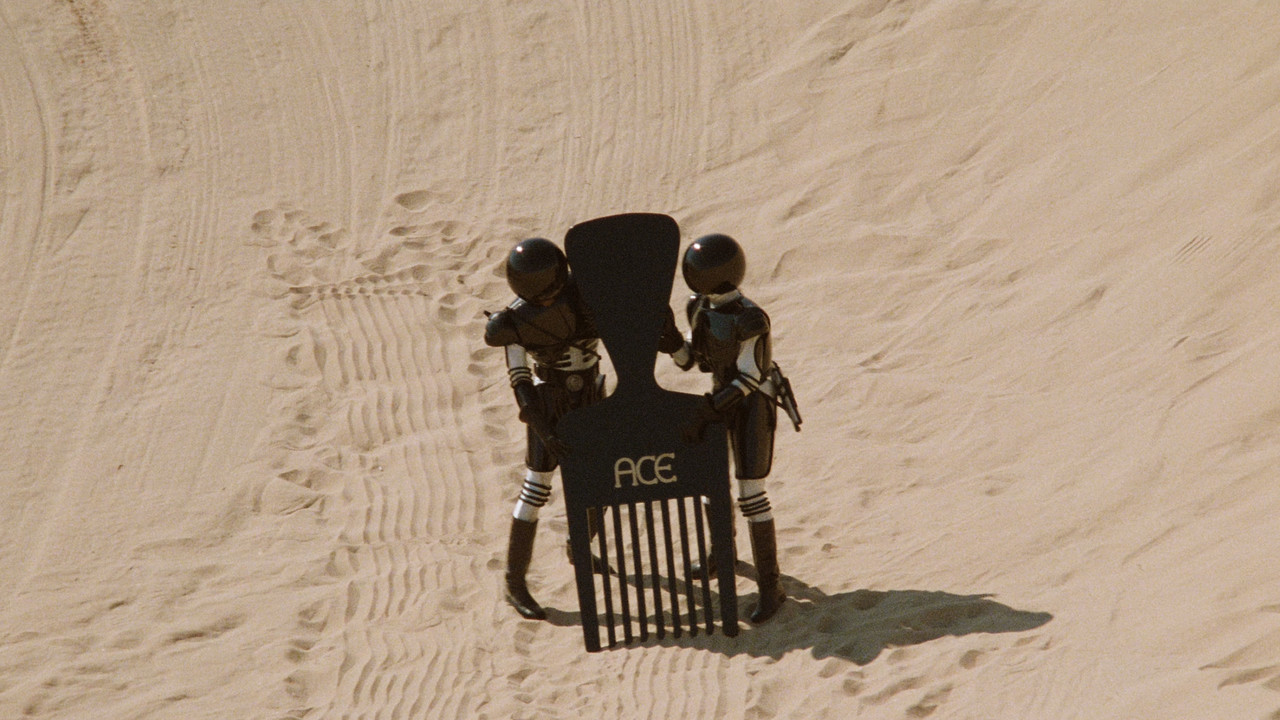
### Combing the Desert for Laughs
The cast is just pitch-perfect. Rick Moranis as Dark Helmet is arguably the film's MVP. His timing, his frustration, the sheer absurdity of that oversized helmet – it’s comedy gold. Moranis reportedly improvised a fair bit, bringing that neurotic energy that made him such an 80s comedy staple. Who else could deliver lines like "I am your father's brother's nephew's cousin's former roommate" with such conviction?
Then there's the irreplaceable John Candy as Barf. Encased in a sweltering fur suit (which apparently required a dedicated air conditioning unit nearby on set), Candy brings his signature warmth and charm to the Chewbacca archetype. He’s the heart of the Eagle 5 crew, even if he is his own best friend. Bill Pullman, stepping into the Han Solo role after names like Tom Cruise and Tom Hanks were reportedly considered, nails the slightly-bemused hero archetype, playing straight man to the surrounding chaos. And Daphne Zuniga perfectly skewers the damsel-in-distress trope, armed with impeccable hair and surprisingly effective luggage.
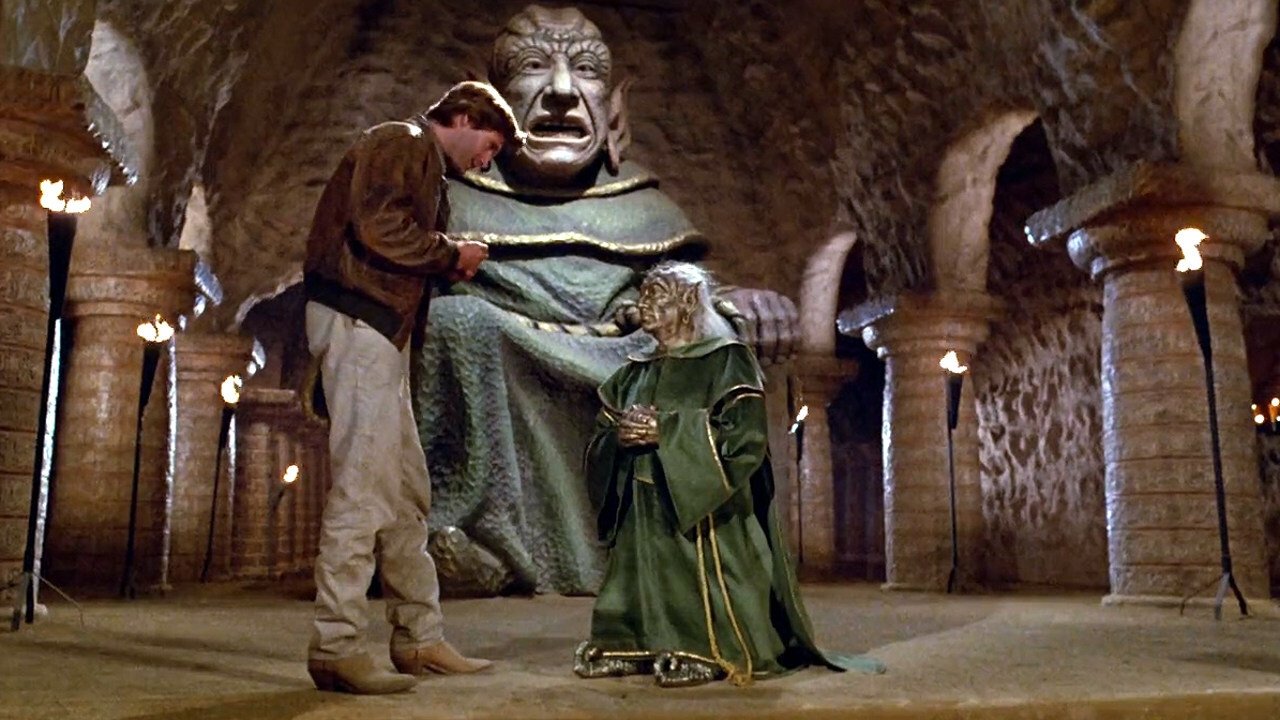
Mel Brooks himself, as both President Skroob and the wise Yogurt, chews the scenery with delightful abandon. Yogurt, the keeper of the Schwartz (and the merchandising!), is Brooks at his most vaudevillian, delivering exposition and punchlines with equal gusto. And let's not forget Joan Rivers voicing the C-3PO parody Dot Matrix, dripping with sarcastic commentary.
### Ludicrous Speed! (But with Practical Charm)
While Spaceballs is primarily about jokes, not action, its visual gags rely heavily on the practical effects and model work typical of the era. The Spaceball One transforming into Mega Maid is a fantastic visual punchline, achieved with detailed miniatures. The "Ludicrous Speed" sequence, with its plaid trails, is pure optical printing magic – the kind of effect that felt dazzling on a fuzzy CRT screen, even if it looks charmingly dated now. Compare that raw, almost tactile effect to the seamless (and sometimes weightless) CGI hyperspace jumps of modern sci-fi. There's a certain charm to knowing they built that stuff.
Brooks even throws in a brilliant gag referencing another sci-fi titan with the Alien chestburster scene, complete with a game John Hurt reprising his role (sort of) for a quick, hilarious cameo. It's these kinds of unexpected, perfectly executed gags that elevate Spaceballs beyond a simple spoof. Remember how shocking and funny that felt the first time you saw it?
### Not a Blockbuster Smash, But a VHS Legend
Interestingly, Spaceballs wasn't a runaway box office phenomenon upon release in 1987. On a budget of around $22.7 million, it pulled in about $38.1 million domestically – respectable, but not earth-shattering. Where it truly found its audience and cemented its legacy was on home video. This was the quintessential VHS rental, passed around between friends, quoted endlessly ("We ain't found shit!"), and watched repeatedly until the tape wore thin. Its constant presence on cable TV further solidified its place in the pop culture consciousness. Critics were mixed at the time, some finding it juvenile, but audiences knew better. This was pure fun, expertly crafted silliness from a comedy legend.
It stands as one of the high-water marks of the parody genre, alongside films like Airplane! (1980) and Brooks' own earlier masterpieces. It succeeded because it understood and loved its target, punching up with clever gags rather than just lazy references.
Rating: 8/10
Justification: While some jokes might feel a bit dated now and the plot is intentionally wafer-thin, Spaceballs remains incredibly funny, quotable, and rewatchable. The iconic performances (especially Moranis and Candy), the sheer volume of successful gags, and its affectionate skewering of a cultural phenomenon earn it high marks. It loses a couple of points for occasional pacing lulls and gags that don't quite land today, but its overall comedic impact is undeniable.
Final Thought: Keep firing, Assholes! Spaceballs is a hilarious time capsule of 80s parody, a movie that understood the power of practical gags and meta-humor long before it became commonplace, proving that sometimes, the best way to show love for something is to point a giant hair dryer at it. It's still ludicrously good fun.