Okay, pop that worn copy of Monty Python's The Meaning of Life into the VCR. Remember the ritual? The tracking adjustment, the slightly muffled Dolby Stereo hiss… and then, before the main feature even kicked off, this happened. What was this glorious slice of anarchy that suddenly commandeered the screen? It wasn't quite Python, but it felt like it, only grander, stranger, and somehow… heavier. We're talking, of course, about Terry Gilliam's magnificent, maddening short film, The Crimson Permanent Assurance.
### Setting Sail on the High Seas of Accountancy
Forget swashbuckling pirates on the Spanish Main. Gilliam, fresh off the imaginative whirlwind of Time Bandits (1981) and already brewing the dystopian visions of Brazil (1985), takes us deep into the grey, soul-crushing drudgery of a venerable London financial institution. The titular firm is staffed entirely by put-upon, elderly clerks, shuffling papers under the tyrannical heel of younger, ruthless management. The atmosphere is thick with dust motes and quiet desperation. It’s a scene many who worked office jobs back then might recognise, albeit dialled up to Gilliam’s signature level of grotesque exaggeration.
This wasn't originally planned as a standalone epic. It started life as a potential animated sequence, then a sketch for The Meaning of Life, but Gilliam's imagination, as it often does, ran away with the concept. It ballooned into this fully-fledged, live-action behemoth that reportedly cost a cool $1 million back in '83 – a significant investment for what was essentially the opening act! You can see every penny on screen, though, not in flashy stars (the cast are largely unsung character actors perfectly embodying weary servitude), but in the sheer scale of the practical ambition.
### All Hands on Deck! Mutiny with Office Supplies!
The simmering resentment finally boils over. And this is where The Crimson Permanent Assurance unleashes its unique brand of "action." Forget carefully choreographed martial arts or explosive gunfights. Here, the rebellion is waged with filing cabinet barricades, sharpened letter openers serving as cutlasses, and staplers deployed with deadly intent. Watching these stooped, grey-haired gentlemen suddenly transform into a geriatric pirate crew, swinging from desk lamps and rappelling down stairwells using adding machine tape… well, it’s utterly bonkers and completely brilliant.
The energy is frantic, chaotic, almost cartoonish, yet grounded by the very real, very physical presence of the actors and the environment. Terry Gilliam directs this mayhem with infectious glee. You feel the impact of every overturned desk, every ledger hurled as a projectile. It taps into that universal fantasy of overthrowing oppressive bureaucracy, but executed with a visual wit that’s pure Gilliam. Remember how viscerally satisfying it felt watching them literally throw their smarmy young bosses overboard? No sleek CGI cleanup here – just pure, tangible, office-supply-fueled revolution!
### Hoist the Mainsail (and the Concrete Foundation)!
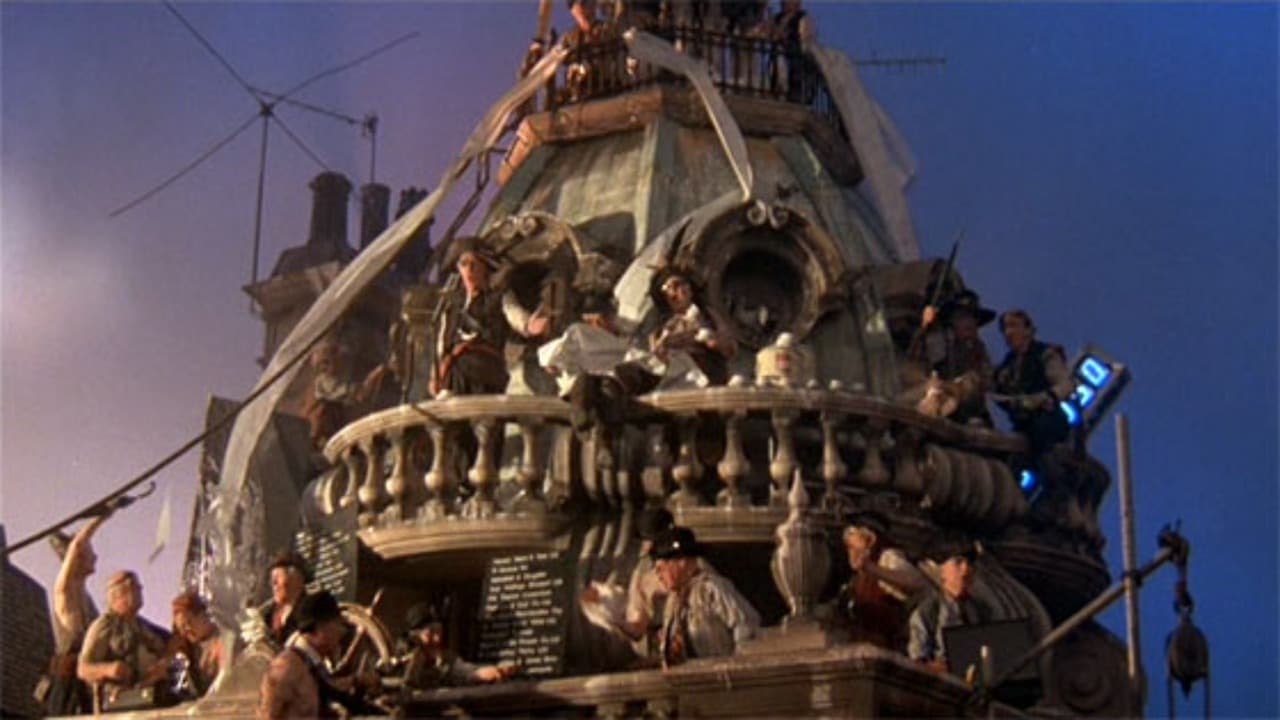
And then comes the moment that likely dropped jaws back in the day, even on a fuzzy CRT screen. Having seized control, the clerks don’t just take over the building… they turn the entire stone-and-glass office block into a pirate ship. This sequence is a masterpiece of 80s practical effects wizardry. Extensive miniature work, clever forced perspective, and sheer filmmaking ingenuity bring this impossible image to life.
Seeing that monolithic structure detach itself from the London skyline, hoist sails made of awnings, and navigate the treacherous "waters" of the financial district to attack other corporate behemoths… it’s breathtaking. It’s the kind of bold, tangible visual storytelling that modern blockbusters, often reliant on digital weightlessness, struggle to replicate. There's a heft, a reality to that model building sailing past Tower Bridge that just sticks with you. It’s a testament to the model makers and Gilliam's unwavering vision. Apparently, the scale model was enormous and incredibly detailed, a real labour of love that paid off spectacularly on screen.
### The Voyage Home (or Not)
The film doesn't just stop at the mutiny; it follows the Crimson Permanent Assurance on its piratical adventures, raiding larger, more modern corporations (represented by sleek, glass towers – a clear visual jab at soulless modernity). The score swells with mock-heroic grandeur, perfectly complementing the absurdity. Yet, there’s a melancholic undercurrent too. These old warriors, fighting for relevance in a changing world, ultimately find themselves adrift, eventually sailing off the edge of a flat Earth – a poignant, typically Gilliam-esque ending.
Initially, seeing this before Meaning of Life could be jarring. Some critics at the time felt it overshadowed the main feature, while audiences were often just bewildered before being thrust into the familiar Python sketches. But viewed now, especially through the lens of VHS nostalgia, The Crimson Permanent Assurance stands as a remarkable piece of filmmaking in its own right. It’s pure, undiluted Terry Gilliam – visually stunning, thematically rich (touching on aging, corporate dehumanization, the clash of old and new), and wildly imaginative.
Rating: 9/10
Why this score? For its sheer audacity, its unforgettable central conceit, and its masterful use of practical effects to create a truly unique spectacle. It’s a dense, visually packed short film that works as blistering satire and a fantastical adventure. It loses a single point perhaps only because its connection to Meaning of Life could initially feel slightly awkward, but its standalone brilliance is undeniable.
Final Thought: In an era before digital workflows streamlined the impossible, The Crimson Permanent Assurance is a glorious testament to what sheer imagination, buckets of model glue, and a healthy dose of anarchic spirit could achieve. It's the kind of ambitious, handcrafted filmmaking that makes the VHS era feel so special – a true buried treasure often found right at the beginning of the tape. Go dig it out!