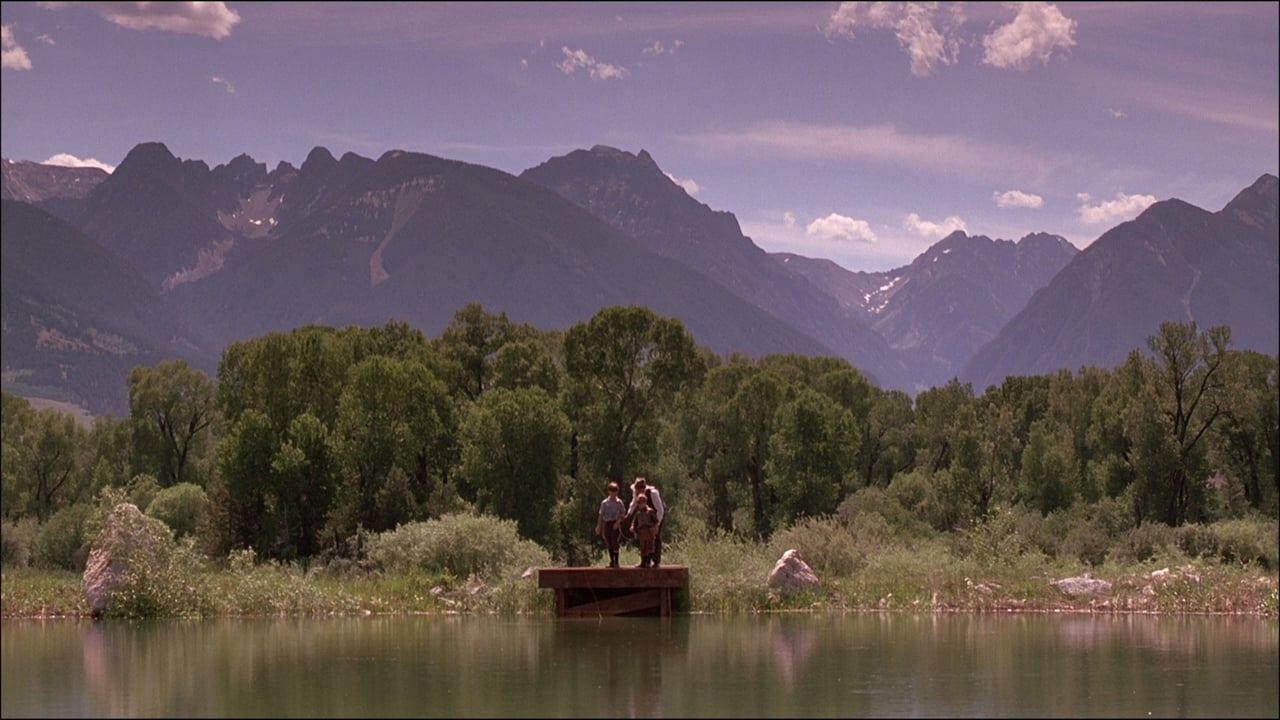
The image lingers, doesn't it? Sunlight dappling through Montana pines, the almost hypnotic rhythm of a fly line tracing arcs over pristine water. Robert Redford's A River Runs Through It (1992) isn't a film you simply watch; it's one you absorb, like the cool air of a mountain morning. Arriving in an era often dominated by louder, faster fare, its quiet power felt like a revelation on those buzzing CRT screens, a VHS tape holding not just a story, but a certain kind of grace. Based on Norman Maclean's semi-autobiographical novella, it’s a film less concerned with plot twists than with the steady, sometimes turbulent, flow of life itself.
Where Water Shapes Lives
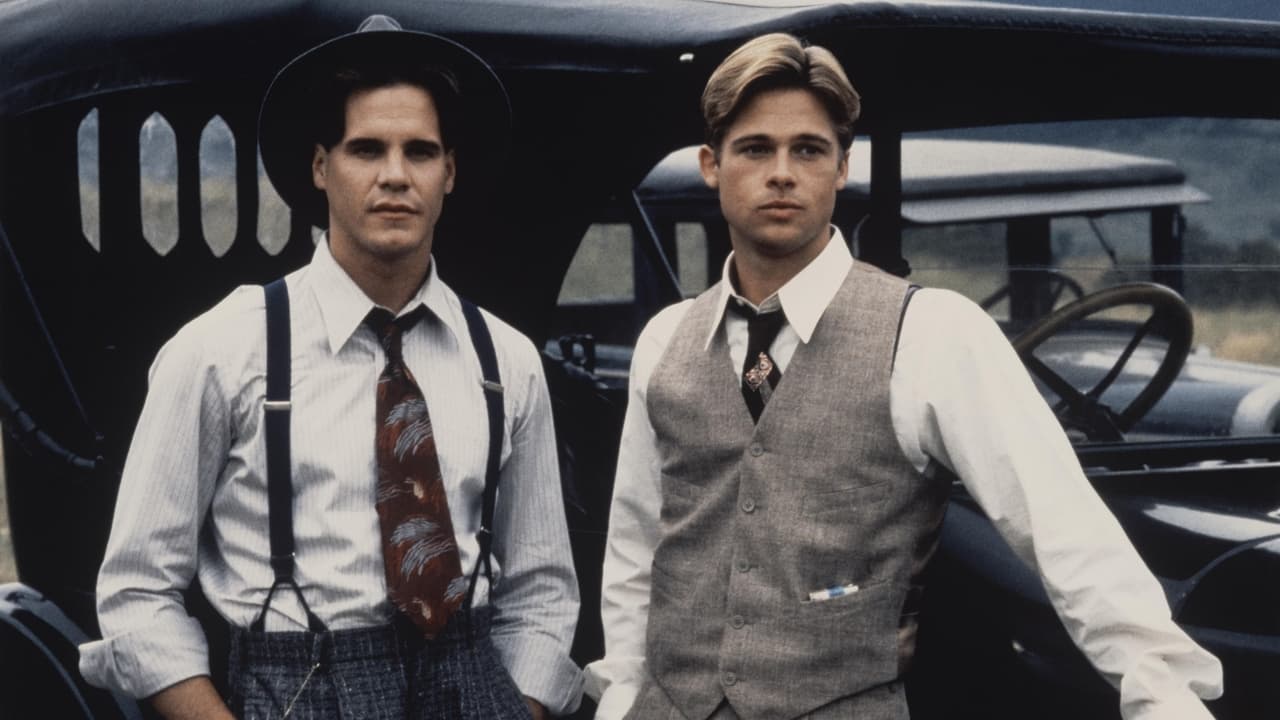
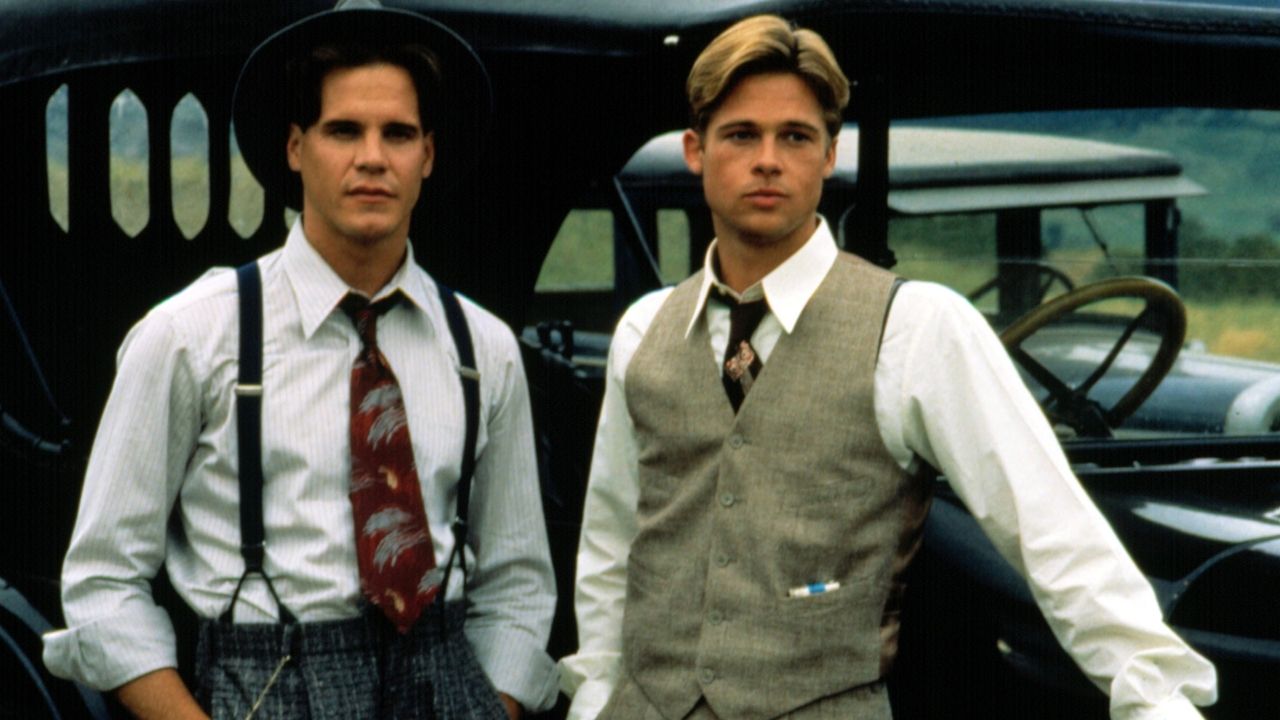
Set primarily in Missoula, Montana, during the early 20th century, the film centers on the Maclean family: the stoic Presbyterian minister father (Tom Skerritt), and his two sons, the thoughtful, studious Norman (Craig Sheffer) and the charming, rebellious Paul (Brad Pitt). Their lives are intertwined with the rugged beauty of the landscape and, most profoundly, with the art of fly-fishing, taught to them by their father as something akin to scripture. The river becomes the silent witness to their triumphs, their conflicts, and the unspoken currents that pull them together and apart. It's a narrative steeped in memory, narrated by an older Norman (voiced beautifully by Redford himself), looking back on a time both idyllic and irrevocably lost.
Brothers Bound by Water and Blood
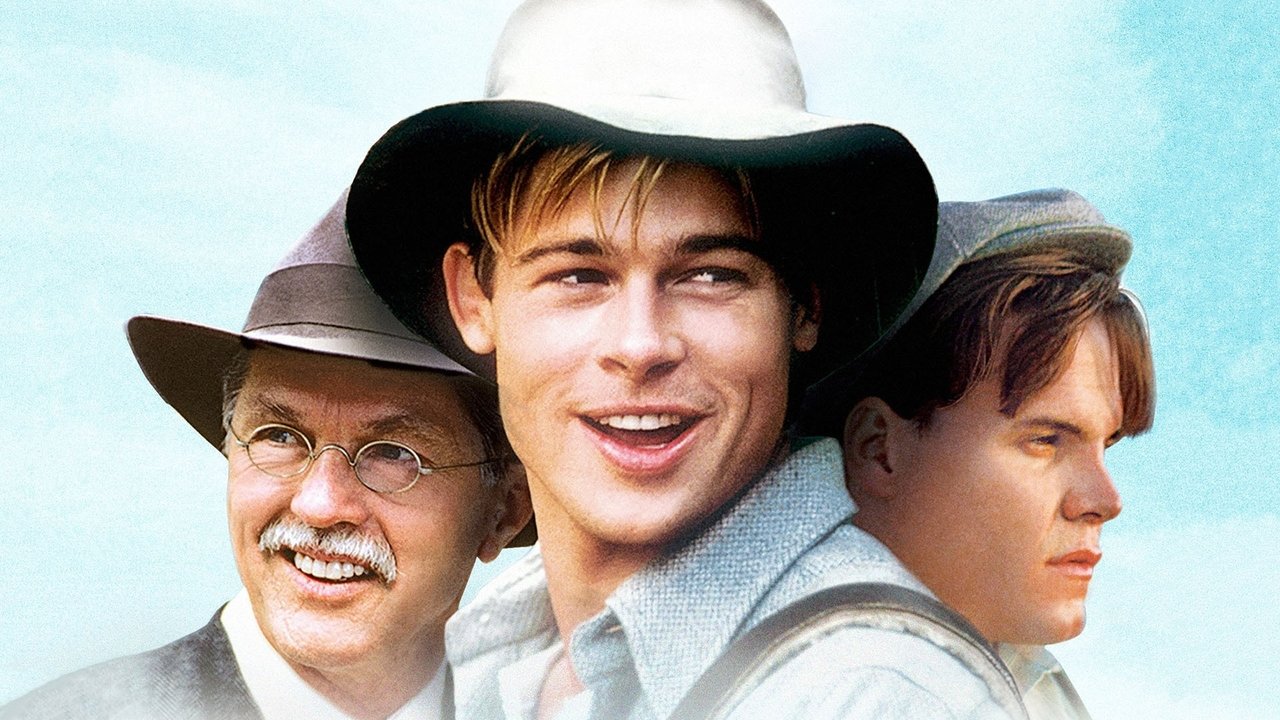
The film truly finds its heart in the relationship between the brothers. Sheffer portrays Norman with a gentle introspection, the responsible older son who leaves Montana for college but remains tethered to his roots. He's our observer, wrestling with his own path while watching his younger brother shine brightly, sometimes dangerously so. And what a shine it was. This was arguably the role that catapulted Brad Pitt from promising actor (seen in films like Thelma & Louise the year prior) to bona fide movie star. His Paul is magnetic – a natural golden boy, a master fisherman whose grace on the river contrasts sharply with his growing recklessness off it (gambling, drinking, fighting). Pitt embodies Paul's effortless charm and underlying vulnerability with a startling authenticity. You understand why people are drawn to him, and you share Norman’s growing sense of unease. It’s a performance that feels less like acting and more like inhabiting a soul.
Supporting them is Tom Skerritt as Reverend Maclean, delivering a performance of immense quiet strength. His character represents tradition, faith, and a form of love expressed more through rigorous instruction and quiet approval than overt affection. The scenes where he fishes alongside his sons, or offers his carefully measured guidance, carry a profound weight. Remember his sermon near the end? "We can love completely without complete understanding." That line resonates long after the credits roll.
Redford's Ode to Nature and Nuance
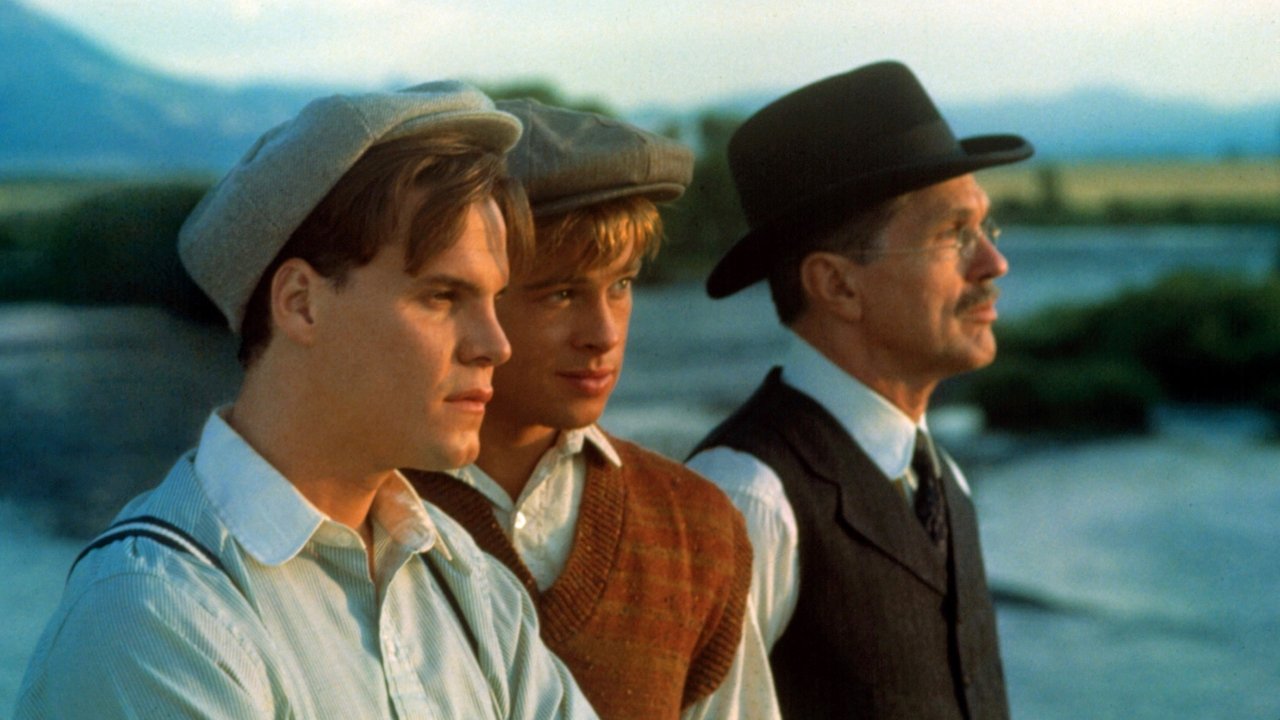
As director, Robert Redford (who, much like his characters, clearly holds a deep reverence for the American West, seen in his work from Jeremiah Johnson (1972) to his founding of the Sundance Institute) approaches the material with patience and visual poetry. He allows the vast Montana landscapes, stunningly captured by Oscar-winning cinematographer Philippe Rousselot, to become a character in themselves. The light, the water, the sheer scale of the wilderness – it all underscores the human drama playing out within it. Redford reportedly spent years trying to secure the rights to Maclean's novella, and his dedication is palpable in every frame. He resists melodrama, focusing instead on the subtle shifts in relationships, the unspoken tensions, and the quiet moments of connection.
Casting Lines and Capturing Grace
Bringing the intricate art of fly-fishing to the screen was no small feat. While the actors learned the basics, expert fly fishermen, including John Dietsch and Gary Borger (who consulted on the film), were often used as doubles, particularly for the more complex "shadow casting" sequences seen in the film. Pitt reportedly practiced casting on rooftops in Los Angeles before filming began. The authenticity achieved is remarkable; the fishing sequences aren't just picturesque interludes, they are central to the characters' identities and interactions, physical expressions of their inner states. Norman Maclean himself, then in his late 80s, visited the set during filming, lending a poignant connection between the past and its cinematic retelling. It's fascinating to think that William Hurt was apparently considered for Paul before Pitt secured the role – a reminder of how casting can fundamentally shape a film's identity and legacy. Made on a modest budget of around $12 million, its $43 million domestic gross (roughly $90 million today) proved there was an audience hungry for this kind of thoughtful, character-driven filmmaking even in the blockbuster-heavy early 90s.
The Unspoken Current
A River Runs Through It doesn't offer easy answers. It explores the painful reality that love doesn't always equate to understanding, and that sometimes, despite our best efforts, we cannot save those we care about from themselves. Norman watches Paul's self-destructive spiral with a growing sense of helplessness, a feeling many viewers might find achingly familiar. How do we help someone who seems determined to walk a dangerous path? The film doesn't preach; it simply presents the situation with honesty and profound sadness, letting the river serve as a metaphor for the forces – both beautiful and destructive – that shape our lives and eventually carry us all away.
For many of us renting this from Blockbuster or the local mom-and-pop video store back in the day, it felt different. It wasn't an explosion-filled action flick or a broad comedy. It demanded patience, invited reflection. Holding that worn VHS box felt like holding something substantial, a story that lingered. Perhaps watching it on a smaller screen, in the quiet of a living room, even enhanced its intimacy.
Rating: 9/10
This score reflects the film's masterful direction, breathtaking cinematography, poignant storytelling, and powerhouse performances, particularly from Pitt and Skerritt. It achieves a rare blend of visual beauty and emotional depth, creating an experience that is both specific to its time and place, yet universally resonant. The pacing might feel slow to some modern viewers, but it's integral to the film's meditative quality. Its enduring power lies in its quiet truths and the haunting beauty it finds in both the natural world and the complexities of family love.
It leaves you with a sense of melancholy beauty, like the fading light on the water – a reminder of moments cherished, people lost, and the inescapable flow of time that, like the river, runs through us all.