It’s almost impossible to think about Robin Hood from 1991 without immediately picturing Kevin Costner’s mullet and hearing Bryan Adams on the soundtrack. That summer belonged to Prince of Thieves, a box office behemoth that stomped its way into pop culture history. Yet, lurking just beneath the surface, released almost simultaneously but relegated to TV movie status in the States (though getting a theatrical run overseas), was another, quite different take on the legend. Watching John Irvin's Robin Hood today feels like uncovering a slightly dustier, less flamboyant cousin – one perhaps unfairly sidelined by its flashier relative. Does this quieter interpretation hold its own charm, decades later?
A Bleaker Sherwood
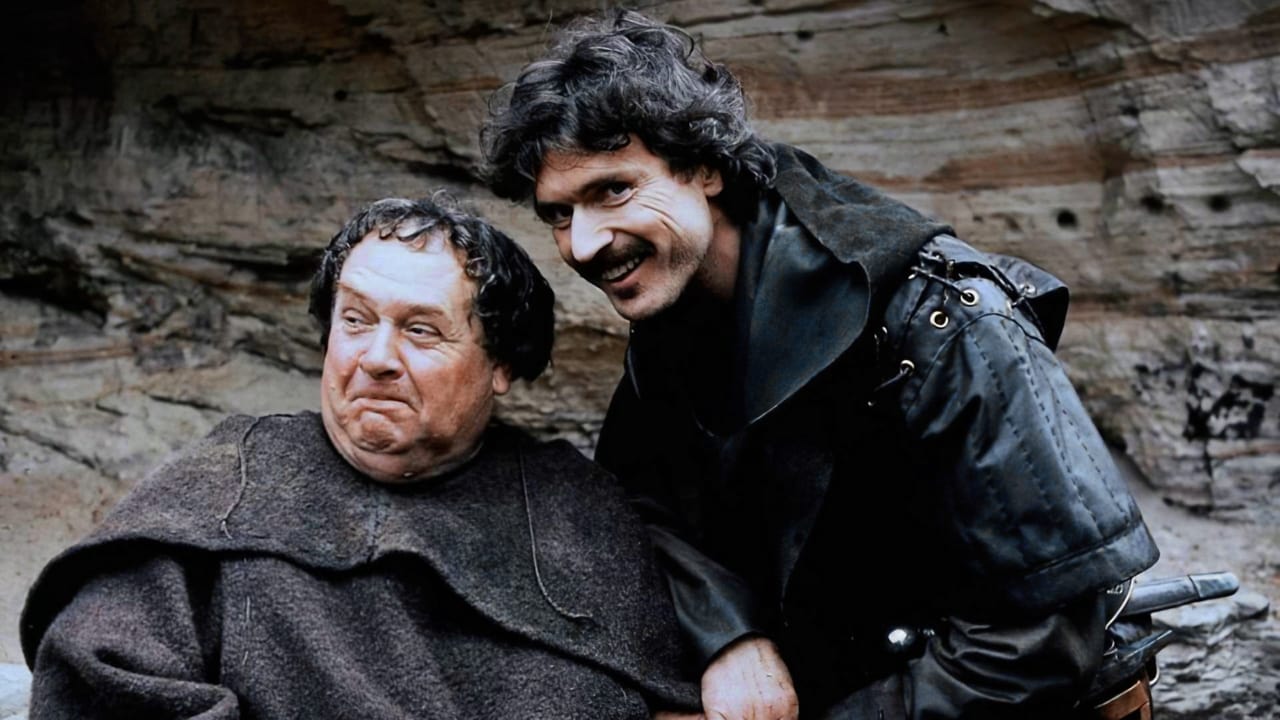
From the outset, this version signals a departure from the swashbuckling romance often associated with the tale. Forget the sun-dappled glades and effortless archery; Irvin, who previously brought a grounded intensity to films like Hamburger Hill (1987), crafts a medieval England thick with mud, rain, and palpable tension. The atmosphere is less adventure, more historical drama, focusing squarely on the brutal friction between the displaced Saxons and their Norman conquerors. Our hero isn't a carefree rogue from the start, but Robert Hode (Patrick Bergin), a Saxon Earl who finds himself outlawed after defending a poacher against the cruelty of the Norman knight Sir Miles Folcanet (Jürgen Prochnow). It's a more overtly political setup, rooting the familiar legend in a specific sense of grievance and injustice.
A Nobleman Outlawed
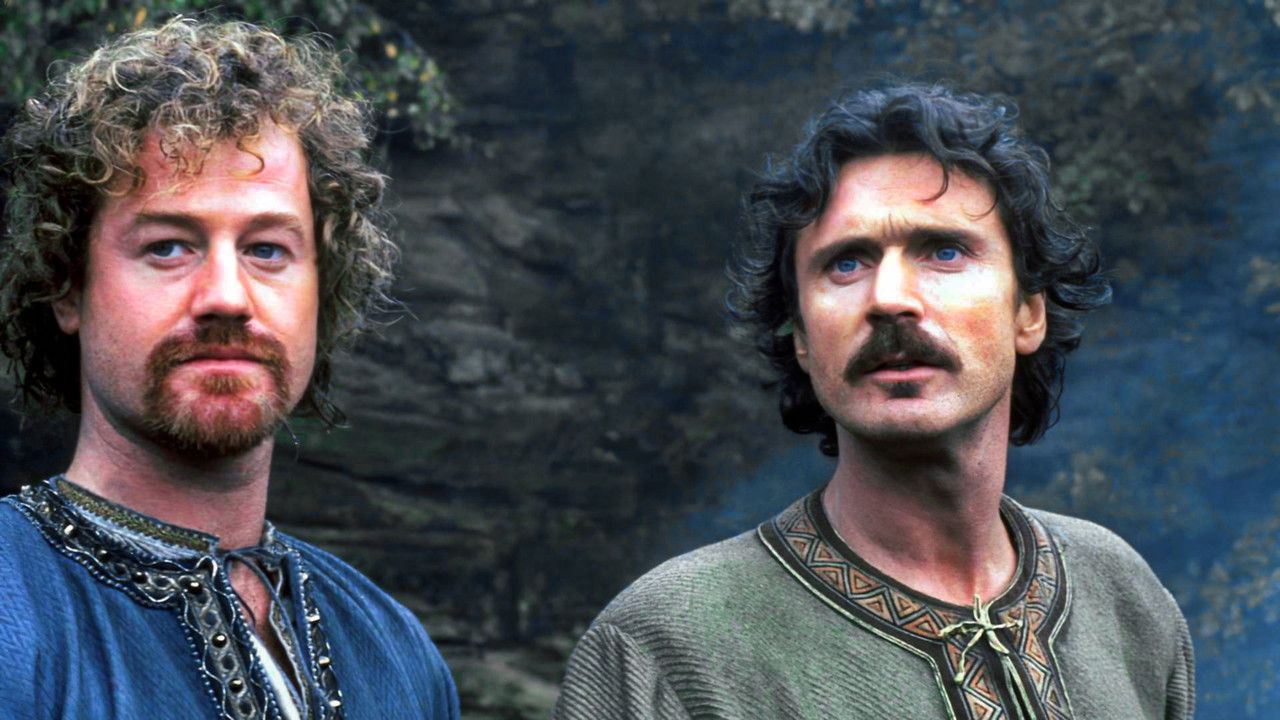
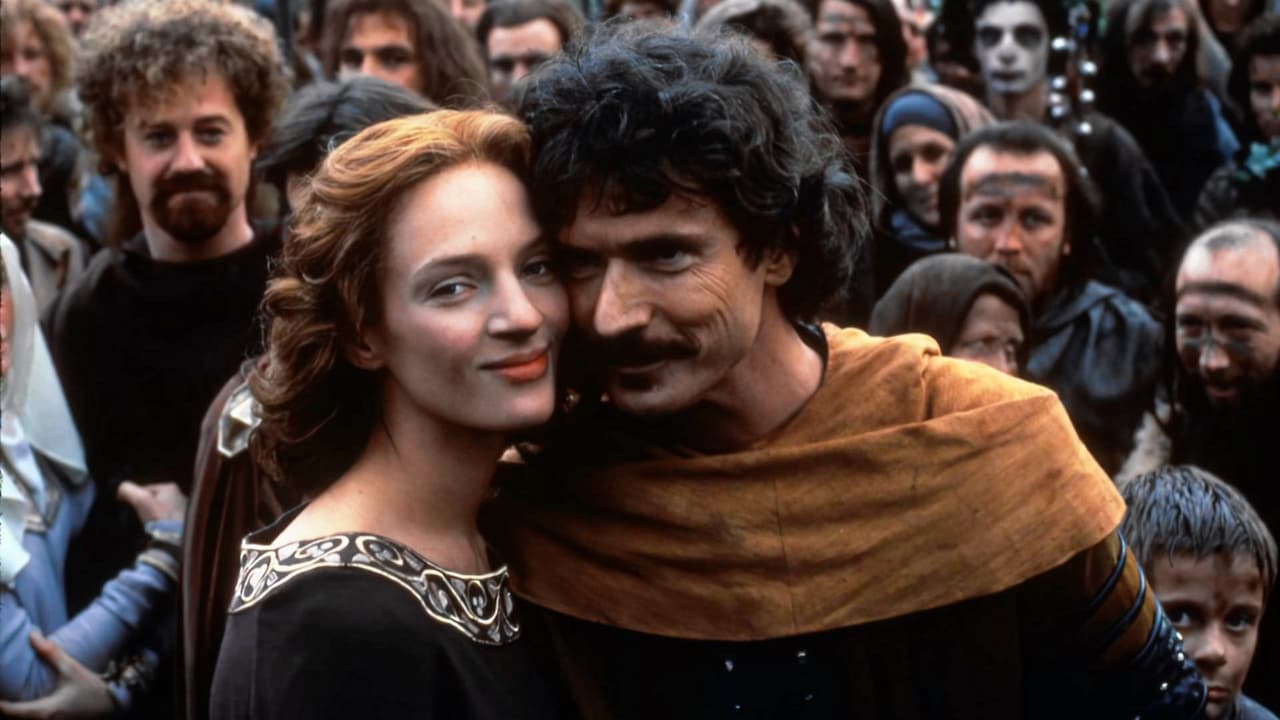
Patrick Bergin, hot off Sleeping with the Enemy (1991), presents a Robin Hood simmering with righteous anger rather than buoyant charm. His Hode is a man pushed to the edge, driven by principle and a deep sense of betrayal. There's a weariness to him, a gravity that feels appropriate for the film's darker tone. He might not possess the easy charisma of Flynn or the earnestness of Costner, but Bergin offers a compelling intensity. You believe in his outrage, even if his leadership sometimes feels more reluctant than inspiring. It’s a performance that resonates with the film’s grounded approach – less a superhero in tights, more a desperate man fighting a losing battle.
Playing opposite him is a young Uma Thurman as Maid Marian. Even before her iconic turn in Pulp Fiction (1994), Thurman had a commanding presence, evident in Dangerous Liaisons (1988). Here, her Marian is no damsel in distress but a headstrong Norman noblewoman navigating a complex political landscape, disguised initially as a boy for safety. There's a spark between her and Bergin, born more of mutual respect and shared defiance than overt romance. Thurman portrays Marian's internal conflict – loyalty to her Norman roots versus her growing sympathy for the Saxon cause and affection for Hode – with a subtle intelligence that elevates the character beyond a simple love interest.
Grit Over Gloss: The Production Story
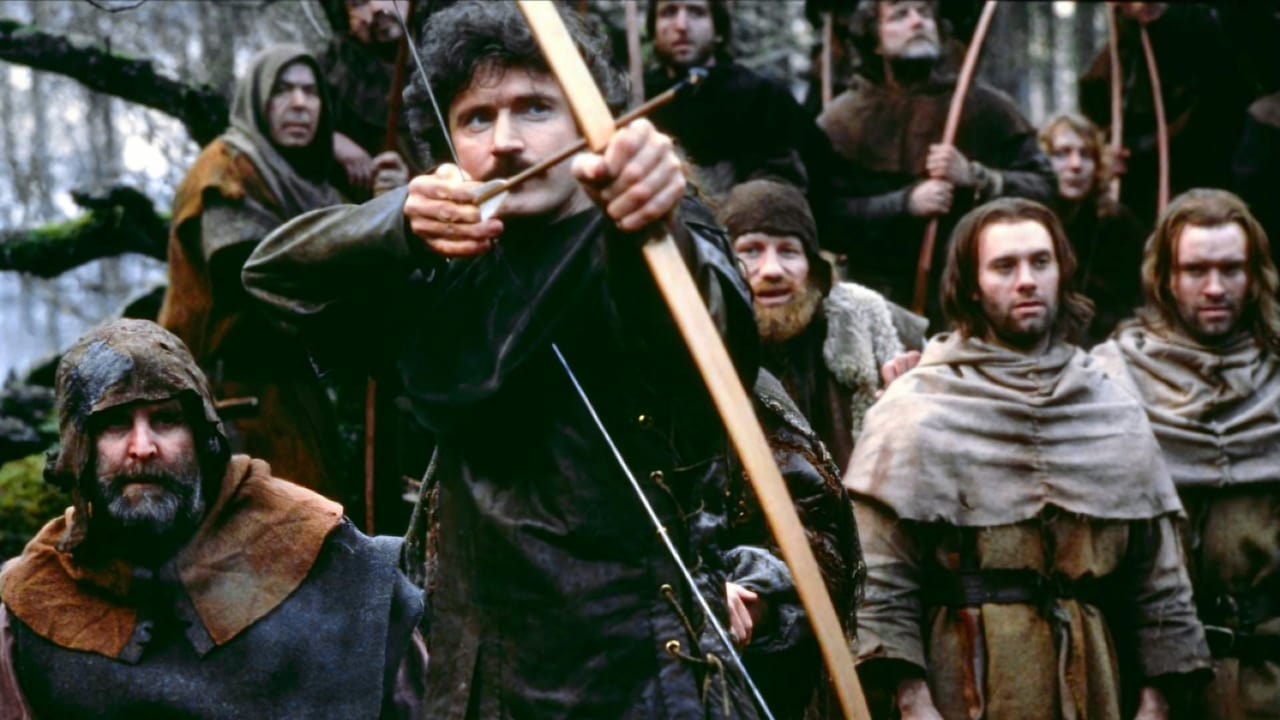
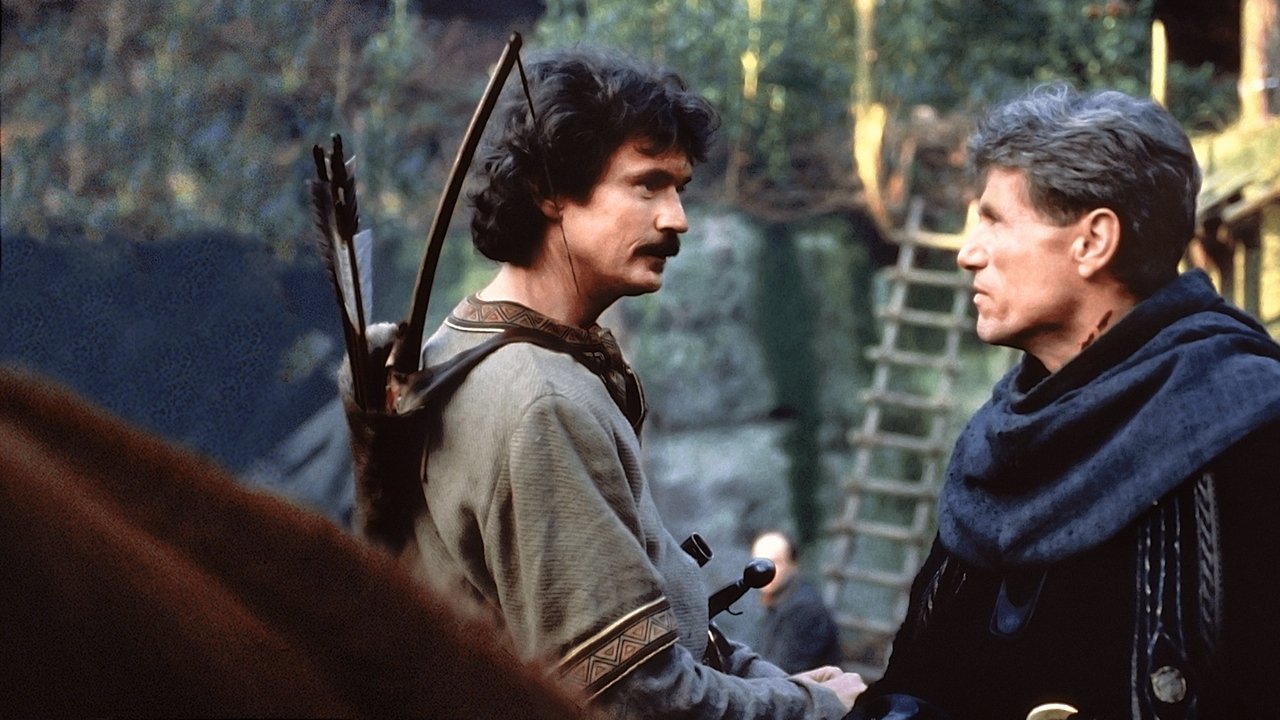
The film’s very existence is a fascinating piece of Hollywood history. Originally developed by 20th Century Fox for a theatrical release, it was reportedly shifted to a TV premiere in the US when the studio realized Kevin Costner's rival project at Warner Bros. had secured bigger stars and a much larger budget (around $48 million for Prince of Thieves compared to a significantly lower, though unspecified, figure for Irvin's film). Watching it now, you can see the cinematic ambitions peeking through the constraints. Shot on location in Wales and utilizing evocative settings like Peckforton Castle in Cheshire, England, there's a tangible sense of place. The cinematography by Jason Lehel captures the damp, earthy textures of medieval Britain effectively. Geoffrey Burgon's score, too, is a standout – moody, evocative, and far removed from the soaring bombast of Michael Kamen's work on the Costner film. It perfectly complements the more somber narrative.
While the action sequences might lack the sheer scale of Prince of Thieves, they possess a certain brutal efficiency. The sword fights feel clunky and dangerous, less choreographed spectacle, more desperate struggle. This commitment to a less stylized reality extends to the supporting cast, including reliable veterans like Jürgen Prochnow (Das Boot, 1981) as the merciless Folcanet and Jeroen Krabbé (The Fugitive, 1993) as the scheming Baron Daguerre. They embody the casual cruelty of Norman power effectively.
Does History Make Better Drama?
The film’s strength lies in its commitment to this historical grounding. The Saxon-Norman conflict feels central, not just background dressing. It explores themes of cultural identity, oppression, and the messy realities of rebellion in a way few other Robin Hood adaptations attempt. But does this focus come at a cost? Perhaps. The pacing can feel somewhat stately compared to its blockbuster counterpart, and the emphasis on political maneuvering occasionally overshadows the pure adventure elements that draw many to the legend. It doesn’t quite have the same replayable, crowd-pleasing energy. You might not have found this VHS tape worn thin from constant childhood viewings.
Yet, there's something admirable in its restraint. It trusts the audience to engage with a more complex, morally ambiguous world. What does it mean to be driven from your home and stripped of your rights? How far does one go to fight back against overwhelming power? These questions linger more persistently here than in more romanticized tellings.
An Outlaw's Legacy
Ultimately, John Irvin's Robin Hood remains overshadowed, a footnote in the "Battle of the Robins" of 1991. It lacks the iconic moments and sheer star power of its rival. However, viewed on its own terms, it emerges as a thoughtful, well-crafted historical drama with strong performances and a distinct, atmospheric identity. It feels like a film made for adults, interested less in myth-making and more in the harsh realities that might have birthed the legend. For those of us who remember scanning the video store shelves and perhaps picking this one up instead of the Costner behemoth (or maybe renting both for a fascinating compare-and-contrast weekend), it offers a different kind of satisfaction.
Rating: 7/10
This score reflects a film that achieves its aims admirably, offering a commendably gritty and historically-minded interpretation with strong performances, particularly from Bergin and Thurman. It’s held back slightly by a less dynamic pace compared to blockbuster expectations and the inescapable shadow of its contemporary rival, but its atmospheric direction and thoughtful approach make it a worthy entry in the Robin Hood canon.
It may not have won the box office war of '91, but perhaps this Robin Hood wins a different battle – the one for quiet authenticity. A worthwhile rediscovery for anyone seeking a less embellished journey back to Sherwood Forest.