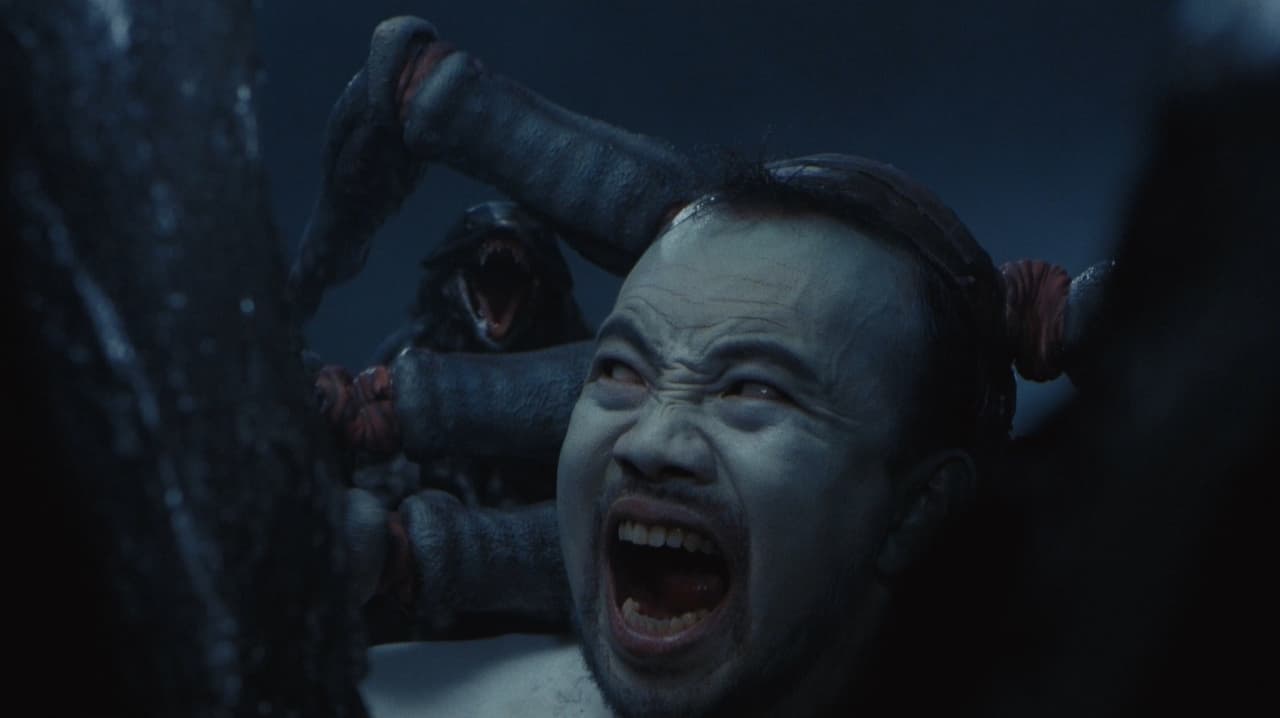
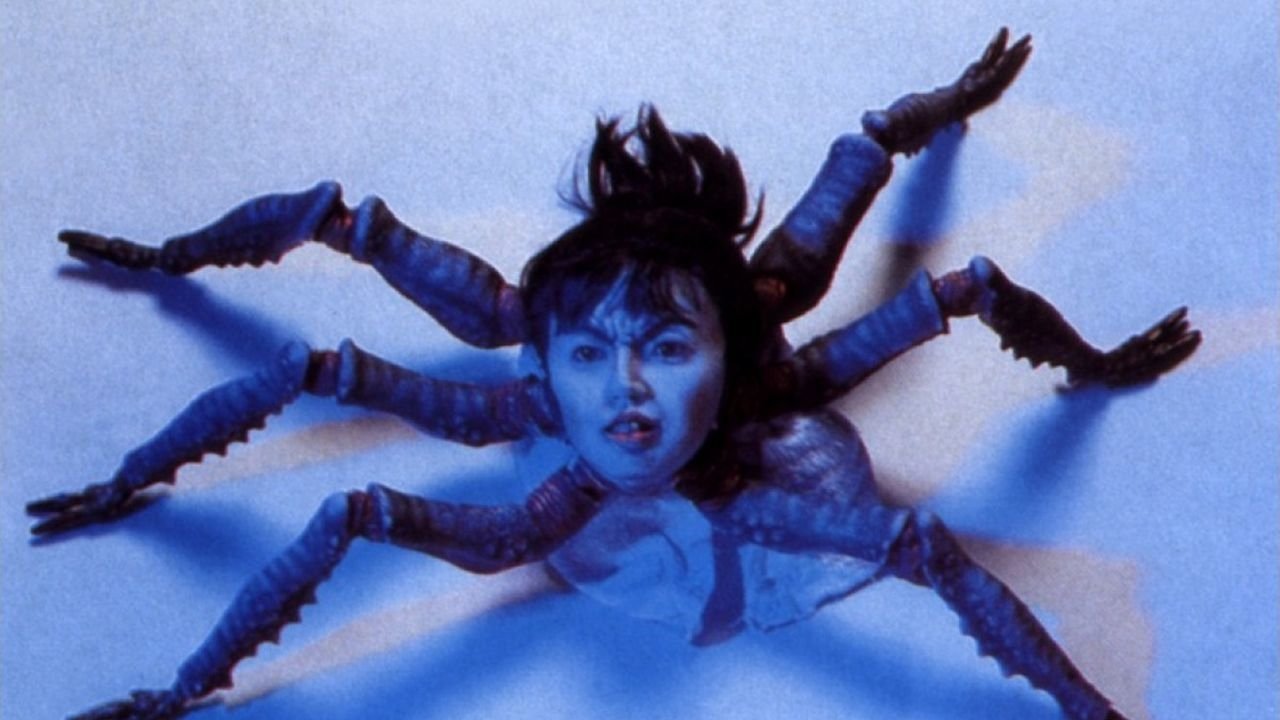
The image burns itself onto the back of your eyelids long after the tape stops rolling: a human head, severed, sprouting twitching, spindly spider legs. It skitters across dusty floors, eyes wide with vacant malice. This isn't just gore; it's a grotesque, fever-dream mutation of folklore and body horror, the kind of visual nightmare that could only crawl out of the VCR late at night, leaving you wondering if the tracking lines were playing tricks on your eyes. Welcome to the wonderfully weird world of Shinya Tsukamoto's Hiruko the Goblin (1991).
Crawling from the Manga Page
Adapted from a manga series (Yokai Hunter) by Daijirō Morohoshi, Hiruko feels both uniquely Tsukamoto and surprisingly... almost conventional? At least, compared to the industrial nightmare scrapyard of his breakout hit Tetsuo: The Iron Man (1989). Here, Tsukamoto, working with a larger budget (relatively speaking) and adapting existing material, channels his frantic energy into a more structured narrative, albeit one still dripping with his signature visual intensity and penchant for the bizarre. The story follows archaeologist Hieda (Kenji Sawada, a genuine Japanese rock superstar lending considerable charisma), disgraced for his outlandish theories about goblins and ancient curses. He's lured back into the field when his colleague vanishes at a remote rural school built over an ancient burial mound. Teaming up with the colleague's traumatized son, Masao (Masaki Kudou), Hieda discovers the chilling truth: the gateways to the underworld are open, and something ancient and hungry is using human heads as its horrifying new bodies.
Atmosphere Thicker Than Summer Heat
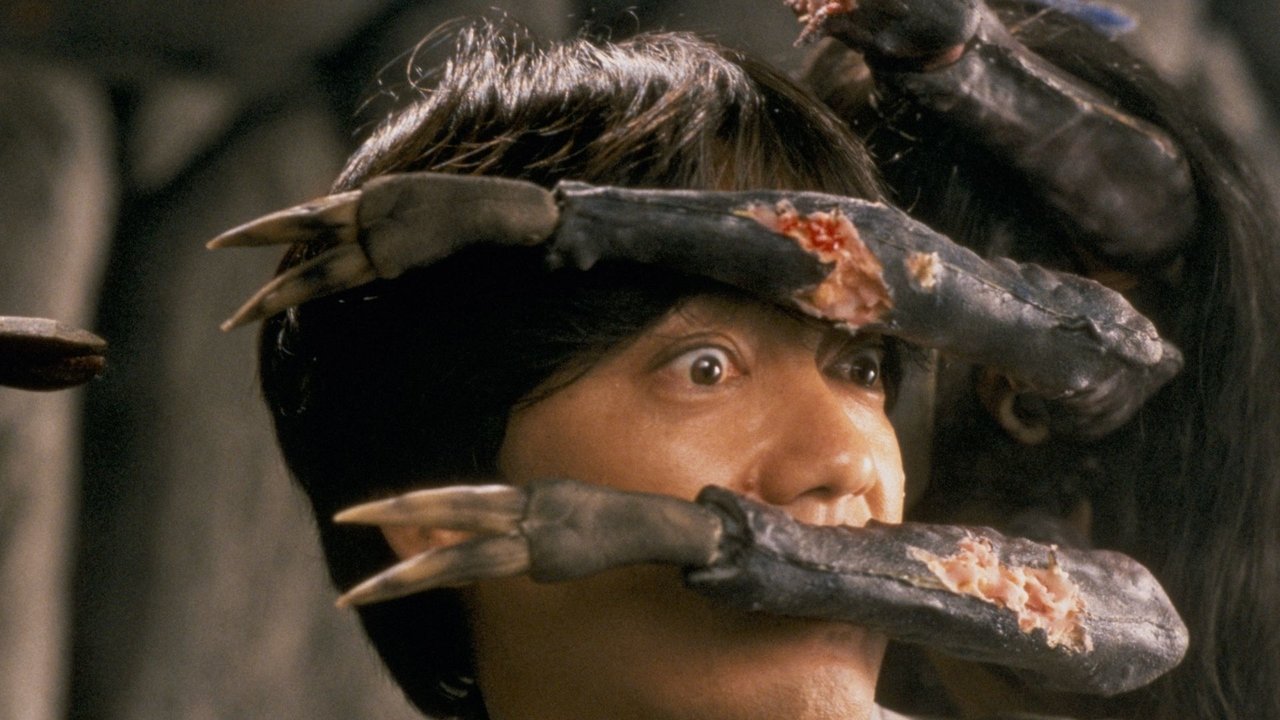
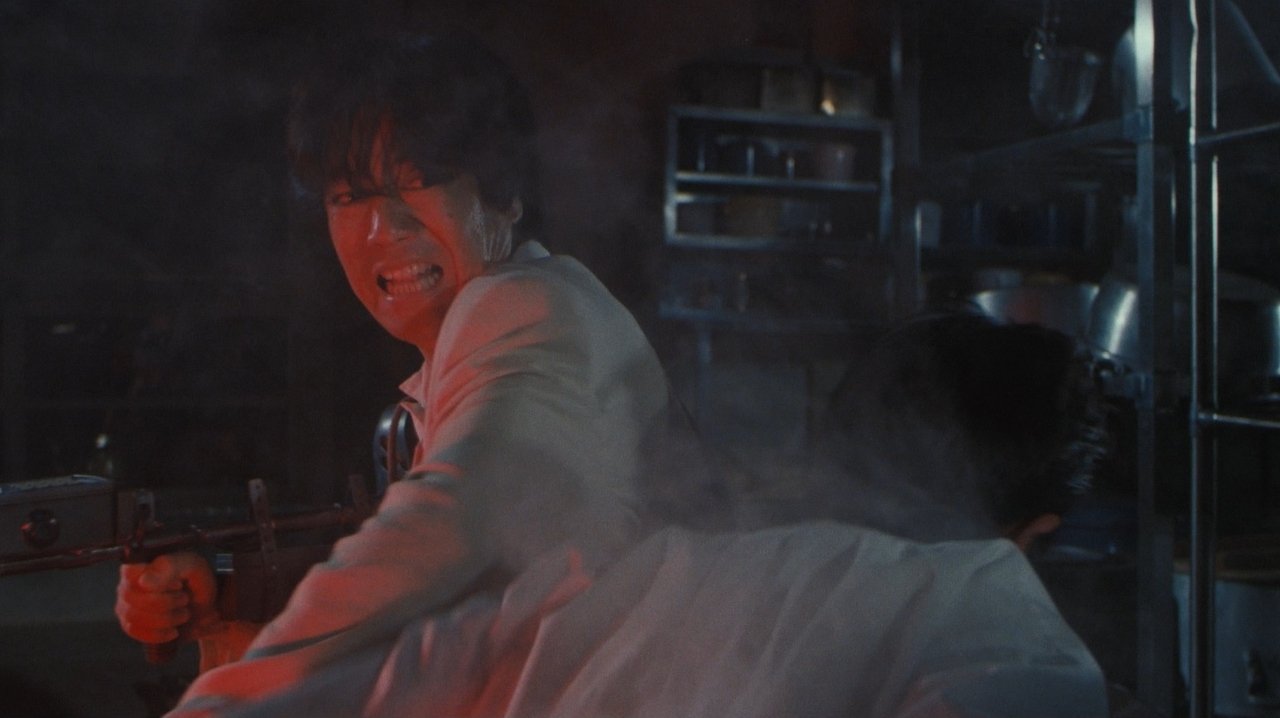
Forget jump scares. Hiruko thrives on a palpable sense of dread hanging heavy in the humid summer air. The setting – a strangely deserted school during summer vacation – becomes a character in itself. Corridors stretch into unsettling darkness, classrooms sit unnaturally silent, and the nearby woods conceal secrets far older than the flimsy walls of the building. Tsukamoto uses claustrophobic framing and restless camerawork, often mimicking a frantic point-of-view, to plunge us directly into the characters' escalating panic. The score, a blend of eerie synths and discordant sounds, gnaws at the nerves, amplifying the isolation and the creeping horror. It captures that specific feeling of being somewhere you shouldn't be, where normal rules have ceased to apply.
The Spider-Head Spectacle
Let's be honest: the main draw here, the image seared into the memory of anyone who stumbled across this gem in a dusty video store corner, is the creature design. The titular Hiruko, manifesting as those spider-legged heads, is a triumph of practical effects wizardry. Achieved through a combination of puppetry, stop-motion animation, and sheer Cronenbergian audacity, these things are genuinely unsettling. Their jerky, unnatural movements tap into some primal fear of scuttling things, made infinitely worse by the human faces – sometimes screaming, sometimes disturbingly serene – attached to them. Doesn't that unsettling stop-motion still crawl under your skin, even knowing how it was done? Reportedly, crafting these disturbing puppets was a meticulous, challenging process, pushing the boundaries of what practical effects could achieve on the film's budget. Tsukamoto himself, known for his hands-on approach, was deeply involved in ensuring the creatures felt viscerally real and disturbing.
A Different Kind of Tsukamoto Terror
While lacking the raw, avant-garde assault of Tetsuo, Hiruko showcases Tsukamoto's versatility. He proves adept at building suspense and orchestrating action set pieces, like the frantic chases through the school or Hieda's desperate attempts to utilize his bizarre, ghost-detecting gadgets. Kenji Sawada brings a weary, almost comical determination to Hieda, a man whose crackpot theories are suddenly, terrifyingly validated. His performance grounds the escalating madness, providing a relatable anchor amidst the Yokai chaos. Masaki Kudou, as the traumatized Masao, effectively conveys the sheer terror of a boy confronting horrors beyond comprehension. There's a surprising amount of heart here too, particularly in the bond that forms between the disgraced scholar and the orphaned boy against the forces of darkness. It was a deliberate move by Tsukamoto to explore more traditional horror tropes, perhaps to prove he could handle studio expectations while still injecting his unique vision – a task he arguably succeeded at, creating something accessible yet unmistakably his.
Lasting Creep Factor
Hiruko the Goblin isn't perfect. The plot occasionally meanders, and some elements might feel slightly goofy viewed through modern eyes. But its flaws are easily forgiven in the face of its overwhelming strengths: its suffocating atmosphere, its truly unforgettable creature design, and the kinetic, imaginative direction of Shinya Tsukamoto. It occupies a fascinating space – a bridge between mainstream J-horror and Tsukamoto's more experimental work, a creature feature infused with folklore and body horror that feels both nostalgic and genuinely strange. It’s the kind of film that might have seemed like a bizarre fever dream after a late-night rental, its unsettling imagery lingering far longer than expected. I distinctly remember the cover art on the VHS box promising something weird, and boy, did it deliver – in ways I couldn't have quite anticipated.
***
Rating: 8/10
Justification: Hiruko scores high for its incredible, enduring practical effects, palpable atmosphere of dread, Shinya Tsukamoto's distinctive visual style applied to a more conventional narrative structure, and Kenji Sawada's charismatic lead performance. The unique blend of Japanese folklore, body horror, and creature feature elements makes it a standout cult classic. Points are slightly deducted for minor pacing inconsistencies and a plot that doesn't quite reach the thematic depth of Tsukamoto's other key works, but its sheer imaginative horror and unsettling visuals earn it a strong recommendation.
Final Thought: A perfect example of 90s Japanese horror weirdness, Hiruko the Goblin proves that practical effects, imaginative direction, and a truly bonkers central concept can create nightmares that still skitter effectively across the mind decades later.