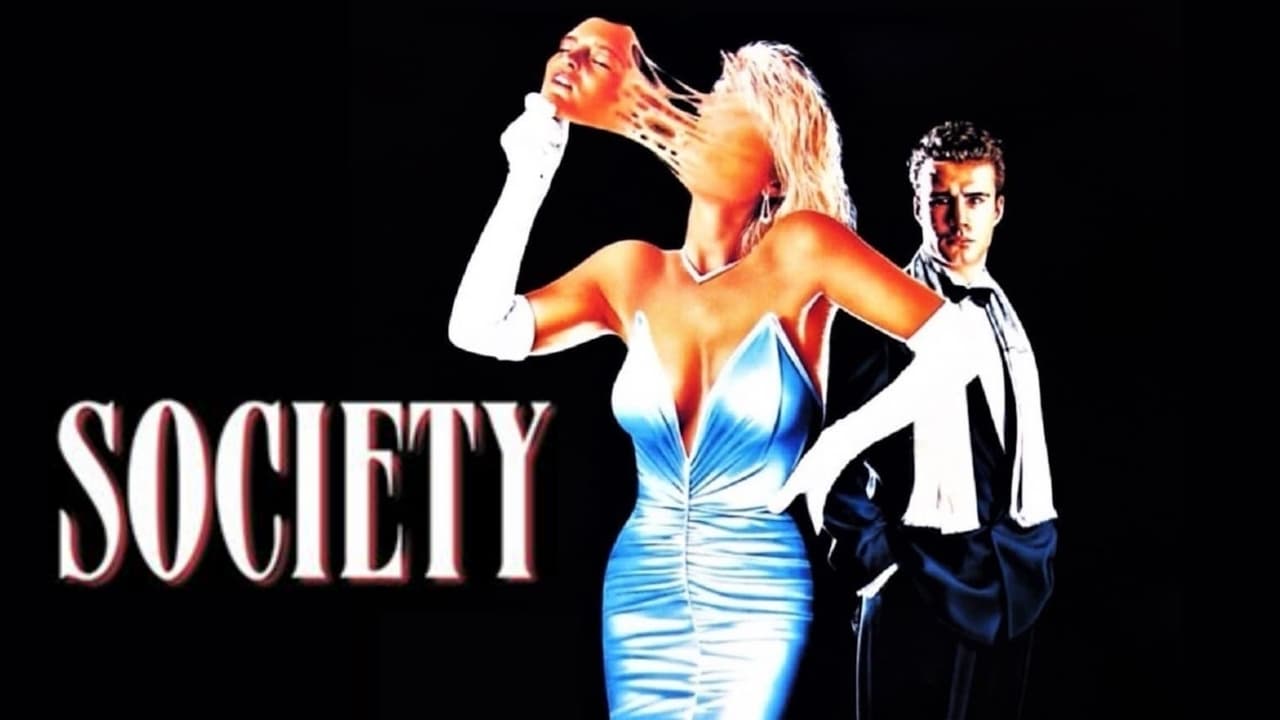
The sun always seems to shine too brightly in Beverly Hills, doesn't it? It glints off polished surfaces, manicured lawns, and the unsettlingly perfect smiles of the elite. But beneath that dazzling veneer, a certain kind of darkness festers. It's the feeling young Bill Whitney (Billy Warlock) can't shake – a chilling disconnect from his wealthy parents and sister, a creeping paranoia that whispers something is fundamentally wrong within the gilded cage of his existence. 1989's Society bottles that specific dread, the unease of realizing the people closest to you might be monstrous strangers operating by rules you can't possibly comprehend.
Beverly Hills Gothic
Director Brian Yuzna, already known for producing Stuart Gordon’s splattery masterpiece Re-Animator (1985), made his directorial debut with Society, and it’s a statement piece soaked in social satire and visceral horror. The film masterfully builds Bill's isolation. His therapy sessions feel like interrogations, his girlfriend seems complicit in the gaslighting, and strange, distorted sounds bleed through the walls of his family's opulent home. Yuzna crafts an atmosphere thick with suspicion, where polite cocktail parties feel vaguely threatening and casual conversations are laced with veiled meanings. It’s a world where conformity isn't just encouraged; it feels like a terrifying requirement for survival. Remember that feeling from certain high school cliques, magnified to a truly grotesque degree? That's the vibe Society taps into.
The screenplay, credited to Rick Fry and Woody Keith (based on their story "The Horns"), cleverly uses the anxieties of adolescence – feeling like an outsider, questioning authority, sexual awakening – as a Trojan horse for its wilder genre elements. Bill’s investigation into his family's secrets mirrors a teenager's natural rebellion, but the answers he uncovers are far beyond typical youthful angst. They lead him towards a truth so physically repulsive, so fundamentally alien, that it rewrites the very definition of the upper crust.

The Man Behind the Slime
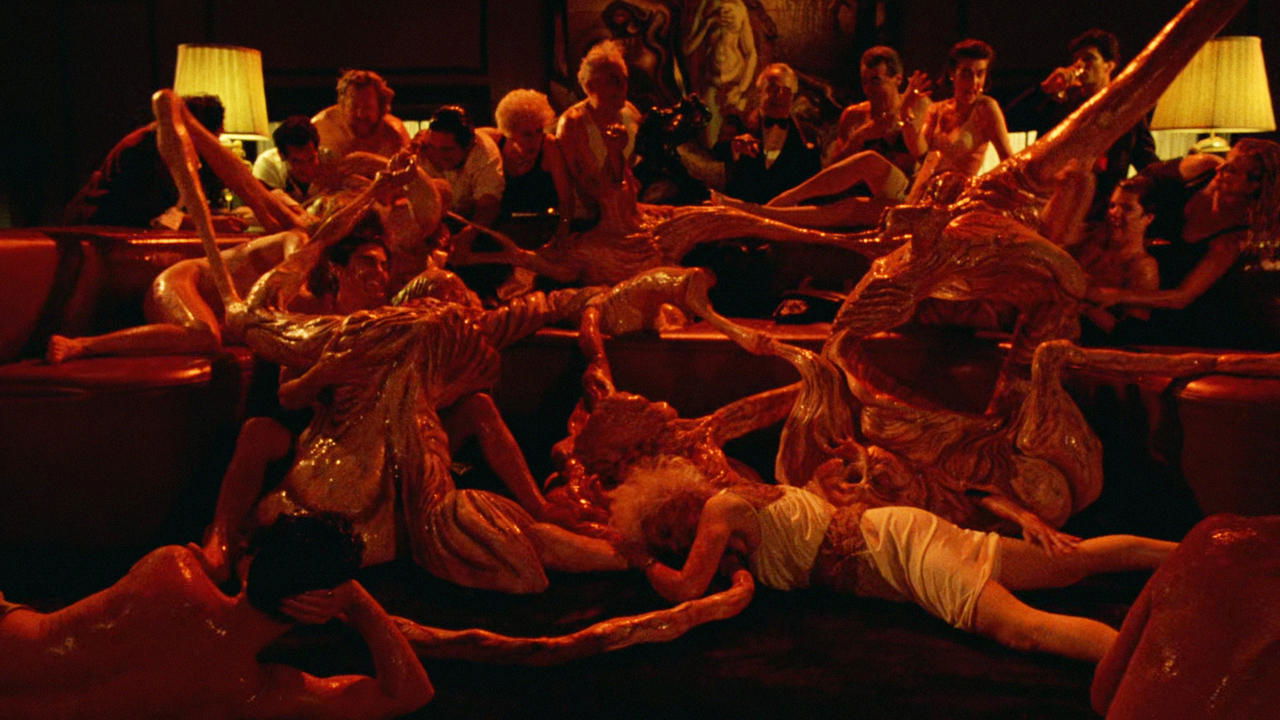
Let's be honest, though. For many who hunted down this gem on VHS, often after hearing hushed, incredulous whispers about its climax, the main draw was the promise of something truly outrageous in the effects department. And Society delivers in spades, thanks to the legendary Japanese special effects artist Screaming Mad George. Known for his surreal and often disgusting practical creations in films like Predator (1987) and A Nightmare on Elm Street 4: The Dream Master (1988), George unleashes his full, bizarre imagination here. The film holds its cards close for a long time, building suspense through suggestion and Bill's mounting paranoia. But when the reveal comes... well, "reveal" is too tame a word.
It's an eruption. A jaw-dropping, physically impossible, utterly unforgettable sequence of body-melding, flesh-warping grotesquerie known as "the shunting." Watching it back then, on a fuzzy CRT, felt like witnessing something forbidden, a transmission from a deeply disturbed dimension. Even today, in an era saturated with CGI, the sheer tactile creativity and Cronenbergian commitment to practical slime and pulsating viscera remain astonishingly effective. Apparently, Billy Warlock himself was kept largely in the dark about the specifics of the finale until filming and was reportedly quite shaken by the gooey pandemonium he had to react to. It's a testament to Screaming Mad George's nightmarish vision that these effects still provoke such a visceral reaction.

Secrets and Status
Interestingly, despite being completed in 1989, Society didn't see a US release until 1992. It found more immediate appreciation in Europe, building a cult reputation before finally hitting American shores. Perhaps distributors were baffled by how to market such a unique blend of teen angst, social satire, and outright Cronenbergian body horror. The film takes aim squarely at the perceived emptiness and parasitic nature of Reagan-era wealth and privilege, suggesting the elite literally feed off the lower classes. It's not subtle, but its outrageousness makes the commentary stick. It’s a dark joke told with a disturbingly straight face, right up until the point where faces start melting into… other things.
The performances support the strange tone well. Billy Warlock, known to many from Baywatch, makes for a sympathetic, increasingly desperate protagonist. His journey from bewildered rich kid to horrified survivor grounds the film's escalating madness. The supporting cast, including Connie Danese as the suspicious Clarissa and Ben Slack as the unnervingly smooth Dr. Cleveland, perfectly embody the predatory politeness of the titular "society." They smile winningly while hinting at the abyss beneath.
The Shunting Never Really Ends
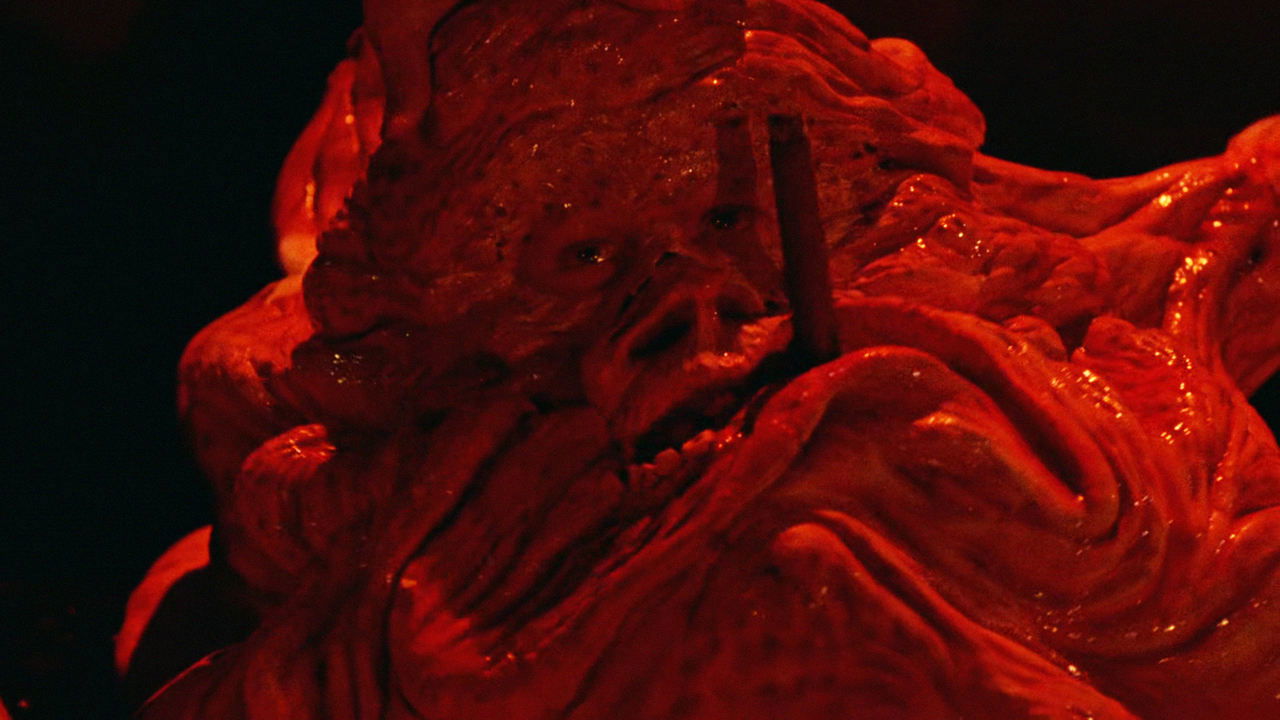
Society isn't just a gross-out flick; it's a genuinely unsettling piece of social commentary wrapped in some of the most unforgettable practical effects of the era. It taps into primal fears of belonging, conformity, and the hidden monstrousness that might lurk behind polite society's facade. The build-up is patient, maybe even a touch slow for some modern viewers, but the payoff is an all-timer in body horror history. It’s a film that lingers, leaving you with a vaguely queasy feeling and a newfound suspicion of anyone who uses the phrase "networking event."
Rating: 8/10
This score reflects the film's undeniable impact as a cult classic, driven by its audacious and still-shocking practical effects finale. The sharp social satire, effective build-up of paranoia, and Brian Yuzna's confident direction elevate it beyond mere schlock. It loses a couple of points for occasional pacing lulls in the middle act and a tone that might alienate viewers not attuned to its specific blend of satire and extreme horror. However, for fans of 80s body horror and daring practical effects, Society remains a must-see – a truly unique artifact from the VHS era that proved the wealthy elite really are different. And maybe, just maybe, a little bit slimy.