Okay team, dim the lights, maybe crack open a Jolt Cola if you’ve still got the constitution for it. Tonight on VHS Heaven, we’re popping in a tape that likely saw heavy rotation in many a top-loading VCR back in the day: Dragon Ball Z: The World's Strongest (1990). Forget intricate canon debates for a moment; this movie, like so many of the classic DBZ features, was pure, uncut spectacle beamed directly into our eyeballs, often discovered on a grainy bootleg or a slightly-less-grainy official release years after its Japanese debut.
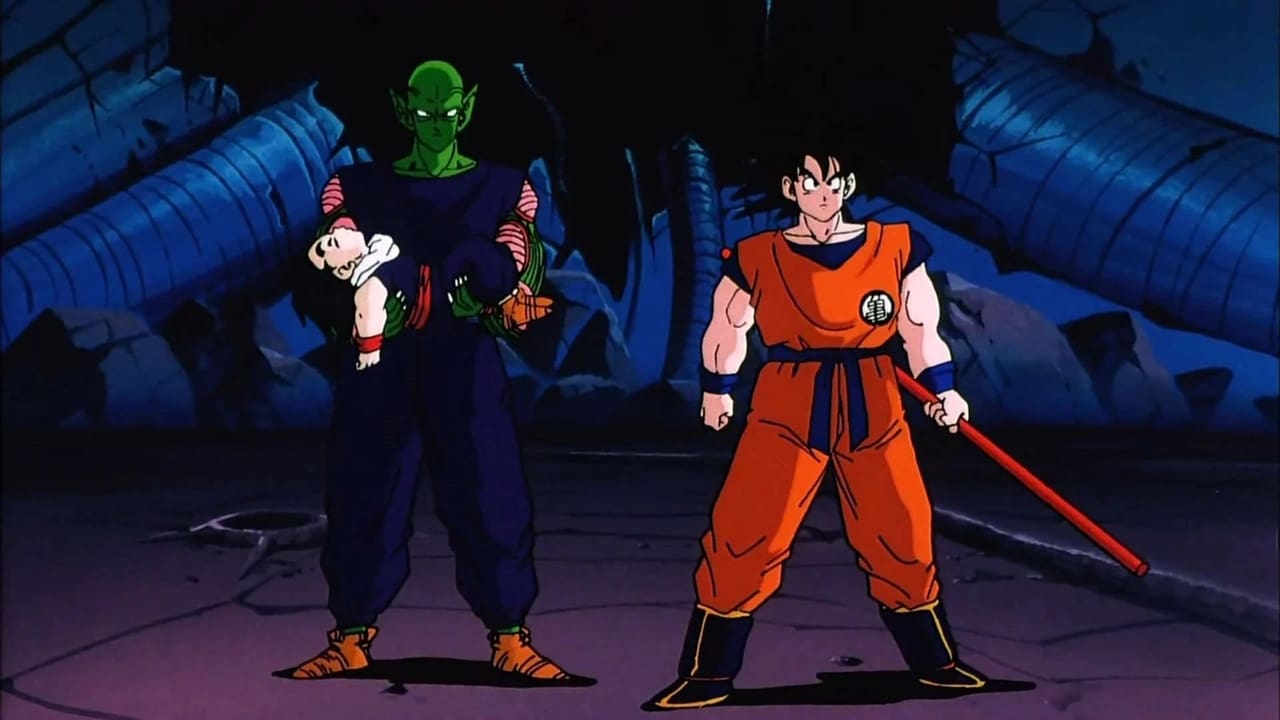
Remember the thrill? Finding a new DBZ adventure, separate from the agonizing week-to-week wait for the next episode? The World's Strongest delivered exactly that promise: familiar heroes, a bonkers new threat, and wall-to-wall action that felt impossibly fast and powerful on our fuzzy CRT screens.
Brain Freeze and Bio-Warriors
The setup is classic Z-movie fare: the sinister Dr. Kochin uses the Dragon Balls (of course) to resurrect his long-frozen master, the brilliant-but-twisted Dr. Wheelo – currently just a massive brain in a jar. Their goal? Find the world's strongest fighter and transplant Wheelo's brain into their body for ultimate domination. Initially, they think it's Master Roshi (a fun throwback!), but soon realize a certain Saiyan named Goku is the real prize. Cue the abduction of Bulma and Roshi, and Goku, Gohan, and Krillin rushing off to save the day, with Piccolo eventually joining the fray in his uniquely stoic-yet-heroic fashion.
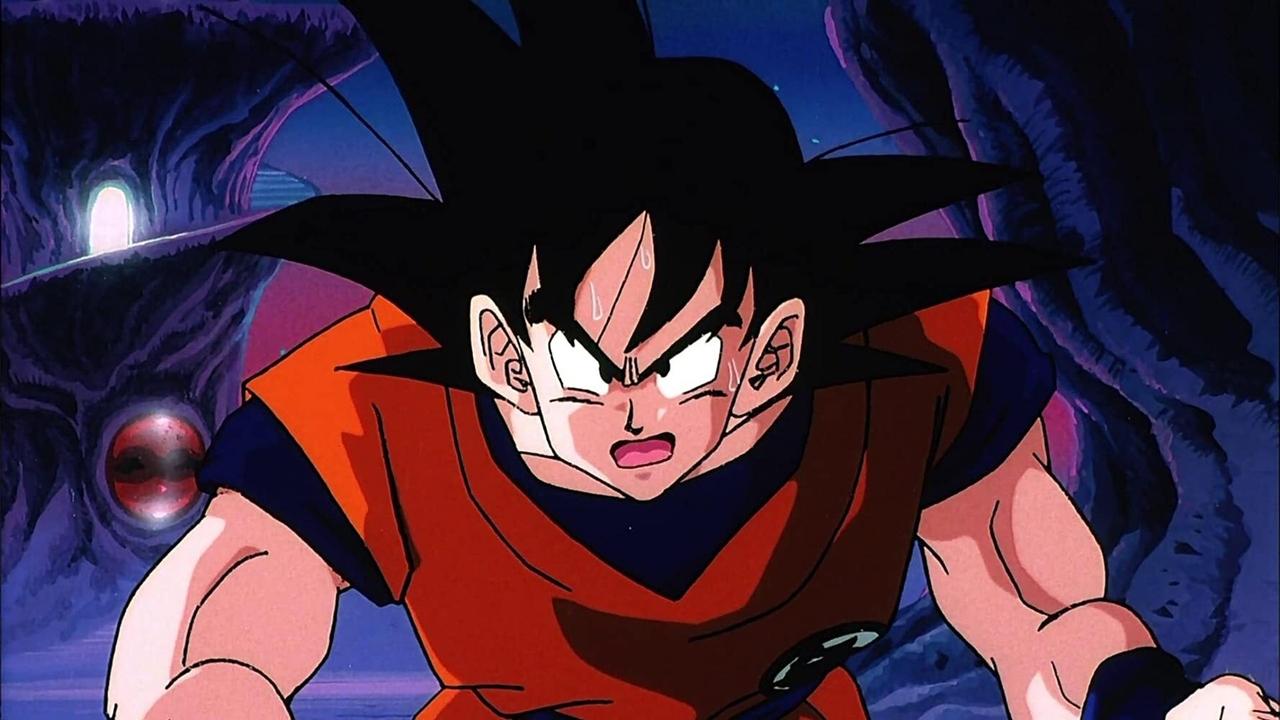
It’s a plot that exists solely to facilitate epic showdowns, and honestly, isn't that what we signed up for? This film hails from that glorious era of hand-drawn cel animation, directed by Daisuke Nishio, a veteran who helmed the very first DBZ movie (Dead Zone) and countless iconic episodes of the series itself. You can feel that experience here. While working within the tighter schedule and budget of these theatrical features compared to, say, a modern anime blockbuster, there’s a palpable energy to the animation that digital often smooths away.
That Old School Animated Punch
Let's talk about those fights. When Goku squares off against Dr. Wheelo’s monstrous Bio-Warriors – Misokatsun, Ebifurya, and Kishime (whose names, in a touch of Akira Toriyama-esque humor likely channeled through writer Takao Koyama, are derived from Japanese dishes) – the animation crackles. Remember how solid those punches felt? The impact frames, the speed lines that blurred characters into streaks of pure velocity, the way energy blasts lit up the screen with raw, almost blinding power? It wasn’t about photorealism; it was about conveying earth-shattering force through sheer artistic gusto.
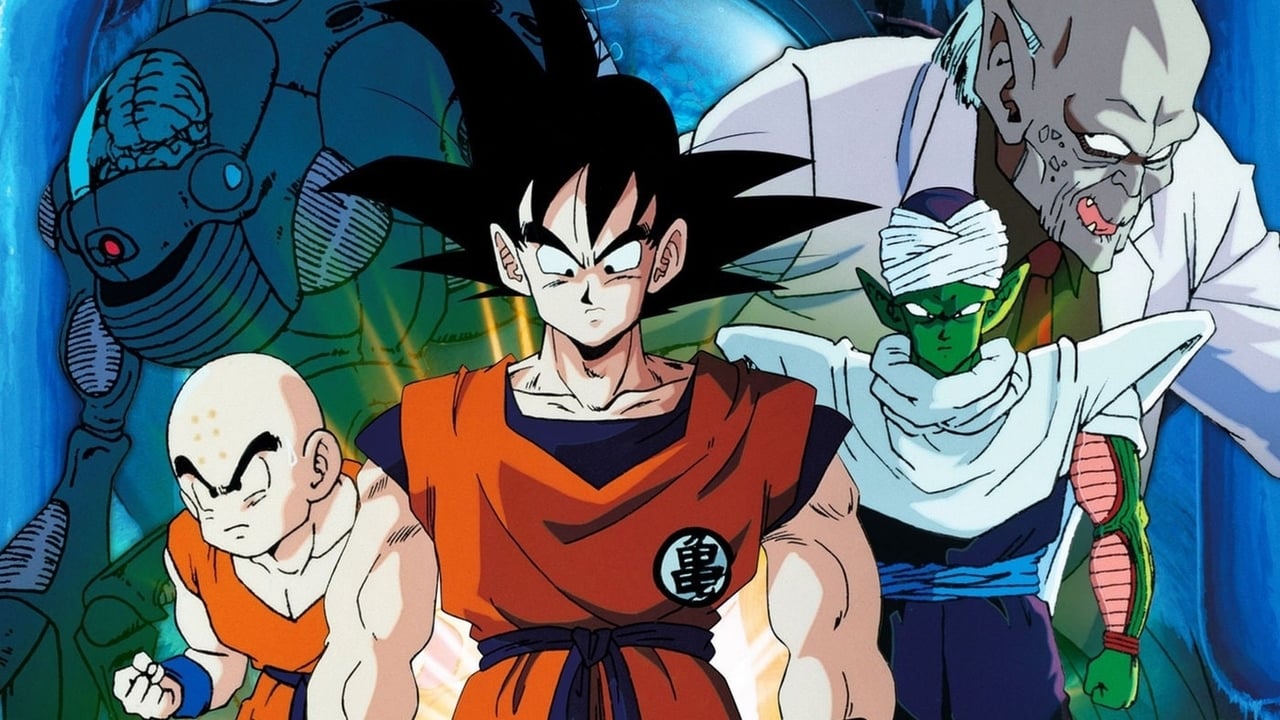
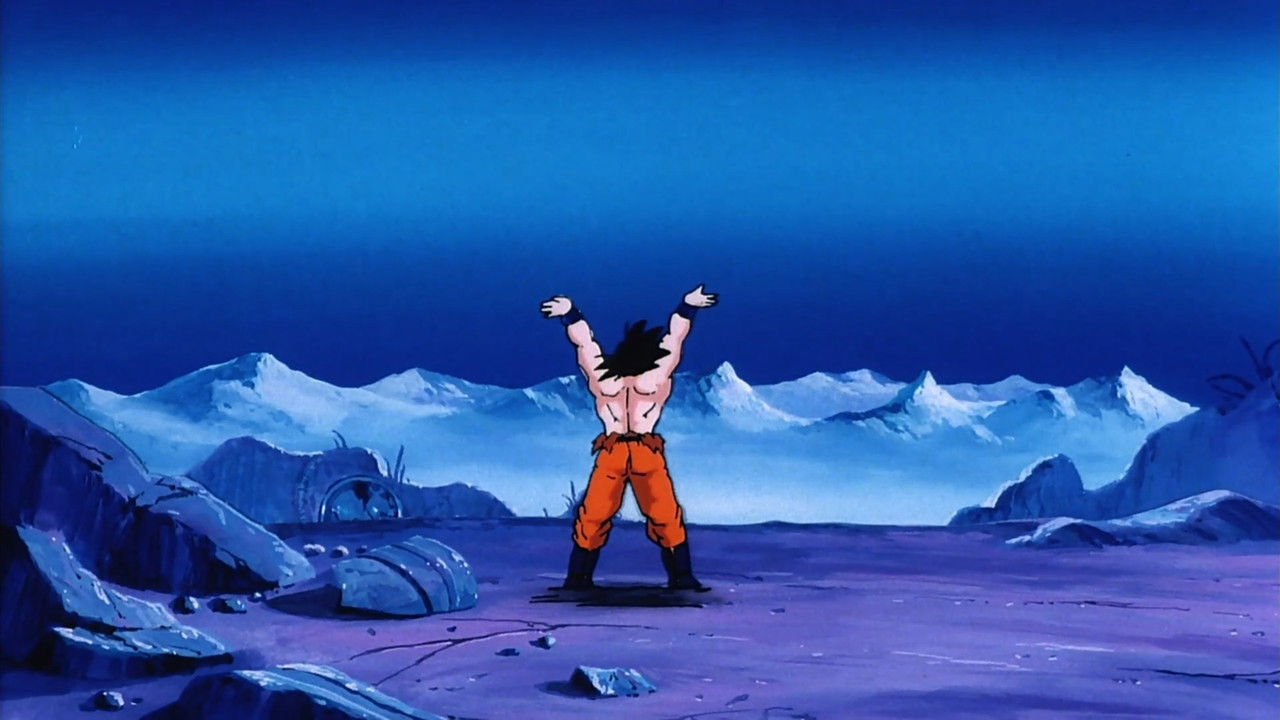
Compared to the often hyper-smooth, digitally composited action of today, there's a certain gritty, kinetic charm here. Every Ki blast felt like it could actually scorch the film cell it was painted on. And the choreography, while perhaps simple by today's standards, had a clarity and weight. We even get Master Roshi throwing down seriously for one of the few times in Z, a real treat for long-time fans! It’s a reminder that before the power levels went completely intergalactic, the original Turtle Hermit could still hold his own. A fun fact: these DBZ movies were often produced relatively quickly for the Toei Anime Fair film festivals in Japan, meant as crowd-pleasing companions to the ongoing TV show, which explains their often self-contained, non-canon nature. They had slightly better animation budgets than the weekly show, and it shows in the fluidity of these battles.
Voices of Power (and Nostalgia)
Of course, no discussion of classic DBZ is complete without mentioning the legendary voice cast. Masako Nozawa is Goku, Gohan, and Goten – her performance is inseparable from the character's identity. Hearing her iconic battle cries alongside Toshio Furukawa's stoic Piccolo and Mayumi Tanaka's earnest Krillin is pure auditory nostalgia. For many Western fans watching on VHS later, the experience might have been shaped by the FUNimation dub, which often swapped out Shunsuke Kikuchi's legendary, mood-setting score for heavier rock tracks – a drastically different vibe, but one that cemented itself in the memories of a generation.
Piccolo gets some standout moments here, playing the reluctant hero role perfectly and delivering a sacrifice play that, even in a non-canon movie, hits hard. And Dr. Wheelo himself, despite being, well, a brain, makes for a visually unique final boss once he gets his hulking mechanical body. It's a departure from the usual muscle-bound tyrants and adds a dash of sci-fi horror to the mix.
Is It Still the Strongest?
Dragon Ball Z: The World's Strongest isn't aiming for deep narrative complexity. It's a concentrated blast of what made DBZ explode into a global phenomenon: incredible stakes, visually stunning transformations (even if Goku mainly sticks to Kaio-ken here), and fight scenes that felt genuinely powerful and dynamic back in the flickering glow of the VCR. It captures that specific early 90s anime energy perfectly.
Rating: 7.5 / 10
Justification: This score reflects the film's success as a prime example of a classic DBZ movie spectacle. It delivers fantastic, well-animated action for its time, features iconic characters doing what they do best (plus a welcome Roshi spotlight!), and boasts a memorable villain design. The plot is thin, and it doesn't break new ground, but it perfectly executes the DBZ movie formula that fans craved. It holds up as a fun, energetic slice of anime history, even if later entries pushed the envelope further.
Final Thought: While modern animation offers slicker visuals, The World's Strongest reminds us of the raw, hand-drawn power that first made us believe a man could punch through a mountain, all from the comfort of our living rooms, tracking lines and all. Pure VHS-era adrenaline.