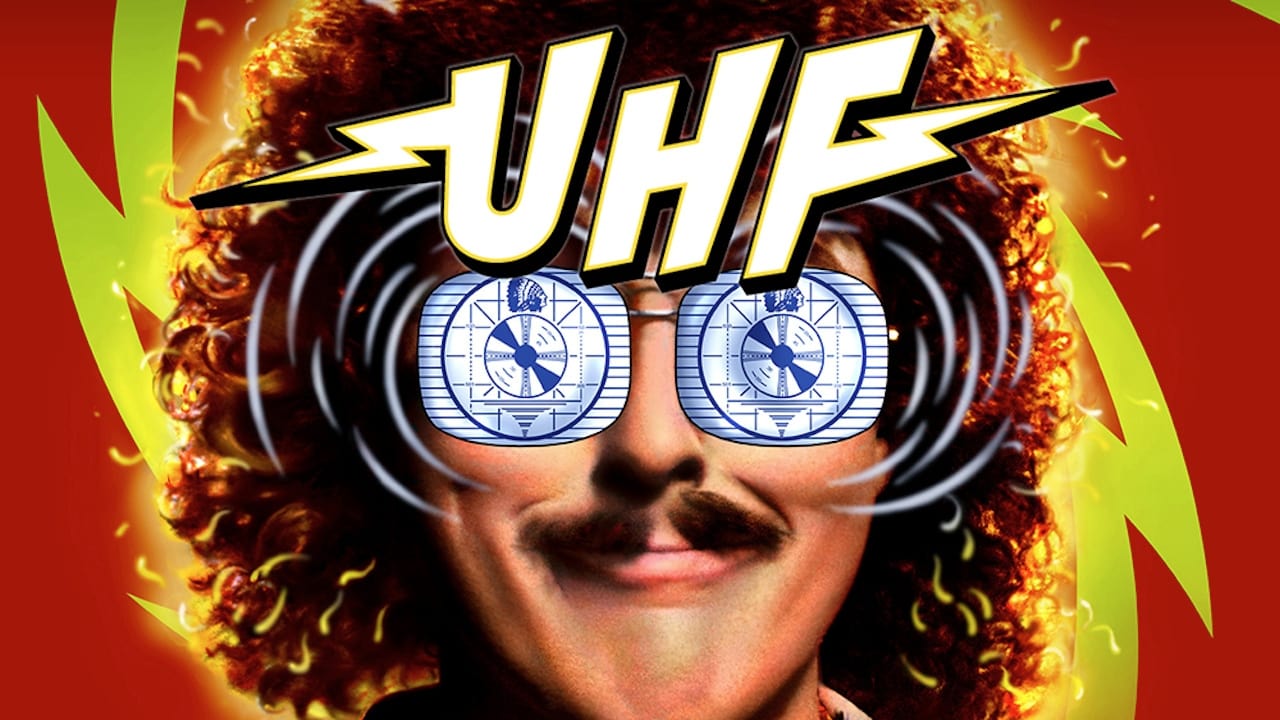
Okay, fellow travelers of the magnetic tape, let’s rewind to 1989. Imagine browsing the aisles of your local video store, past the glossy boxes for Batman and Lethal Weapon 2. Tucked away, perhaps slightly forlorn, sits a cover featuring a lanky guy with glasses and curly hair holding… well, a spatula? You pop it in the VCR later that night, the tracking adjusts, and suddenly you’re tuned into Channel 62. Welcome, my friends, to the gloriously unhinged world of UHF.
### Dial M for Madness
This isn't just a movie; it's a feature-length barrage of absurdity filtered through the singular comedic lens of 'Weird Al' Yankovic, making his starring debut here alongside writing duties with his manager and the film's director, Jay Levey. Al plays George Newman, a well-meaning daydreamer whose hyperactive imagination constantly torpedoes his job prospects. His luck seems to change when his uncle Harvey wins a low-power, nearly bankrupt UHF television station – U-62 – in a poker game and promptly hands George the keys. Faced with imminent financial collapse and the predatory scheming of rival network executive R.J. Fletcher (Kevin McCarthy, radiating pure corporate slime), George does the only logical thing: he hands the station's janitor, the irrepressibly odd Stanley Spadowski, his own kids' show.
### A Firehose of Funny (Mostly)
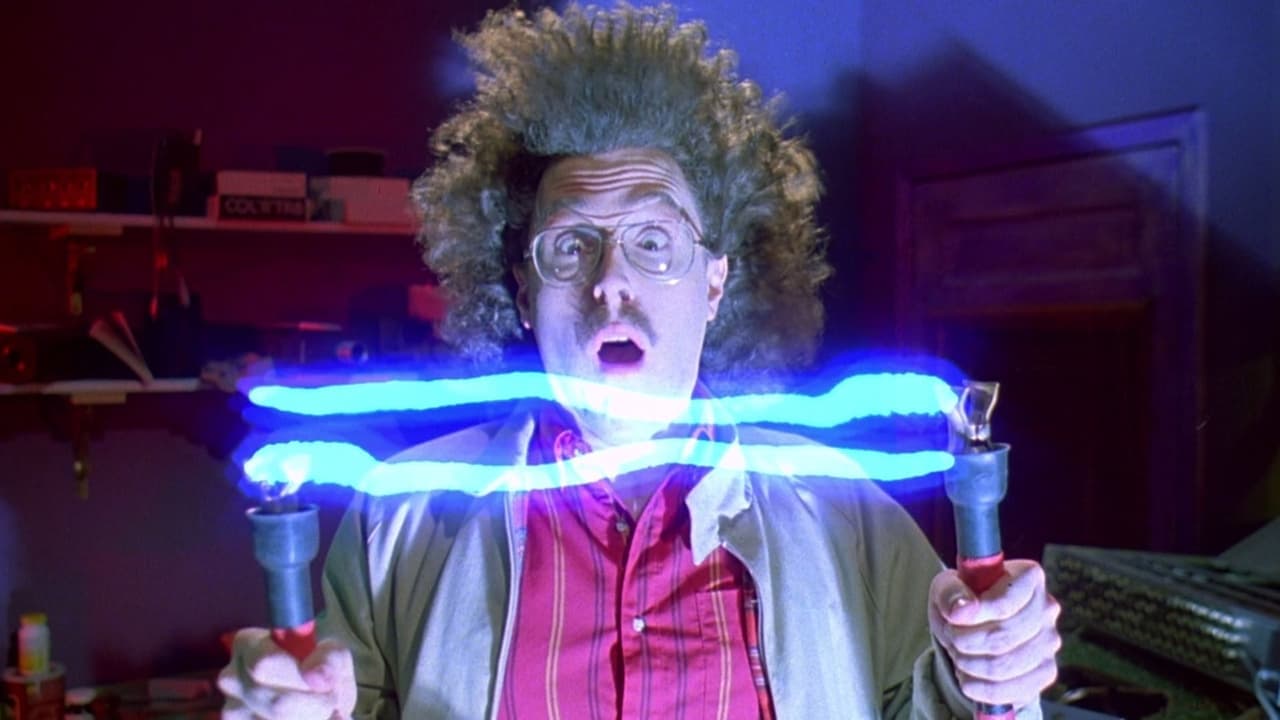
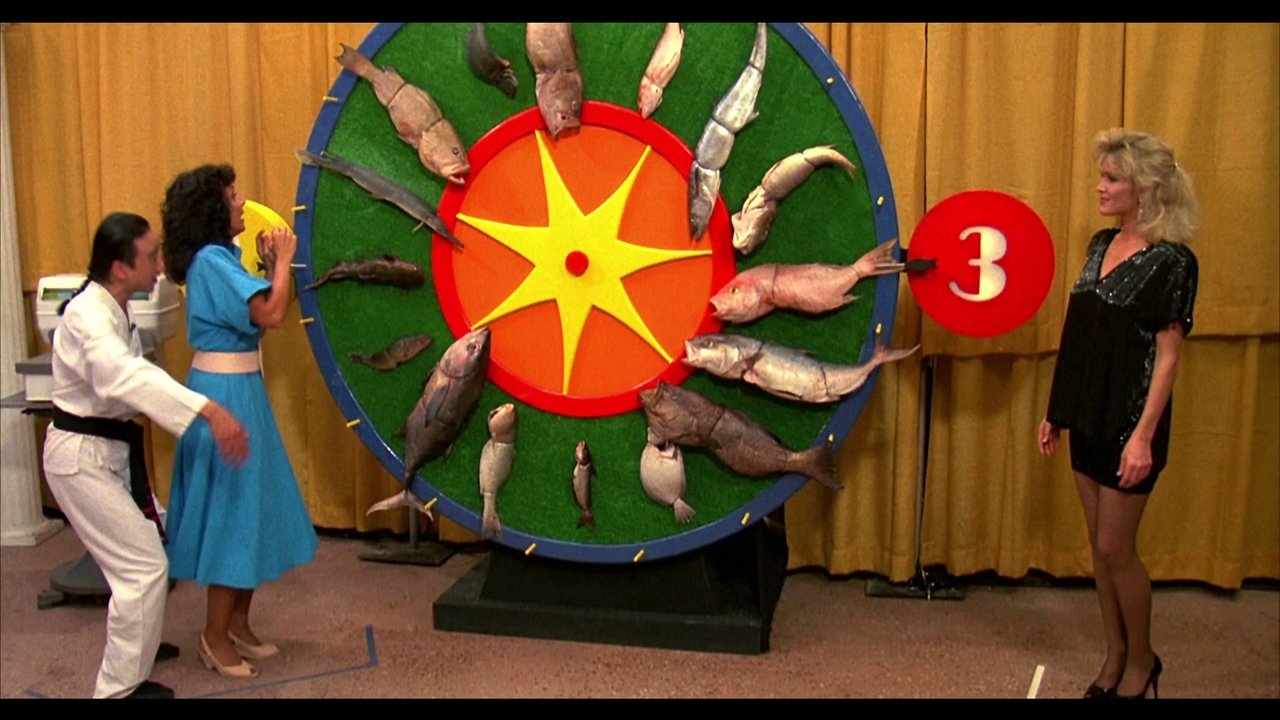
What follows is less a tightly structured narrative and more a relentless delivery system for parodies, sight gags, and profoundly silly concepts. UHF throws everything at the wall: fake commercials ("Spatula City" – whose jingle I still find myself humming decades later), movie trailer spoofs (Gandhi II, Conan the Librarian), bizarre game shows ("Wheel of Fish" – "Stupid! You're so stupid!"), and original programming concepts so ludicrous they feel almost plausible on late-night public access ("Raul's Wild Kingdom"). It's important to remember that UHF landed in the summer of '89, a season absolutely stacked with blockbusters. It sadly got lost in the shuffle, grossing a modest $6.1 million against its $5 million budget, leading many to unfairly label it a flop. Little did they know, its true life would begin on VHS and cable, where it found its devoted audience.
The genius here isn't necessarily in every single joke landing perfectly – they don't. But the sheer volume and anarchic spirit are infectious. Yankovic, while not a traditionally polished actor, possesses an undeniable nerdy charm that anchors the madness. He’s the relatable everyman tossed into a sea of delightful weirdos. And what weirdos they are! Victoria Jackson brings her trademark wide-eyed naivete as George's girlfriend Teri, and Gedde Watanabe (forever known to many from Sixteen Candles) steals scenes as the karate instructor Kuni, teaching his students the vital importance of turtle waxing.
### Before Kramer, There Was Stanley

Of course, no discussion of UHF is complete without bowing down to the force of nature that is Michael Richards as Stanley Spadowski. Years before he’d burst into Jerry’s apartment, Richards unleashes a torrent of pure, unadulterated physical comedy and bizarre vocalizations. Handing him a mop and letting him loose in a TV studio proves to be comedic dynamite. Stanley’s accidental rise to local stardom with "Stanley Spadowski's Clubhouse" is the heart of the film's plot (such as it is) and Richards commits with an energy that’s frankly astonishing. Watching him now, you can see the raw, untamed sparks of the character that would later make him a household name on Seinfeld. It’s a performance that feels genuinely spontaneous and joyfully chaotic.
### The Charm of Cheapness
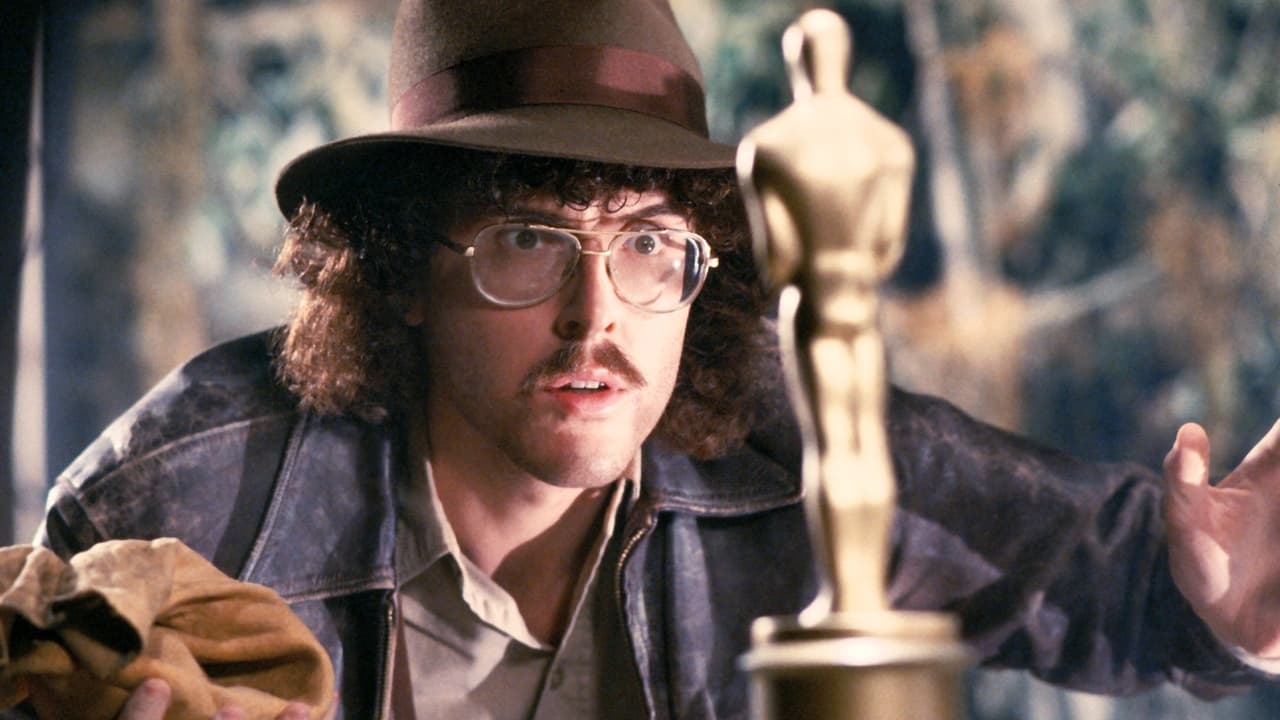
Part of UHF's enduring appeal is its gloriously low-budget aesthetic. The sets for U-62 look exactly like you'd expect a failing UHF station to look – cobbled together, slightly worn, utterly lacking in corporate sheen. This isn't a flaw; it's intrinsic to the film's charm. It feels authentic, like a glimpse behind the curtain of truly independent, maybe slightly desperate, local broadcasting. This ramshackle quality resonated perfectly with the VHS experience – the slightly fuzzy picture, the occasional tracking lines – it all felt part of the same scrappy, underdog world. The practical nature of the gags, the simple sets for the parodies, they have a tangible quality that sophisticated CGI often lacks. Remember the raw absurdity of the Raiders of the Lost Ark parody intro? It wasn't slick, but it was undeniably there.
The climactic telethon sequence, a mad scramble to save the station, encapsulates the film's ethos: throw everything you have at the problem, no matter how ridiculous, and hope for the best. It’s messy, frantic, and punctuated by moments of sheer inspired lunacy (like Stanley playing the accordion with his feet).
***
Rating: 8/10
Justification: While the plot is thinner than R.J. Fletcher's patience and not every joke hits the bullseye, UHF scores high on pure, unadulterated creativity, infectious energy, and its status as a beloved cult artifact. Yankovic's unique comedic voice shines, the supporting cast (especially Richards) is brilliant, and the sheer density of gags ensures plenty of laughs. Its initial failure only adds to its underdog charm, making its eventual triumph on home video feel earned. It perfectly captures a specific brand of anarchic, low-budget humor that feels both nostalgic and genuinely funny.
Final Take: UHF is more than just a movie; it's a time capsule of glorious, unpretentious weirdness, a testament to the strange wonders you could find channel surfing late at night or browsing the stranger corners of the video store. A film that proves sometimes, the best television – and the best comedy – comes from turning the dial way, way up. Drink from the firehose, indeed!