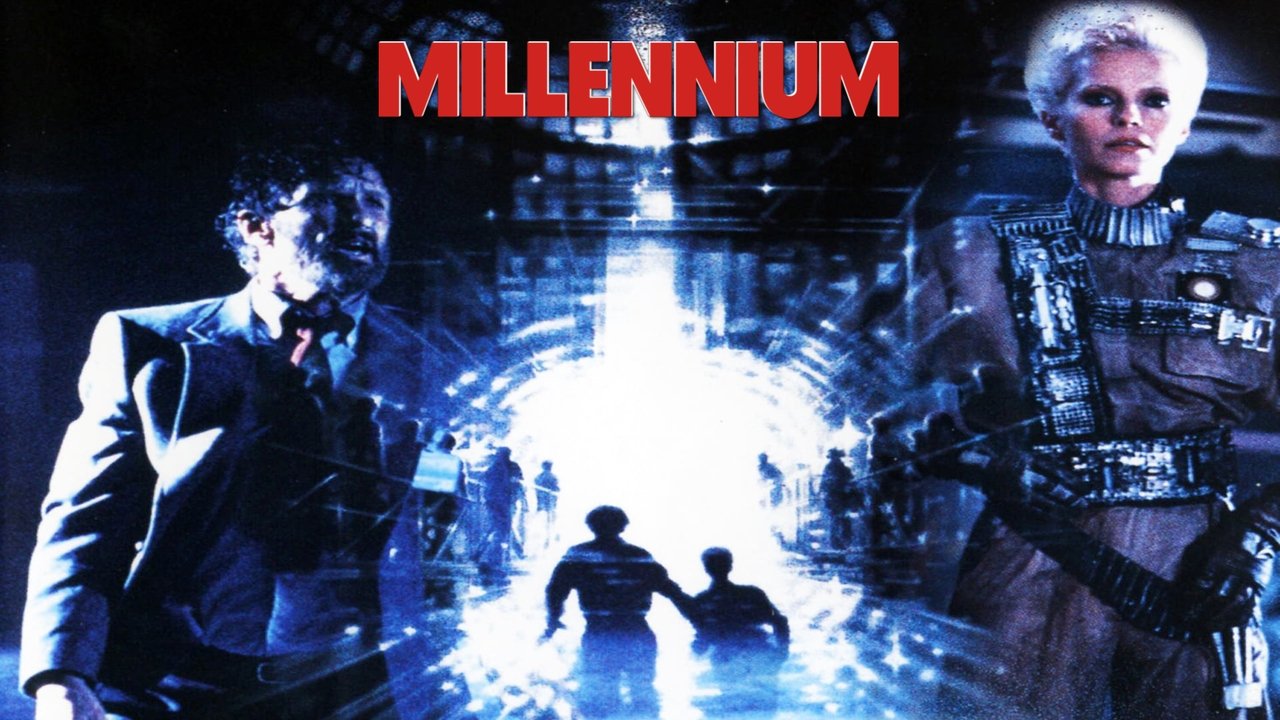
It begins, as so many chilling tales do, with wreckage. Twisted metal, the impossible aftermath of a mid-air collision, and the gnawing sense that something is deeply, fundamentally wrong. 1989's Millennium doesn't announce its strangeness with fanfare; it lets the unease seep in through the cracks of an NTSB investigation, led by the perpetually weary Bill Smith (Kris Kristofferson). What unfolds isn't just a disaster procedural, but a slow-burn temporal mystery box, the kind that burrowed under your skin after a late-night rental from the 'New Releases' wall.
Echoes in the Wreckage
Smith, a man seemingly carrying the weight of every crash he’s ever worked, finds himself baffled. Two jumbo jets collide near Minneapolis, a horrific tragedy, yet the details refuse to align. Why were passengers already dead before impact, according to the cockpit voice recorder? What are these strange, futuristic-looking artifacts found amidst the debris? And who is the impossibly composed, enigmatic Louise Baltimore (Cheryl Ladd), who seems to appear wherever the investigation leads, asking all the wrong—or perhaps exactly the right—questions? The initial mystery is handled with a grounded seriousness by director Michael Anderson (Logan's Run), allowing the bizarre elements to feel genuinely intrusive and disturbing within a recognizable reality.
The film's roots run deep, stemming from Nebula and Hugo Award-winning author John Varley's 1977 short story "Air Raid," which he later expanded into the novel Millennium. Varley himself penned the screenplay, a rarity that often lends authenticity, and you can feel the density of the underlying ideas trying to break through. This project reportedly simmered in development hell for nearly a decade before finally hitting screens, a testament to the challenges of bringing complex sci-fi narratives to life, especially those involving the mind-bending implications of time travel. The final film carries traces of that long gestation, a feeling of weighty concepts sometimes struggling against the constraints of a late-80s thriller format.

A Future Less Bright
As Smith digs deeper, pressured by his colleague Arnold Mayer (Daniel J. Travanti, bringing some Hill Street Blues gravitas), he uncovers the impossible truth: Louise and her team are temporal commandos from a dying future, a sterile, polluted millennium hence. Humanity is infertile, choked by its own progress, and their only hope lies in snatching doomed individuals from the past – specifically, those about to perish in unavoidable disasters like plane crashes – moments before their deaths, replacing them with replicas to maintain the timeline, and bringing them forward to repopulate their sterile world. It’s a desperate, morally grey gambit, played out against the backdrop of decaying future architecture and technology that felt subtly unsettling back in '89. Remember those sleek, slightly ominous stunner weapons? Practical effects that had a tangible, slightly dangerous quality on grainy VHS.
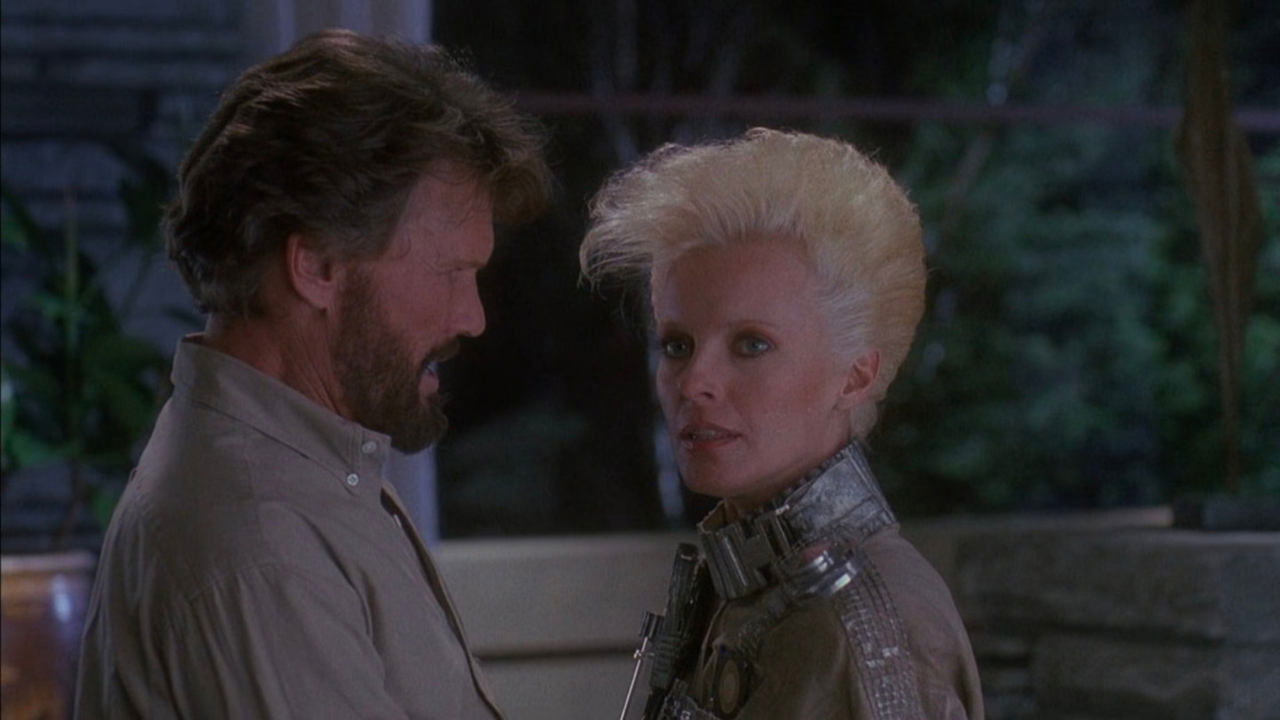
Kristofferson embodies the grizzled investigator perfectly, his tired eyes reflecting the audience's own disbelief slowly turning to acceptance. Cheryl Ladd, stepping away from her Charlie's Angels image, delivers a surprisingly effective performance as Louise. She captures the detached efficiency of someone performing a necessary, grim duty, but crucially, allows flickers of forbidden emotion – particularly her growing connection to Smith – to complicate her mission. Their burgeoning relationship across time forms the paradoxical heart of the film. It's a connection doomed by the very mechanics that allow it to exist, adding a layer of poignant tragedy to the sci-fi thrills.
Temporal Turbulence & Retro Fun Facts
Millennium wasn't afraid to lean into the paradoxes. The central conceit revolves around a causal loop – the very actions taken by the future dwellers to save humanity might be contributing to the disasters they exploit, or at least ensuring their inevitability. This heady concept elevates the film beyond simple action, even if the execution sometimes feels a little tangled.
The production, budgeted at a respectable (for the time) $22 million, showcases some interesting design choices for the future world, though perhaps lacking the budget for true spectacle. The temporal gate effects and the stark, functional look of the Millennium Council chambers have a distinct late-80s sci-fi aesthetic. Interestingly, despite the intriguing premise and known stars, the film struggled at the box office, pulling in only around $6 million domestically. Perhaps its blend of sci-fi mystery, romance, and disaster elements proved a tricky sell in a market shifting towards different kinds of blockbusters. John Varley has mentioned in interviews that the final film departs somewhat from his novel, particularly in the ending, a common fate for adaptations wrestling complex source material into cinematic form.
One specific detail that always stuck with me was the chilling synchronization of the victims' watches, hinting at the surgical precision (and inherent creepiness) of the temporal snatch-and-replace operation. Did that detail give anyone else a shiver back in the day?
Legacy on Magnetic Tape
Millennium is a fascinating artifact of late-80s sci-fi. It’s a film brimming with big ideas about fate, consequence, and the desperate measures taken in the face of extinction. While perhaps not as slick or action-packed as some contemporaries, its moody atmosphere, compelling central mystery, and the poignant temporal romance at its core leave a lasting impression. It doesn't always perfectly balance its complex plot threads, and some elements feel undeniably dated, but the core concept remains potent. It’s the kind of thoughtful, slightly melancholic sci-fi thriller that rewards patient viewing, a film that felt uniquely suited to the quiet contemplation afforded by a worn VHS tape playing long after midnight.
Rating: 7/10
The score reflects a genuinely intriguing and atmospheric sci-fi concept, bolstered by solid performances from Kristofferson and Ladd, and Varley's intelligent source material. It loses points for occasional pacing issues and a slightly dated feel in execution, never quite reaching the full potential of its ambitious ideas, but remaining a compelling watch nonetheless.
Final Thought: A memorable slice of time-bending 80s cinema that dared to ask complex questions, leaving you pondering paradoxes long after the VCR clicked off.