Okay, let's dim the lights, maybe pour a drink, and settle in. Some films, when you pull that chunky cassette from its worn cardboard sleeve, feel less like simple entertainment and more like revisiting a profound turning point. For me, and I suspect for many of you browsing the shelves back then, Peter Weir's Dead Poets Society (1989) was exactly that kind of tape. It wasn't just a movie; it felt like a whispered invitation to think differently, slipped into VCRs across the world.

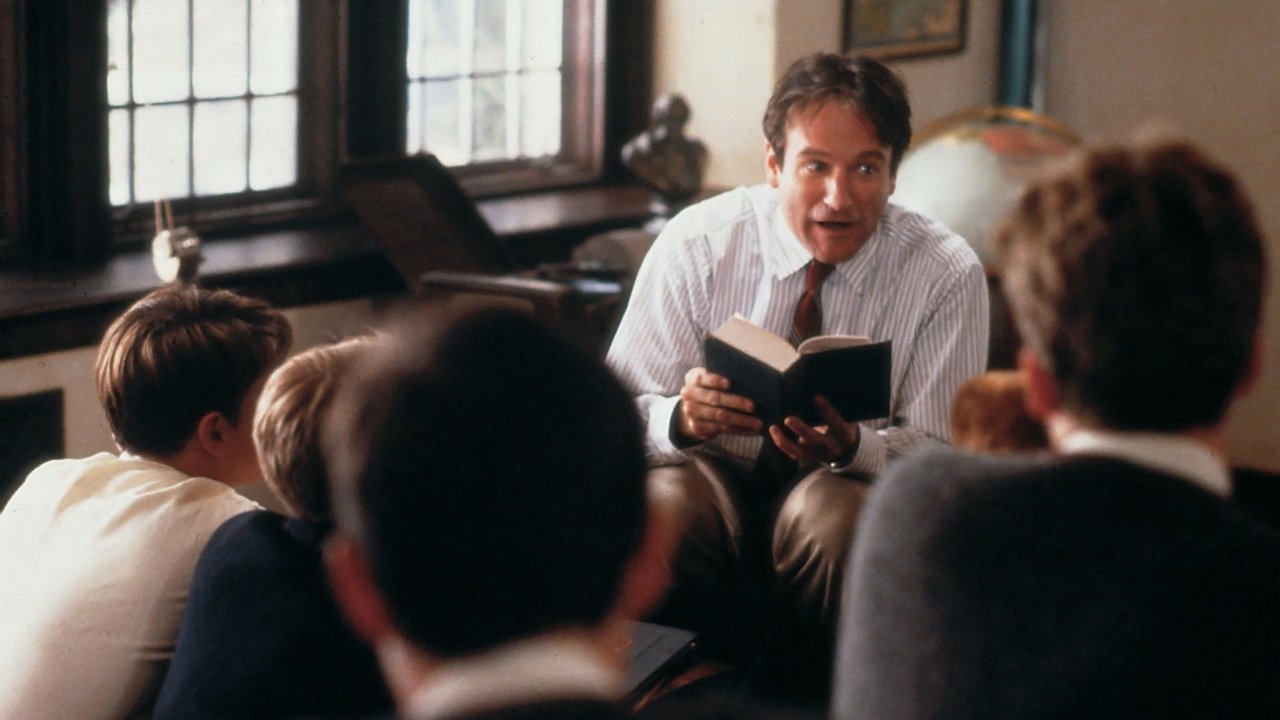
The opening shots immediately establish the world we're entering: the hallowed, imposing halls of Welton Academy in the autumn of 1959. Tradition, honour, discipline, excellence – the pillars loom large, casting long shadows over the young men buttoned tightly into their uniforms. There's a weight to the air, a sense of expectation that feels almost suffocating. And into this meticulously ordered environment steps John Keating, the new English teacher, portrayed by Robin Williams in a role that beautifully balanced his manic improvisational genius with a deep, soulful sincerity.
### O Captain! My Captain!
It's impossible to discuss Dead Poets Society without focusing on Robin Williams. Fresh off acclaimed roles like Good Morning, Vietnam (1987), he brought an infectious energy that was utterly captivating. But this wasn't just the Williams of rapid-fire stand-up. As Keating, he was a guide, a mentor, sometimes mischievous, always passionate. Director Peter Weir, known for atmospheric pieces like Picnic at Hanging Rock (1975) and later The Truman Show (1998), reportedly encouraged Williams' improvisational spirit during takes, capturing moments of genuine spontaneity – like the impromptu Shakespearean riff – that feel utterly organic to Keating's unconventional style. Yet, Weir also masterfully harnessed Williams' capacity for quiet gravity, ensuring Keating felt like a fully rounded human being, not just a whirlwind of inspiration. It's a performance that anchors the film, making Keating's belief in the power of words and self-expression feel not just believable, but essential.
Interestingly, the project had initially been slated for a different director, Jeff Kanew (Revenge of the Nerds), which might have resulted in a very different, potentially lighter film. Weir's involvement brought a layer of seriousness and artistic sensibility that elevates the material significantly.
### Seize the Day
At the heart of the film are the boys Keating inspires. We see Welton primarily through their eyes, particularly Neil Perry (Robert Sean Leonard) and Todd Anderson (Ethan Hawke). Leonard, in a star-making turn, beautifully conveys Neil's desperate yearning for a life beyond the stifling expectations of his domineering father. You feel his burgeoning passion for acting, his quiet rebellion, and the crushing weight he carries. It’s a performance of subtle power that makes his ultimate trajectory (Spoiler Alert! for those few who haven't seen it) so devastatingly impactful.
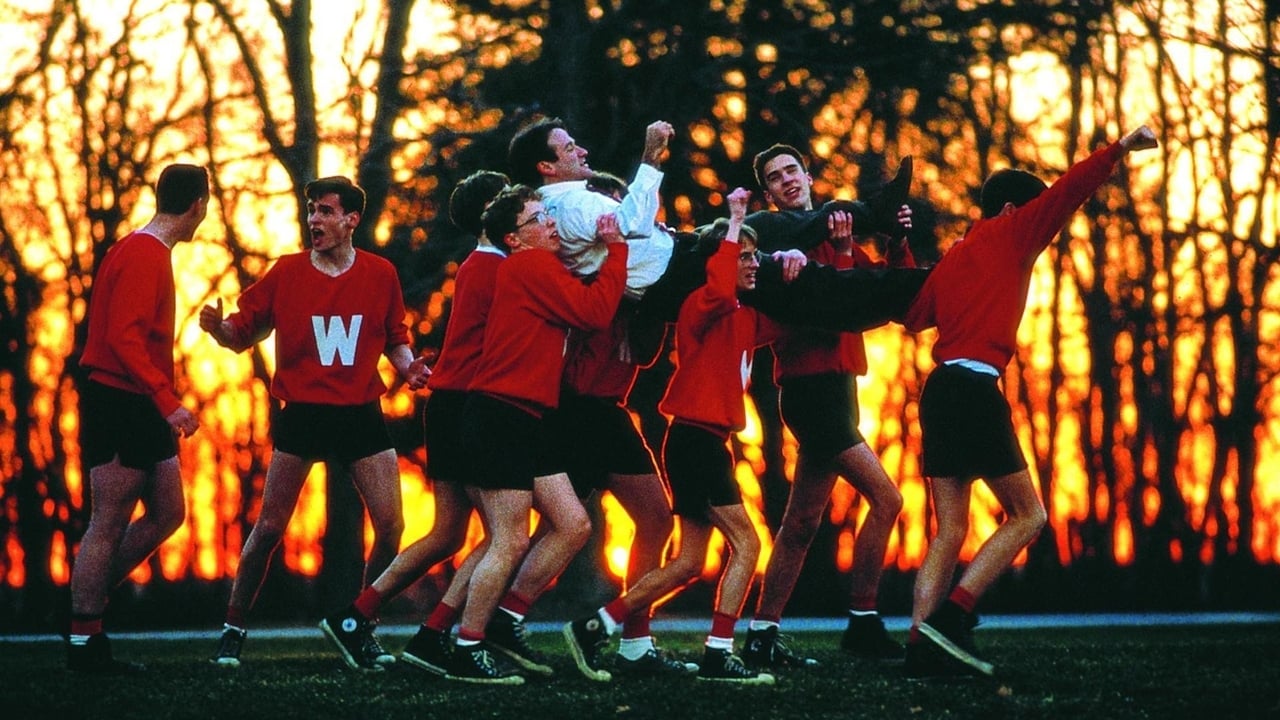
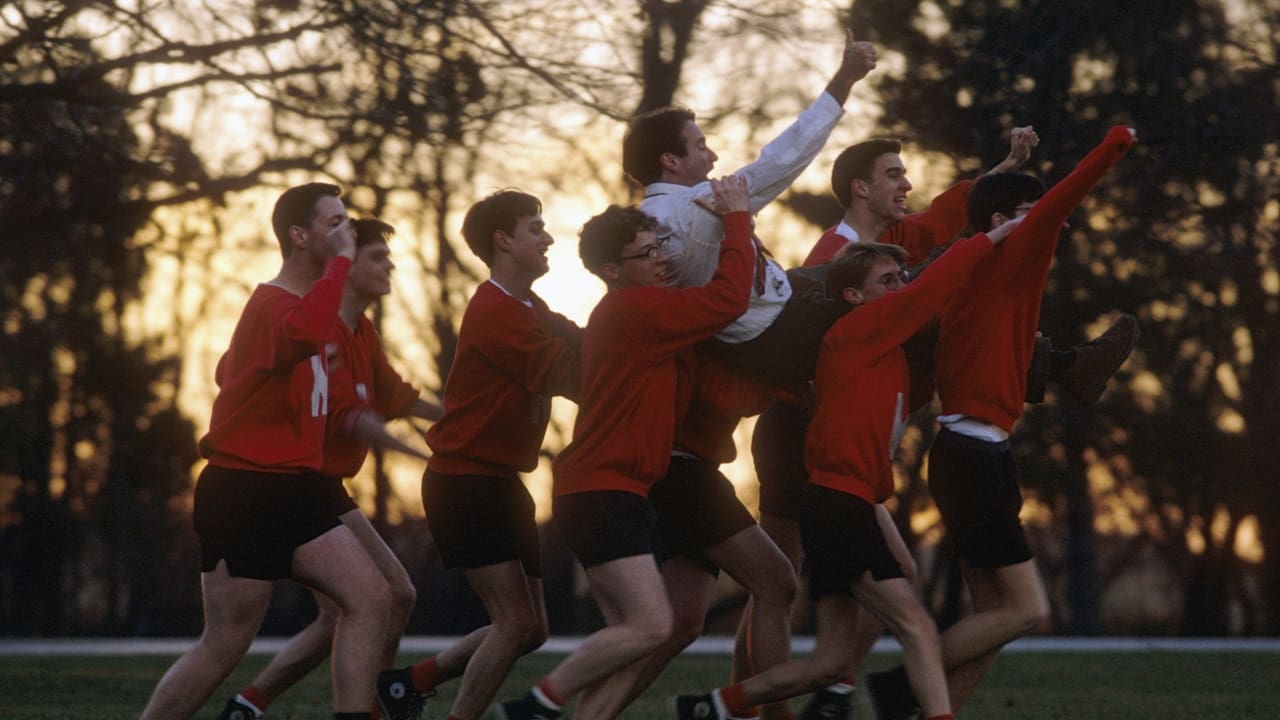
Ethan Hawke, almost painfully shy as Todd Anderson, undergoes perhaps the most visible transformation. His journey from crippling insecurity to finding his voice, culminating in that iconic "O Captain! My Captain!" moment, is incredibly moving. Hawke captures that teenage awkwardness with such authenticity; you root for him intensely. The supporting cast, including Josh Charles as Knox Overstreet and Gale Hansen as Charlie Dalton ('Nuwanda'), create a believable camaraderie, their shared secret meetings in the lamp-lit cave feeling like genuine acts of youthful defiance.
### Words and Ideas Can Change the World
Tom Schulman's screenplay, which deservedly won the Academy Award for Best Original Screenplay, is the bedrock upon which the film stands. Inspired partly by his own experiences at a preparatory school, the script crackles with memorable lines ("Carpe Diem," "Suck the marrow out of life") but, more importantly, explores profound themes: conformity versus individuality, the pressure of parental expectation, the liberating power of art, and the courage required to pursue one's own path. Schulman avoids easy answers, acknowledging the potential costs of challenging the status quo.
Peter Weir’s direction, coupled with John Seale’s gorgeous cinematography, bathes Welton in the golden hues of autumn, creating a visually stunning backdrop that contrasts the beauty of the natural world and burgeoning self-discovery with the rigid, stone-grey institution. The score by Maurice Jarre adds another layer of emotional depth, swelling with inspiration and poignant melancholy. Filmed largely at St. Andrew's School in Delaware, the location itself becomes a character, embodying both tradition and confinement.
The film wasn't just critically acclaimed; it was a significant box office success, earning nearly $236 million worldwide against a $16.4 million budget. Adjusted for inflation, that's like making close to $600 million today on a $40 million budget – a testament to how deeply its message resonated with audiences in 1989 and continues to do so. It tapped into a universal desire for meaning and self-determination that felt particularly potent against the backdrop of the late 80s.
### The Lasting Echo
Watching Dead Poets Society today, decades removed from its initial release, its power hasn't diminished. Sure, some might find moments a touch earnest, but the core message remains incredibly relevant. It asks questions that endure: How much of ourselves are we willing to sacrifice for security or approval? What truly makes life worthwhile? The performances feel as authentic as ever, and the film's emotional climax still hits with undeniable force. I remember renting this from the local video store, maybe expecting something lighter based on Williams' presence, and being utterly captivated by its depth and heart. It was one of those tapes that didn't get returned right away, lingering near the VCR for another viewing.
It’s a film that encourages you to stand on your desk, metaphorically speaking, and see the world from a different perspective. It champions the humanities, the power of poetry and critical thought, in a way that feels both timeless and increasingly vital.
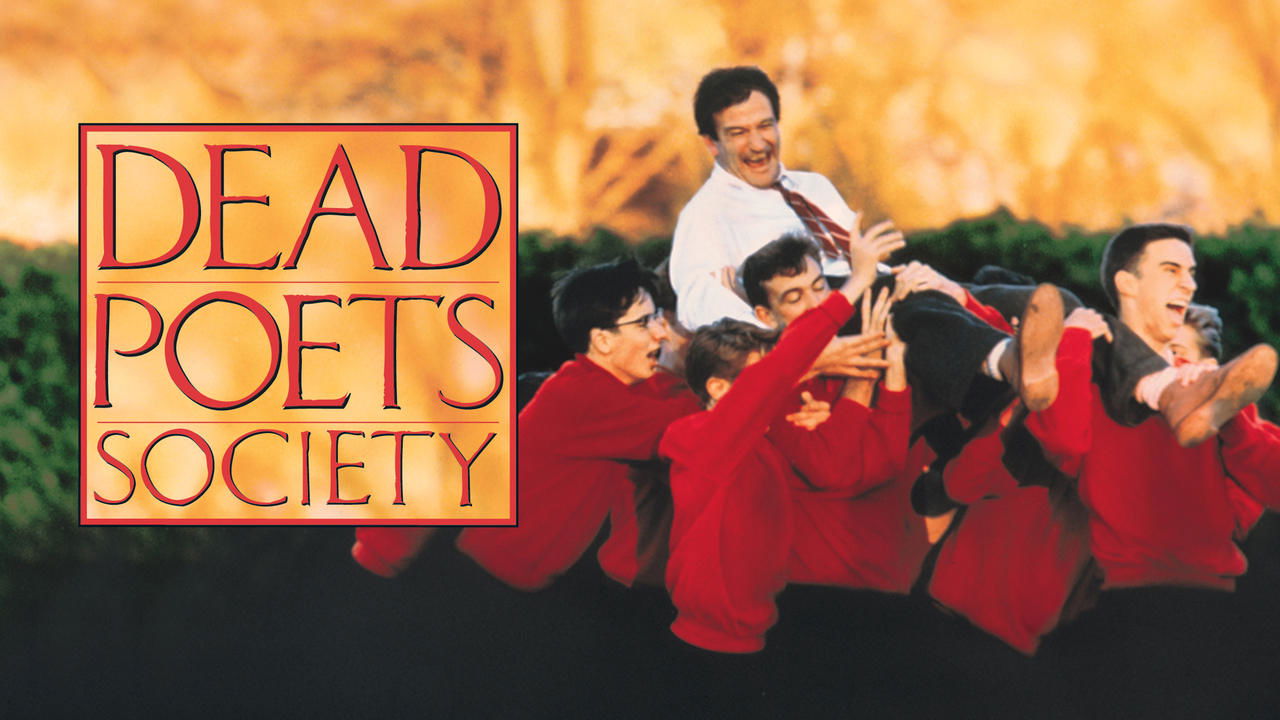
Rating: 9/10
Justification: Dead Poets Society earns this high score through its masterful blend of inspirational storytelling, outstanding performances (especially from Williams, Leonard, and Hawke), Peter Weir's evocative direction, and Tom Schulman's resonant, Oscar-winning screenplay. Its thematic depth, emotional impact, and enduring message about individuality and the power of art overcome any slight hints of sentimentality. It's a cornerstone of late 80s cinema that remains deeply affecting.
Final Thought: Even now, the final moments linger – a potent mix of tragedy and triumphant defiance. It leaves you not just thinking, but feeling, pondering the echoes of Keating's call to "make your lives extraordinary." What verse will you contribute?