Here we go, popping another tape into the VCR – this time, it's a trip back to late 80s France with a thriller that hits harder than you might expect. Remember those gritty European crime films that occasionally surfaced in the 'New Releases' section, often with slightly generic English titles hiding something more complex? 1989's Brothers in Arms (originally, and more pointedly, titled L'Union sacrée) is precisely one of those gems, a film less about explosive action and more about the simmering, volatile chemistry between two men forced to bridge an abyss of hatred.
An Alliance Born of Necessity
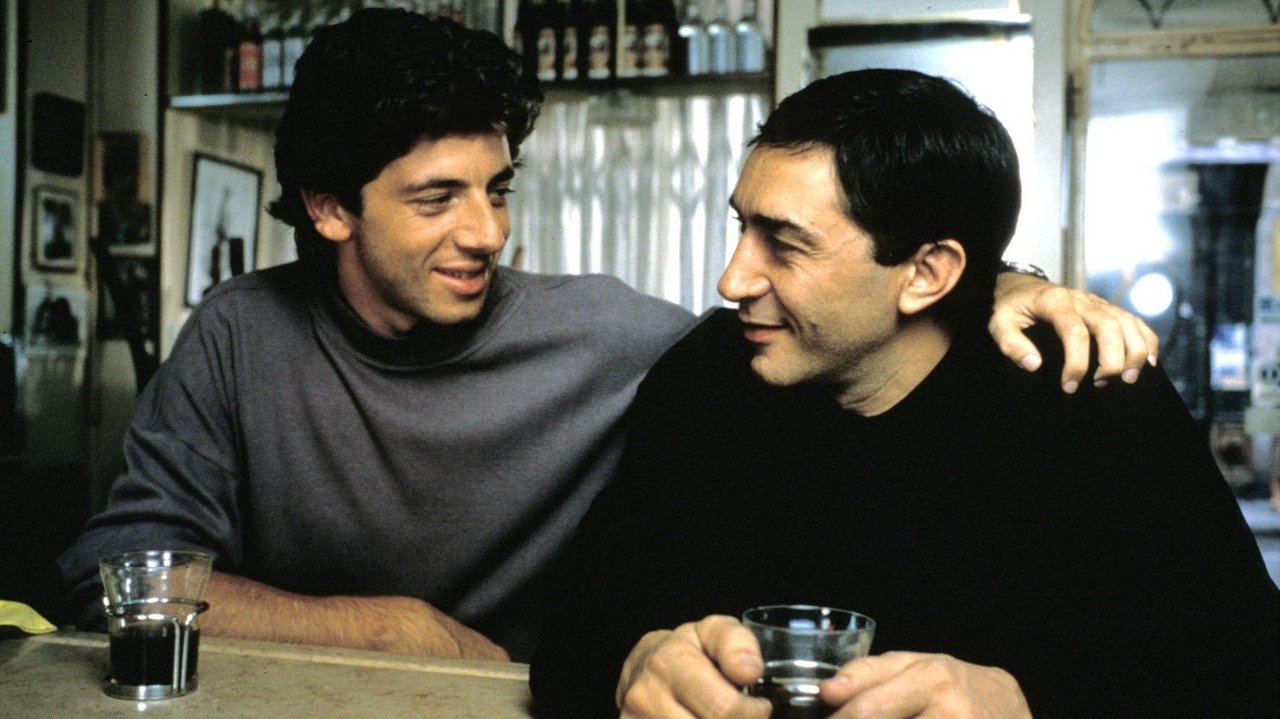
The premise hooks you immediately with its stark tension: Simon Atlan (Richard Berry), a hardened Jewish narcotics detective, finds his investigation into a dangerous drug ring suddenly intertwined with Karim Hamida (Patrick Bruel), a French intelligence agent of Arab descent working deep undercover within the same network. Neither man trusts the other; their backgrounds are steeped in mutual suspicion and societal prejudice. Yet, facing a common enemy involved in both narcotics and terrorism, they are ordered to form an uneasy partnership – a "sacred union," as the original title suggests, invoking a powerful French historical term for unity in crisis. It’s a setup ripe for drama, exploring whether shared danger can overcome deeply ingrained animosity.
Sparks Fly, But Not Always Friendly
What truly elevates Brothers in Arms beyond a standard procedural is the dynamic between its leads. Richard Berry, a reliable presence in French cinema, embodies Simon's world-weariness and cynicism perfectly. He carries the weight of his past and the burden of his identity in every glance. Opposite him, Patrick Bruel, who was already a massive music sensation in France and solidifying his acting chops, brings a fiery intensity to Karim. He’s navigating not just the dangers of his undercover role, but also the constant friction of prejudice, even from his supposed ally. Their scenes together crackle with hostility, suspicion, and the slow, painful emergence of grudging respect. It's not the easy camaraderie of a Hollywood buddy cop movie; it's raw, uncomfortable, and utterly believable. You feel the history and the hurt behind every barbed exchange. Supporting them is the ever-reliable Bruno Cremer (later beloved internationally as Inspector Maigret), adding his signature gravitas as the commanding officer orchestrating this fragile alliance.
Grit, Paris, and the Polar Tradition
Director Alexandre Arcady, who often explored themes of French identity, immigration, and crime (he gave us Le Grand Pardon in 1982), brings a grounded, often bleak realism to the proceedings. Born in Algeria himself, Arcady had a personal connection to the cultural tensions simmering beneath the surface of French society, and it informs the film's perspective. This isn't a glossy tourist view of Paris; it's the gritty streets, the shadowy underworld, the tense atmosphere of a city grappling with terrorism and organized crime – core elements of the French polar tradition. The film captures that late-80s vibe authentically, without excessive stylization. It feels rooted in a specific time and place, adding to its potent atmosphere.
Echoes of History, Seeds of Conflict
It's fascinating how L'Union sacrée tapped into the anxieties of its time. Released in 1989, it directly confronted issues of anti-Semitism and anti-Arab prejudice, alongside the very real threat of terrorism that Europe was facing. The film doesn't shy away from depicting ugly moments of racism, making the eventual, fragile bond between Simon and Karim feel hard-earned. It poses a tough question: can national identity or a common enemy truly supersede centuries of division? The answer it offers is complex, suggesting that while unity is possible, the scars remain. Its significant success at the French box office (drawing nearly 1.8 million viewers) suggests these themes struck a powerful chord with audiences at the time. The English title, "Brothers in Arms," while losing the nuance of L'Union sacrée, does capture the essence of that eventual, battle-forged connection.
A Thriller with Substance
While the action sequences are competent rather than spectacular by today's standards, they serve the story effectively. The focus remains squarely on the characters and the intricate plot involving drug lords and extremist plots. Some narrative threads might feel a little conventional to modern eyes, perhaps, and the pacing reflects its era – more deliberate build-up, less frantic cutting. But these aren't necessarily criticisms; they are part of what gives the film its distinct 80s flavor. I remember renting this one, intrigued by the cover art promising something tougher than the usual fare, and being genuinely surprised by the depth beneath the action veneer. It stuck with me more than many flashier imports.
***
VHS Heaven Rating: 7.5/10
Justification: Brothers in Arms earns its solid score primarily through the compelling central performances of Richard Berry and Patrick Bruel and their volatile, believable dynamic. Director Alexandre Arcady crafts a gritty, atmospheric thriller that tackles challenging themes of prejudice and terrorism with a seriousness uncommon in the genre at the time. While some plot mechanics feel familiar and the action is characteristic of its era, the film's emotional core and exploration of a forced "sacred union" remain potent. Its success in France speaks to its resonance, making it more than just another cop thriller.
Final Thought: Beyond the drugs and bullets, this film is a powerful reminder of how shared humanity can, sometimes against all odds, flicker even in the deepest shadows of hate – a theme that feels just as urgent today as it did on grainy VHS back in '89.