It's a curious thing, how certain performances can completely reshape your perception of an actor. Many of us walking into the video store in 1988, perhaps clutching a well-worn copy of Jumpin' Jack Flash (1986) or eagerly anticipating more comedic brilliance, might have scanned the shelves and landed on Clara's Heart. Seeing Whoopi Goldberg on the cover, maybe we expected laughs, sharp wit, a certain familiar energy. What we got instead was something far quieter, profoundly melancholic, and anchored by a performance of such still, watchful power it felt like discovering a hidden facet of a familiar friend.
A Study in Stillness
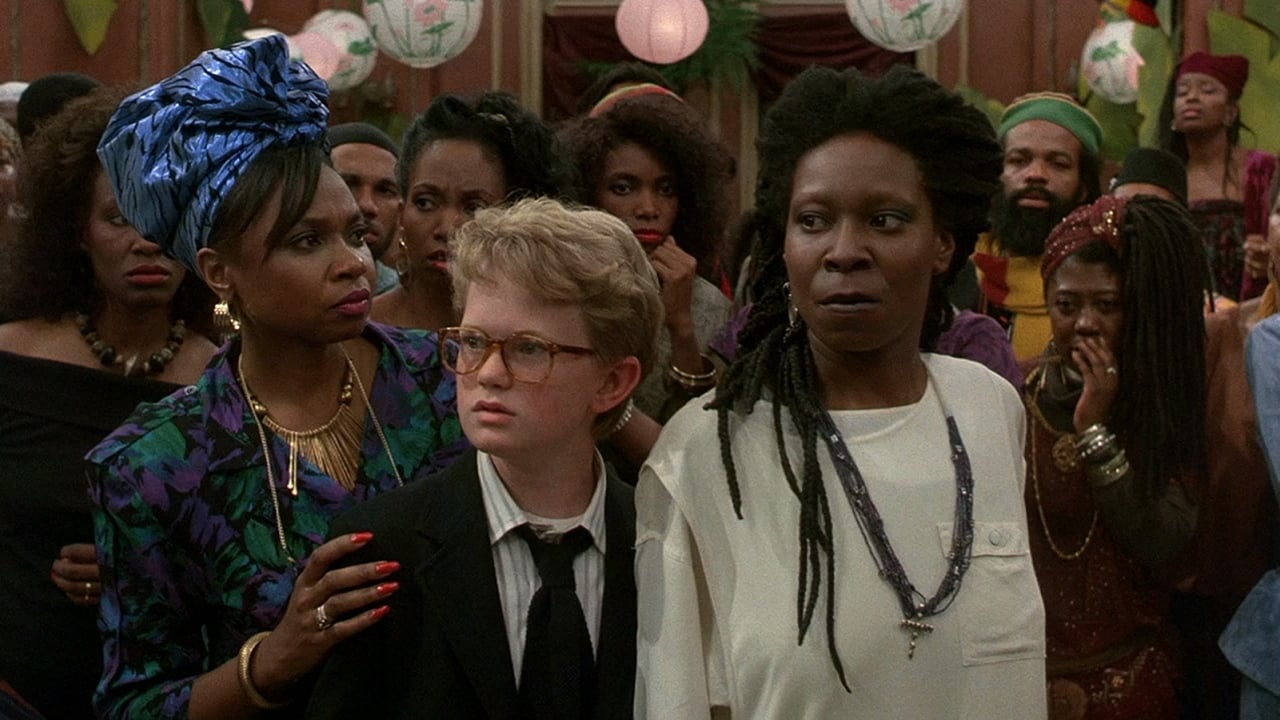
Directed by the great Robert Mulligan, a filmmaker who knew a thing or two about capturing youthful vulnerability (To Kill a Mockingbird (1962), Summer of '42 (1971)), Clara's Heart isn't driven by plot fireworks. Based on the novel by Joseph Olshan (who co-adapted it with Mark Medoff), it's the story of David Hart (Neil Patrick Harris in his stunning film debut), a young boy reeling from the emotional fallout of his parents' disintegrating marriage (Michael Ontkean and Kathleen Quinlan, both effective in conveying brittle unhappiness). Sent to stay with his preoccupied mother at their Maryland estate, David finds an unlikely confidante and anchor in Clara Mayfield (Whoopi Goldberg), a Jamaican housekeeper hired initially for a short stint, who becomes a permanent fixture in his turbulent life.
What unfolds is less a traditional narrative and more an intimate portrait of a bond forged in shared loneliness and unspoken grief. Goldberg's Clara is a figure of immense dignity and reserve. She observes everything, her eyes holding oceans of experience and sorrow, yet she offers wisdom and stability not through grand pronouncements, but through quiet presence, practical guidance, and a firm, unwavering moral compass. It's a performance built on nuance – the slight tilt of her head, the measured cadence of her Jamaican Patois (which Goldberg worked diligently on with a dialect coach), the way she carries herself with a quiet strength that hints at deep, closely guarded pain. It’s no surprise she earned a Golden Globe nomination for this role; it’s a masterful exercise in dramatic restraint, a world away from her usual screen persona at the time.

The Boy Who Would Be Doogie
And then there's Neil Patrick Harris. It's almost startling to see him here, pre-Doogie Howser, pre-Broadway stardom, delivering a performance of such naturalism and emotional intelligence. He was David Hart – awkward, observant, yearning for connection, navigating the confusing landscape of adolescence while burdened by adult problems. Mulligan, known for his exceptional work with young actors, clearly found fertile ground here. Harris holds his own beautifully against Goldberg, creating a dynamic that feels authentic and deeply moving. Their connection becomes the film's vital center, a small island of understanding in a sea of adult self-absorption and simmering resentment. You believe in their shared moments, their inside jokes, the gradual erosion of barriers between them. Reportedly, Harris beat out hundreds of other young hopefuls for the role, and watching his scenes with Goldberg, it's easy to see why. He wasn't just reciting lines; he was inhabiting the complex emotional space of a boy desperately needing someone to see him.
Beneath the Surface


Clara's Heart doesn't shy away from difficult themes. It touches upon parental neglect, the lingering scars of grief, casual racism, and the painful secrets people carry. Clara, we learn, has her own profound tragedy, a truth she keeps hidden until circumstances force it into the light. The film handles this reveal with sensitivity, adding another layer to her reserved nature and deepening our understanding of her connection with David, who is also grappling with loss, albeit of a different kind.
The film's pacing is deliberate, meditative even. It mirrors the slow unfolding of trust and intimacy between its central characters. Shot primarily on location in Maryland (with some scenes in Jamaica adding context to Clara's background), the atmosphere is one of quiet affluence underscored by emotional poverty. Some critics at the time found it perhaps too slow, too reliant on its central performances (the famous duo Siskel & Ebert were split, with Ebert championing it). Seen today, that pacing feels like a strength, allowing the emotional currents to build naturally, drawing you into David and Clara's world without resorting to melodrama. It asks for patience, rewarding it with moments of genuine emotional resonance. It was a modest success upon release, earning around $20 million on a $12 million budget, perhaps ensuring its status as more of a remembered favorite than a widely-revisited classic.
Why It Still Resonates
Watching Clara's Heart again, maybe on a worn VHS tape pulled from the back of the shelf, feels like revisiting a quiet truth. It’s a film about the unexpected places we find connection and understanding, often when the people who should be providing it fail us. It’s about the weight of secrets and the quiet strength required to simply endure. Doesn't the film subtly ask us who truly nurtures us in life? Is it always the people obligated by blood, or sometimes the quiet strangers who offer unexpected grace?
Goldberg's performance remains magnetic, a testament to her range beyond comedy. And Harris's debut is a poignant reminder of the talent evident even then. It’s not a flashy film, nor necessarily an easy watch, but its emotional honesty lingers.
Rating: 7.5/10
This score reflects the film's undeniable strengths – primarily the powerhouse performances from Goldberg and Harris, and Mulligan's sensitive direction. It captures a specific emotional truth with grace. It loses a couple of points perhaps for its sometimes slow pace that might test some viewers, and the parental characters occasionally feeling more like plot devices than fully fleshed-out individuals. However, the core relationship is so compelling and rendered with such authenticity that it elevates the entire film.
Clara's Heart remains a heartfelt, beautifully acted drama that reminds us that sometimes the deepest bonds are forged not in shared joy, but in navigating shared sorrow. It’s a quiet gem from the late 80s, well worth seeking out for anyone who appreciates character-driven storytelling and truly phenomenal acting. What lingers most, perhaps, is the quiet dignity of Clara herself – a silent strength many of us might recognize from figures in our own lives.