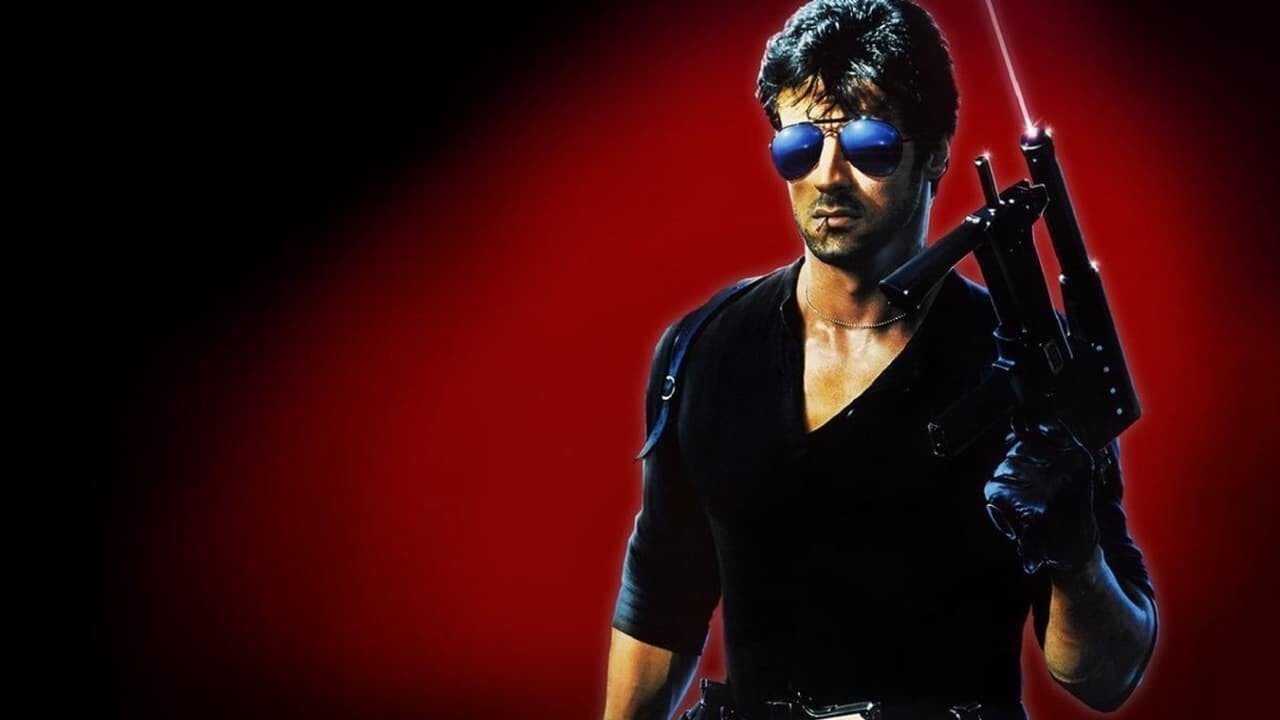
Alright, fellow tapeheads, let’s rewind to a time when action heroes chewed matchsticks instead of scenery, and the streets felt genuinely mean. Dim the lights, maybe nudge the tracking on your mental VCR, because tonight we’re diving headfirst into the neon-drenched, bullet-riddled world of 1986’s Cobra. You remember the box art, right? Sylvester Stallone, mirrored aviators reflecting some unseen urban inferno, weapon looking impossibly cool. It practically screamed “Rent Me!” from the shelves of Blockbuster.
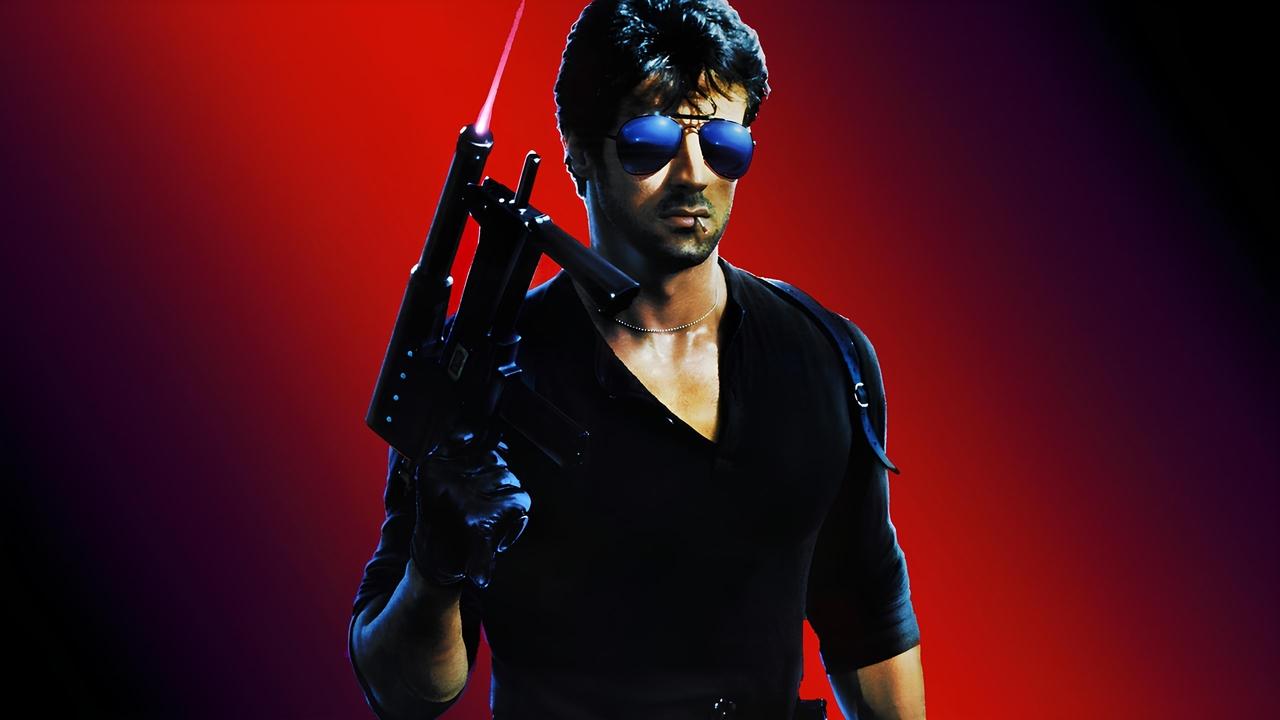
This wasn't just another Stallone vehicle hitting the rental circuit after the seismic success of Rambo: First Blood Part II (1985) the year before. No, Cobra felt different. Grittier. Nastier. It was Stallone doubling down on the hard-edged persona, crafting a character, Lieutenant Marion "Cobra" Cobretti, who felt less like a soldier and more like a force of nature unleashed on the criminal underworld. Fun fact: Stallone actually developed some of the core ideas for Cobra – the tougher, less comedic approach – during his brief attachment to Beverly Hills Cop (1984) before dropping out! Imagine that alternate timeline.
### Crime is a Disease...
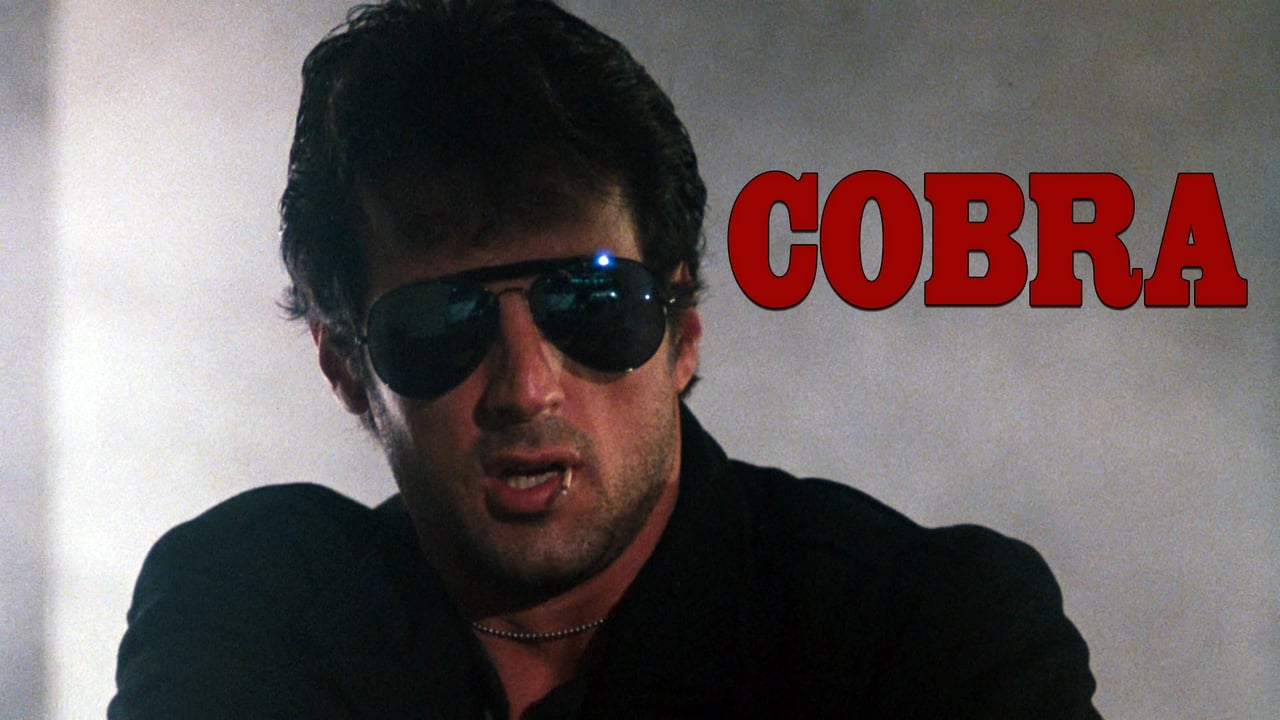
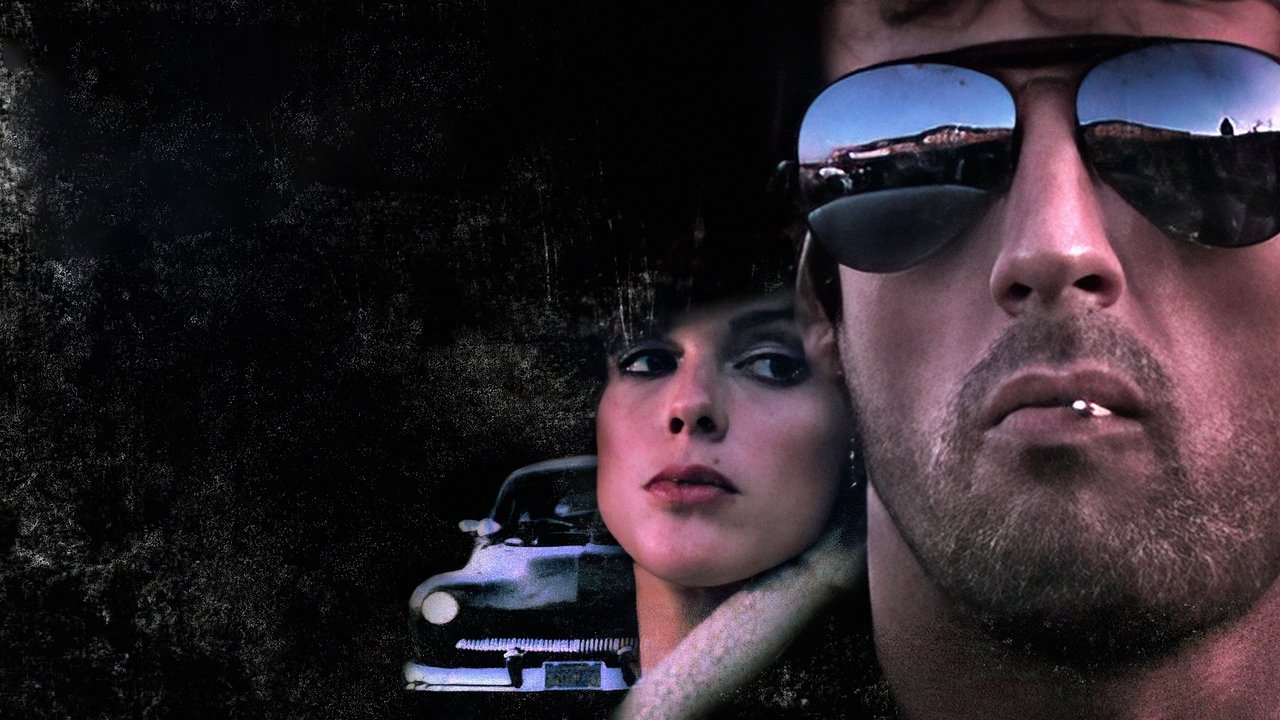
The setup is pure 80s urban nightmare fuel. A shadowy cult known as the "New World" is terrorizing Los Angeles, led by the chillingly imposing Night Slasher (Brian Thompson, who carved out a niche playing intimidating figures). They’re not after money; they’re nihilistic fanatics killing seemingly at random. When model Ingrid Knudsen (Brigitte Nielsen, Stallone's then-wife, adding a layer of tabloid fascination at the time) witnesses one of their attacks, she becomes their prime target. Enter Cobretti, the specialist from the "Zombie Squad," the cop they call when conventional methods fail. His philosophy? "Crime is a disease. Meet the cure." It’s a tagline for the ages, folks.

Cobretti isn't your standard movie cop. He's taciturn, rocks sunglasses indoors and out, famously customizes his handgun grips, and, yes, chews a matchstick with surgical precision. He even cuts his pizza with scissors (a detail reportedly improvised by Stallone on set). He’s partnered with the perpetually exasperated Sergeant Gonzales (Reni Santoni, a familiar face from films like Dirty Harry), who mostly serves to react to Cobra’s extreme methods. The plot itself is admittedly thin – protect the witness, take down the bad guys – but honestly, were we renting Cobra for intricate plotting?
### Raw Power, Real Danger
Let’s talk about what really made this tape a must-watch: the action. Directed by George P. Cosmatos, who had just steered Stallone through the jungles of Vietnam in Rambo: First Blood Part II, Cobra delivers a brutal ballet of practical mayhem that feels almost alien today. Remember that opening supermarket siege? The sheer visceral impact of those shotgun blasts and Cobretti’s custom Jatimatic submachine gun tearing through grocery aisles? It felt dangerous because, well, it was. We're talking real squibs, real stunt performers hitting the deck hard.
And the car chase? Oh man, the car chase! Featuring Cobra's iconic, nitrous-boosted 1950 Mercury Monterey (a car Stallone actually owned, with several replicas reportedly used and abused during filming), it’s a masterclass in 80s vehicular destruction through the streets and industrial areas of LA. The weight of the cars, the sparks flying, the tangible sense of metal-on-metal impact – it’s miles away from the frictionless physics of modern CGI sequences. Didn't that feel incredibly real back then, watching it on a fuzzy CRT? The film positively revels in this crunchy, tactile violence. It's worth noting that Cosmatos and Stallone delivered a cut reportedly much longer and far more violent, which had to be significantly trimmed to avoid an X rating from the MPAA. One can only imagine what ended up on the cutting room floor.
### An Artifact of Excess
Beyond the firepower, Cobra is a fascinating time capsule. The synth-heavy score by Sylvester Levay is pure 80s pulsing rhythm. The fashion, the dimly lit, often rain-slicked streets, the sheer bleakness of the cult's ideology – it all coalesces into a specific kind of Reagan-era action fantasy. It’s playing on anxieties about urban decay and rising crime rates, offering a blunt, forceful solution in the form of Cobretti.
Critics at the time? Mostly savaged it for its violence and perceived lack of depth. It made decent money (around $49 million domestically on a $25 million budget – not Rambo numbers, but solid), but its true life began on VHS. It became a cult classic, endlessly rented and debated. Was it a masterpiece? No. Was it gloriously excessive, ridiculously entertaining, and utterly unapologetic? Absolutely. Interestingly, the source novel, Paula Gosling's Fair Game, was adapted again in 1995 as a slicker, but far less memorable, Cindy Crawford vehicle – proof that sometimes grit beats gloss.
### VHS Heaven Rating: 7/10
The Verdict: Cobra isn't high art, and its narrative is as subtle as a shotgun blast to the door. Yet, it delivers exactly what it promises: Stallone embodying an iconic, hyper-cool angel of vengeance, surrounded by some of the most satisfyingly crunchy practical action sequences of the decade. The plot is threadbare, and some elements haven't aged gracefully, but the sheer commitment to its gritty, violent aesthetic and the raw energy of its set pieces make it essential viewing for any 80s action aficionado. It's a pure, uncut dose of VHS-era adrenaline.
Final Thought: In a world of smooth digital effects, there's still something undeniably thrilling about watching real cars smash and real fire bloom – Cobra is Exhibit A. You might be surprised how well its brutal efficiency still plays.