Here we go, another gem pulled from the archives for "VHS Heaven." This one might not have been the tape you fought over with your siblings on a Friday night, but finding it nestled on the rental shelf felt like uncovering a secret.
### Beyond Time, Beyond Words
What if a film could bypass narrative altogether and speak directly to that part of us which understands the slow turn of ages, the relentless pulse of civilization, and the quiet majesty of the earth? That's the territory Ron Fricke explores in Chronos (1985). This isn't a movie you watch in the conventional sense; it's an experience you absorb, a visual meditation that unfolds across continents and centuries, compressed into a hypnotic 40-odd minutes. Forget plot points and character arcs; here, the protagonist is time itself.
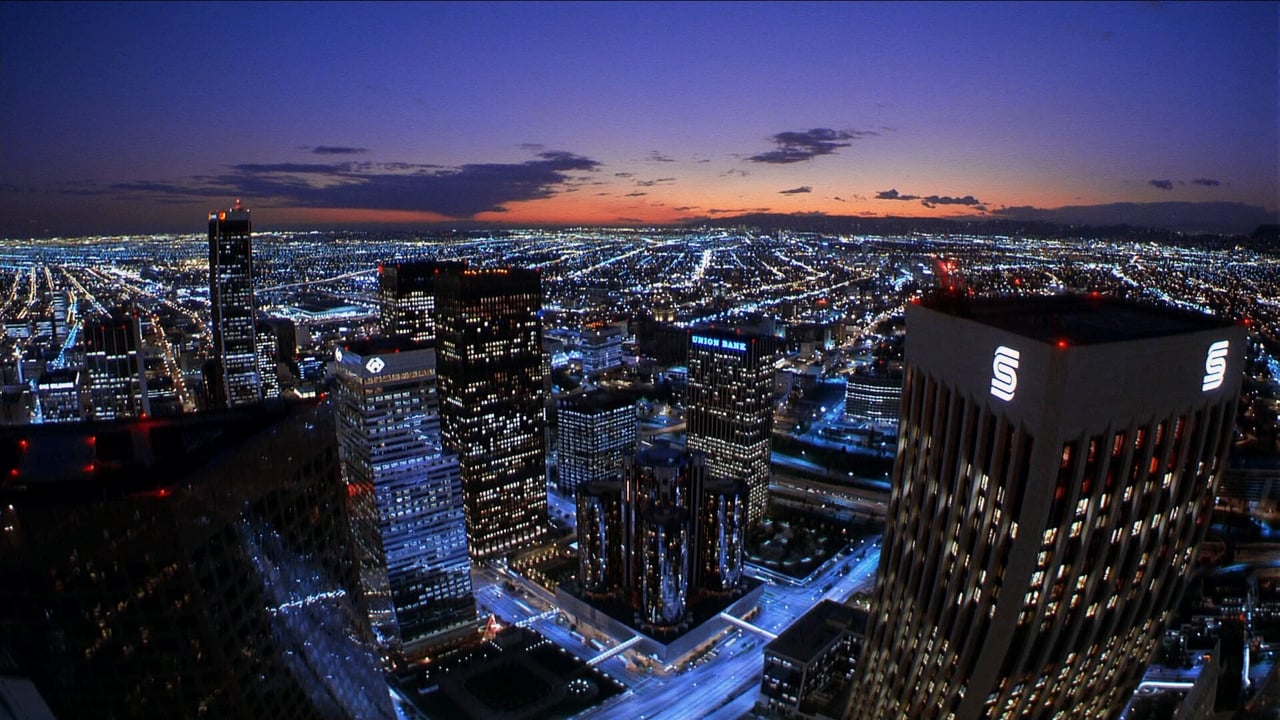
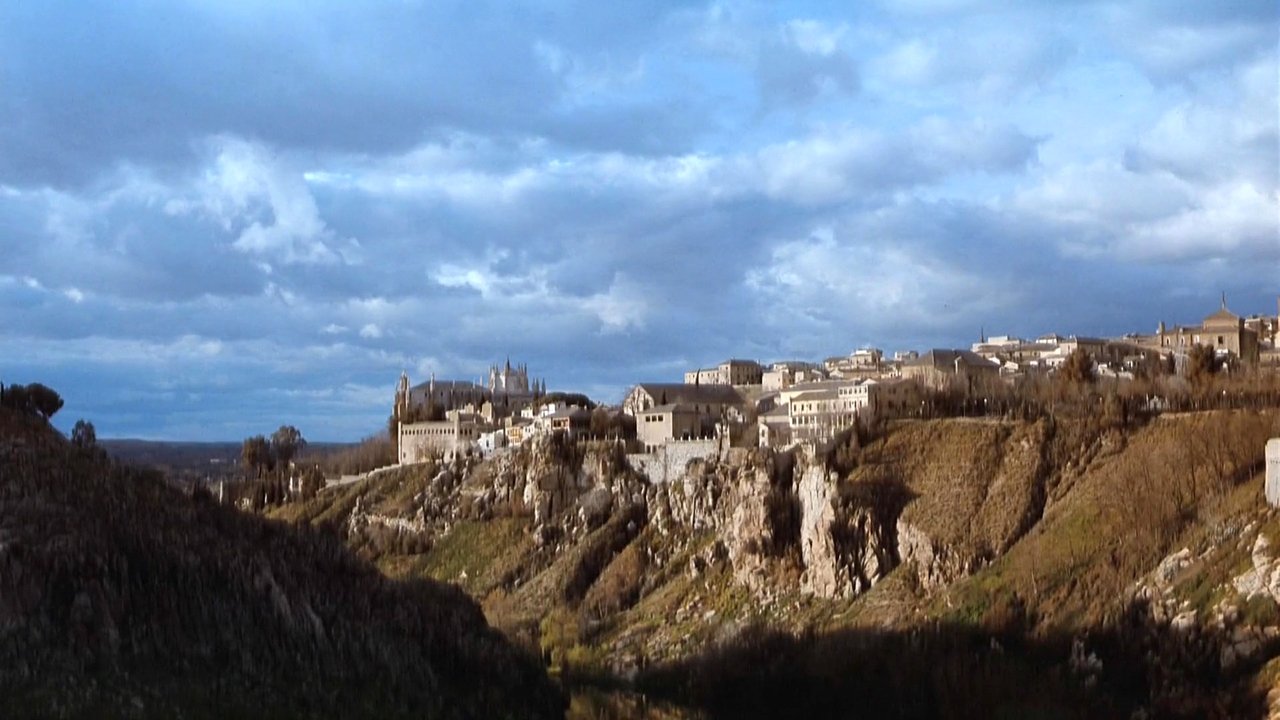
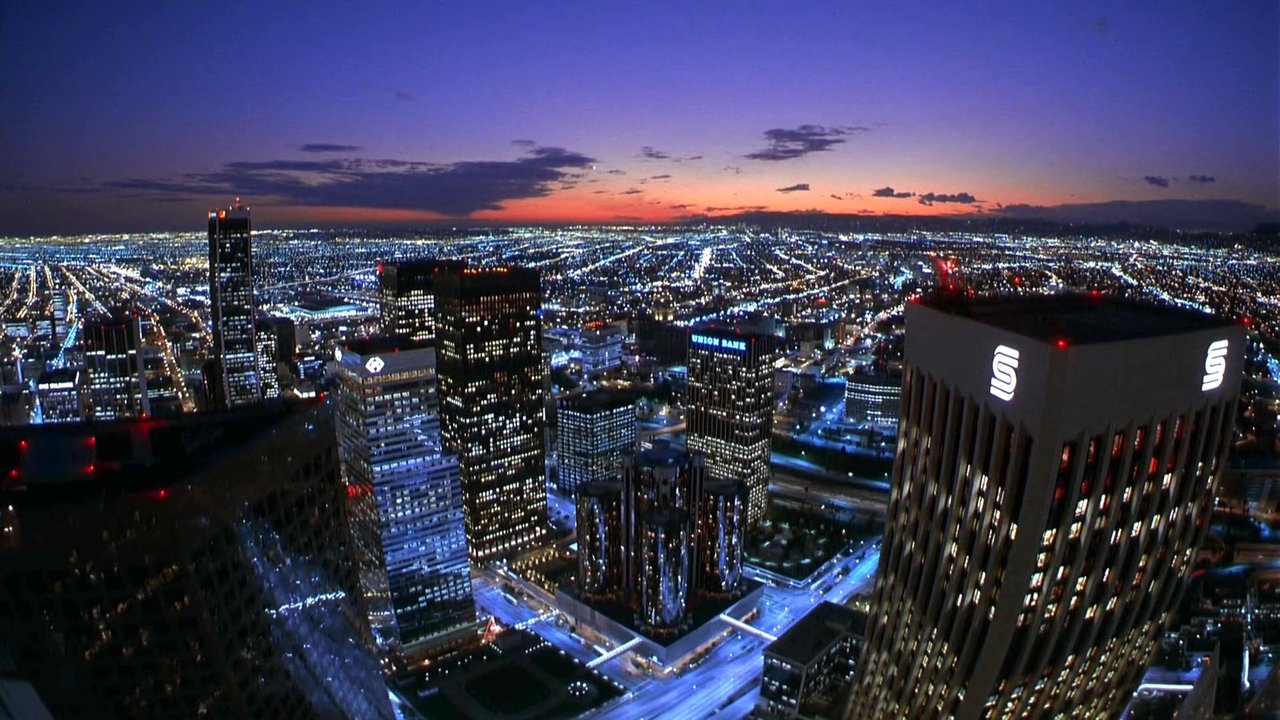
Coming just a few years after his groundbreaking cinematography work on Godfrey Reggio's Koyaanisqatsi (1982), Chronos feels like Fricke stepping fully into his own distinct vision. Where Koyaanisqatsi often felt like a frantic, sometimes critical, look at humanity's collision with nature and technology, Chronos adopts a more serene, observational stance. It invites contemplation rather than confrontation. Using pioneering time-lapse techniques, Fricke takes us on a journey from the geological deep time of the Grand Canyon to the enduring stones of ancient Egypt and Rome, flowing seamlessly into the kinetic energy of modern metropolises like Paris and Los Angeles.
### The Clockwork Camera
The technical achievement here, especially viewed through the lens of 1985, is staggering. To achieve the film's signature fluid motion time-lapse – clouds boiling over landscapes, shadows racing across monuments, rivers of headlights flowing through city canyons – Fricke employed custom-built camera rigs. These weren't off-the-shelf items; they were bespoke contraptions designed to execute incredibly precise, slow movements over hours, sometimes days, capturing single frames at intervals. Remember, this was long before digital workflows made such things relatively commonplace. This was meticulous, analogue craftsmanship, wrestling with bulky equipment in challenging locations across the globe, from the Vatican to Monument Valley.
One fascinating detail often overlooked is that Chronos was specifically conceived and shot for the IMAX format, presented on massive 70mm film prints. Seeing it projected in that intended scale was reportedly overwhelming, a truly immersive bath of light and motion. Of course, most of us first encountered its magic on a decidedly smaller canvas – the humble CRT television via a well-worn VHS tape. Did the grandeur translate perfectly? Perhaps not entirely. The sheer scale was inevitably reduced. Yet, something of its hypnotic power remained. The pulsing visuals, the sense of accelerated reality, still drew you in, transforming your living room into a quiet space for reflection. There was a unique intimacy to experiencing such a vast vision on a small screen, like peering through a keyhole into eternity.
### The Sound of Ages Passing
Crucial to the film's immersive quality is the electronic score by Michael Stearns. It’s not just background music; it’s the film’s heartbeat, its atmosphere made audible. Stearns, who also contributed to Fricke's later works, crafts synthesizer soundscapes that perfectly complement the visuals – sometimes soaring and majestic, sometimes pulsing with urban energy, often deeply meditative. The score doesn't dictate emotion but rather enhances the viewer's own response to the images, creating a symbiotic relationship between sight and sound that defines the Chronos experience. It’s a score that washes over you, integral to the film's trance-like effect. I remember letting the tape run late at night, the combination of Stearns' ambient textures and Fricke's flowing visuals feeling almost like a guided meditation beamed directly from the VCR.
### A Different Kind of Rewind
Chronos isn't a film with standout performances in the traditional sense, obviously. There are no actors, no dialogue. The 'performance' belongs to the patient eye of Fricke's camera, the meticulous editing that finds rhythm and connection across disparate locations, and Stearns' evocative score. It stands as a testament to the power of pure cinema, the ability to communicate profound ideas and evoke deep feeling through image and sound alone.
It paved the way for Fricke's later, perhaps more widely known, masterpieces like Baraka (1992) and Samsara (2011), further refining this unique form of non-verbal, globally-minded filmmaking. While those later films expanded the scope and budget, Chronos retains a certain purity, a focused intensity born from its relatively tighter runtime and its pioneering spirit. It was a bold statement in the mid-80s home video market, a visual poem slipped in amongst the action blockbusters and horror flicks.
***
Rating: 9/10
Justification: Chronos earns this high score not as a conventional narrative film, but as a breathtaking technical achievement and a profoundly moving piece of visual art. Its pioneering time-lapse cinematography, conceived for the grand scale of IMAX, remains stunning even on smaller screens. Coupled with Michael Stearns' perfectly attuned score, it creates a unique, meditative experience that transcends language and plot. While its lack of traditional structure might not appeal to everyone, its sheer artistry and the unique contemplative space it offers make it a landmark of experimental documentary filmmaking from the era. It pushes the boundaries of what cinema can be.
Final Thought: Decades after its release, Chronos still has the power to stop you in your tracks, reminding us of the beauty and fragility of our world, and the relentless, humbling passage of time. It’s a tape worth seeking out, not for thrills, but for a rare moment of cinematic transcendence.