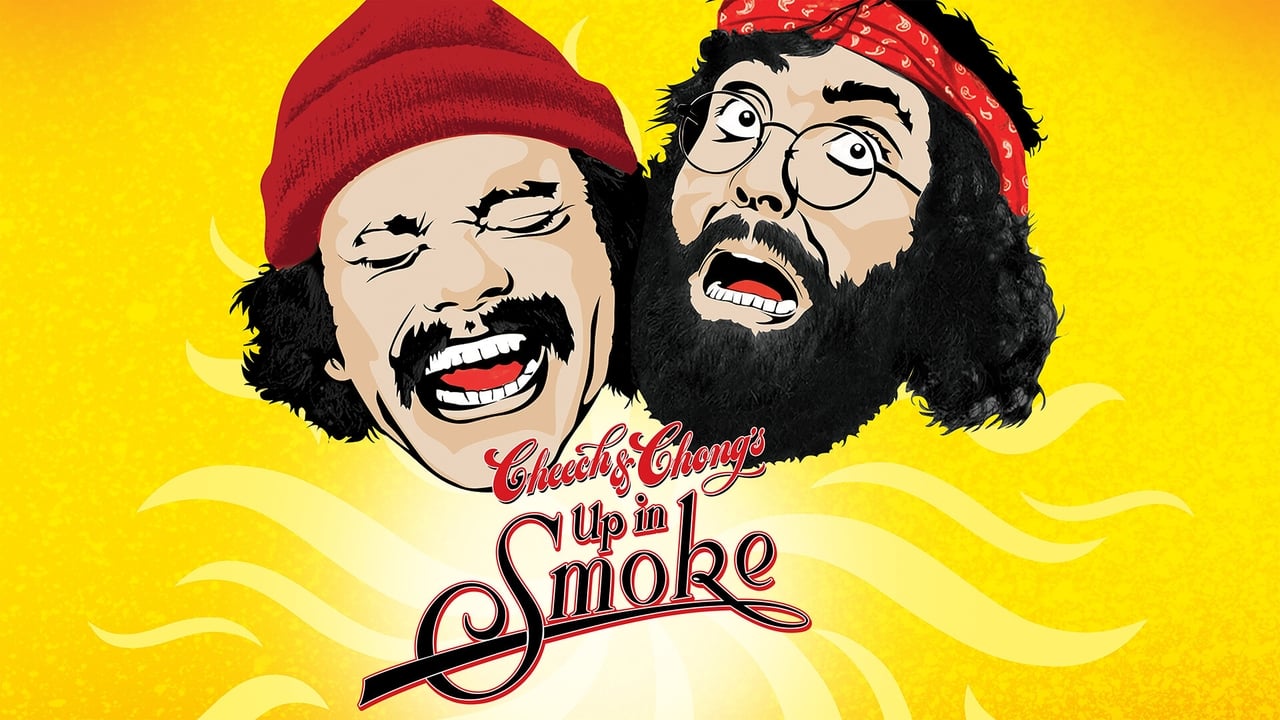
Alright, fellow tapeheads, dim the lights, maybe crack open a beverage of your choice (we won't ask), and let's rewind to a time when counter-culture comedy wasn't just niche, it was practically broadcast from another planet. I'm talking about the hazy, hilarious, and utterly iconic Up in Smoke (1978), the film that didn't just feature Cheech & Chong, it unleashed them onto the big screen. Finding this gem on a grainy VHS back in the day felt like uncovering forbidden knowledge, a secret handshake shared between those who understood its gleefully anarchic spirit.
### Birth of the Buddies
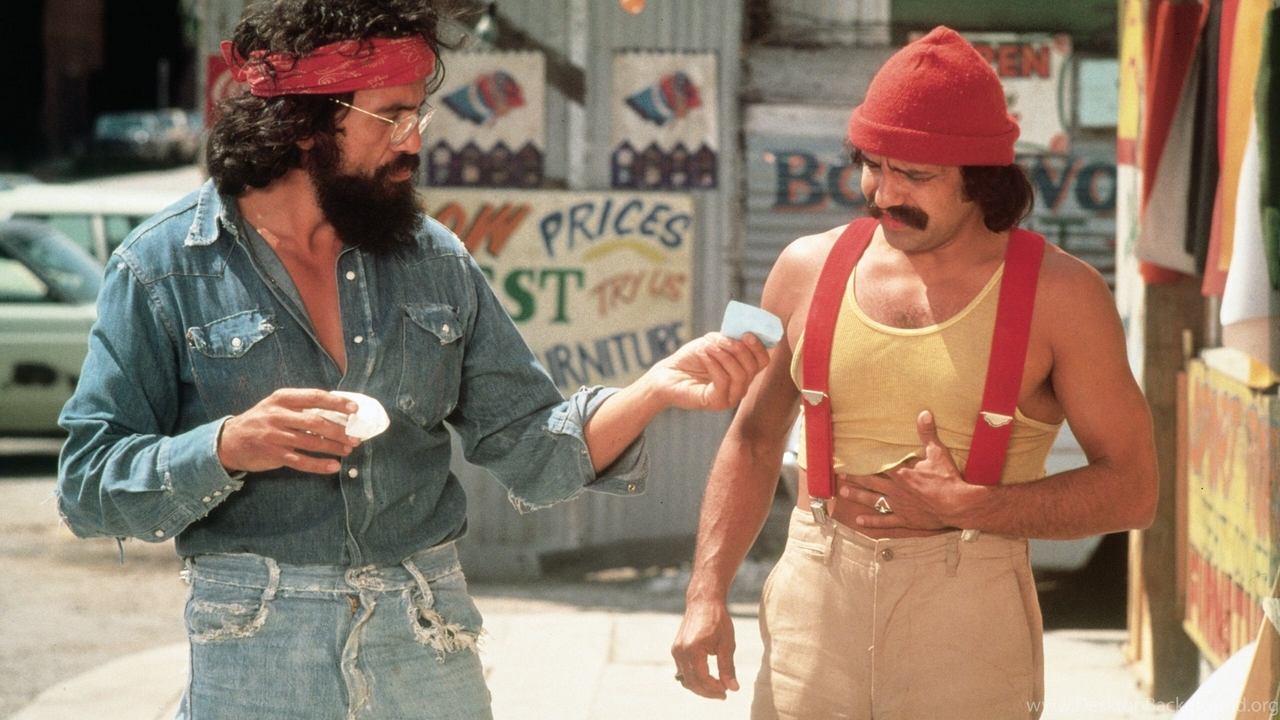
Before Cheech Marin and Tommy Chong became accidental drug mules in their film debut, they were already counter-culture comedy legends, honing their distinct personas – Cheech the hyperactive, vaguely streetwise Chicano, Chong the perpetually mellow, slow-drifting hippie – through years of popular comedy albums and stand-up. Up in Smoke wasn't some studio concoction; it felt ripped directly from their routines, loose and rambling, held together by sheer charisma and copious amounts of… well, smoke. This authenticity is key. It’s fascinating to think this landmark stoner comedy, which practically invented a film genre, was directed by Lou Adler, the legendary music producer behind acts like The Mamas & the Papas and Carole King. Talk about range! Adler, making his directorial debut, wisely lets his stars do their thing, capturing their improvisational energy without too much cinematic fuss.
### A Road Trip Paved with Good Intentions (and Fiberweed)
The plot, such as it is, follows Pedro De Pacas (Cheech Marin) and Anthony "Man" Stoner (Tommy Chong) through a series of misadventures after Man gets kicked out by his wealthy, uptight parents (played brilliantly by comedy veteran Edie Adams and the legendary Strother Martin, instantly recognizable from Cool Hand Luke). Their paths cross, they search for weed, get accidentally deported to Tijuana, and end up agreeing to drive a suspicious-looking van back to Los Angeles. What they don't realize is the van is constructed almost entirely out of "fiberweed" (marijuana). Cue run-ins with incompetent cops led by the hilariously stressed Sgt. Stedenko (Stacy Keach, playing it perfectly straight), and a desperate race to make it to a Battle of the Bands contest at the Roxy Theatre. Fun fact: Lou Adler actually owned the Roxy at the time, making that chaotic climax feel even more grounded in a specific slice of LA rock history.
### That Van is Practically a Character
Let's talk about that van. The aptly named "Fiberweed" van, lurching down highways leaving a trail of perplexed followers in its wake, is as iconic as the duo themselves. It's a masterpiece of low-budget production design, a rolling sight gag that perfectly encapsulates the film's blend of absurdity and surprisingly grounded grit. Forget sleek CGI vehicles; this thing looked like it might genuinely fall apart, adding a layer of tangible, almost documentary-style reality to the madness. The film embraces its low-budget roots – a reported $2 million budget, which makes its staggering $44 million box office haul (that’s like $170 million today!) even more impressive. Critics at the time mostly scratched their heads or clutched their pearls, but audiences got it, turning it into a massive, word-of-mouth phenomenon. Remember how raw and unfiltered LA looked in films from this era? Up in Smoke captures that perfectly, filming on real streets, embracing the smog and the slightly seedy atmosphere. It feels real in a way many modern comedies don't dare to.

### Low-Brow, High Laughs
Sure, the humor is often juvenile, relying heavily on drug jokes, misunderstandings, and bodily functions. But there's an undeniable charm and infectious energy to Cheech and Chong's interplay. Their timing is impeccable, honed over years on stage. Even seemingly throwaway lines become quotable ("Dave's not here, man!"). The supporting cast, including a memorable early role for Tom Skerritt as Man's PTSD-suffering cousin Strawberry, adds to the general chaos. The film isn't trying to be high art; it's aiming for gut laughs and a celebration of sticking it to the man, even if accidentally. And who could forget the climactic performance of "Earache My Eye," a blast of punk rock energy that perfectly caps off the absurdity?
The raw, unpolished feel is part of the appeal, especially viewed through the nostalgic lens of VHS. The slightly fuzzy picture, the mono sound – it all adds to the experience of watching something that felt delightfully dangerous and different back then. It wasn't trying to be slick; it was just trying to be funny, and on that level, it succeeded brilliantly.
VHS Heaven Rating: 8/10
Justification: Up in Smoke isn't sophisticated, and parts haven't aged perfectly, but its historical significance as the progenitor of the stoner comedy genre is undeniable. The chemistry between Cheech and Chong is legendary, the laughs are frequent (if often low-brow), and its sheer, unpretentious energy remains infectious. It captured a specific cultural moment with surprising authenticity, all while delivering quotable lines and that unforgettable van. The massive box office success against its low budget proved audiences were hungry for this kind of anarchic comedy.
Final Hit: A landmark piece of counter-culture cinema that rolled onto screens with the subtlety of a giant rolling paper, Up in Smoke remains a hazy, hilarious artifact that's still surprisingly potent, man.