Okay, fellow tape travelers, let’s rewind to a corner of the video store that often held the truly weird and wonderful. Forget the big Hollywood blockbusters for a moment. Remember stumbling across a cover, maybe slightly sun-faded, featuring a wild-haired man-ape awkwardly holding hands with a stunningly elegant woman, against a backdrop that screamed ‘early 80s Italy’? If that sparks a flicker, you might have encountered the utterly bizarre, strangely charming artifact known as Bingo Bongo (1982). This wasn’t your typical rental, oh no. This was the kind of discovery that made you whisper, "What is this?" before gleefully taking it home.

### King Kong Meets Milan Fashion Week
The premise alone is pure, uncut European cinematic eccentricity. Researchers discover a man (Adriano Celentano) raised by chimpanzees in the Congo. Dubbed "Bingo Bongo," he's brought back to Milan for study, placed under the care of the beautiful, initially detached anthropologist Laura (Carole Bouquet). What follows is a fish-out-of-water story cranked up to eleven, filtered through a distinctly Italian lens. Forget Tarzan’s stoic nobility; Bingo Bongo is a force of primal chaos unleashed upon polite society, communicating through grunts, gestures, and an uncanny ability to mimic sounds.
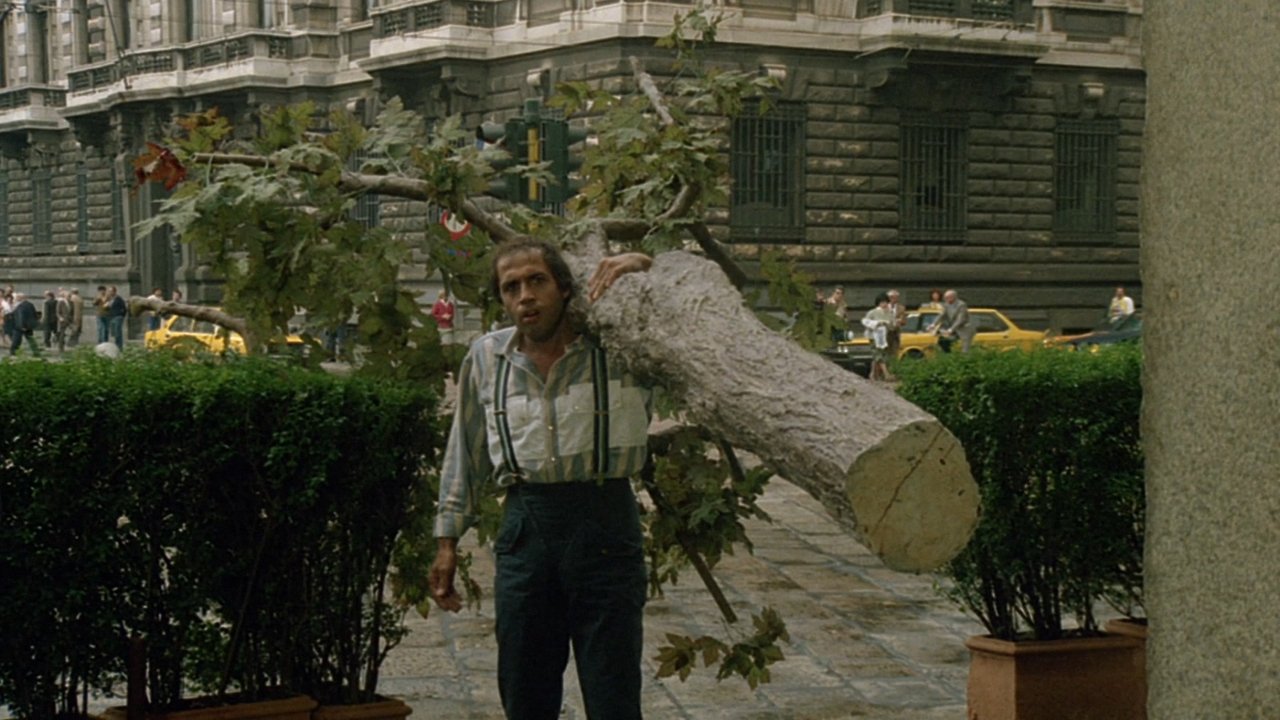
At the heart of this delightful madness is Adriano Celentano. Now, for those unfamiliar, Celentano wasn't just an actor in Italy; he was (and remains) a cultural phenomenon – a wildly popular singer, comedian, television host, and all-around icon known for his distinctive, sometimes elastic-limbed performance style and gravelly voice. Think maybe Elvis meets Jacques Tati, but entirely his own unique thing. Bingo Bongo is practically a showcase for his peculiar charisma. He throws himself into the physical comedy with gusto, whether attempting to eat spaghetti with his hands (a truly memorable scene), navigating traffic, or reacting to the baffling technology of the modern world. It's a performance that relies entirely on presence and physicality, and honestly, it’s mesmerizing in its strangeness. A Retro Fun Fact: Celentano often had significant creative input on his films, sometimes leading to legendary clashes with directors, ensuring his unique vision (and persona) remained front and center.
### Beauty and the Primate
Playing opposite Celentano’s whirlwind is Carole Bouquet, radiating effortless chic even when dealing with a man trying to peel her clothes like a banana. Fresh off her role as Melina Havelock in the Bond film For Your Eyes Only (1981), Bouquet brings a necessary grounding presence. Her character, Laura, gradually softens towards Bingo Bongo, moving from scientific observer to genuine protector and friend. Their dynamic is surprisingly sweet amidst the slapstick, forming the film's emotional, if somewhat unconventional, core. The supporting cast, including Felice Andreasi as Professor Fortis, mostly serves to react to Bingo Bongo's antics, underscoring the absurdity of trying to fit this force of nature into a civilized box.
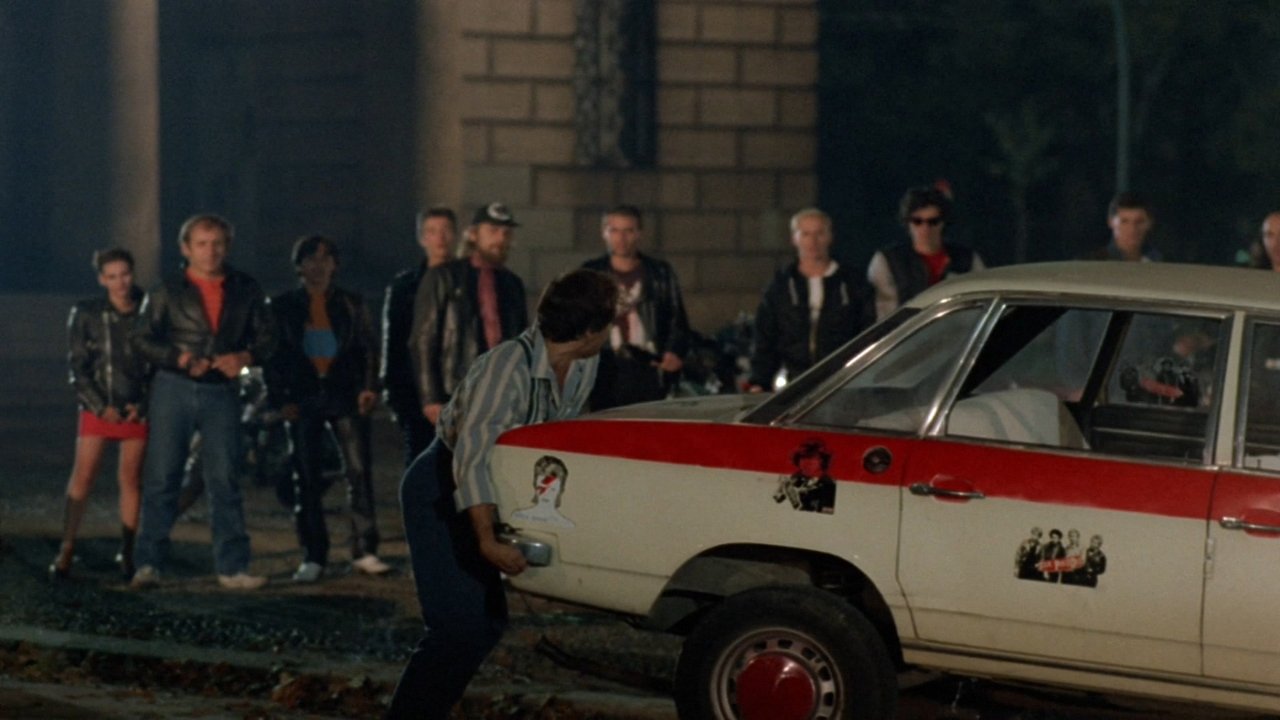
The director, Pasquale Festa Campanile, was a prolific filmmaker in Italy, known for a wide range of comedies and dramas, perhaps less famous internationally but a steady hand behind the camera. Here, he lets Celentano run wild while capturing the specific look and feel of early 80s Milan – the fashion, the architecture, the burgeoning consumer culture that Bingo Bongo finds so bewildering. Retro Fun Fact: Filmed on location, the movie offers a great time capsule glimpse of Milan just as it was solidifying its status as a global fashion capital.
### More Than Just Monkey Business?
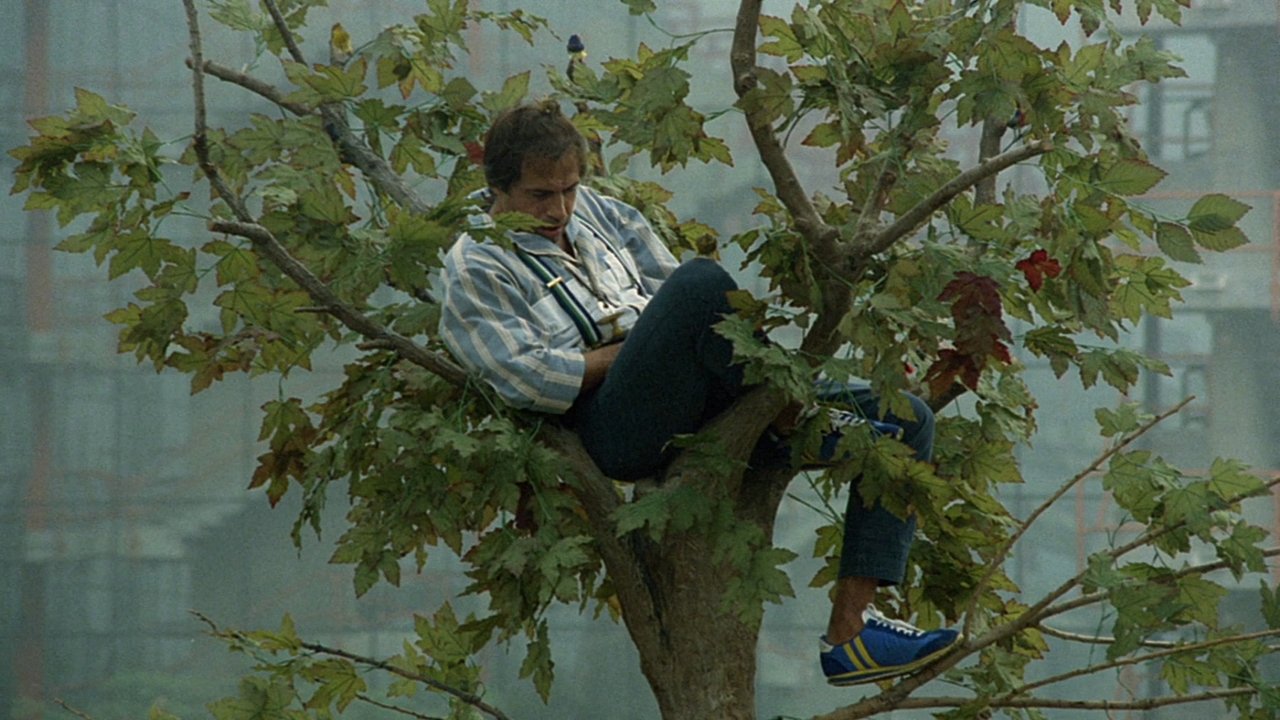
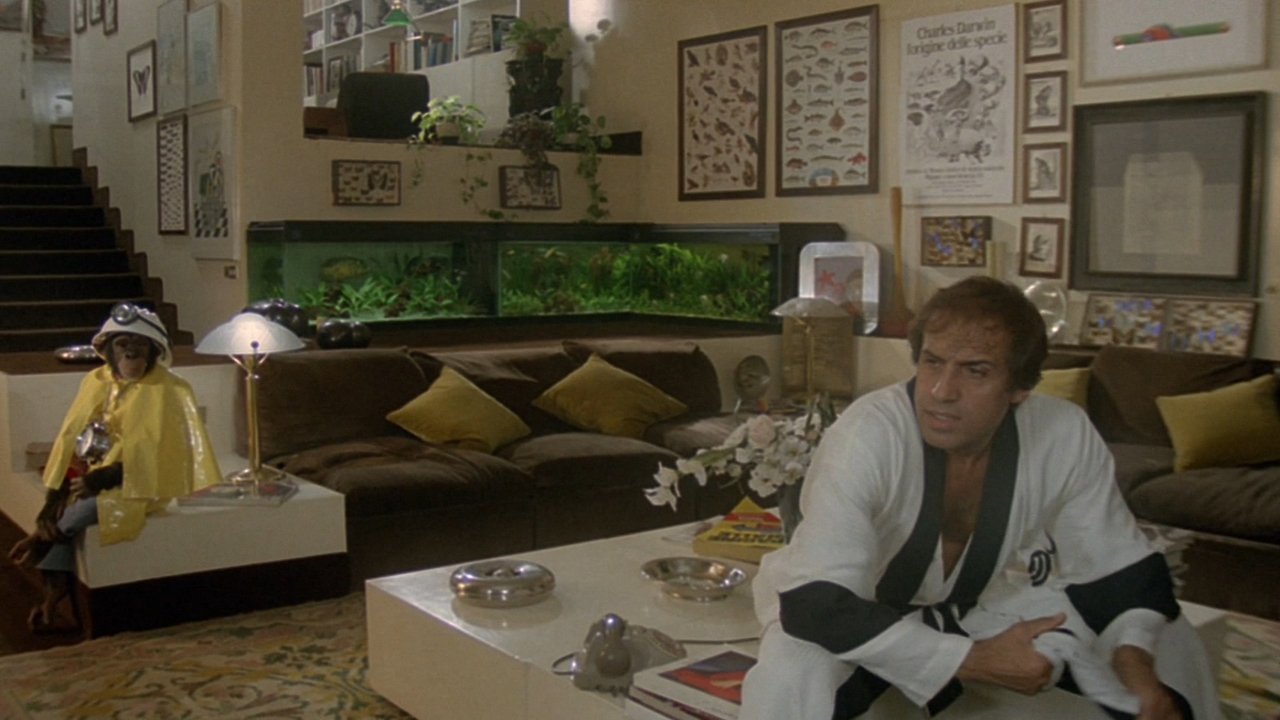
While primarily a comedy driven by Celentano's antics, Bingo Bongo does develop a slightly unexpected environmental and animal rights theme in its latter half. Bingo Bongo reveals an ability to communicate with animals, becoming a sort of interspecies ambassador trying to warn humanity about pollution and ecological disaster. It's handled with the same light, somewhat goofy touch as the rest of the film, but it adds another layer to its charming oddity. This wasn't Gorillas in the Mist; it was more like Dr. Dolittle by way of Italian pop cinema.
The film doesn’t boast explosive action or groundbreaking practical effects in the traditional sense, but the physical comedy is the spectacle. Celentano’s commitment to the role, his way of moving and reacting, feels very much of its time – raw, unpolished, and reliant on the performer's sheer nerve rather than digital trickery. You watched it knowing he was doing those strange movements, embodying that character completely. Retro Fun Fact: The film was a significant hit in Italy, leveraging Celentano's massive star power, though its international reach remained more cultish, precisely the kind of gem you'd find nestled in the foreign films section of a well-stocked VHS haven.
### Finding the Charm in the Chaos
Bingo Bongo is undeniably dated in places. Some gags land better than others, and the plot takes some truly bizarre turns. Yet, watching it again after all these years, I was struck by its sheer, unadulterated weirdness and, yes, its charm. It’s a film completely unafraid to be silly, driven by a unique star performance that simply wouldn't exist today. It captures that feeling of discovering something truly unexpected on VHS – maybe not a masterpiece, but a memorable curio you couldn't help but talk about. I remember renting this from a tiny local store with a hand-written label; it felt like uncovering a secret.
Rating: 6/10
Justification: The rating reflects the film's undeniable status as a cult oddity rather than a conventional classic. It earns points for Adriano Celentano's truly unique and committed performance, its sheer originality (however bizarre), Carole Bouquet's charm, and its specific early 80s Italian vibe. It loses points for uneven pacing, some dated humor, and a plot that occasionally feels stitched together. It's not high art, but it's memorable and entertaining in its own peculiar way, especially for fans of Euro-cult or Celentano himself.
Final Thought: Bingo Bongo is a perfect example of the delightful strangeness lurking on those beloved VHS shelves – a reminder that sometimes, the most memorable movie nights came from the tapes you picked up purely out of bewildered curiosity. Utterly bonkers, undeniably Italian, and strangely endearing.