The silhouette of the island against the churning grey water is an image that burns itself into your memory long after the tape stops rolling. Alcatraz. The Rock. A place designed not just to hold men, but to break their spirit, to convince them that the world outside simply ceased to exist. Watching Don Siegel's 1979 masterclass in tension, Escape from Alcatraz, on a flickering CRT felt less like watching a movie and more like being smuggled inside those grim, echoing walls yourself. There's a damp chill to this film, a palpable sense of confinement that seeps right off the screen.
Inside the Inescapable
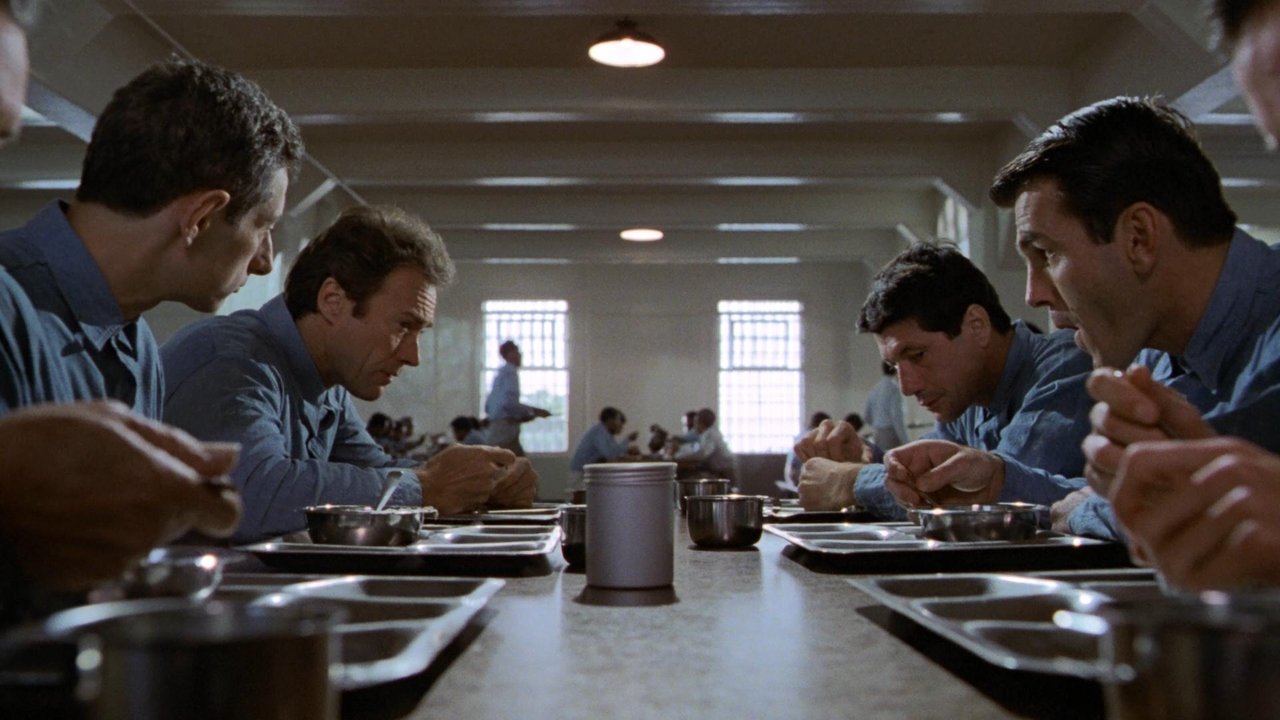
The premise is starkly simple, rooted in the unsettling ambiguity of a true story: Frank Morris (Clint Eastwood), a man known for his high intelligence and previous escapes, arrives at the supposedly escape-proof federal penitentiary. From the moment he steps off the boat, the film establishes its rhythm – deliberate, observational, almost procedural. We see the dehumanizing routine, the petty tyrannies of the guards, the constant surveillance. Siegel, reuniting with Eastwood for their fifth and final collaboration after defining gritty crime cinema with films like Dirty Harry (1971), strips away any Hollywood glamour. There are no soaring speeches or dramatic confrontations in the early acts; instead, the tension builds through silence, through the clanging of steel doors, through the meticulous depiction of prison life where a single misstep means oblivion in the solitary confinement block known simply as 'D-Block'.
Quiet Defiance, Chilling Authority

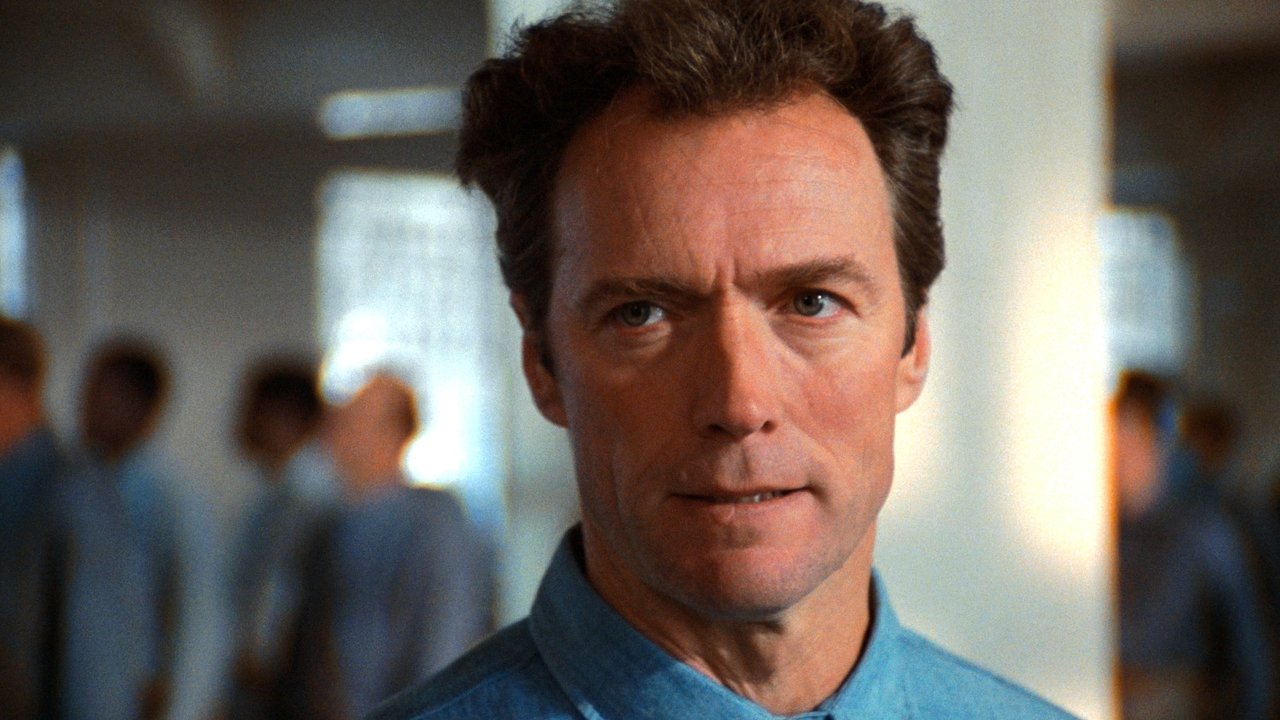
This film belongs to Clint Eastwood. His Frank Morris is a marvel of minimalist acting. Morris isn't a charismatic rogue; he's watchful, calculating, internalizing everything. Eastwood conveys Morris's intelligence and unwavering determination through little more than the set of his jaw, a flicker in his eyes, the deliberate way he observes his surroundings. It’s a performance that forces you to lean in, to decipher the thoughts behind that impassive facade. What makes his character so compelling isn't explosive action, but the sheer force of his quiet will against an overwhelming system.
Contrast this beautifully with Patrick McGoohan's chilling portrayal of the Warden. McGoohan, forever iconic as Number Six in The Prisoner, brings a different kind of confinement expertise here. His Warden isn't a mustache-twirling villain; he's worse – a creature of cold, detached bureaucracy, utterly convinced of his own righteousness and the prison's infallibility. His pronouncements ("Alcatraz was built to keep all the rotten eggs in one basket") land with icy finality. The supporting cast is equally strong, particularly Roberts Blossom as Doc, the gentle inmate who finds solace in painting, offering a heartbreaking glimpse of the humanity trying to survive within the stone walls. His quiet tragedy underscores the crushing weight of the institution.
Crafting Authenticity: Behind the Bars
What truly elevates Escape from Alcatraz is its commitment to realism, a hallmark of Don Siegel's directorial style. The film was famously shot on location at the actual, decommissioned Alcatraz prison. This wasn't just for set dressing; the real environment permeates every frame. You feel the cold, the dampness, the history echoing in those cell blocks. You can almost imagine the crew navigating the logistical hurdles of filming in such a dilapidated, forbidding place. This choice lends an unparalleled authenticity; the peeling paint, the rusted bars – it's all tangibly real. Eastwood, known for his physicality, reportedly endured the intensely cold San Francisco Bay water sequences himself, adding another layer of verisimilitude to Morris’s daring plan.
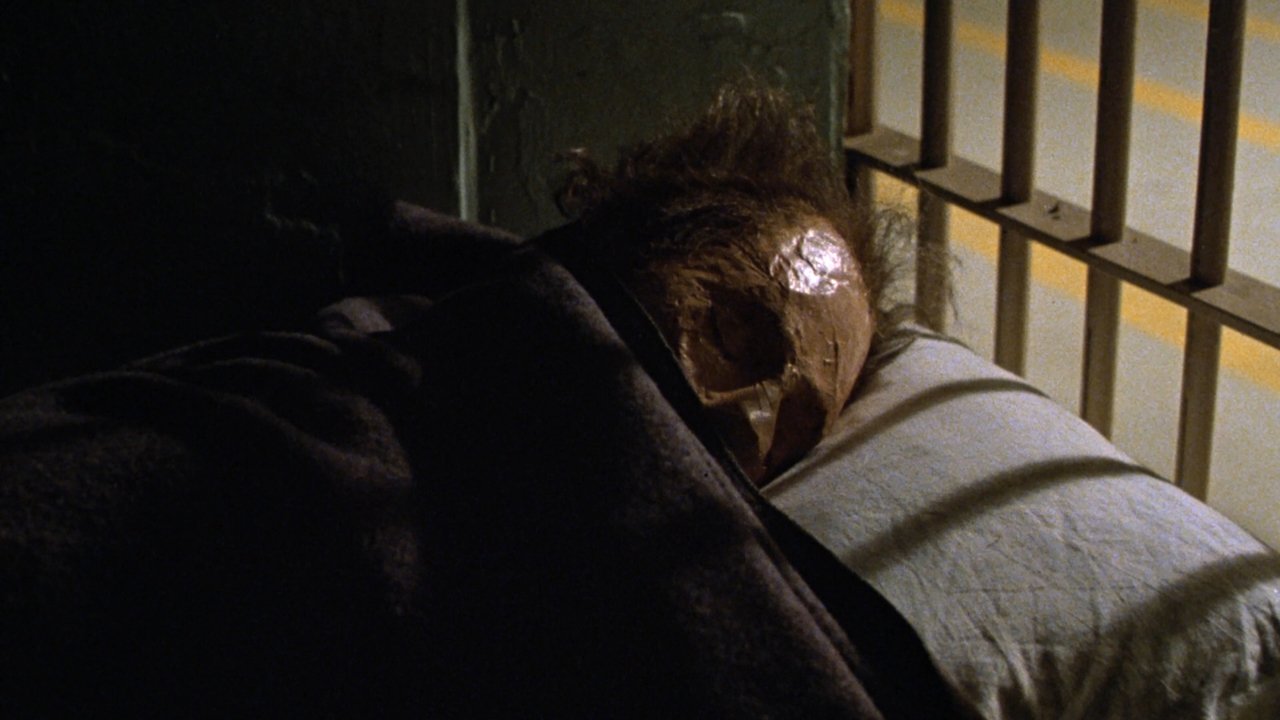
The screenplay by Richard Tuggle, incredibly based on his Master's thesis which meticulously adapted J. Campbell Bruce's book, focuses intently on the how. The lengthy middle section details the ingenious, painstaking process of the escape – the chipping away at concrete with sharpened spoons, the crafting of dummy heads from soap and toilet paper, the assembling of makeshift rafts. Siegel films these sequences with a documentarian's eye, building suspense not through frantic editing or a pounding score (indeed, the film often uses silence to powerful effect), but through the sheer audacity and methodical patience of the inmates' work. It taps into that primal fascination with process, with seeing a complex plan come together piece by painstaking piece.
Interestingly, while the core escape narrative sticks close to the known facts and the Bruce book, McGoohan's Warden character is largely a composite, created to embody the institutional authority Morris defies. The film's budget was a relatively modest $8 million, but it became a significant box office success, pulling in over $43 million domestically – proving audiences were captivated by this grounded, tense thriller (that's roughly $170 million in today's money, a solid hit!).
The Lingering Question
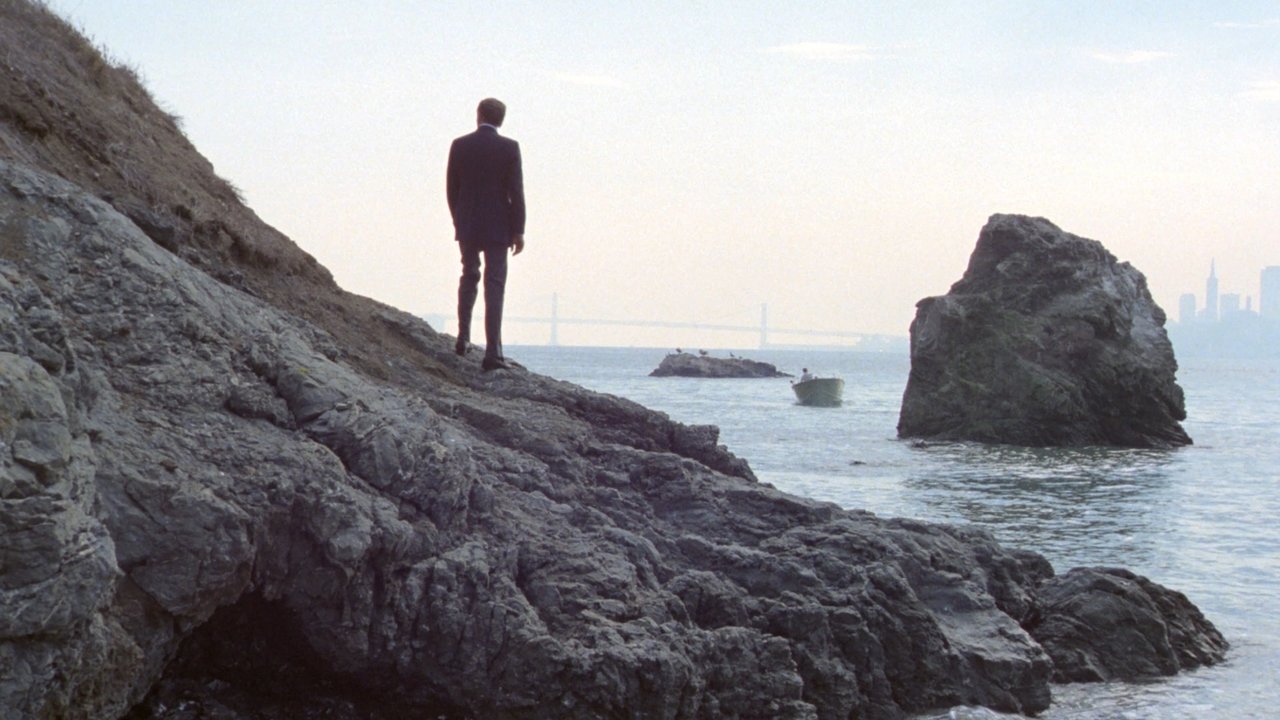
Escape from Alcatraz doesn't offer easy answers. Its power lies partly in its ambiguity, mirroring the real-life mystery surrounding the fates of Frank Morris and the Anglin brothers (played here by Fred Ward and Jack Thibeau). Did they make it across the treacherous waters to Angel Island, or did the frigid currents claim them? Siegel and Eastwood wisely refused to provide a definitive answer, leaving the audience suspended in the same uncertainty that lingers to this day. It forces us to ponder the nature of freedom and the extraordinary lengths people will go to reclaim it. What does it truly mean to escape? Is it merely breaching the walls, or is it something more profound?
This film stands as a testament to lean, efficient storytelling. It’s a 70s thriller that feels refreshingly devoid of melodrama, relying instead on atmosphere, procedural detail, and powerful, understated performances. It’s the kind of movie that might have been a staple on the shelves of your local video store, its stark cover art promising a gritty, compelling experience – a promise it thoroughly delivers.
Rating: 8/10
Escape from Alcatraz earns its high marks through its masterful control of tension, its unwavering commitment to realism amplified by the authentic location shooting, and Clint Eastwood's iconic embodiment of quiet, determined intelligence against overwhelming odds. The procedural detail is gripping, and Don Siegel's direction is perfectly pitched. While perhaps lacking the emotional fireworks of other prison dramas, its strength lies in its grounded, almost documentary-like approach.
It's a film that stays with you, not because of explosions or grand gestures, but because of the chilling atmosphere and that final, haunting shot looking back at the impenetrable island, leaving you forever wondering about the fate of those who dared to challenge the Rock.