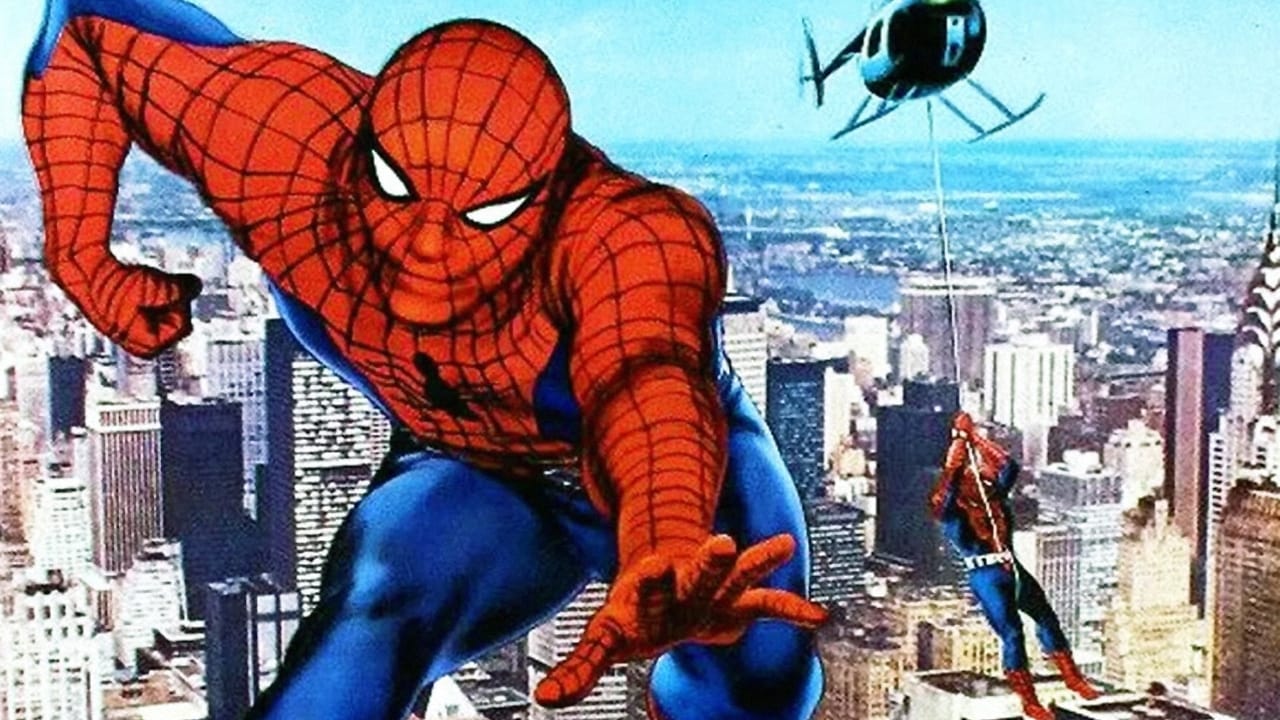
Alright, fellow tape-heads, let’s rewind to a time when superheroes on screen felt a little more… grounded. Literally. Before the web-slinging acrobatics became seamless CGI spectacles, there was a certain friendly neighborhood Spider-Man swinging onto our TV screens (and sometimes, confusingly, into overseas cinemas). I'm talking about the era of Nicholas Hammond's Peter Parker, and specifically, the 1978 feature-length curiosity known as Spider-Man Strikes Back. Finding this on a dusty VHS shelf back in the day often felt like unearthing a slightly mysterious chapter of Spidey history. Was it a lost movie? A sequel? The truth, like Spidey himself sometimes, was clinging to the walls of network television.
### Not Quite a Movie, But Definitely an Adventure
Here’s the fascinating bit that explains why Spider-Man Strikes Back feels a little… episodic. It was episodes! Specifically, it's the two-part story "The Deadly Dust" from the The Amazing Spider-Man TV series (which ran from 1977-1979), cleverly stitched together by Columbia Pictures for a theatrical release outside the United States. For those of us stateside, it often arrived later on home video, adding to its slightly enigmatic aura. This origin explains the pacing, which can feel more like television than a cohesive film – understandable, given it was crafted by director Ron Satlof and writer Robert Janes (working from the immortal blueprint laid down by Stan Lee) for commercial breaks and weekly installments.
The plot itself is pure Cold War-era intrigue mixed with campus life. Peter Parker, juggling his job at the Daily Bugle under the perpetually exasperated J. Jonah Jameson (played with reliable gruffness by Robert F. Simon) and his studies at Empire State University, stumbles onto a scheme involving stolen plutonium. Some fellow students decide to build an atomic bomb as a protest statement (ah, the 70s!), while a shadowy European industrialist has his own nefarious plans for the radioactive material. Naturally, it’s up to Spider-Man to track down the plutonium before it falls into the wrong hands or, you know, explodes over New York City. No pressure.
### Web-Slinging on a Budget
Let's talk about the webs and the walls, shall we? This iteration of Spider-Man is famous – or perhaps infamous – for its decidedly low-fi special effects. Forget kinetic, physics-defying swings through Manhattan canyons. Here, Spidey’s web-shooters often dispense something resembling thick, ropey netting, usually aimed conveniently off-screen or at stationary objects. And the wall-crawling? It’s a combination of clever camera angles, visible wires (if you squinted just right on your CRT!), and Nicholas Hammond gamely hoisting himself up specially constructed sets.
But here’s the thing: watching it back then, especially as a kid just thrilled to see any live-action Spider-Man, it felt… kind of amazing. There was a tangible quality to it. You could almost imagine the rigging involved. Director Ron Satlof had to get creative, focusing more on suspense and Parker’s detective work than on elaborate action sequences the budget simply couldn't support. The series famously lacked the colourful supervillains from the comics due to licensing costs and perhaps a desire for more "realistic" threats, pitting Spidey against spies, thugs, and rogue scientists instead of Doctor Octopus or the Green Goblin. It gives the whole affair a unique, almost street-level crime drama feel, punctuated by occasional web-slinging and wall-scaling.
### Parker, Peter Parker
Nicholas Hammond brought a certain earnestness and likeability to Peter Parker. He convincingly portrayed the character's intelligence, social awkwardness, and underlying sense of responsibility. While the scripts didn't always give him the quippy, fast-talking Spidey we often expect, Hammond’s Peter felt relatable – a genuinely good guy burdened by his secret identity. Supporting players like Robert F. Simon as Jameson and Chip Fields as Bugle secretary Rita Conway added to the show’s grounded atmosphere. You felt the world Parker inhabited, even if it was a slightly muted version compared to the vibrant chaos of the comic panels.
### Retro Fun Facts: The Making of a TV Movie
The story behind Spider-Man Strikes Back is a great example of resourceful TV production and international marketing. Editing two episodes together ("The Deadly Dust" Parts 1 & 2) wasn't just a cost-effective way to create a "movie" for foreign markets; it was a strategy employed multiple times with the series. The 1977 pilot film was also released theatrically overseas, as was the series finale two-parter, retitled Spider-Man: The Dragon's Challenge (1981). These releases often performed respectably abroad, proving the global appeal of the character even in this more modest incarnation. It’s a fascinating case study in maximizing content value across different platforms and regions – something studios are masters of today, but quite novel back then. Imagine the surprise of audiences in Europe seeing this on the big screen while American viewers were catching it between commercials!
### Still Worth a Spin?
Watching Spider-Man Strikes Back today is undeniably a trip back in time. The pacing is deliberate, the action sequences are charmingly constrained, and the plot reflects the specific anxieties and tropes of its late-70s origin. Yet, there’s an undeniable warmth and sincerity to it. It represents a time before superhero filmmaking became a multi-billion dollar industry, when just seeing a beloved character come to life, however imperfectly, felt like a minor miracle pulled from the pages of a comic book. It captures a certain innocence, a focus on the man behind the mask trying to do the right thing against relatable, if sometimes mundane, odds. For fans who remember squinting at fuzzy TV screens or excitedly grabbing that chunky VHS tape from the rental store shelf, it holds a special, nostalgic charm. I distinctly recall renting this one, sandwiched between bigger, louder blockbusters, and feeling like I'd discovered a hidden gem.
Rating: 5/10
Justification: Spider-Man Strikes Back earns its score primarily through nostalgia and historical significance. It’s a fascinating time capsule of early live-action superhero television, boasting an earnest performance from Nicholas Hammond and showcasing resourceful, if dated, practical effects. However, its stitched-together nature from TV episodes results in uneven pacing, and the action lacks the dynamism modern audiences expect. It's definitely flawed and requires patience, but for fans of the era or those curious about Spidey's screen history, it's an endearing and important piece of the web-slinger's legacy.
Final Thought: It might not have the polish of today's epics, but this earnest, analogue adventure reminds us that sometimes, just seeing your hero climb a wall – wires and all – was all the movie magic we needed. A true relic from the early days of VHS Heaven.